Pickleball Serve Foot Fault or Ball Fault? A Clear Call Order
A focused guide to separating server foot faults from serve landing faults, starting with the exact moment of paddle contact.
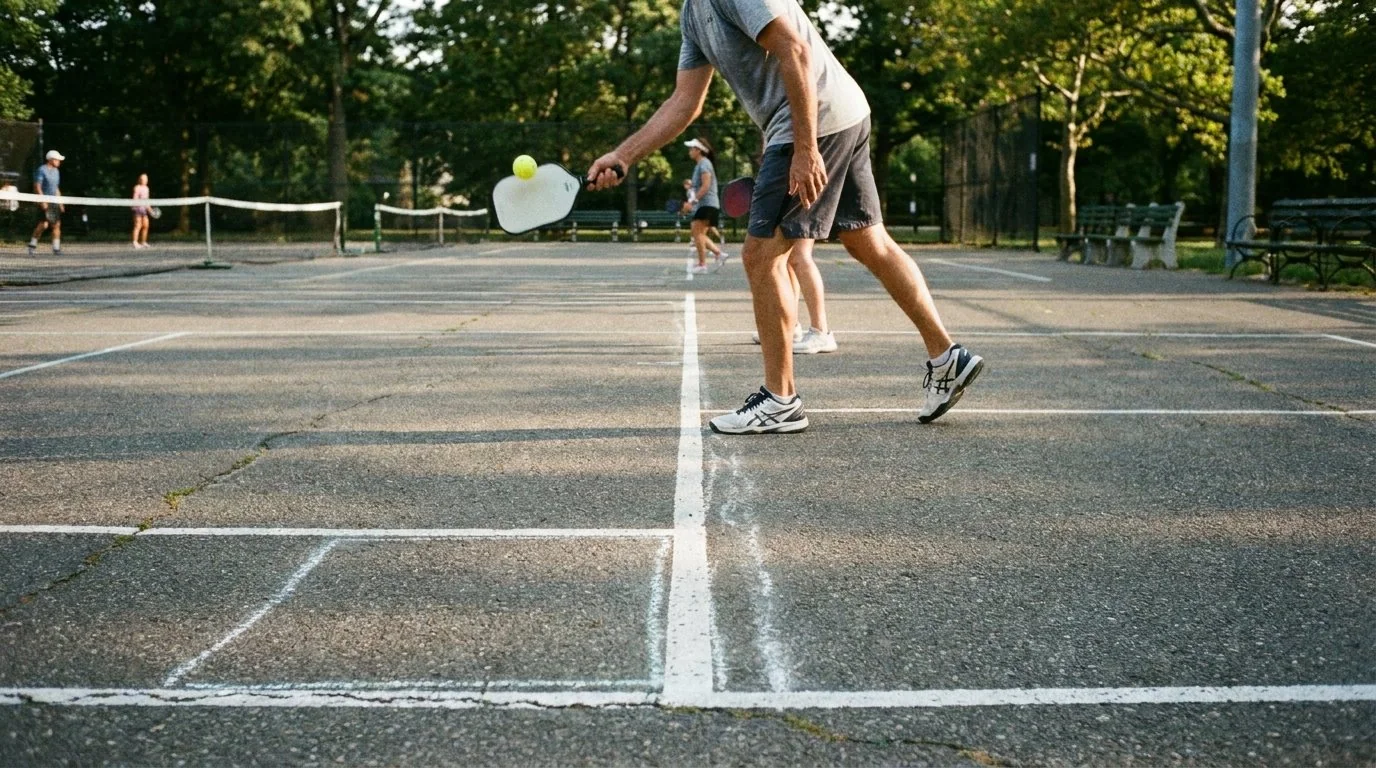
Serve foot faults are easy to miss because everyone watches the ball and the target. The useful question is narrower: at the instant the paddle hits the serve, is the server grounded in the correct serving area, behind the baseline, and clear of the court and the imaginary boundary extensions? Checking the feet in the same order each time prevents many disputes.
Check the three parts of the serving area
At contact, at least one foot must be on the ground in the correct serving area. The server cannot be completely airborne when the ball is struck. Neither foot may touch the court. That includes the baseline: a toe touching the painted baseline is a foot fault, not a position safely behind the line. The same check applies to the sideline and centerline surfaces.
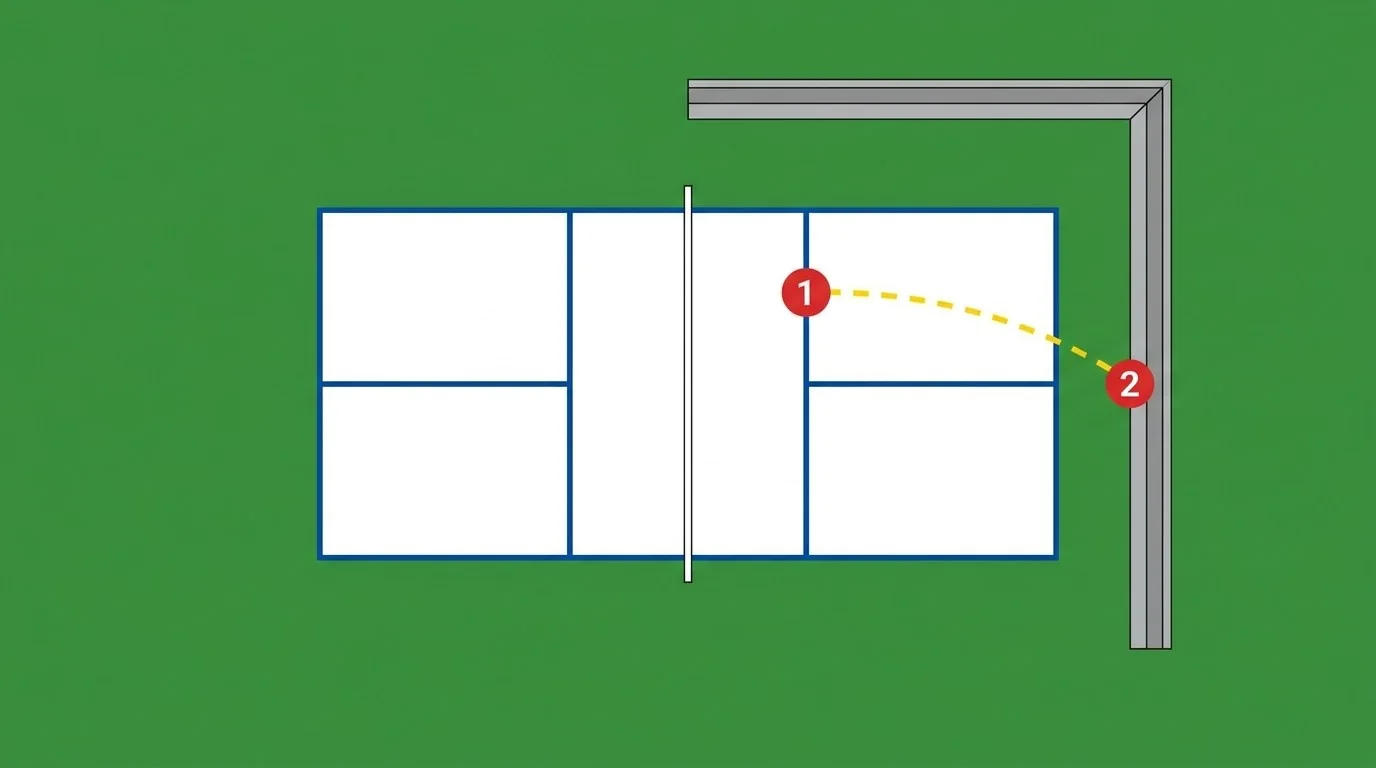
Both feet must also stay inside the serving corridor formed by the imaginary extensions of the relevant sideline and centerline. The server may stand on the ground behind the baseline, but stepping outside that corridor is a fault even if the ball lands in the right service court.
Judge the position at paddle contact, not at the start of the motion. A heel lifting before contact is not automatically the problem. What matters is whether either shoe touches an impermissible surface at contact. Watch the toe, heel, and outside edge of both shoes, especially when the server uses a long step or a sideways stance. The lines behind the baseline may be imaginary, but they still define the legal space.
Watch for the mistakes that change the call
The common error is treating the baseline like a boundary that may be touched. It is part of the court, so contact with it is prohibited when the serve is hit. Another mistake is beginning in the correct rectangle and then stepping across the imaginary centerline during the toss. The non-serving foot can also drift beyond the sideline extension while the player focuses on generating power.
The toss and forward momentum can turn a legal setup into an illegal position at contact. Pick out the baseline before starting, leave a small cushion behind it, and rehearse the motion without reaching for extra distance. A shorter step is usually easier to repeat than a lean over the line. In doubles, the partner should leave enough room that the server does not change foot position to avoid a collision.
A drop serve does not change the foot-placement requirement. The ball may bounce more than once or bounce in different places before it is struck, but the server's feet still have to meet the serving-area requirements at paddle contact. Changing from a volley serve to a drop serve does not allow the server to stand on the baseline or outside the corridor.
Use the same pre-serve routine
Before each serve, ask:
- Is at least one foot grounded in the correct serving area?
- Are both feet clear of the court, including the baseline, and behind it?
- Are both feet inside the imaginary sideline and centerline extensions?
In casual play, call your own foot fault as soon as you notice it. In organized play, follow the event's procedure. If an opponent calls a service foot fault, ask which foot and which boundary was involved instead of arguing from where the ball landed. A legal landing cannot make an illegal contact position legal.
Practice separates foot placement from serve accuracy. Put removable markers behind the baseline and along the two imaginary extensions. Rehearse ten slow serves while a partner watches only the feet, then repeat with ten normal serves while keeping the same cushion. Have the observer call “baseline,” “side,” or “center” when a fault occurs.
A reliable serving habit is simple: start in the correct corridor, keep space behind the baseline, and keep the feet legal at contact. Check the baseline, sideline, and centerline separately. That small routine makes foot faults easier to prevent and easier to explain when a close game produces a disagreement.