Pickleball Serve Bounce Call: Is a Short Serve Legal?
A net-cord serve is not automatically a replay. Learn the call order for deciding whether the serve lands legally and play continues.
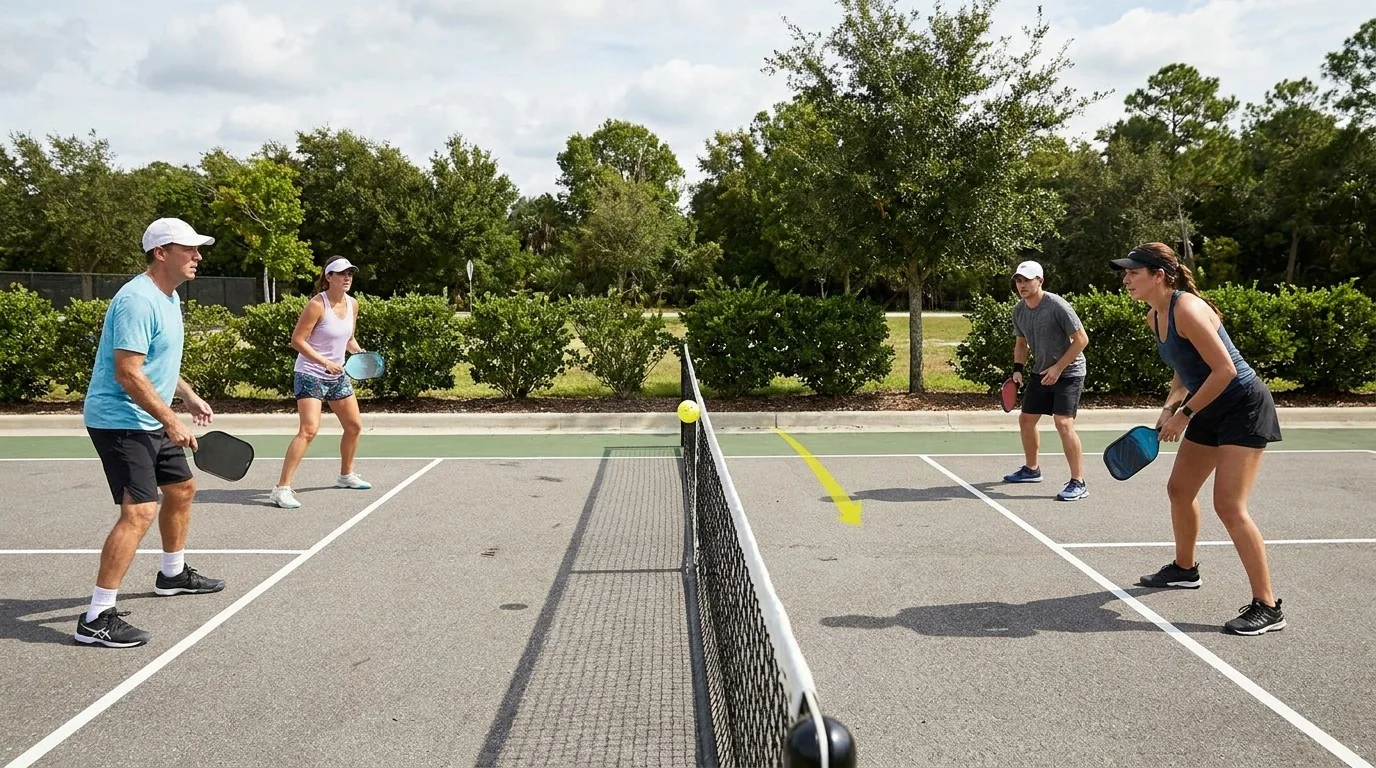
A pickleball serve that clips the net cord can look odd at full speed. The ball changes height, may land short, and can still finish in the correct service court. Judge it by the full service sequence, not by the sound of the cord or the ball’s unusual flight. If it clears the net and lands legally, let it bounce and continue the rally.
Start with the landing, not the sound
When the serve touches the net cord, watch the first bounce. If the ball lands in the correct diagonal service court, the serve is not automatically a fault. The net contact is simply one event in the flight. The landing area and the other service requirements still decide the call.
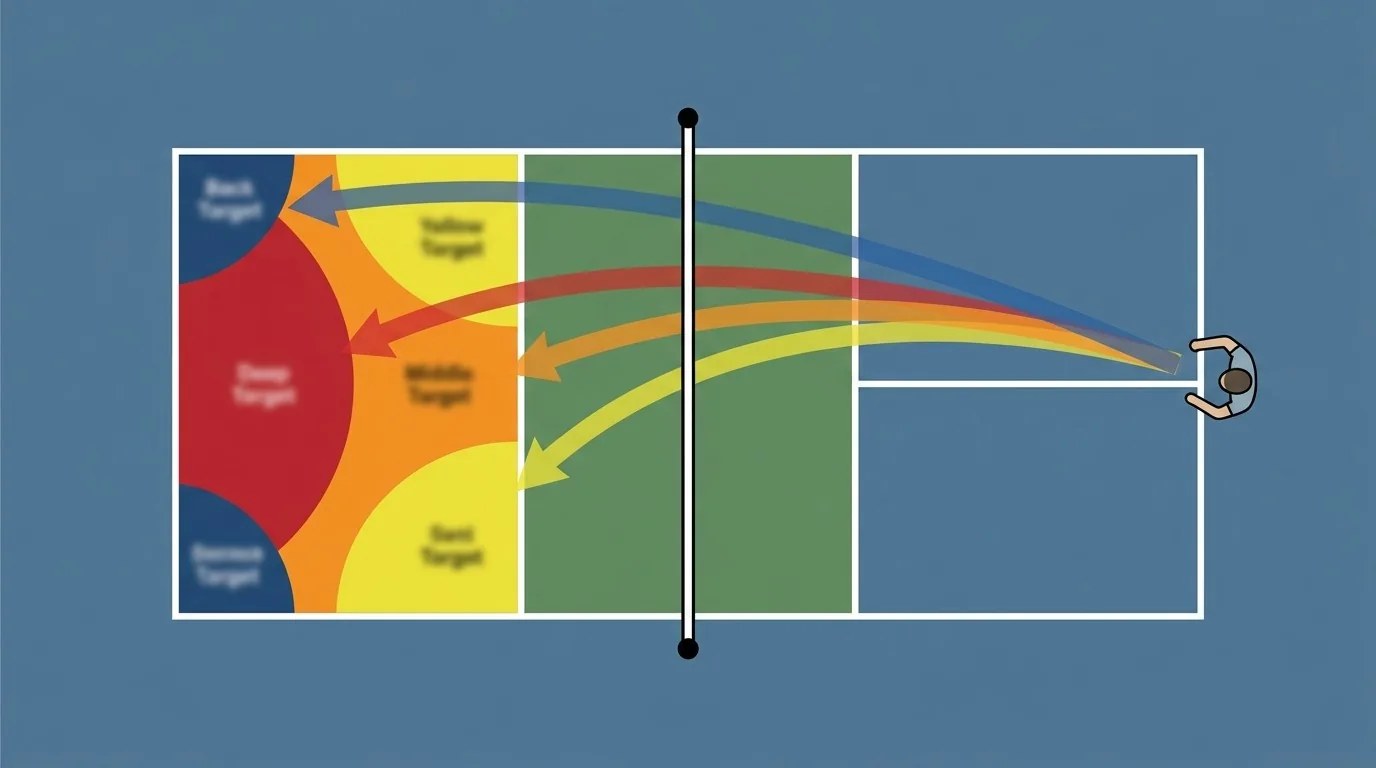
Use this call order: identify the server, confirm that the ball crossed the net, check the receiver’s diagonal service court, and then check whether the first bounce was in the non-volley zone. A net-cord serve that lands in the proper box is live. One that lands out is a fault. Do not call a replay just because the ball touched the cord.
Keep the three outcomes separate
There are three useful cases to remember:
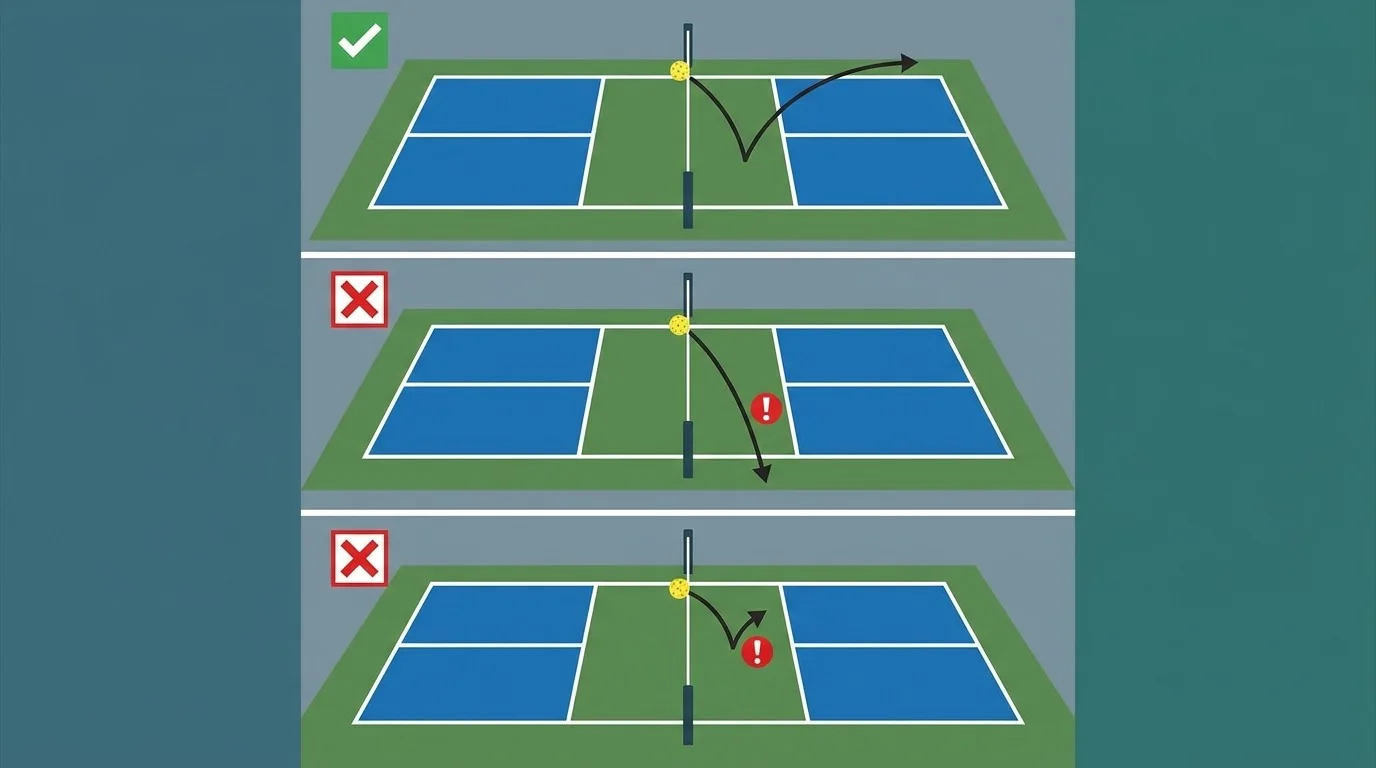
- The ball clips the cord and bounces in the correct service court. The serve is legal and play continues.
- The ball clips the cord and bounces out of bounds. The serve is a fault because it missed the required landing area.
- The ball clips the cord and bounces in the non-volley zone. That is also a serving fault, even though the ball crossed the net.
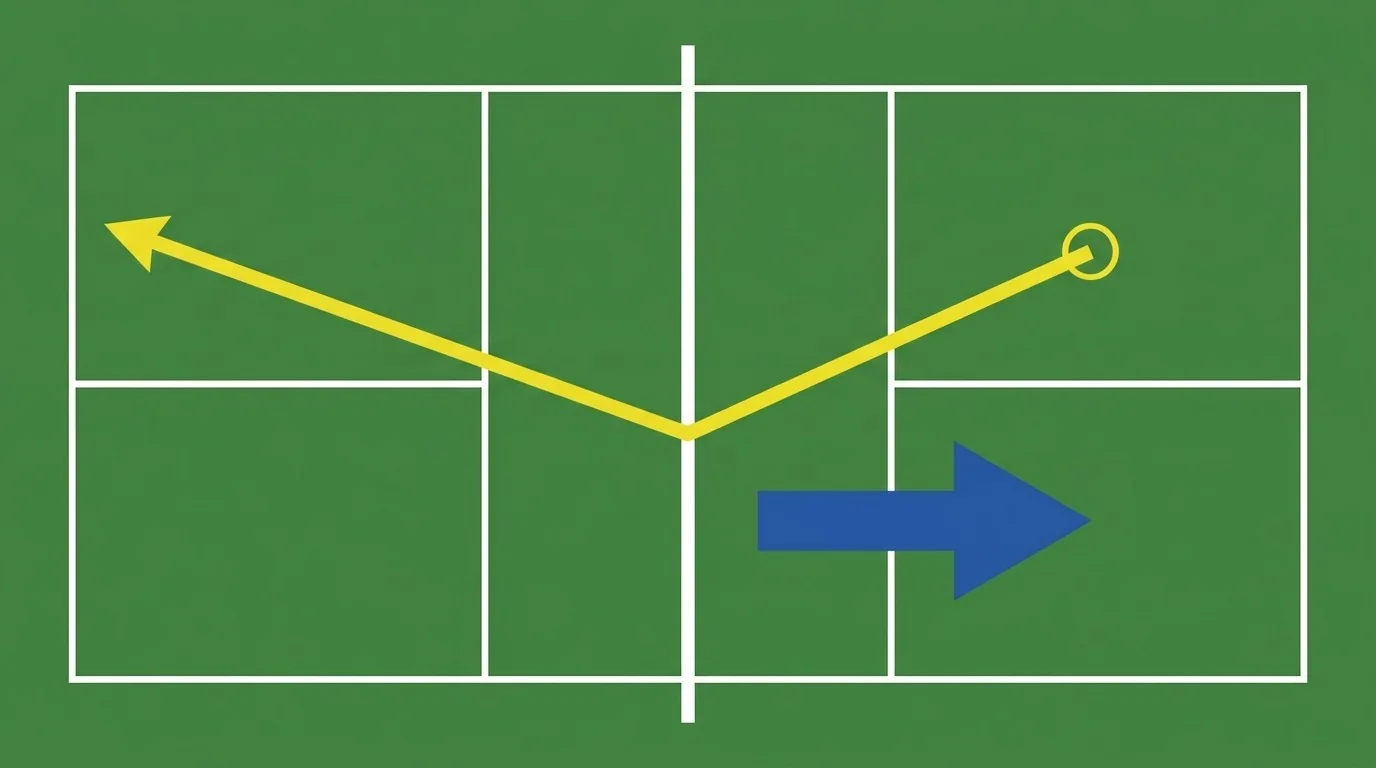
In doubles, wait until the bounce before communicating. The receiver should follow the landing, while the serving team should be ready for the return if the ball is legal. If it is clearly out or lands in the non-volley zone, call the fault using your normal pre-rally communication. When players disagree, use the applicable rulebook and the agreed officiating procedure instead of making up a replay.
Use the same four-question routine
Ask yourself the same questions each time:
- Did the ball touch the net cord?
- Did it cross into the receiver’s diagonal service court?
- Where did the first bounce occur?
- Was that bounce outside the legal service area, including the non-volley zone?
This routine prevents two common errors: treating every cord touch as a replay and treating every short bounce as legal. The receiver does not need to catch or stop a legal net-cord serve. Let it complete the bounce, then return it like any other legal serve. If it heads toward a line, remember that a ball touching a boundary line of the correct service court is generally in. The non-volley-zone restriction is a separate check.
Practise the call without slowing the game
Work with a partner who serves ten balls that intentionally clip or approach the cord. The server does not need to disguise the landing. After each bounce, the receiver says “in,” “out,” or “non-volley zone.” Then mix ordinary serves into the sequence. The aim is calm, quick observation: cord contact is not the call; the complete landing result is.
The usual mistakes are easy to spot. Calling a replay before seeing the bounce ignores the landing requirement. Calling a legal serve out because it sounded unusual confuses cord contact with a fault. Stopping the point before the bounce creates an avoidable dispute. Watch the whole sequence, apply the service-box test, and keep playing when the net-cord serve is legal.