Pickleball Serve Landing Zones: A Simple Fault-Spotting Guide
A clear guide to pickleball service lets, net clips, legal landing zones, faults, replays, and practical calls for open play.

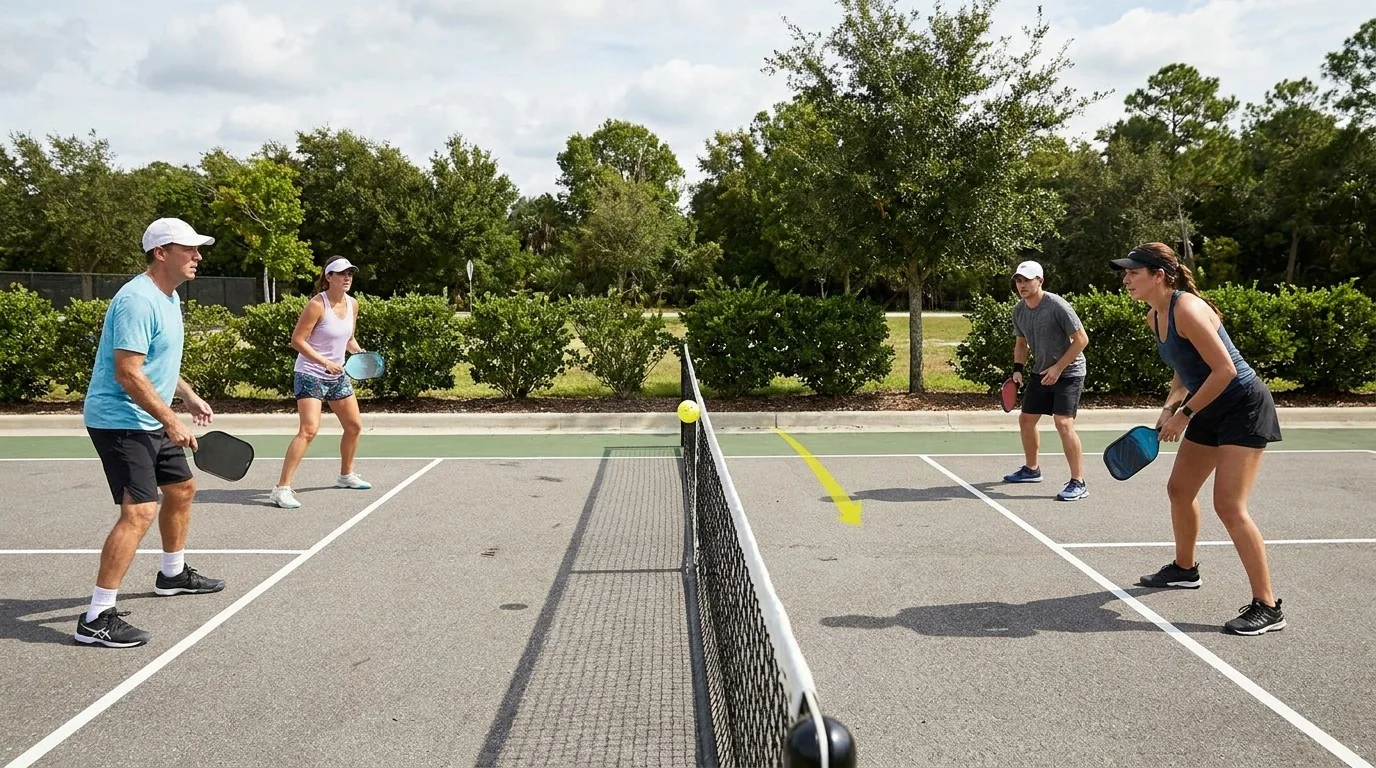
A pickleball service that touches the net can create a surprising pause. The right decision depends on what happens after the contact, not simply on whether the ball made a sound. Understanding the service let rule keeps recreational games moving and prevents arguments at the first point.
What is a pickleball service let?
A service let occurs when a served ball touches the net and still lands in the correct diagonal service court. Under the current standard rule set, that contact alone does not automatically stop play. The receiver should be ready to return the ball if it is otherwise a legal serve.
This is different from a serve that clips the net and then lands outside the correct service court. That serve is a fault. It is also different from a ball that touches the net and does not cross to the receiver’s side. That is a fault as well. The landing location and the complete serve matter more than the sound at the net.
The practical habit is simple: watch the ball through its bounce. Do not call “let” while it is still traveling. If the serve lands legally and the rally continues, play the point.
How to judge the serve without guessing
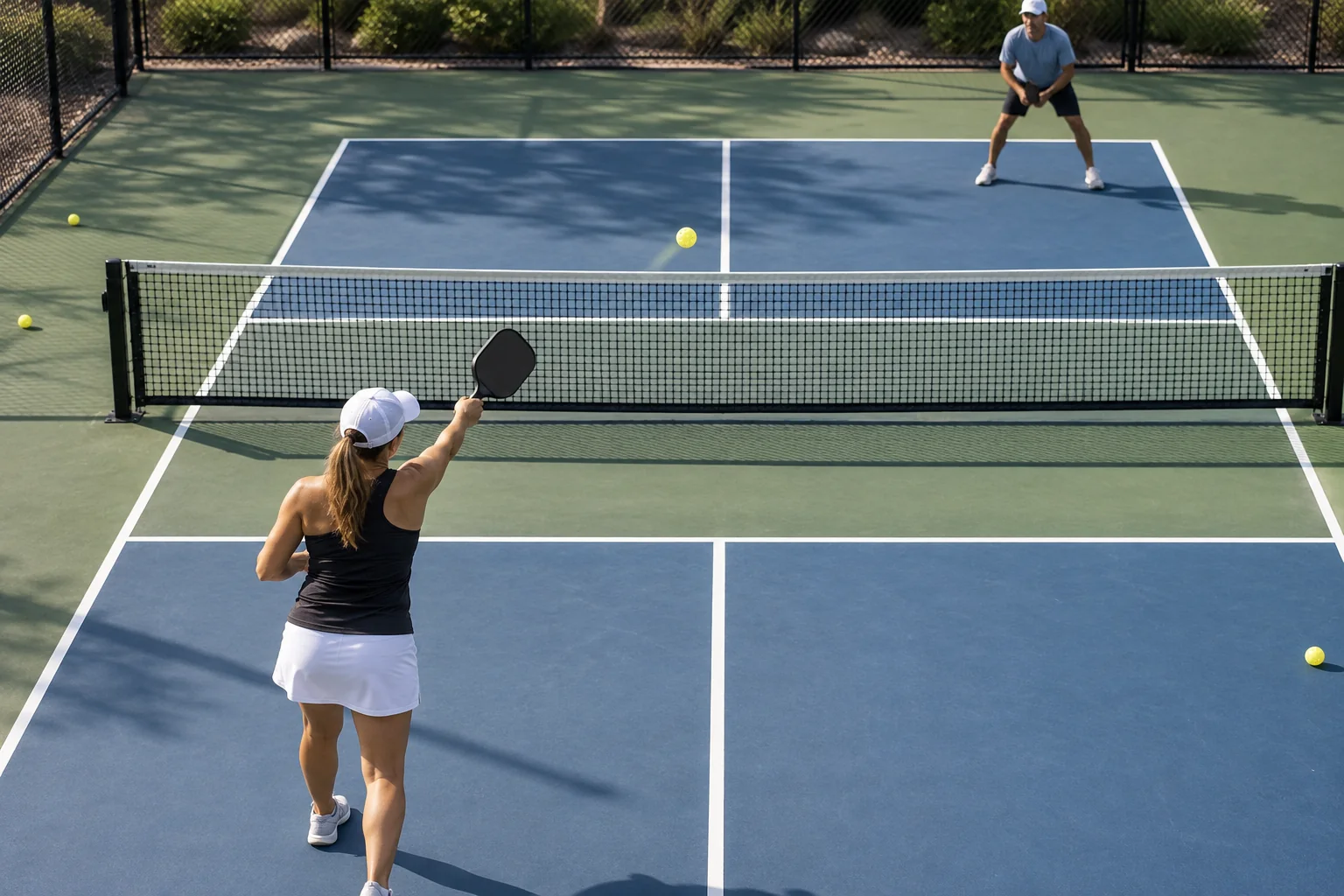
Start with the receiver’s service box. The ball must cross the net and land in the correct diagonal court beyond the non-volley zone line. A ball that touches the net but falls short in the non-volley zone is a fault. A ball that lands beyond the sideline or baseline is also a fault, even if it crossed the net cleanly afterward.
Next, check the server’s action. The serve must satisfy the applicable service-motion requirements, and the ball must be contacted below the permitted height. A net touch does not repair an illegal swing, an incorrect position, or a serve aimed at the wrong box. Call the fault that actually occurred rather than using “let” as a catch-all phrase.
Finally, agree on the call before the next serve. In casual play, the server and receiver can briefly state “legal, play on” or “fault, wrong box.” In a tournament, follow the event’s official procedure and let the referee handle a disputed ruling.
Three common examples
- The ball kisses the net, lands in the correct box, and bounces: legal serve; continue the rally.
- The ball kisses the net and lands in the non-volley zone: fault; do not replay it.
- The ball clears the net but lands outside the diagonal box: fault; do not replay it.
When should a point be replayed?

A replay is appropriate only when a rule or an event official calls for one. Do not replay every net clip by habit. A genuine interruption, an outside ball entering the court, or another recognized hindrance may require a stoppage, but the net contact itself is not enough when the serve lands legally.
If players disagree, stop before the return and explain what each person saw. Ask where the ball landed, whether it crossed the non-volley zone line, and whether anything else interrupted the serve. If the group cannot resolve the question, replaying a disputed point may be a fair recreational solution, but it should not become an automatic rule for every net touch.
A quick service-let checklist
Before calling a let or fault, use this sequence:
- Did the served ball cross the net?
- Did it land in the correct diagonal service court?
- Did it stay out of the non-volley zone on the serve bounce?
- Was the service motion legal?
- Did another hindrance interrupt the play?
If the answers are yes, yes, yes, yes, and no, the serve is playable. If the ball missed the correct court or landed in the non-volley zone, call a fault instead. Keeping the language precise makes open play friendlier and helps newer players learn the rule from the action in front of them.
For practice, have one player serve ten balls while the partner announces only the landing result: legal box, non-volley zone, or outside. Add net clips naturally and wait for the bounce before making the call. That drill builds judgment without turning every point into a debate.