Can a Pickleball Serve Hit the Net? The No-Let Rule Explained
A clear guide to net-clipping pickleball serves: live landings, kitchen and out-of-bounds faults, the no-let rule, and receiver action.
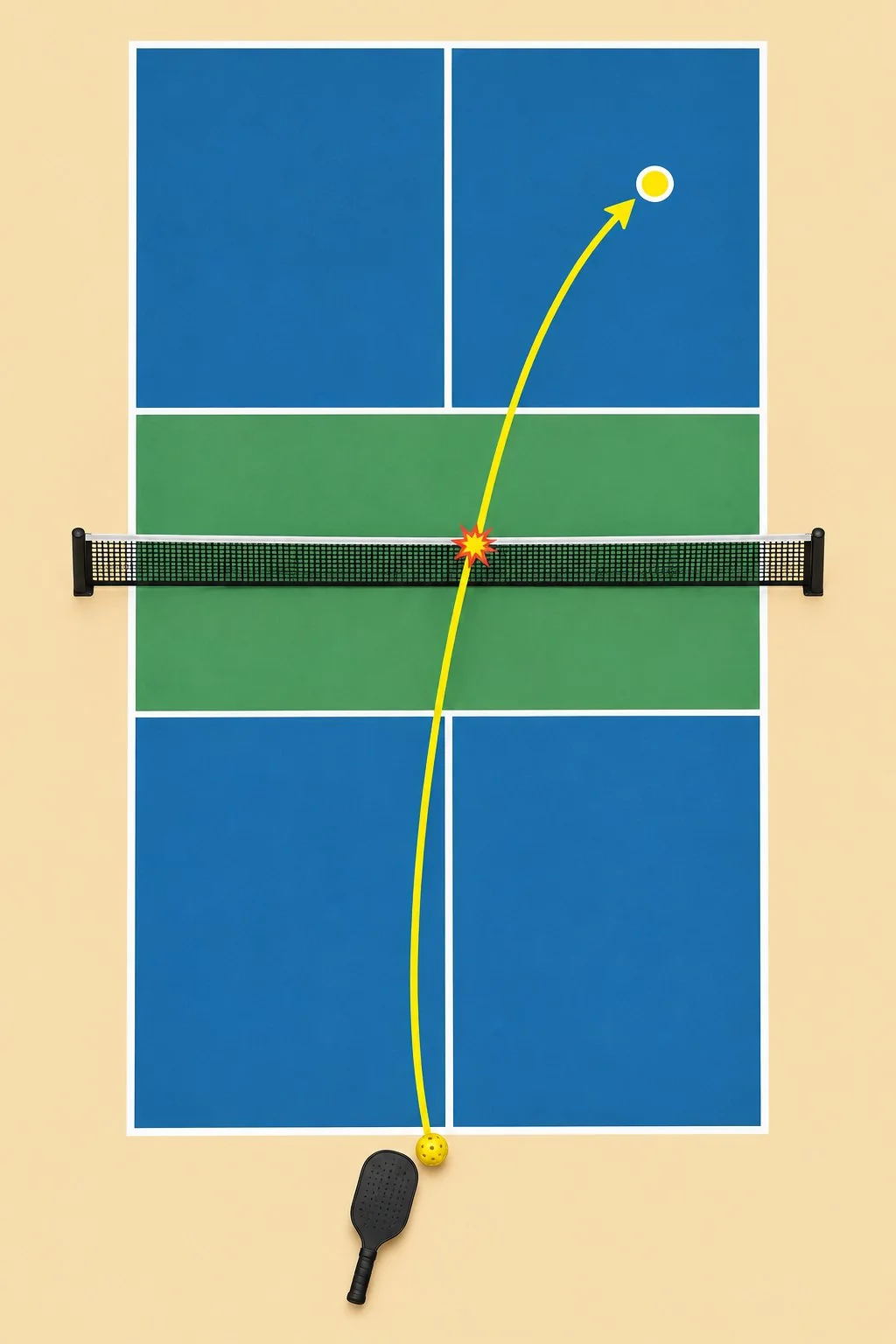
Yes, a pickleball serve may touch the net. The net contact itself does not decide the result. Under the current no-let rule, the ball stays live when it clips the net and then lands in the correct diagonal service court. The receiver should play it rather than waiting for a replay.
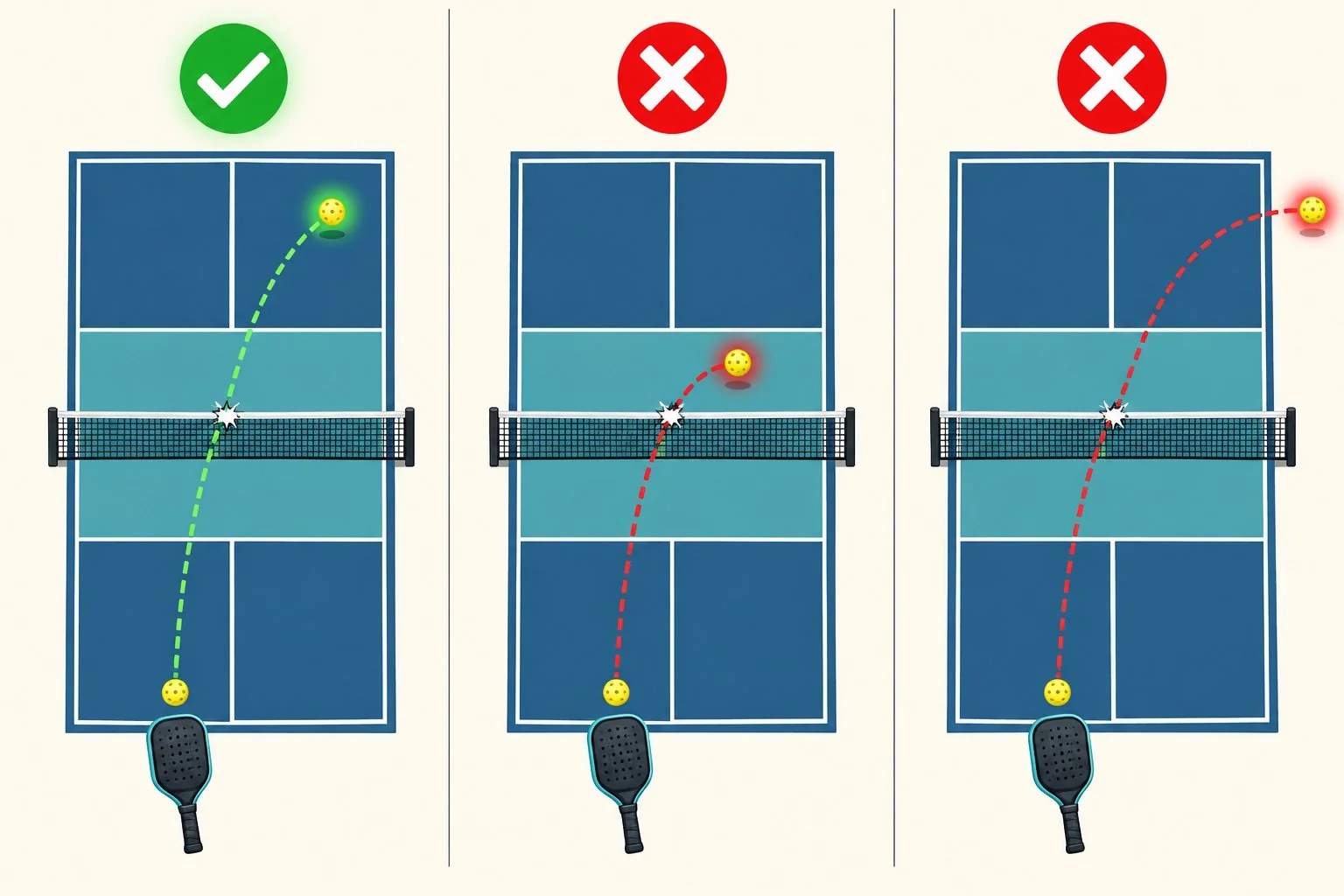
What happens when a pickleball serve hits the net?
Think of the net touch as neutral. The landing spot is what matters. If the served ball brushes the net, clears the non-volley zone, and lands in the proper diagonal service court, it is a legal serve. The point continues immediately, and the receiving team must let the serve bounce before returning it under the two-bounce rule.
That bounce can be awkward. A serve that barely clears the tape may arrive slower, lower, or with an unusual angle, so the receiver should stay alert instead of assuming the point will be replayed. The serving team must also be ready for the return; a net-clipping serve does not erase the rest of the rally.
There is no service let in current pickleball rules. In practical terms, do not call “let,” stop moving, or reach for a second serve simply because the ball touched the net. If it lands legally, play on.
When is a net serve a fault?
A net touch becomes part of a fault when the ball does not finish in a legal service location. The serve is a fault if it lands in the non-volley zone, touches the kitchen line, or lands outside the correct service court. The kitchen line is included in the non-volley zone for a serve, so a ball that kisses the net and drops onto that line is not saved by the net contact.
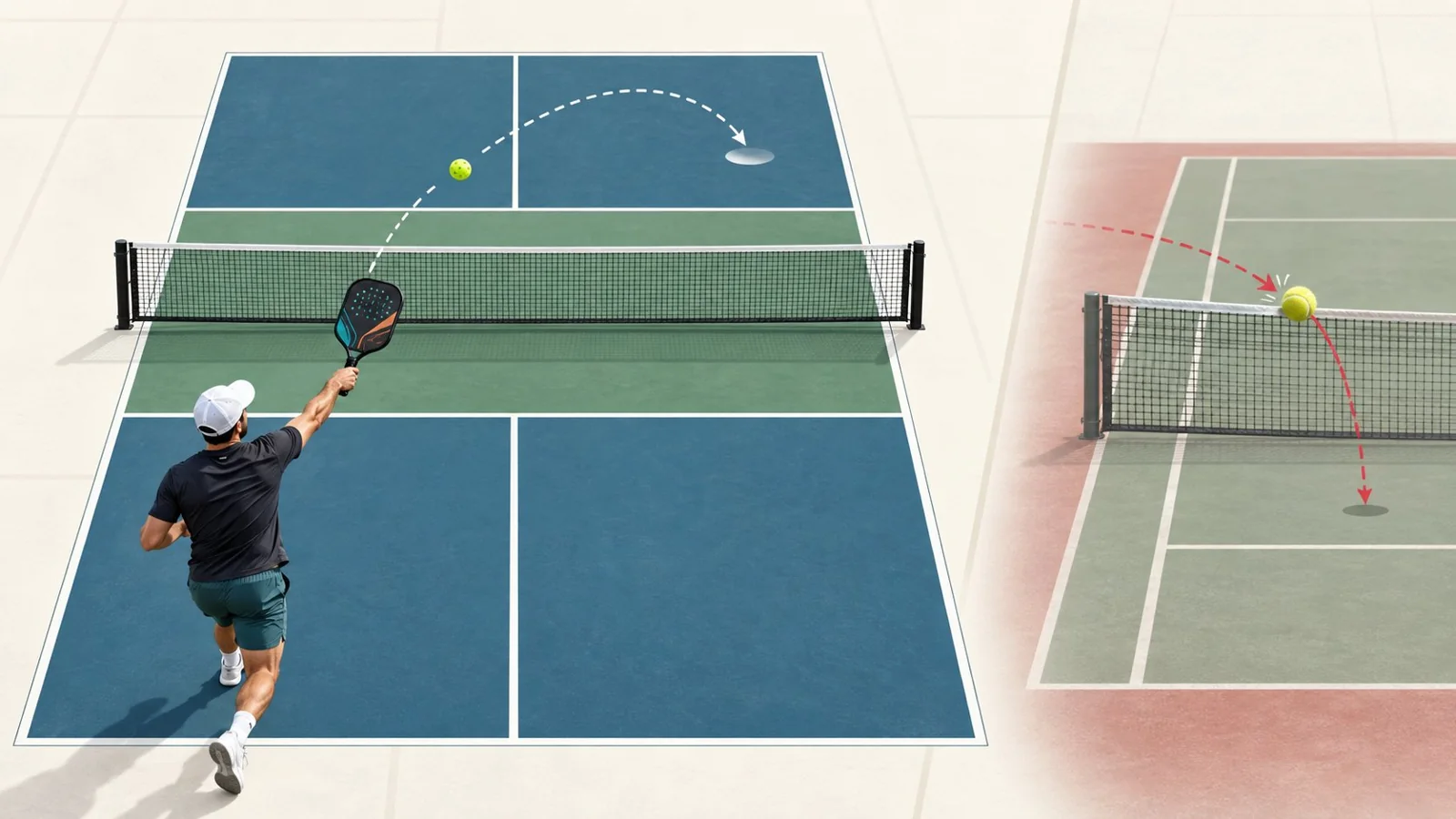
The same principle applies to a serve that touches the net and then hits a permanent object before bouncing, although that situation is different from ordinary net contact. Foot faults and illegal serve motions remain faults as well. Net contact does not cancel the server’s other obligations: the serve still has to begin from the correct position, travel diagonally, clear the kitchen, and land in bounds.
A simple match-day checklist helps. Ask three questions in order: Did the ball touch the net? Where did it land? Did any other service fault occur? The first answer alone is not enough to stop the rally.
How is pickleball different from tennis?
Tennis players often expect a net serve that lands in to be replayed. Pickleball uses a different approach. In pickleball, a net-clipping serve that lands in the correct service court is live; there is no automatic do-over. During ordinary rallies, a ball that touches the net and lands in bounds is also live, including when it drops into the non-volley zone.
The comparison matters most when players move between the sports. A tennis habit of calling “let” can make a pickleball player stop before the receiver has even touched the ball. That interruption creates confusion and may cost the rally in casual play. Agree before the game that net serves are played, then keep the same expectation for every server.
What should the receiver do?
Stay in a ready position until the ball bounces. Watch the ball through the net and adjust your feet instead of guessing its final path. If the serve lands in the service court, make the return and remember that your team has to allow the serve to bounce; after your return also bounces, normal volley play opens up.
For a practice routine, have a partner serve deliberately toward the middle and then vary the pace so a few balls skim the net. Call “live” only after the ball lands in the service court, return the bounce, and reset for the next shot. Separately rehearse the fault cases by serving into the kitchen or wide, so everyone can distinguish a legal net serve from a serve that is out.
The short version is easy to remember: a net touch is not a replay. A legal landing keeps the serve live; a kitchen or out-of-bounds landing is a fault.