Pickleball Reaction Cue Drill: Split, Move, and Recover
A practical guide to pickleball split-step timing, including the contact cue, balanced landing, kitchen-line reactions, transition movement, and partner drills.
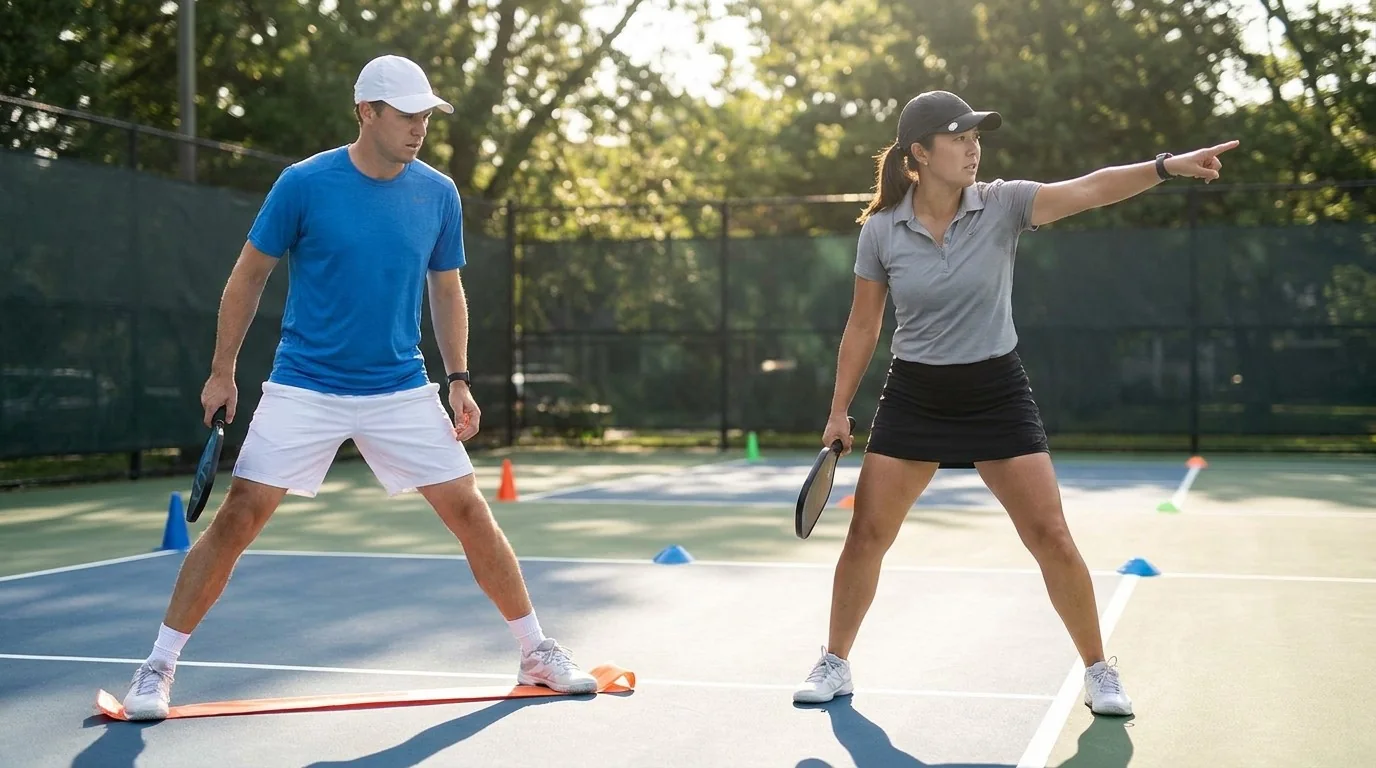
The pickleball reaction cue drill turns a simple direction call into a repeatable movement habit. One player gives the cue; the other makes a small split step, moves under control, finds balance at the marker, and returns ready for the next cue. It is a useful way to practise reacting instead of guessing.
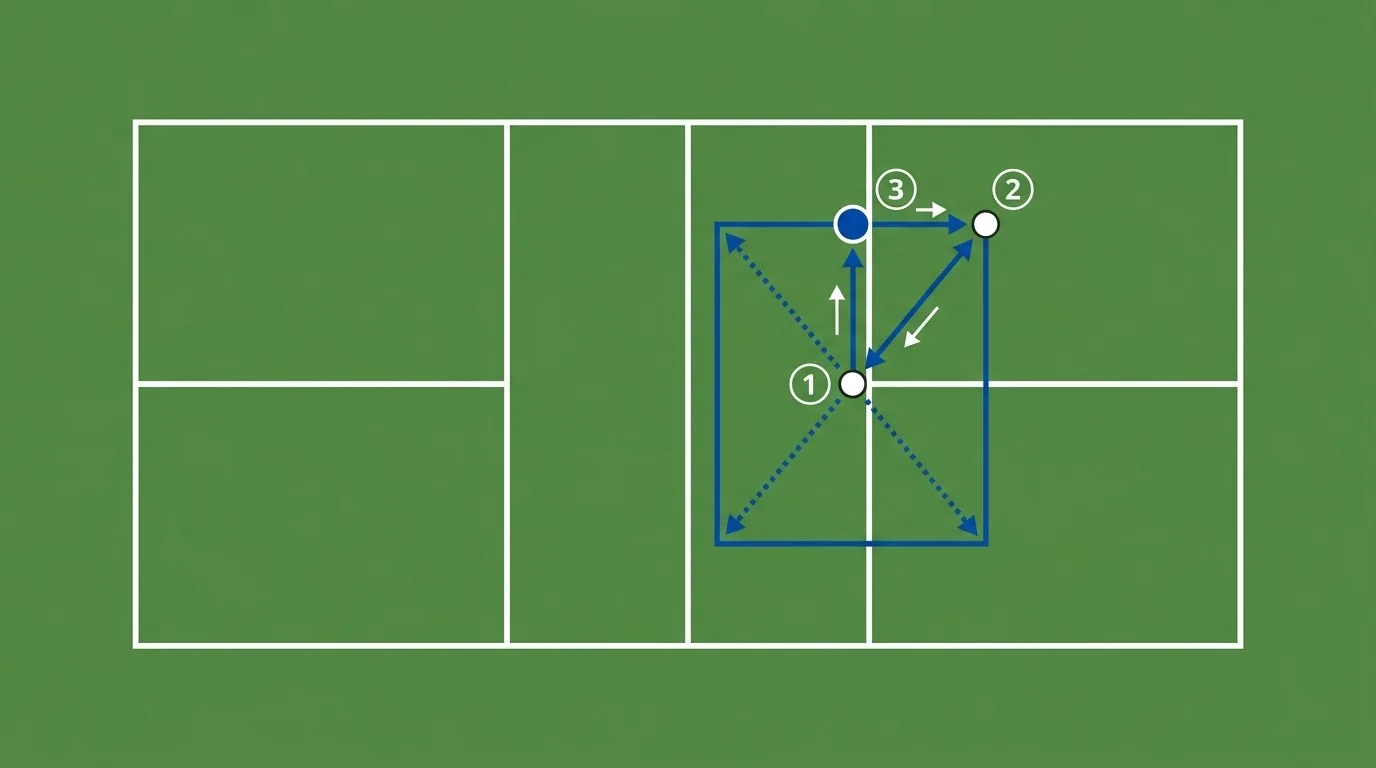
Set up the movement box
Place two to four flat cones or safe floor markers around a small central marker. The mover starts at the center in a ready position with the paddle in front. The caller stands far enough away to point safely and clearly. Leave space between groups if several players are training at once.
Keep the split step small. The goal is not to jump high; it is to wake up both feet so the first step can go in the called direction. A large jump, crossed feet, or a forward lean makes the drill harder without making the reaction cleaner.
Run the first version
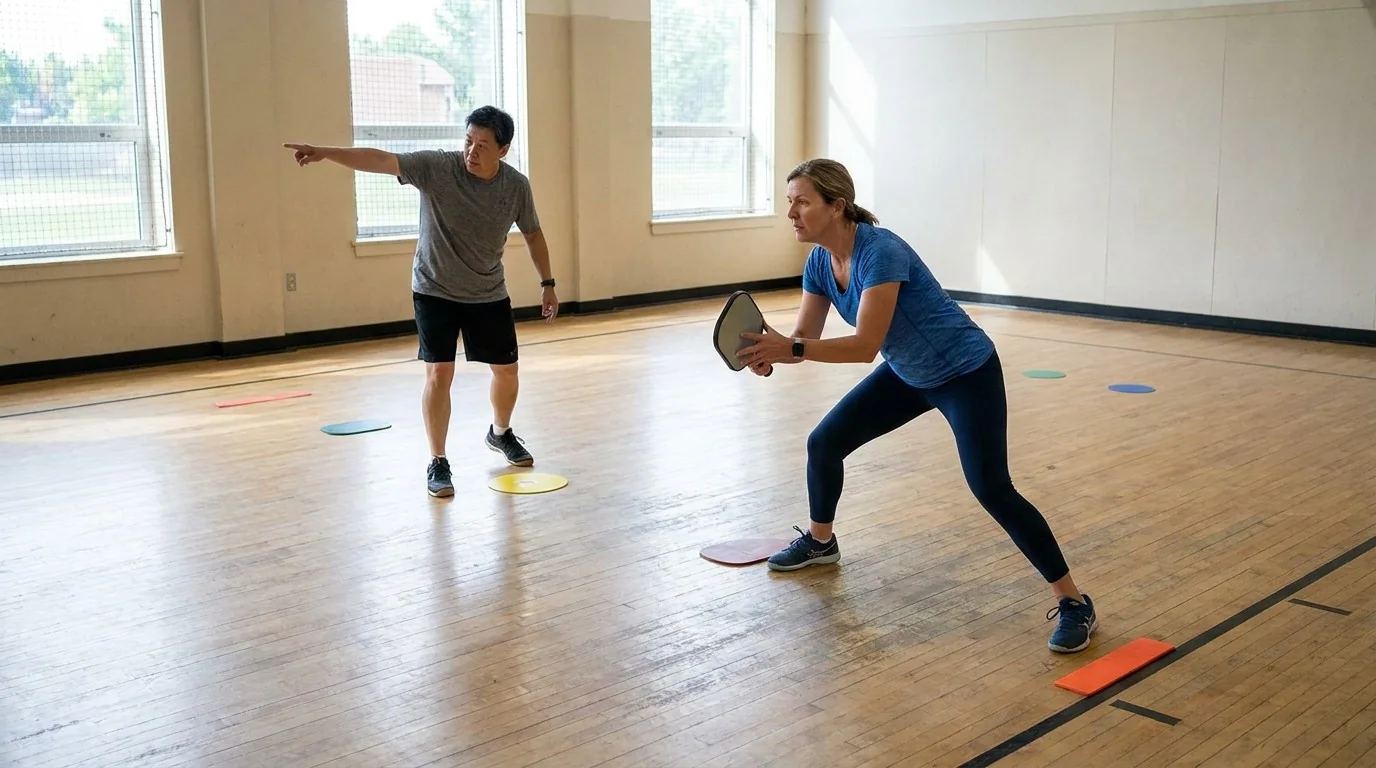
The caller points left, right, forward, or backward. React after the point rather than moving early. As the cue is given, make the small split step, travel to the outside marker, establish balance, and return to the center in ready position.
Complete 8 random cues, then switch roles. The caller should vary direction without trying to trick the mover with unsafe or excessive speed. The mover should arrive under control, not dive for the marker or rush the return to center.
Add a paddle and a ball
Once the footwork is steady, add a shadow forehand or backhand after the move. The stroke should stay compact, and the player should recover to the center marker before the next cue.
For the next progression, replace the shadow swing with a gentle hand-fed ball. The caller or feeder gives the direction cue first, lets the mover establish a base, and then feeds a manageable ball. Keep the feed slow enough that the player can preserve the movement pattern.
If the player starts anticipating the direction, pause and return to the pointing version. The drill is successful when the mover reacts to the cue, not when the mover guesses correctly.
Coach the landing and recovery
Both feet should meet the court softly, with knees slightly bent and the paddle ready. Use short adjustment steps near the destination, then return to the center without crossing the feet during lateral movement.
A common mistake is adding speed before control. Also watch for leaning beyond the base of support, jumping too high, or arriving at the outside marker unable to change direction again. Reduce the distance or slow the cue until the landing is balanced.
Carry the cue into a rally
After the movement box feels natural, use the same cue in a kitchen-line or transition drill. The partner gives a visible paddle or pointing cue, and the mover splits before taking a controlled step toward the ball. Keep the original priorities: react after the cue, land balanced, and recover before the next action.
Do not measure the drill by how quickly the player reaches the marker. Measure whether the player reacts after the cue, keeps the hop compact, and returns to a usable ready position.
Finish with a few gentle ball feeds in different directions. If the mover loses balance, remove the ball and return to the pointing cue. Better footwork comes from a clean reaction repeated often, not from adding pace before the pattern is stable.
The best reaction cue drill is simple enough to repeat. Point, split, move, find balance, and recover to the center. When those actions stay quiet, add the paddle and then the ball.