Pickleball Return Footwork: Move Behind the Ball Before Contact
A practical guide to pickleball return footwork: create space behind the baseline, read serve depth, move behind the ball, contact in front, and recover toward the kitchen.
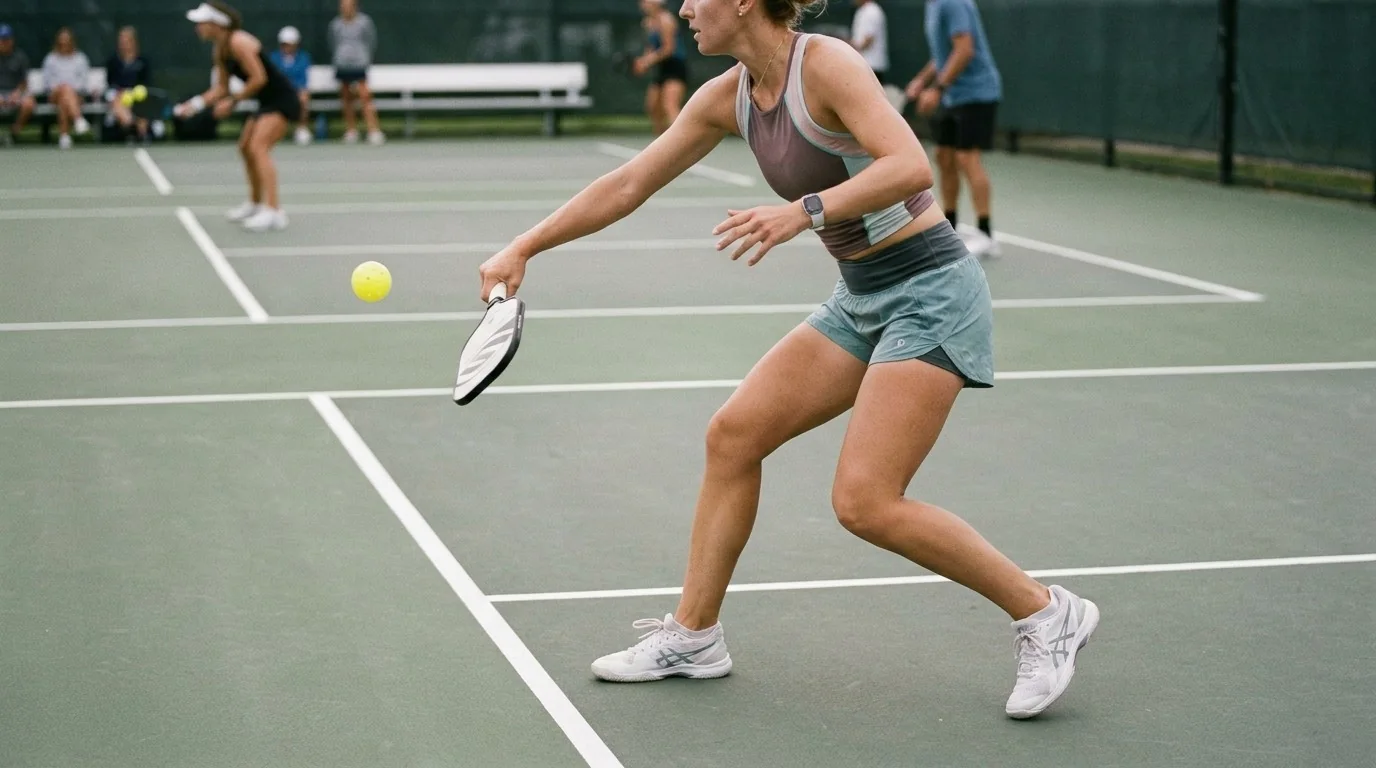
Good pickleball return footwork starts before the swing. Give yourself room behind the baseline, read the serve, move so the ball stays in front of you, and recover toward the kitchen after a controlled return. The aim is not a spectacular winner. It is a dependable first shot that gives you time to move forward.
Start with usable space
Stand behind the baseline with enough room for a deep serve to bounce in front of you. Your exact distance depends on your speed, reach, and the serves you face. If deep balls regularly jam you or force a late reach, you may be too close. If you return comfortably but struggle to advance, you may be starting farther back than necessary.
Keep the paddle ready and the feet light. Watch the serve after it crosses the net, then decide whether the first step should be forward, back, or sideways. Do not drift forward simply because you want to reach the kitchen quickly.
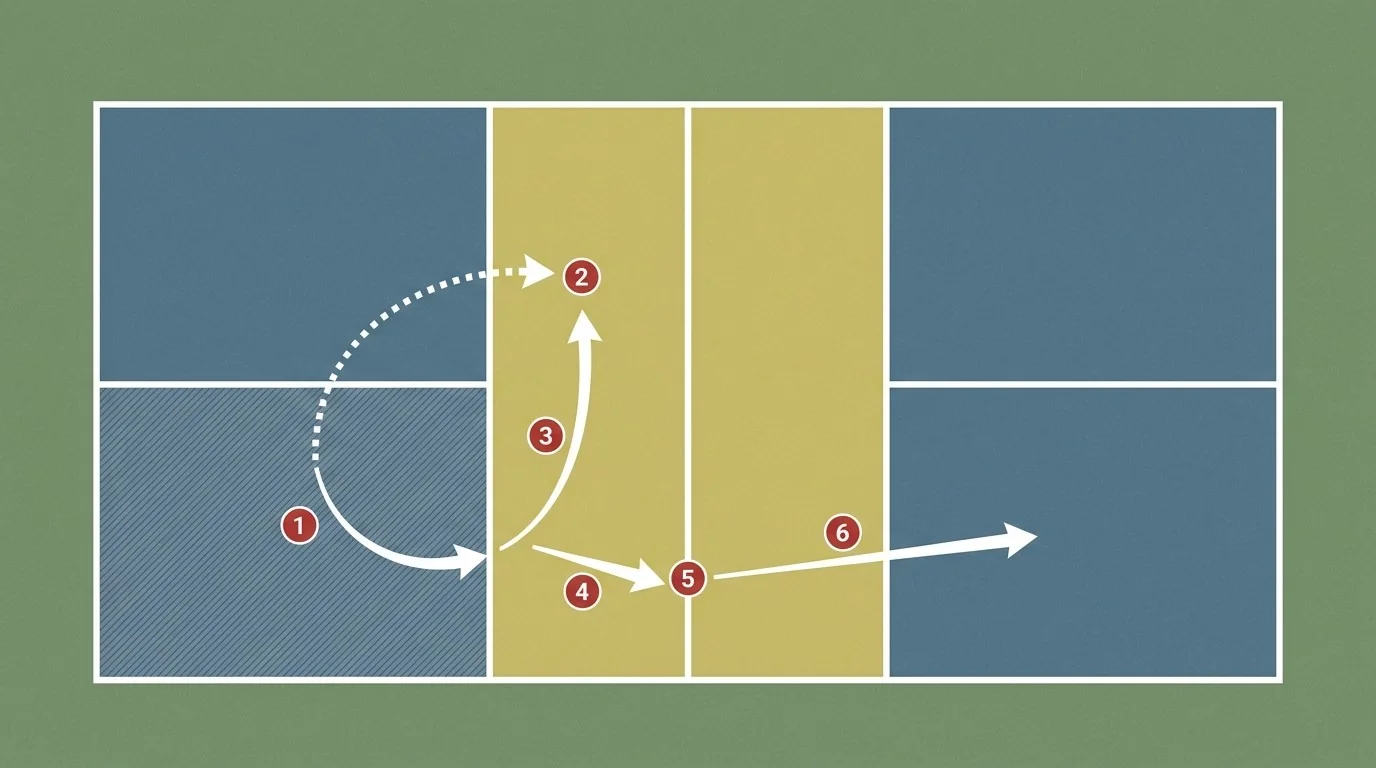
Move behind the ball
As the serve travels, use short adjustment steps to create a stable platform. The goal is to get your body behind the ball rather than reaching from the side or letting contact drift behind you. For a wide serve, move laterally first and avoid crossing your feet while trying to swing. For a body serve, make a small space-creating step and choose the cleaner contact side early.
Contact the ball in front of your body with a compact swing. Keep the return controlled and give it enough height and depth to buy time. Aim with margin rather than chasing a line when balance is already difficult.
Return, then move forward
Begin moving toward the kitchen as the return travels. Do not wait to admire the shot, but do not sprint blindly either. Keep the paddle ready, watch the serving team prepare its next ball, and use the quality of your return to choose how far you advance. A deep, controlled return usually gives you more time; a short or high return calls for more caution.
Stop in a balanced position before the next shot. Your partner's position matters in doubles, so recover with awareness of the middle instead of opening a large lane.
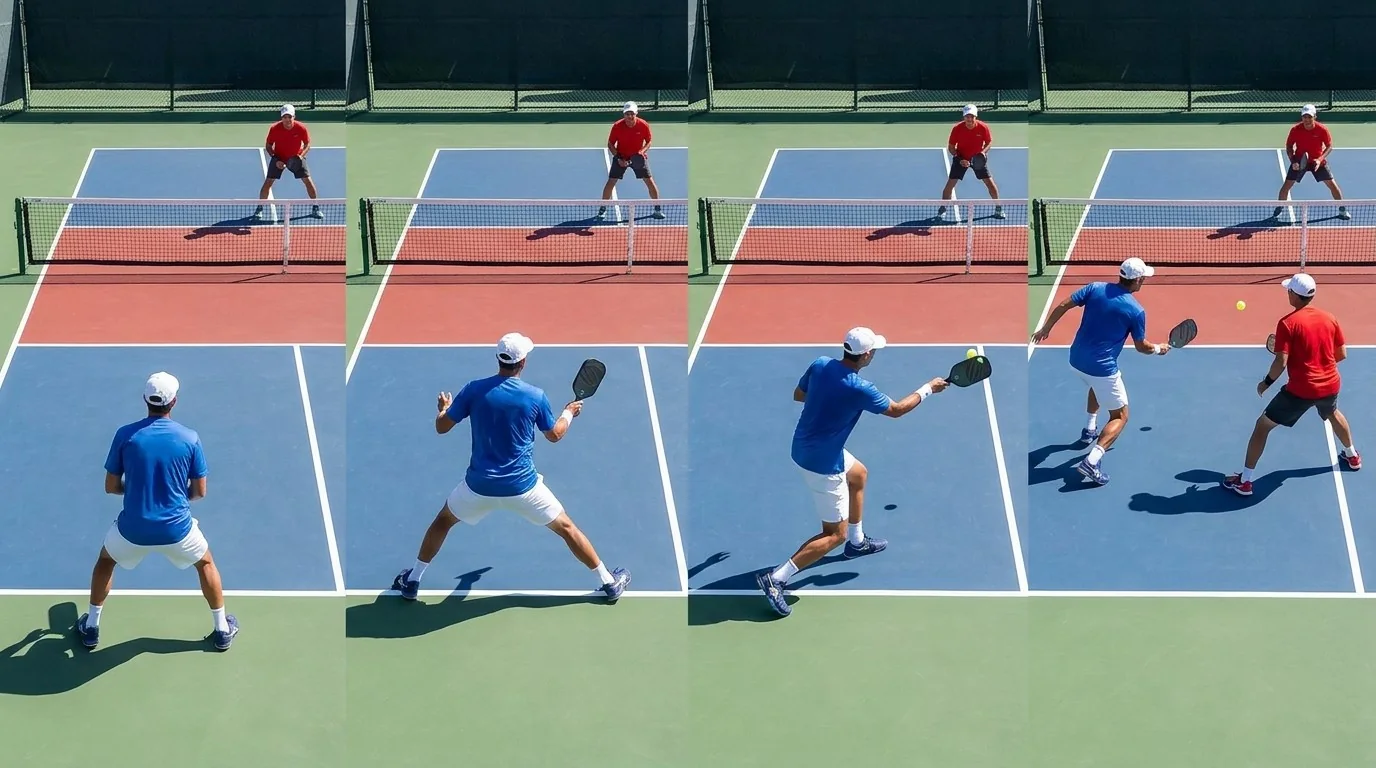
Practise the decision
Place a deep center target, a deep crosscourt target, and a shorter target on the receiving side. Have a partner vary serve depth and direction. Call “short,” “deep,” or “wide” as you read the serve, then make the matching first movement.
Count balanced returns rather than winners. A good repetition includes room behind the baseline, a clear read, contact in front, a controlled return with margin, and a recovery step toward the kitchen. If you keep retreating after contact, work on moving forward behind the ball. If you are late to deep serves, create more starting space.
The repeatable sequence is simple: start with room, read the serve, move behind the ball, contact in front, and advance with control.
A useful check is whether your feet finish underneath you after the return. If they do, the next movement is available; if they do not, slow the drill and rebuild the spacing before adding speed.