How to Clean a Pickleball Paddle Without Damaging the Surface
A safe, practical routine for cleaning a pickleball paddle, caring for its face, grip, and edge guard, and preventing heat and moisture damage.
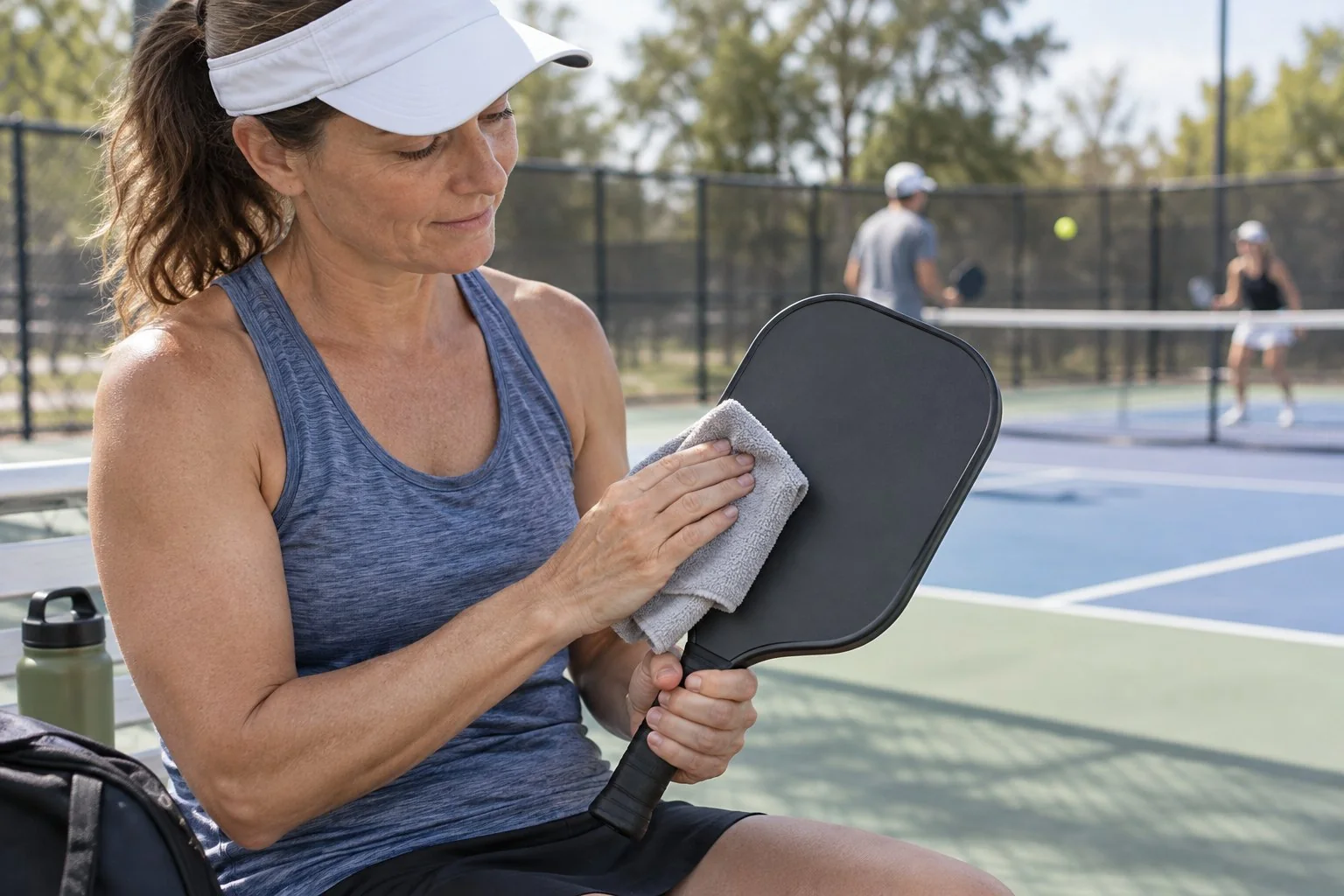
Knowing how to clean a pickleball paddle matters because a paddle face collects ball residue, court dust, and skin oils every time you play. That film can fill the surface texture and make a paddle feel less grippy. The safe routine is simple: use the least aggressive method that fits the face, keep water away from the core, and let every part dry before storage.
What do you need to clean a pickleball paddle?
For routine care, start with a clean microfiber cloth and a small amount of lukewarm water. The cloth should be damp, not wet. Keep a second dry cloth nearby for the final pass. This basic kit handles most dust, sweat, and light ball residue without adding a chemical film to the face.
Some raw carbon-fiber faces have textured surfaces that hold residue more firmly. A paddle-specific rubber cleaning block may help, but only when the paddle maker permits it. Surface treatments differ, and a tool that is acceptable for one model can damage or void the warranty of another. When the care instructions are unclear, use the cloth-and-water method and contact the manufacturer before trying an eraser.
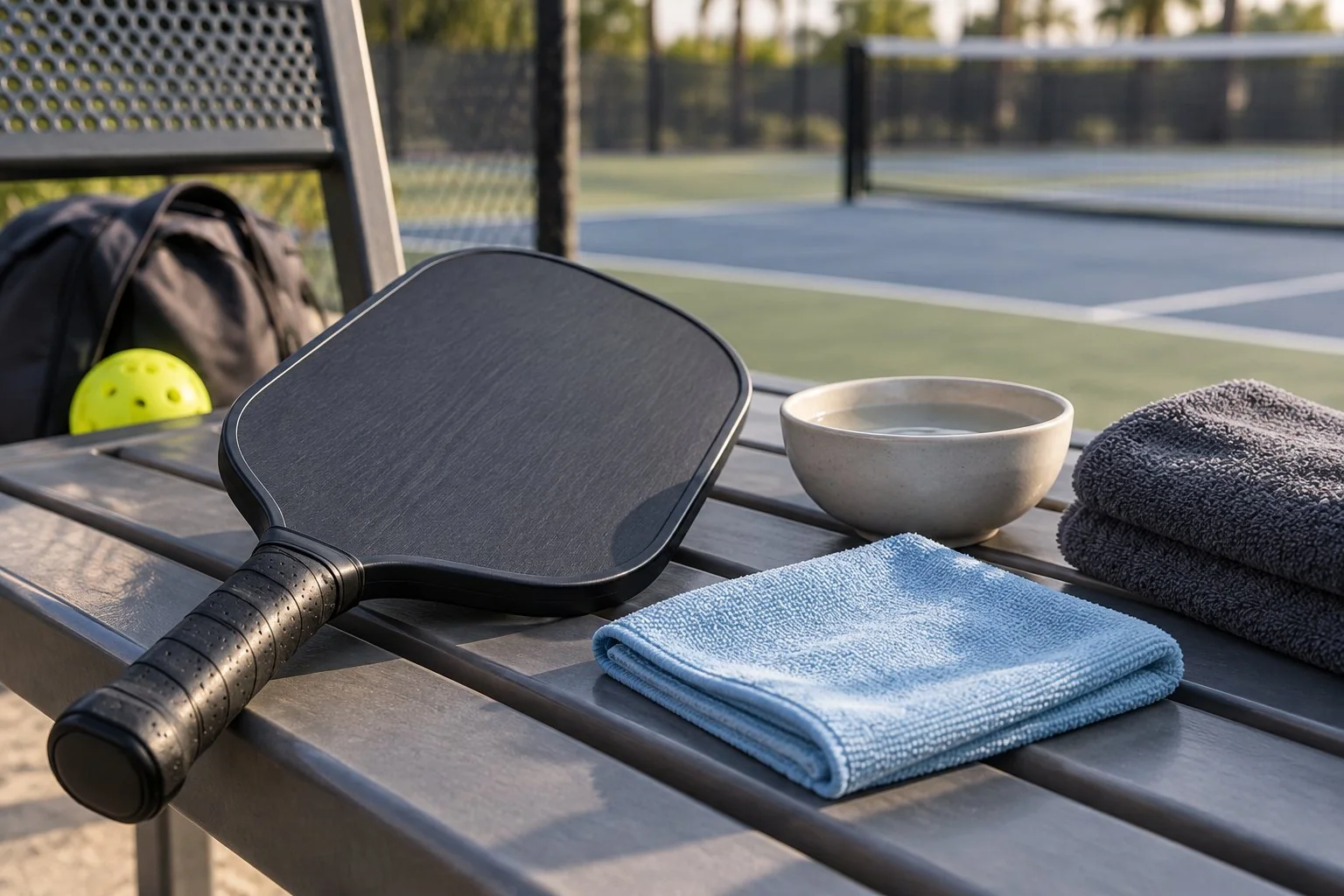
How do you clean the paddle face safely?
- Remove loose dirt first. Hold the paddle by the grip and brush away grit with a dry microfiber cloth. Do not grind sand across the face.
- Dampen the cloth. Wring it until no water drips. Never pour liquid directly onto the paddle, spray into the edge, or rinse the paddle under a tap.
- Wipe both faces. Use light, even strokes from the top toward the throat. Work across the whole hitting area, including the edges where residue collects.
- Treat a stubborn mark gently. Add a tiny amount of mild soap to the cloth only if the manufacturer allows it. Wipe the spot, then use a clean damp cloth to remove soap film.
- Dry immediately. Finish with a dry cloth and leave the paddle in open air before placing it in a cover or bag.
The purpose is to lift material sitting in the texture, not to create new texture. Do not use sandpaper, scouring pads, abrasive powders, grit sprays, or aggressive scrubbing. These can change the surface, remove finish, and make the paddle unsuitable for sanctioned play.
How should you clean the edge guard and grip?
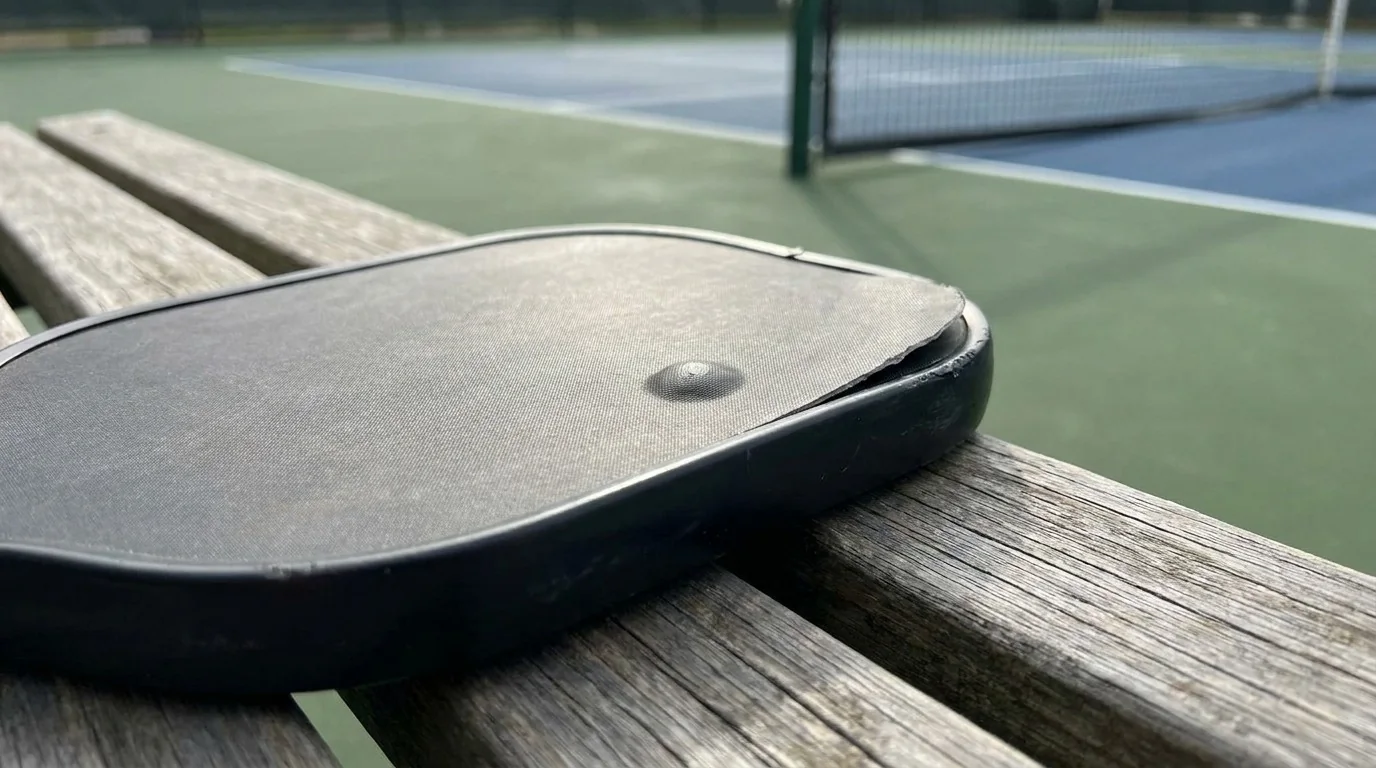
The edge guard deserves a separate pass because dust can collect along its seam. Wipe around the perimeter with a barely damp cloth, then dry the seam. Run a finger around the guard and look for lifting, cracking, or a section that catches. A loose guard can allow moisture and debris toward the core; follow the maker's repair or warranty instructions rather than improvising a large glue repair.
The grip collects sweat and oils more quickly than the face. Wipe it with a dry towel after play. For buildup, use a lightly damp cloth with a small amount of mild soap, then dry the handle completely. Do not soak the wrap. If the grip stays slick, flattened, loose, or odorous after cleaning, replacement is usually more useful than repeated washing.
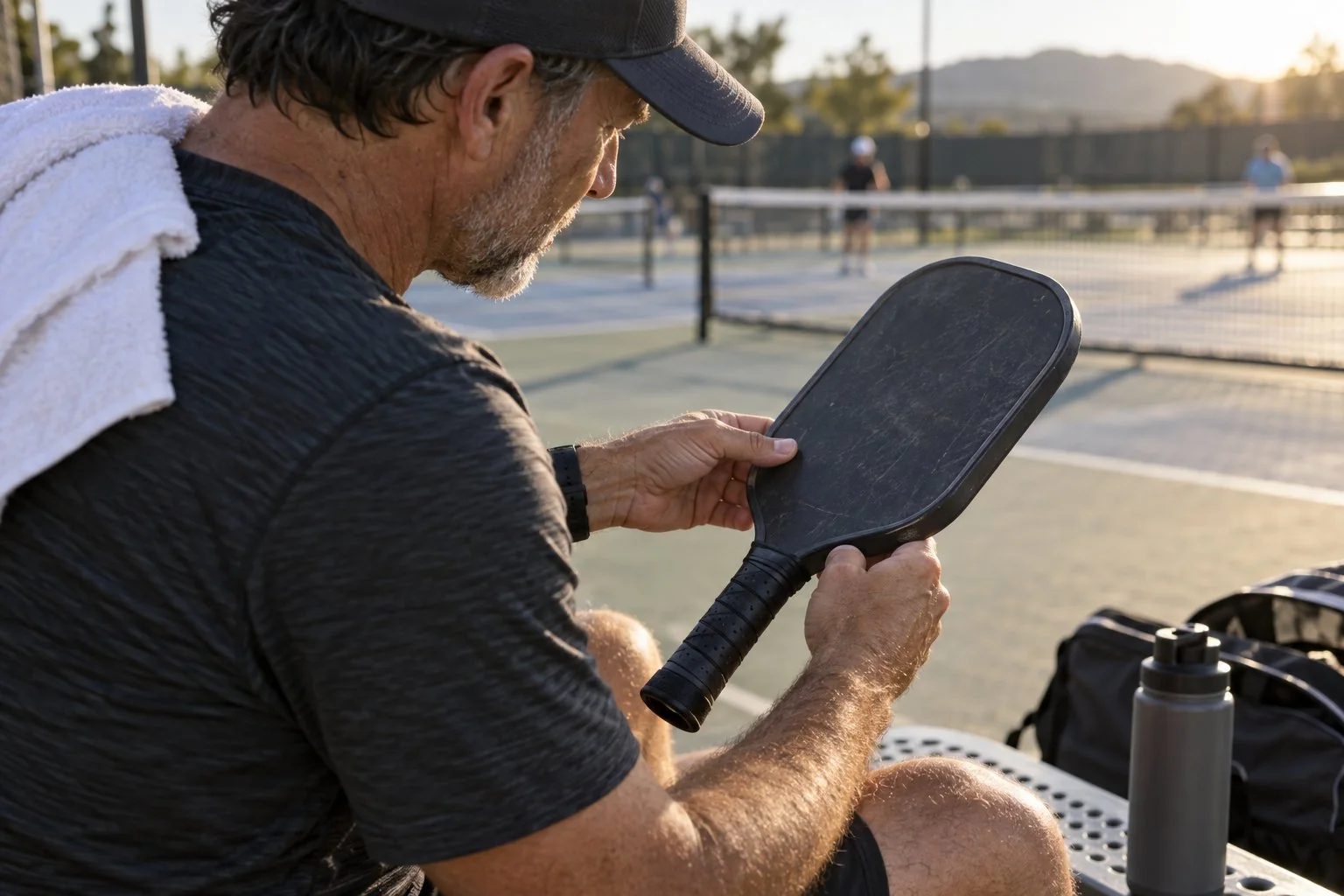
How often should you clean a pickleball paddle?
Make a quick face-and-grip wipe part of every session, especially after outdoor play, sunscreen use, or dusty conditions. A deeper inspection every few weeks can include the edge guard, throat, grip, and the face under bright light. Players who play several times weekly may need more frequent grip replacement because sweat accelerates wear.
A cleaning schedule should respond to conditions rather than a rigid calendar. If the face feels slick, visible residue appears, or spin seems lower while your technique and ball are unchanged, clean it first. If the face remains smooth after cleaning, the texture may be worn rather than dirty; cleaning cannot rebuild material that has physically eroded.
Why should you keep a paddle away from heat and moisture?
Do not leave a paddle in a hot car, on a sun-heated court, or against a damp bag. Heat can weaken the bonds that hold the face and core together, while trapped moisture can reach seams and contribute to swelling or delamination. Store the paddle indoors in a dry, temperature-stable place, preferably in a padded compartment that prevents contact with other gear.
After rain or heavy humidity, dry the face, edge, throat, and grip before storage. Keep the paddle out of sealed covers until surface moisture is gone. A cover protects against scratches and dust, but it cannot make a wet paddle safe to pack.
What cleaning mistakes damage paddles?
- Using household or solvent cleaners: Window cleaner, bleach, acetone, and strong degreasers can attack finishes, graphics, adhesives, or grip materials.
- Using abrasives to restore spin: Sanding or rough pads alter the face instead of removing residue.
- Soaking the handle: Water can loosen grip adhesive and migrate through seams.
- Scrubbing one small area hard: Uneven pressure can wear the finish and leave a visible patch.
- Ignoring manufacturer guidance: Specialty coatings may have stricter care rules than standard faces.
- Packing the paddle wet: A closed bag traps moisture where it can do the most harm.
When is cleaning no longer enough?
Inspect a paddle when its response changes across the face, a section sounds noticeably dull when tapped lightly, the edge guard separates, or the face has cracks and deep impact damage. A dead spot or delamination is a structural problem, not a stain. Move a questionable paddle to practice only and ask the manufacturer or a qualified retailer whether it should be replaced.
A clean paddle should feel consistent, dry, and secure in the hand. The safest maintenance plan is modest: wipe after play, use only approved tools, inspect the seams, replace a worn grip, and store the paddle away from heat and moisture. Those habits protect the surface without trying to make it rougher than its design allows.