Pickleball Paddle Delamination: Check Soft Spots, Sound, and Edge Damage
Use a practical pickleball paddle inspection routine to spot soft areas, face bubbles, edge separation, and changed sound before deciding whether to keep playing or seek help.
A paddle can look usable and still have a problem inside its layers. Delamination means parts of the paddle face or internal construction have separated, which can create soft spots, a different sound, or a noticeable change in how the paddle responds. This pickleball paddle delamination check is not a laboratory test. It is a practical inspection routine to help you decide whether to keep monitoring the paddle, contact the manufacturer, or stop using it.
Start with the outside
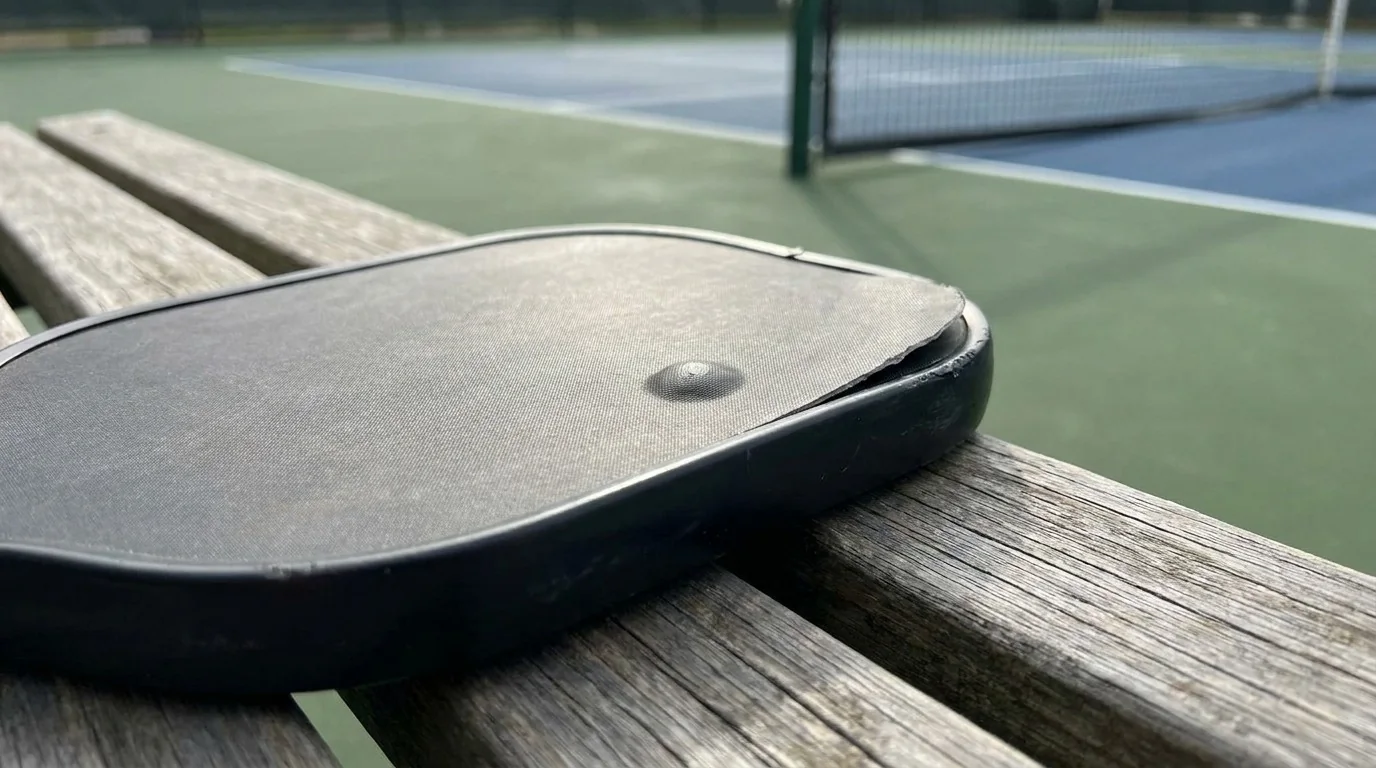
Clean the paddle gently enough that dust and ball residue do not hide the surface. Look across the face under even light rather than relying on one quick glance. Bubbles, raised areas, gaps between layers, or a section that appears to sit differently from the rest deserve a closer look. A scratch or small cosmetic mark is not automatically delamination, so do not treat every blemish as structural failure.
Inspect the edge guard all the way around the paddle. Check for cracks, lifting, separation, and places where the guard no longer sits firmly against the edge. Edge damage can come from ground contact or a wall, but a loose section can also be a clue that the paddle needs a more careful inspection. Do not pull at the guard to make the gap larger; record what you can see and check the manufacturer’s warranty or repair guidance before applying adhesive.
Check for a soft or dead area
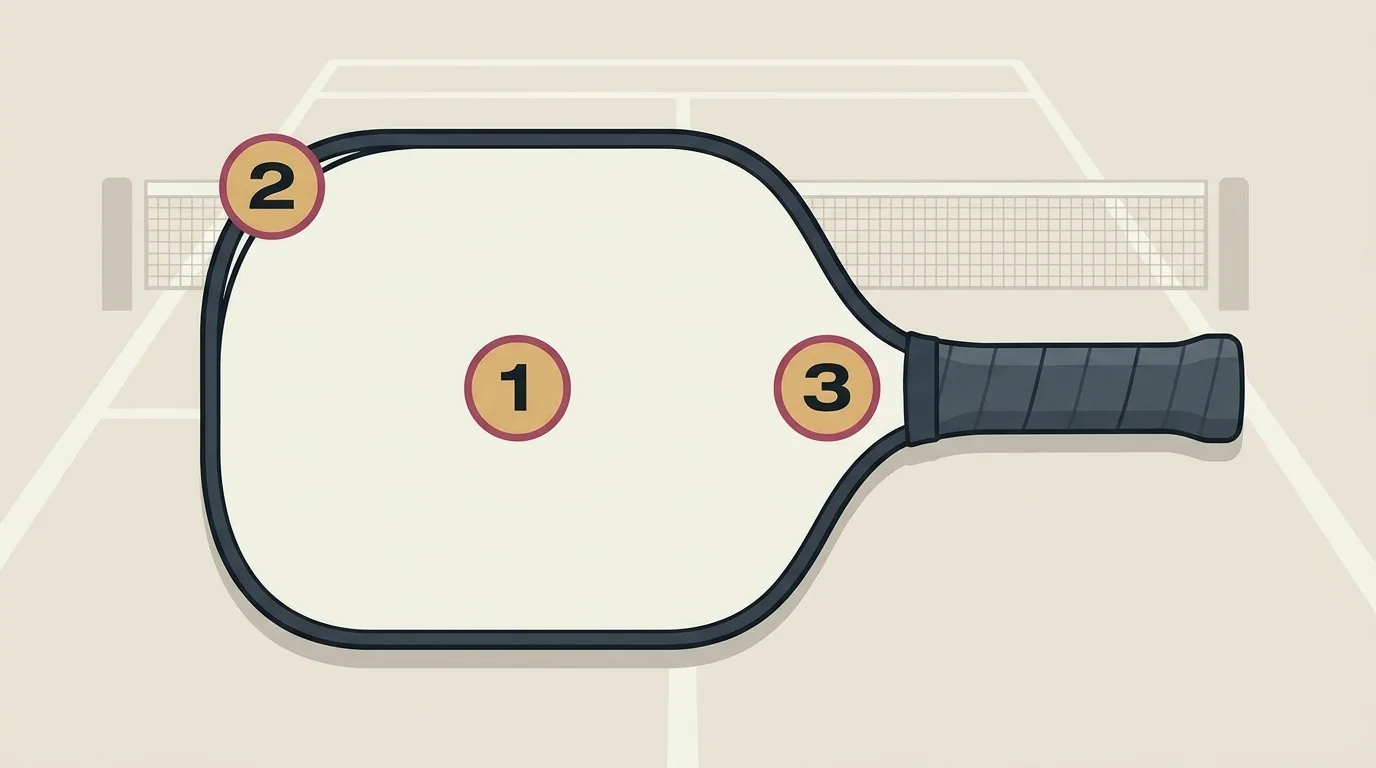
With the paddle dry and supported in your hand, press lightly over different areas of the face. You are looking for an unusual soft spot or a section that feels different from the surrounding surface. Use gentle, consistent pressure. The goal is to notice a clear change, not to flex the paddle aggressively or create damage during the inspection.
A dead or soft area can affect touch and response, but one odd shot is not enough to diagnose the cause. Compare the suspected area with the rest of the face and repeat the check after cleaning. If the paddle has a visible bubble, crack, separation, or persistent soft spot, set it aside for a closer review rather than trying to play through the uncertainty.
Listen for a change in sound
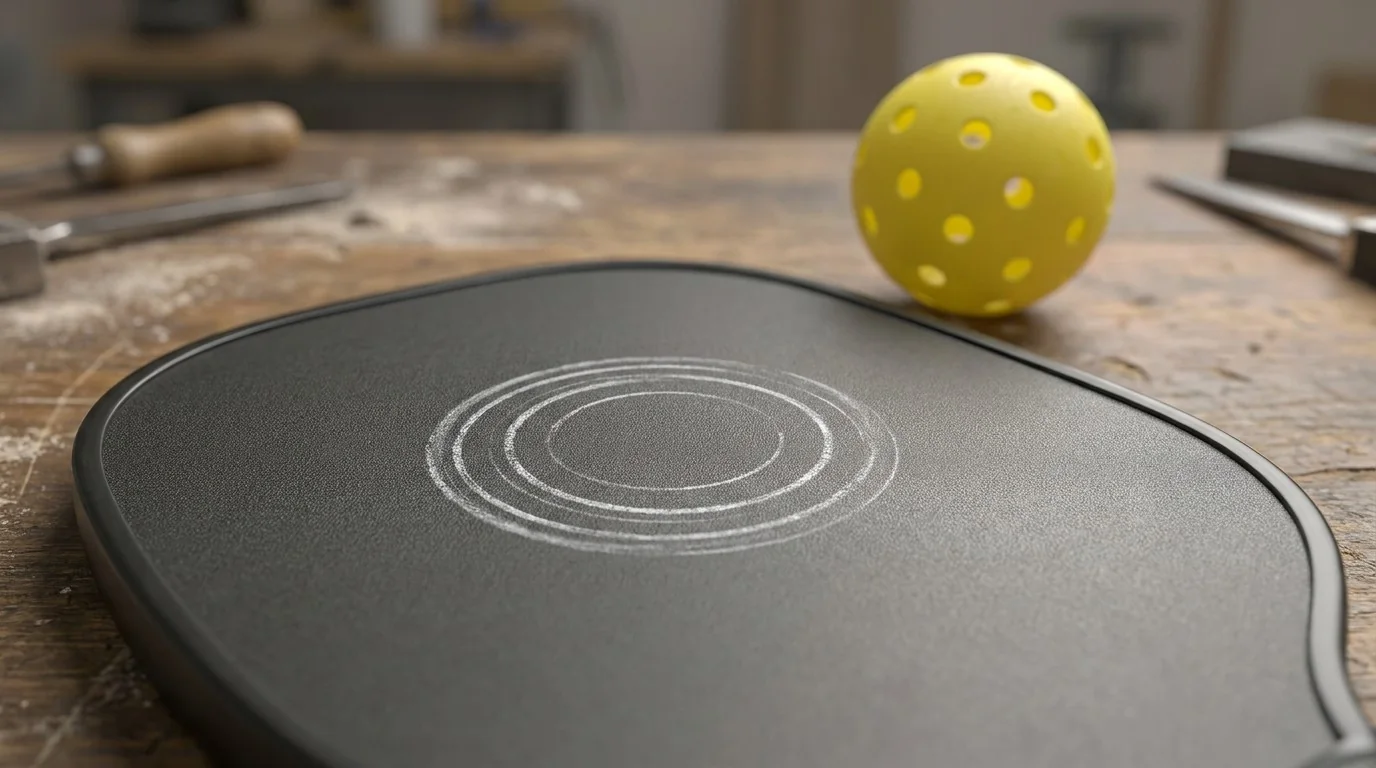
A light tap test can help you compare sections of the paddle. Tap gently across the face with the same object and similar force, moving in a simple grid from one side to the other. A healthy paddle should give a reasonably consistent response across comparable areas. A hollow or noticeably different sound in one region is a warning sign, not proof on its own.
Repeat the tap test only long enough to compare the areas. Combine the sound with what you can see, what you can feel, and how the paddle has been playing. A change in sound plus a soft spot, bubble, edge separation, or sudden loss of predictable response is more concerning than any single clue by itself.
What to do when the checks disagree
If the face looks normal, feels consistent, and sounds consistent, continue normal care while keeping an eye on the same areas. Store the paddle away from damaging heat, moisture, and pressure, and avoid leaving it where the face or edge can be struck by other equipment. If the edge guard is only cosmetically scuffed, photograph it and monitor whether the damage is spreading.
If you find multiple warning signs, stop using the paddle for important play and contact the manufacturer or a qualified repair service. Send clear photographs and describe the location of the change. Do not claim a warranty result before the manufacturer evaluates it, and do not use glue or a rigid home repair as a substitute for a structural assessment. A temporary-looking fix can hide a problem that affects the paddle’s consistency.
A short inspection routine
Use the same order each time: wipe the paddle, scan the face, inspect the edge guard, compare the feel of the surface, and finish with a gentle tap comparison. Note what changed and when you noticed it. This routine gives you a useful record without pretending that a visual check can identify every internal failure.
The practical decision is simple: one cosmetic mark can be monitored, but several matching signs deserve attention. When the paddle’s structure or response is in doubt, protect the rest of your game by putting the paddle aside until the cause is clear.