How to Hit a Third Shot Drop in Pickleball: Compact Swing and Smart Recovery
A practical guide to the third-shot drop: build a compact swing, create safe height, move behind the ball, and recover toward the kitchen.
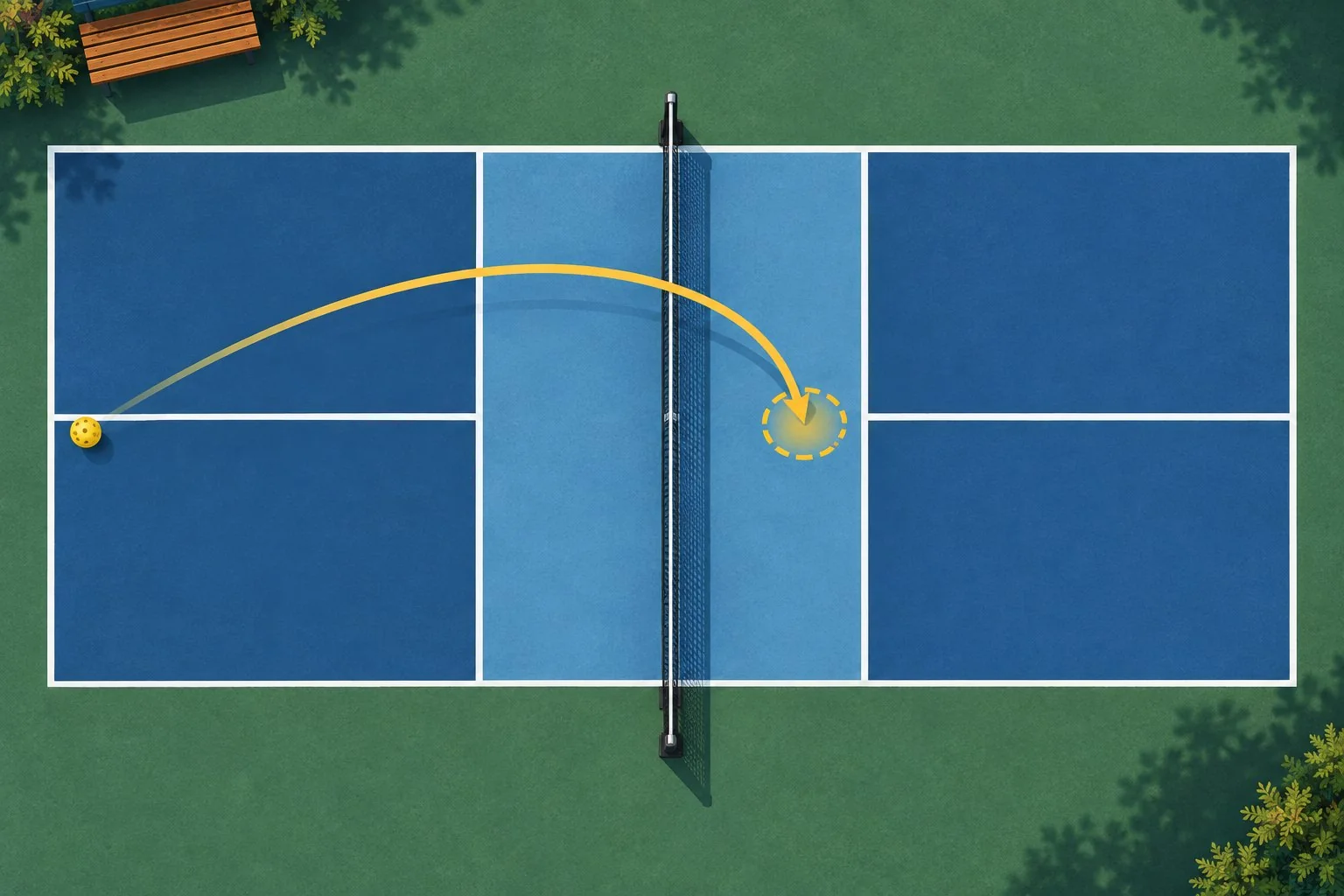
The third-shot drop is a soft, controlled shot hit by the serving team on its third contact. Its purpose is to arc over the net and land gently in the opponent’s non-volley zone, making the next ball harder to attack and creating time to move forward. Because the serving team begins the rally at a positional disadvantage, this shot can turn a defensive start into a path toward the kitchen line.
What makes the third-shot drop useful
Unlike a drive, the drop prioritizes control, placement, and touch. A well-shaped ball travels high enough to clear the net, then falls into the kitchen where the opponent must usually lift it. That gives the serving team a chance to advance instead of staying trapped near the baseline. The shot does not need to be perfect to be useful: a dependable ball with safe clearance is better than a risky attempt that dies in the net.
Build a compact, repeatable swing
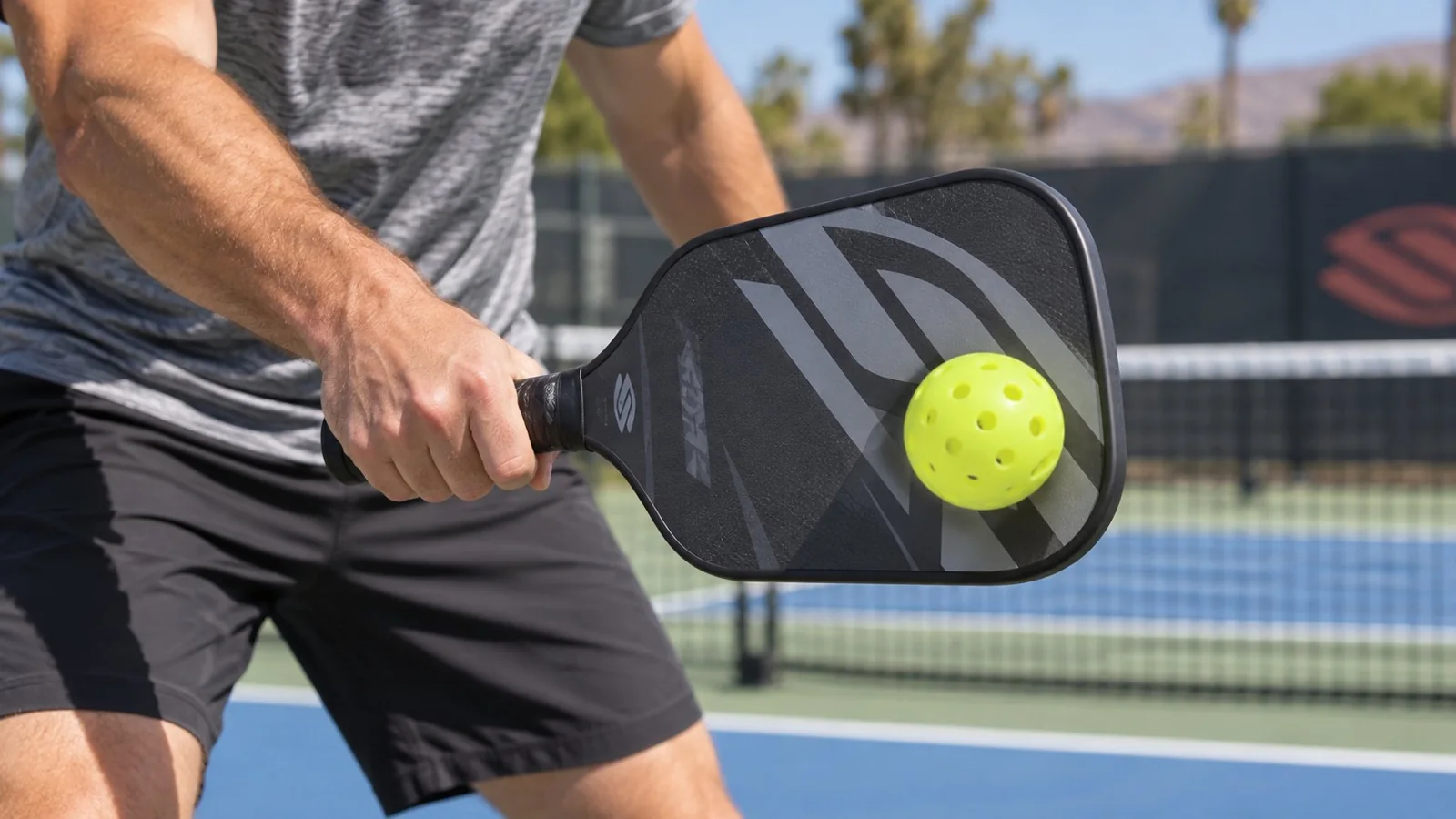
Start with the paddle in a comfortable neutral grip and prepare without a large backswing. Imagine a wall behind you: the paddle should not travel far enough to hit it. A short motion keeps the contact in front, reduces timing errors, and prevents the ball from flying too hard. Use the body and shoulder turn to support the stroke while the hand stays relaxed and the paddle face remains stable.
Get your feet behind the ball
Positioning is as important as the swing. Move so the ball is in front of you rather than reaching from the side or while falling away. When the incoming return is deep, give yourself room to set up. Balanced feet make it easier to control the face and choose a useful landing area. Reaching often produces inconsistent contact and leaves no stable base for the next step forward.
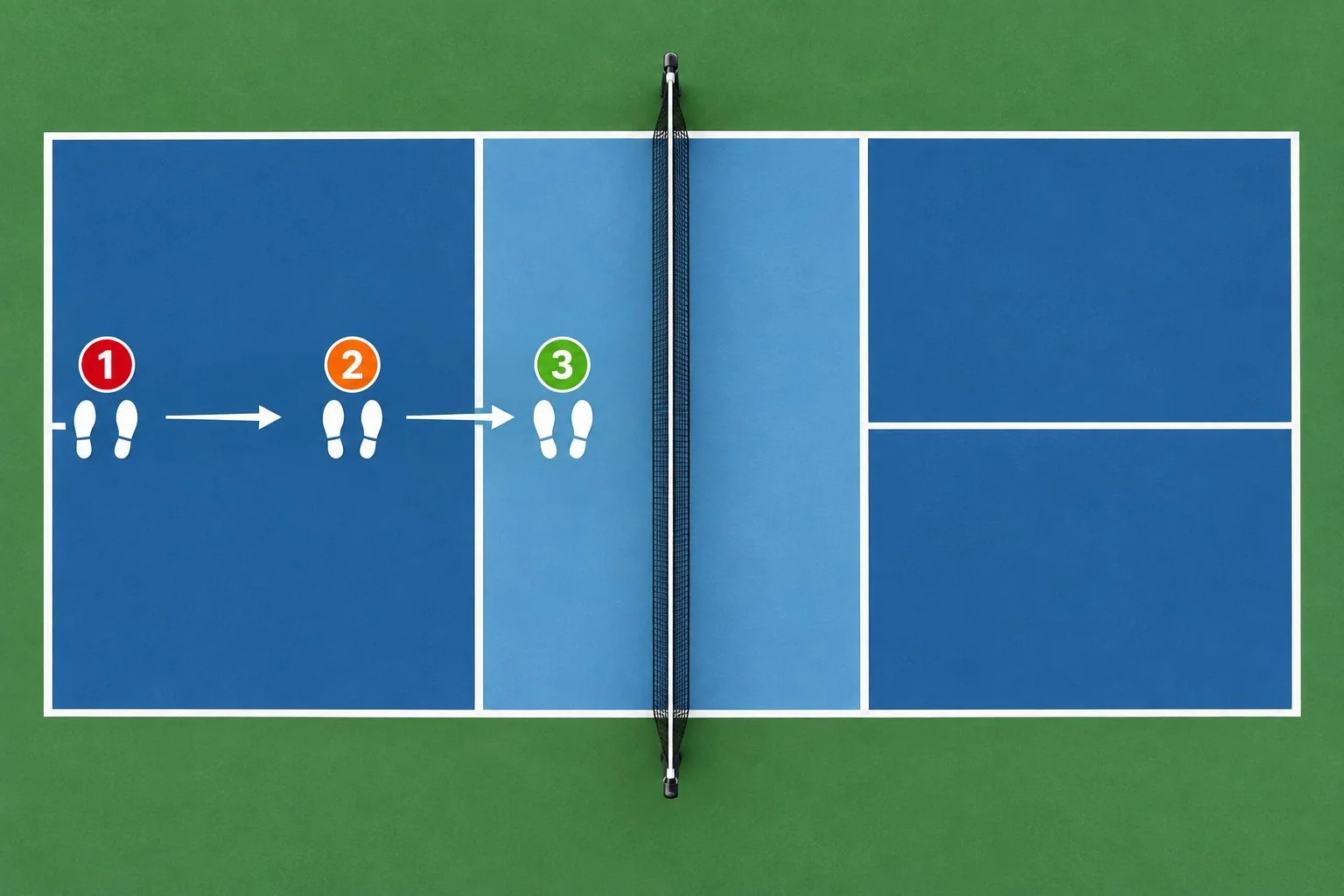
A simple sequence is: read the bounce, move behind the ball, prepare compactly, contact in front, then watch the result before advancing. The shot and the recovery belong together; hitting a drop while sprinting forward can make the next response harder, not easier.
Choose margin over perfection
Aim to clear the net with enough height to tolerate a small timing error. If you miss, miss deep rather than low or wide. A ball that travels slightly too far can keep the rally alive, while a ball into the net or outside the court ends the point immediately. Do not chase a barely clearing trajectory when a little extra height would make the shot repeatable.
Avoid the common mistakes
The most frequent errors are a large backswing, reaching instead of moving the feet, trying to be too precise, and hitting with too much force. A long preparation often makes contact late. An overactive hand sends the ball long. Aiming for the exact corner before the basic arc is reliable removes useful margin. Start with a generous kitchen target, then narrow it as control improves.
Move forward with a plan
After contact, advance only when the ball gives you time. Follow the drop with controlled steps rather than a blind sprint. Watch the opponent and be ready to stop at a balanced position. If your drop lands short but rises, pause in the transition area because the opponent may attack it. If the ball lands softly and forces an upward reply, continue toward the kitchen and prepare for the next exchange.
Practise the complete sequence
Begin with gentle feeds and one broad landing target. Count a repetition only when the ball clears the net, lands in or near the kitchen, and leaves you balanced. Then vary the feed depth and direction so you learn to move behind the ball instead of repeating one comfortable stance. Finish with a transition drill: hit the drop, take controlled steps, stop as the opponent contacts, and play the next ball.
The goal is not to force a drop on every third ball. When the return is high and you are balanced, a controlled drive may be the better choice. When the ball is low, deep, or awkward, choose the shot that preserves control and recovery. With compact preparation, sound positioning, and sensible margin, the third-shot drop becomes a dependable bridge from the baseline to the kitchen.