Pickleball Triangle Dinking Drill: Change Targets Without Losing Control
Build more reliable dink direction with a simple left-middle-right triangle drill that keeps your contact compact, your paddle ready, and your feet balanced.

A dink becomes easier to trust when you can change its destination without changing your whole swing. The pickleball triangle dinking drill gives you a simple pattern: place three targets on the opponent’s side, then work through them in sequence. You practice direction, touch, and paddle control while avoiding the habit of sending every ball to the same spot.
Set up the triangle
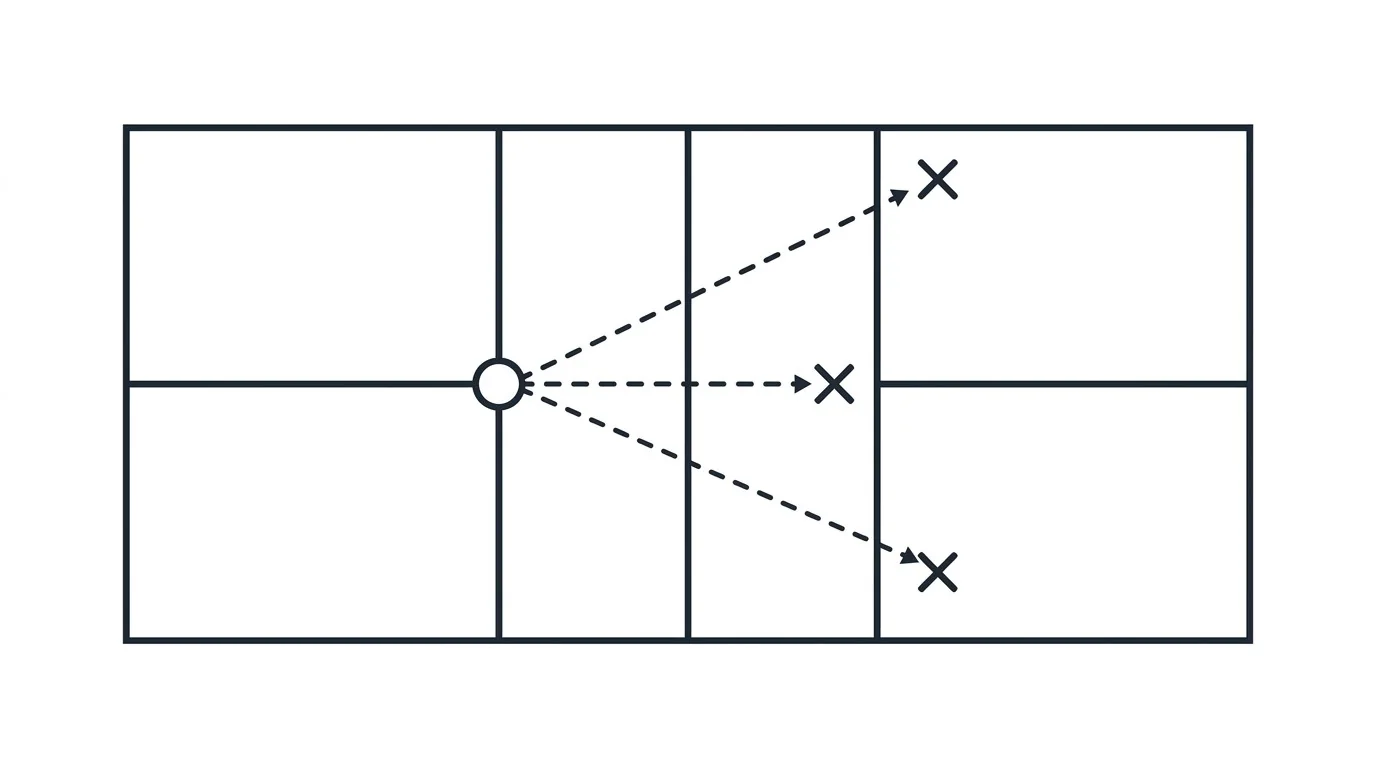
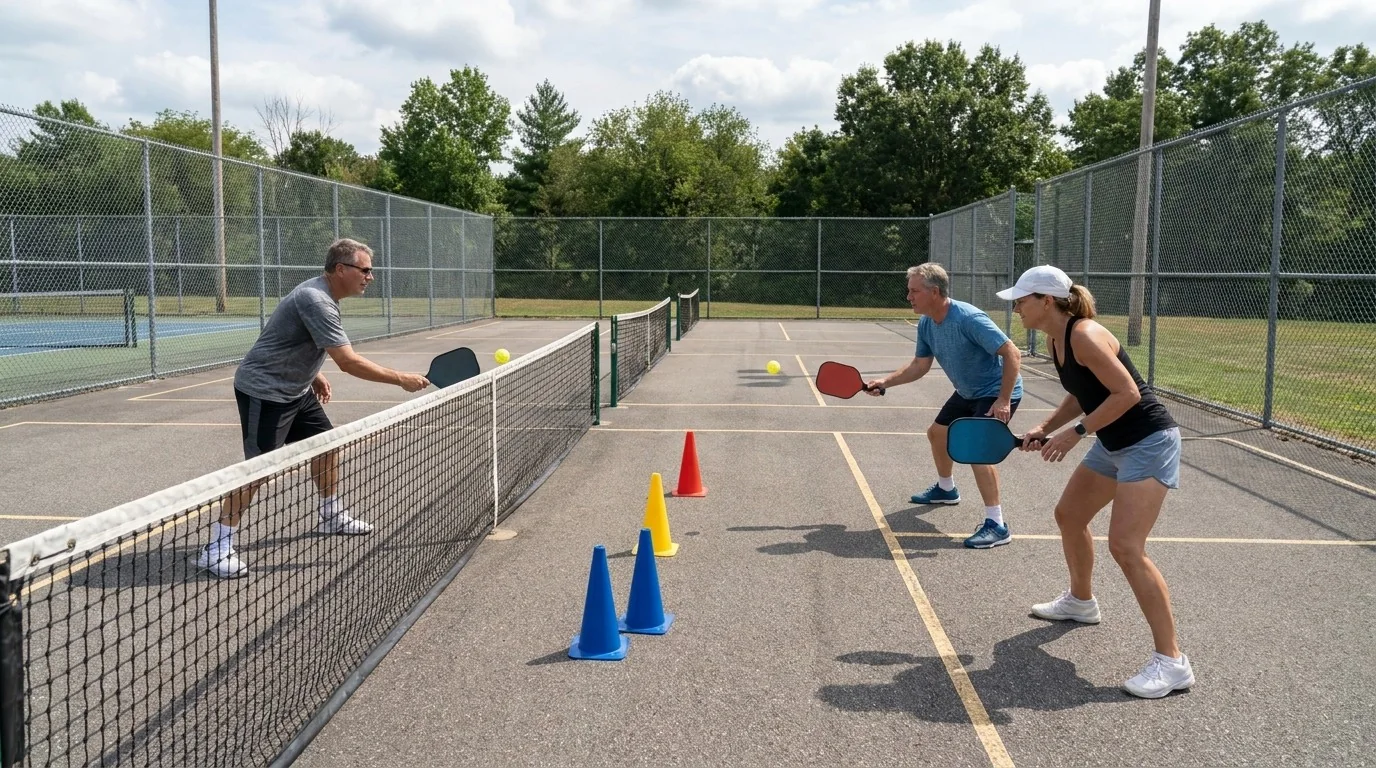
Place three low-profile markers on the opponent’s side of the kitchen: one toward the left, one near the middle, and one toward the right. Keep them well inside the court so you are aiming for a usable area rather than painting the line. Your partner stands across the net and returns cooperative dinks. If you are training alone, a ball machine or a safe feed can supply the repetition, but the target sequence stays the same.
Begin from a balanced position near the Non-Volley Zone line. Hold the paddle in front of your body, keep the grip relaxed enough to feel the ball, and watch the contact rather than turning your head early toward the next target. The markers are visual guides, not proof that every ball must land perfectly on them.
Drill 1: left, middle, right
Start the rally by aiming at the left target. After the return, send the next dink toward the middle target, then the right target. Continue the sequence and repeat it in the same order. Use a compact motion and let the paddle face, contact point, and small change in direction do most of the work.
Your first goal is not pace. It is a ball that clears the net with safe margin, lands in the kitchen, and gives your partner a comfortable return. If the ball rises, slow down and check whether the paddle face opened or the contact drifted too far behind you. If the ball falls short, avoid adding a big swing immediately; make a small adjustment to the lift and contact.
Drill 2: change the target without losing your base
Once the sequence feels familiar, add footwork. After each dink, recover the paddle to the ready position and make a small adjustment so your body stays behind the next contact. Do not lean toward the marker before the ball arrives. Move first, settle your balance, then play the ball in front of you.
Ask your partner to vary the return slightly while keeping the feed cooperative. You may need a short shuffle before a forehand or backhand dink. Keep the triangle pattern only when you can reach the ball without stretching. If a wide return pulls you out of position, prioritize balance and a safe reset instead of forcing the planned target.
Drill 3: mix the order after control improves
When you can complete the left-middle-right pattern with a stable base, change the order. Try right, middle, left, or call the next target just before the feed. The point is to prevent your swing from becoming automatic while preserving the same preparation and contact quality.
A target change should come from a readable adjustment, not a last-second wrist flick. Keep the paddle face quiet, use your feet to create space, and recover after every shot. If communication helps, the feeder can name the target early; later, let the hitter read the ball and choose.
Common mistakes and a useful finish
If every dink goes to the middle, check whether your shoulders and paddle face are staying square to the first target. If you miss wide, reduce the size of the directional change and make contact farther in front. If your feet stop working, return to stationary feeding, then add one small shuffle at a time.
Finish with a short rally in which you choose targets freely. Keep the same priorities: clear the net, land in the kitchen, stay balanced, and return the paddle to ready position. The triangle is not a scoring promise or a test of perfect accuracy. It is a repeatable way to make direction part of your dinking practice.