Pickleball Partner Mirror Drill: Move Together Without Chasing the Ball
Use a partner mirror drill to improve doubles spacing, lateral movement, communication, and recovery without chasing the ball.

In doubles, your partner’s movement is a useful cue. When one player shifts to cover a ball, the other should usually adjust with them instead of standing still and opening a gap. This pickleball partner mirror drill turns that idea into a controlled practice pattern: watch the partner, move together, keep the spacing usable, and recover before the next feed.
Set the spacing before the drill
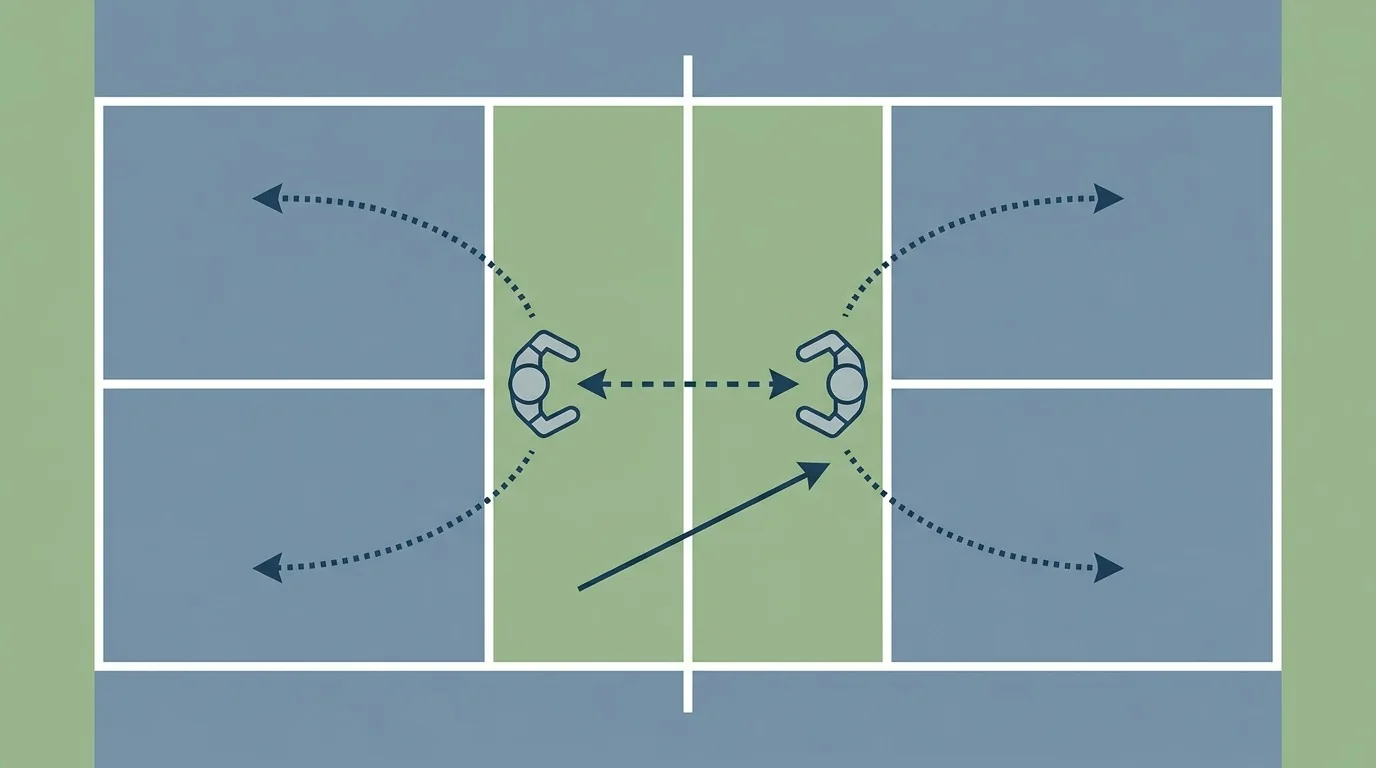
Start with both players near the kitchen line, facing the net and holding the paddle in front. Stand far enough apart to cover your lanes without leaving a large middle gap. The exact distance depends on court position and the shot, so begin with a comfortable formation that lets both players see the ball and each other.
Choose one player as the mover and the other as the mirror. The mover takes small lateral steps while the mirror matches the direction and rhythm. Neither player should sprint. The first goal is to keep the pair connected while the feet remain quiet and balanced.
Drill 1: mirror the lateral steps
The mover points or gives a short verbal cue, then shifts one or two steps to the left or right. The mirror follows without crossing the feet or drifting too far. After each shift, both players stop, reset the paddle in front, and check the gap between them.
Keep the movement small at first. If the mirror watches only the ball, the response may be late; if the mirror stares only at the partner, ball awareness disappears. Use peripheral vision for the partner and keep the head available for the incoming ball.
Drill 2: connect movement to a feed
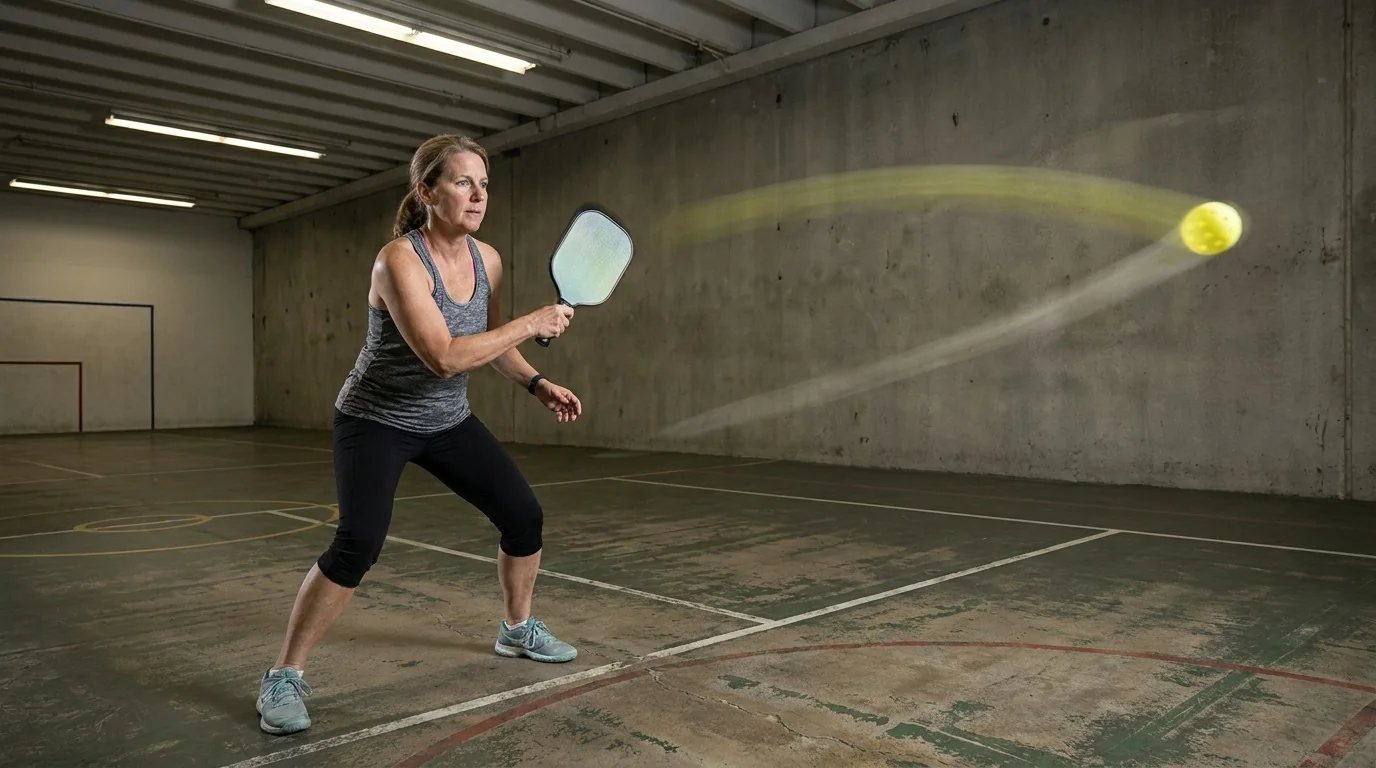
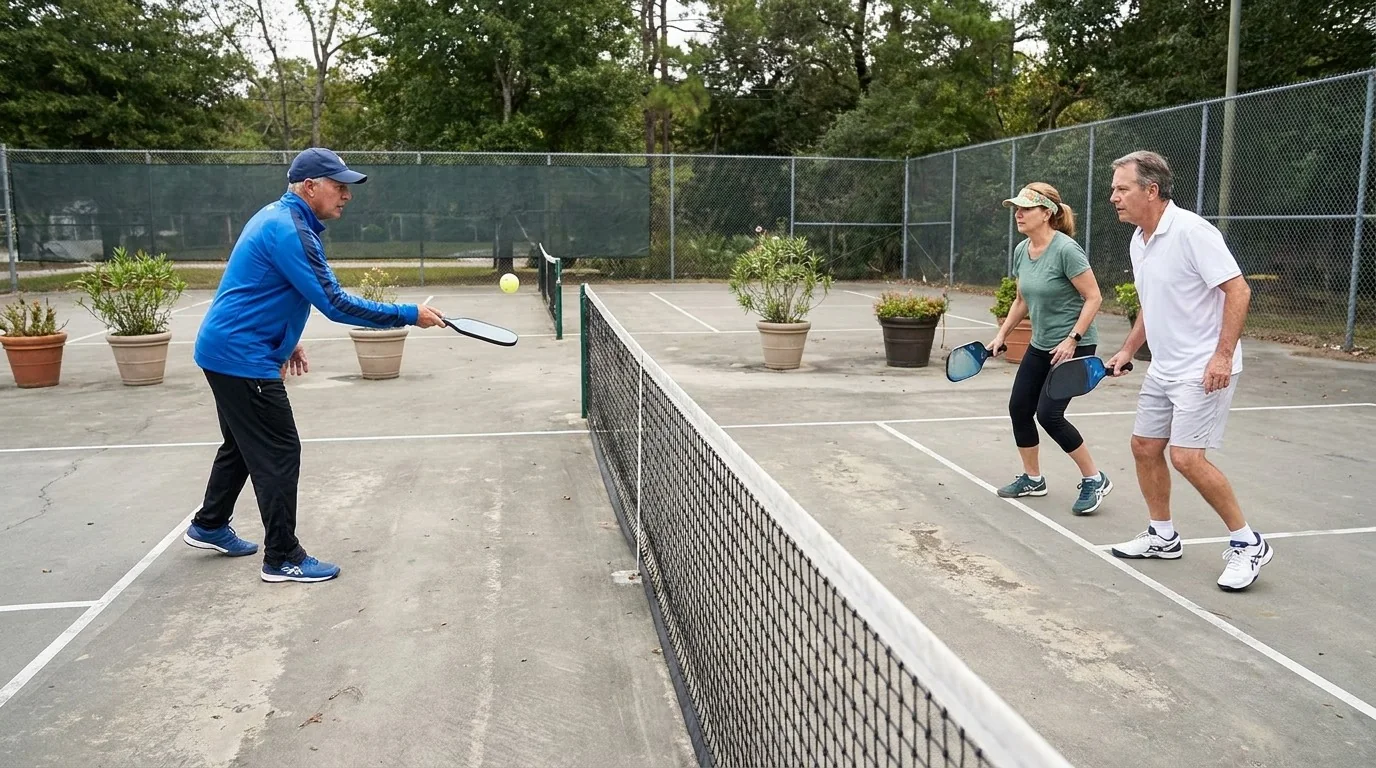
Add a cooperative feed after the players can mirror several direction changes. The feeder sends a manageable ball toward one side. The nearer player moves to play it, while the partner slides with that movement and protects the open space. Both players recover after the contact instead of watching the shot.
The player taking the ball should call early when the ball is theirs. A clear “mine” or “you” is more useful than a late reach across the partner. If the ball is in the middle, agree on a simple local call before starting. The drill is for movement and communication, not for proving who can hit the hardest ball.
Drill 3: add a pause and reset
Have the mover shift, stop, and hold the balanced position for a moment before the feed arrives. The mirror matches the stop. This pause exposes a common error: players may move together but finish with their weight still traveling sideways. A stable stop gives both partners time to read the next ball.
Now let the feeder vary the direction slightly. When the ball makes one player move farther, the partner should adjust enough to stay connected without crowding the shot. After contact, both players return to a useful neutral position. Do not chase the ball so far that the pair loses its shape.
Common mistakes and fixes
If the middle opens, shorten the partner’s delay and use smaller steps. If the players collide, decide who owns the ball before the feed and leave a clear lane for the hitter. If one player freezes while the other moves, start again with shadow steps and no ball. If both players rush forward, add the pause and require a balanced stop before the next feed.
A mirror drill should feel cooperative. Increase the speed only when the pair can keep seeing the ball, communicate early, preserve a workable gap, and recover together. The useful finish is not a spectacular save. It is two players arriving in position for the next contact at nearly the same time.