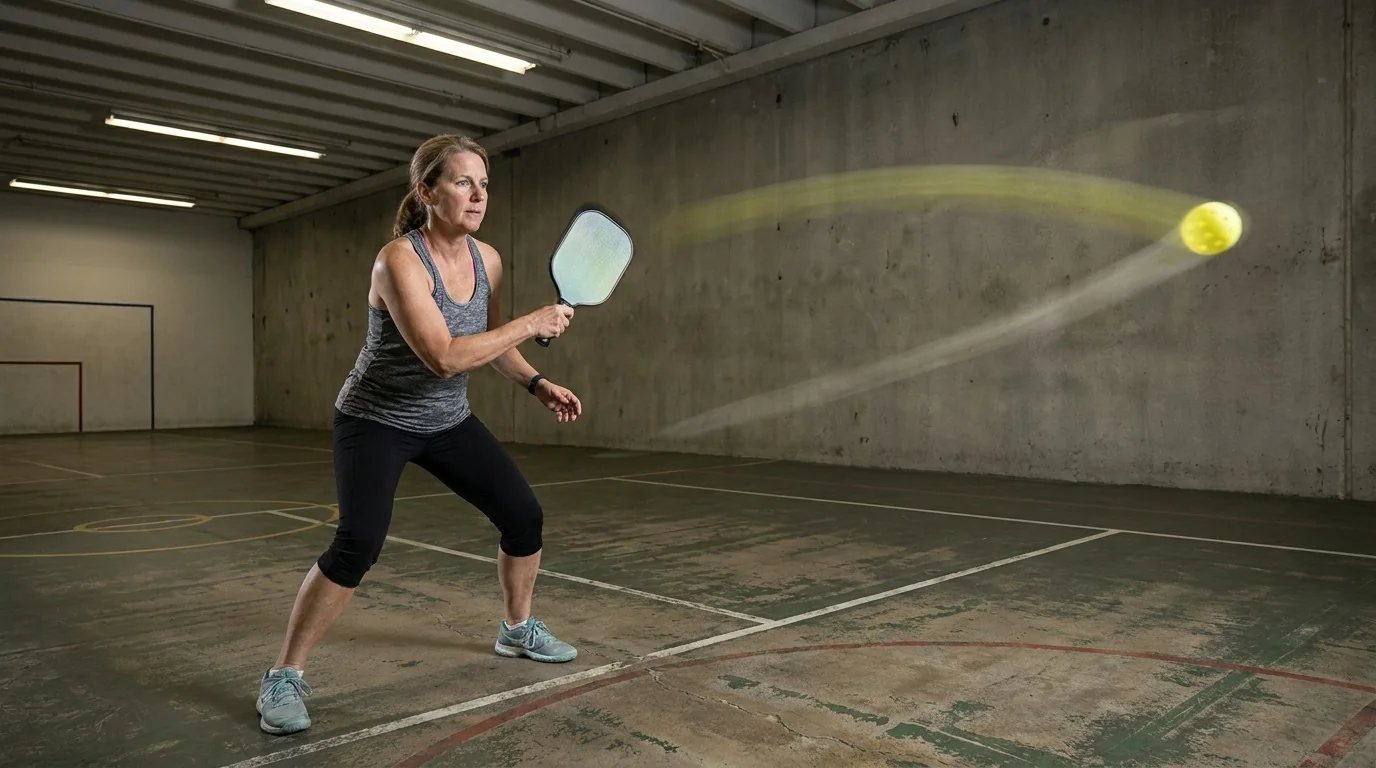
Pickleball Poaching: Plan the Move and Recover Together
A practical pickleball doubles poaching guide covering planned and opportunistic decisions, partner coverage, communication, timing, recovery, and drills.

A poach is not simply crossing in front of your partner to hit a ball. Good pickleball poaching strategy starts with a shared decision, a reachable ball, and a recovery plan. One player intercepts to apply pressure while the partner closes the space that the move creates. If the team cannot explain who covers the open court, the poach is probably premature.
What the poaching player is trying to do
A poach moves a player toward the partner’s side to intercept a ball before it reaches the original hitter. The move can take time away from the opponents, change the return angle, or turn a predictable exchange into a pressure ball. The purpose is not to collect every middle ball. It is to take a ball that can be reached under control while keeping the team’s shape usable.
Before the point, decide what the signal means. A hand signal, paddle cue, or short call can tell the partner that the move is planned. Agree on the direction, the intended target, and what happens if the opponents respond with a lob or a ball behind the moving player. A plan reduces hesitation, but it does not remove the need to read the actual ball.
Planned and opportunistic poaches
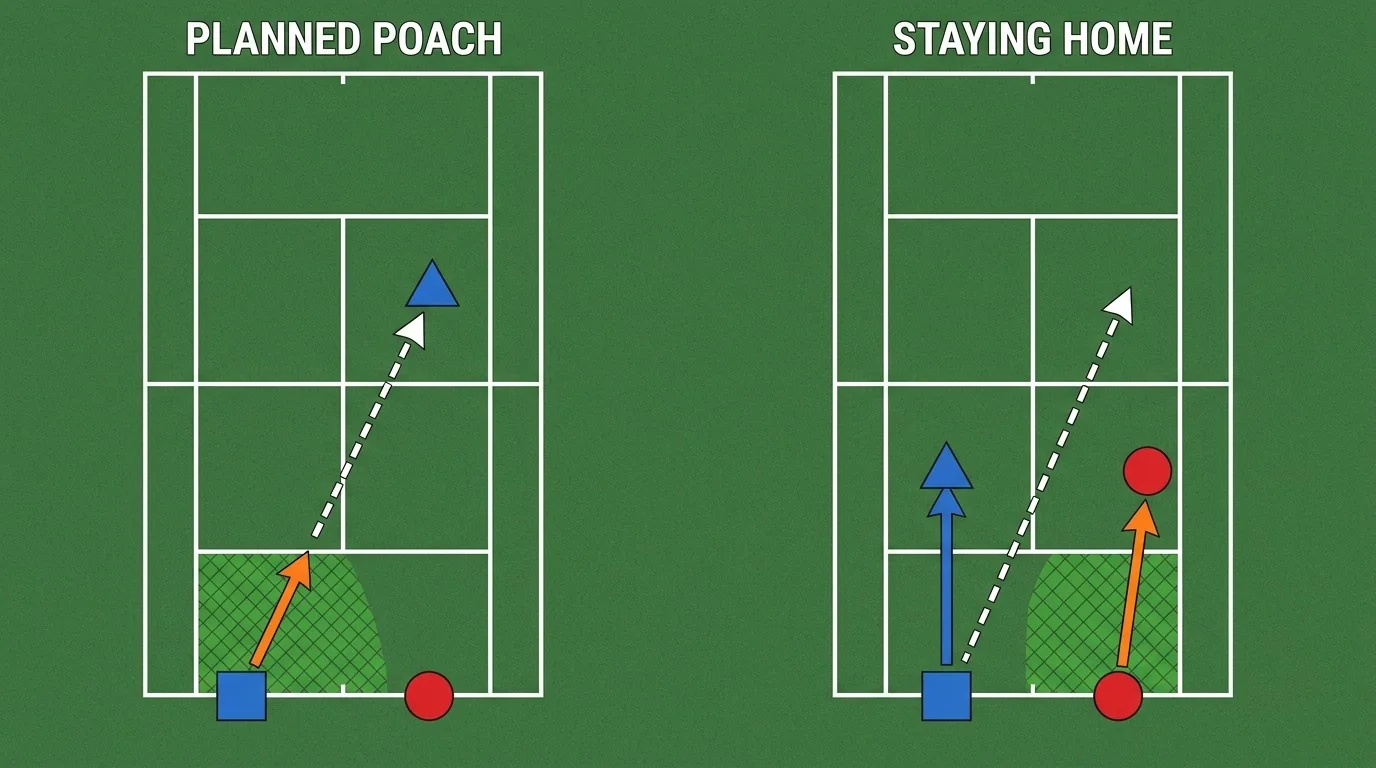
A planned poach is chosen before the opponents strike. The partners may expect a particular return, protect the poaching player’s forehand, or use a known pattern after a serve. The player starts from a position that makes the move possible, then crosses only when the ball matches the plan. If the return is too low, too wide, or too fast to handle safely, cancel the move and stay home.
An opportunistic poach develops during the rally. The opponent leaves a ball high, exposes a middle gap, or sends a shot that can be intercepted without a desperate lunge. The decision is made from the ball’s height, speed, and direction rather than from a prearranged signal. Even then, the partner must move with the poacher and protect the space behind the play.
Use a clear decision sequence
First, read the ball. A ball that is low or outside your comfortable reach is usually a poor invitation. Next, check your partner’s position. If the partner is already stretched wide or recovering, crossing may open more court than the interception is worth. Then choose the target. A controlled ball at the opponent’s feet or into a safe open area is often more useful than a full-speed winner attempt.
Move with a compact first step and keep the paddle ready. Do not turn the poach into a blind sprint across the kitchen. Reach the contact in balance, keep the ball in front when possible, and finish the stroke with enough control to recover. If the ball is not yours, stop the move instead of drifting farther into the partner’s lane.
The partner’s job is active coverage
The partner should not watch the poach from the original spot. As the poaching player moves across, the partner slides to protect the open lane and stays ready for a ball behind the move. Keep the middle and the most dangerous passing direction in view. The exact adjustment depends on where the ball is going and how much court the poacher has left uncovered.
Communication matters before and after contact. A clear call prevents both players from reaching for the same ball. After the shot, both players should recover toward a connected formation rather than admiring the interception. If the poach produces a weak ball, the team still needs a next position for the reply.
Drills for timing and trust
Shadow poach without a ball
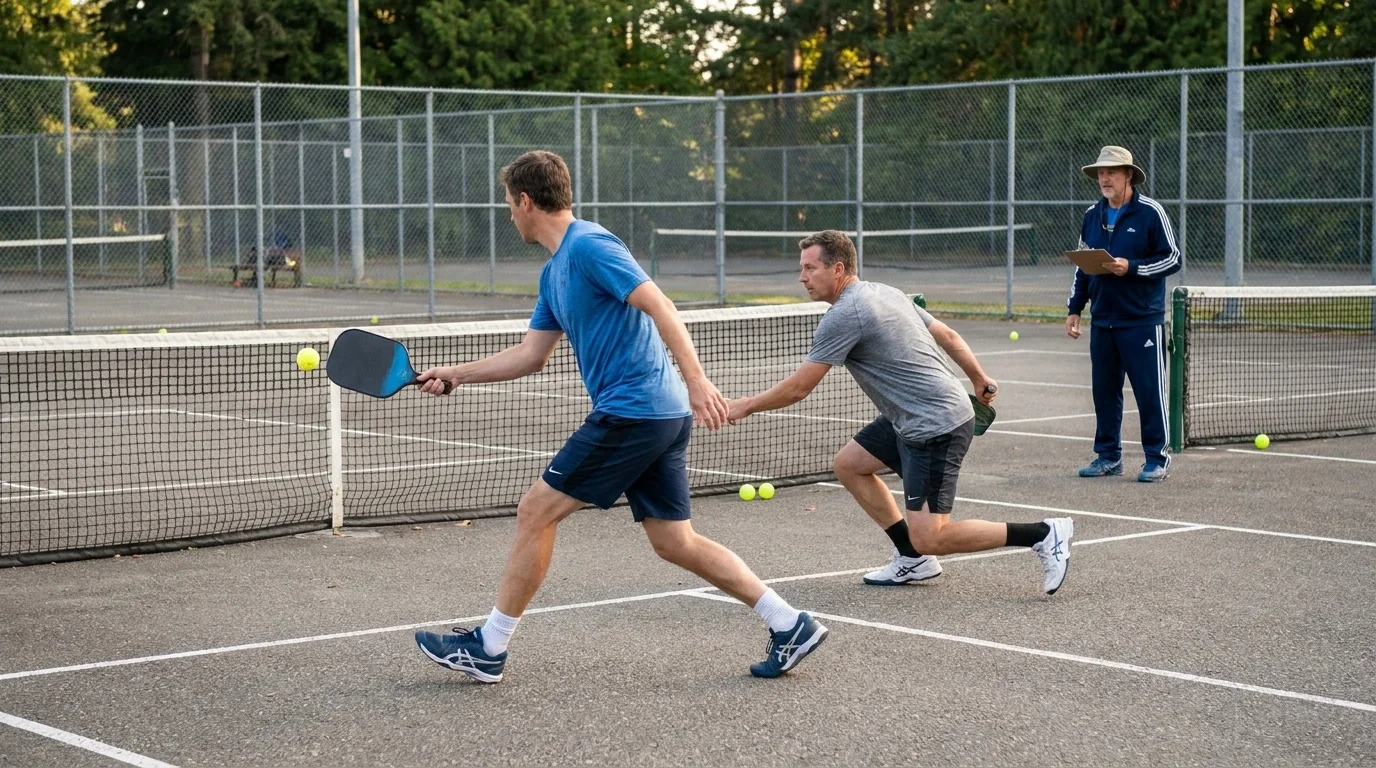
Start in doubles formation. The mover gives the agreed cue, takes the planned path, and freezes at the imagined contact. The partner slides into coverage and both players check the remaining gap. Reverse roles and repeat slowly. The goal is to learn the route and the recovery, not to move fast.
Add cooperative feeds
Have a feeder send manageable balls toward the expected interception area. The poaching player calls, moves, and plays to a large target. The partner closes the space and prepares for the next ball. Cancel the poach when the feed is too low or too wide. This teaches the team that refusing a bad opportunity is part of the pattern.
Mix planned and surprise cues
Begin with a planned signal, then let the feeder occasionally create an opportunistic ball. The players must identify whether the ball is actually attackable before moving. Stop the drill when the poaching player reaches while off balance, the partner fails to cover, or both players finish on the same side. Restart with slower feeds and clearer calls.
Common mistakes to correct
- Poaching every middle ball: choose based on height, reach, and balance rather than habit.
- Partner stays still: slide with the poach and protect the open lane.
- No cancellation rule: agree that a low, wide, or late ball cancels the move.
- Swing becomes too big: shorten the preparation so the interception remains controllable.
- No recovery: finish the shot, rebuild the formation, and prepare for the reply.
A useful poach is a team action: one player creates pressure, the other protects the space, and both recover for the next contact. Practise the call at half speed first. Add realistic feeds only when the pair can move together without collisions or abandoned court.