How to Keep Score in Doubles Pickleball: The Three-Number System
A practical guide to doubles pickleball scoring: decode the three-number call, track side-outs and server rotation, and avoid common position errors.
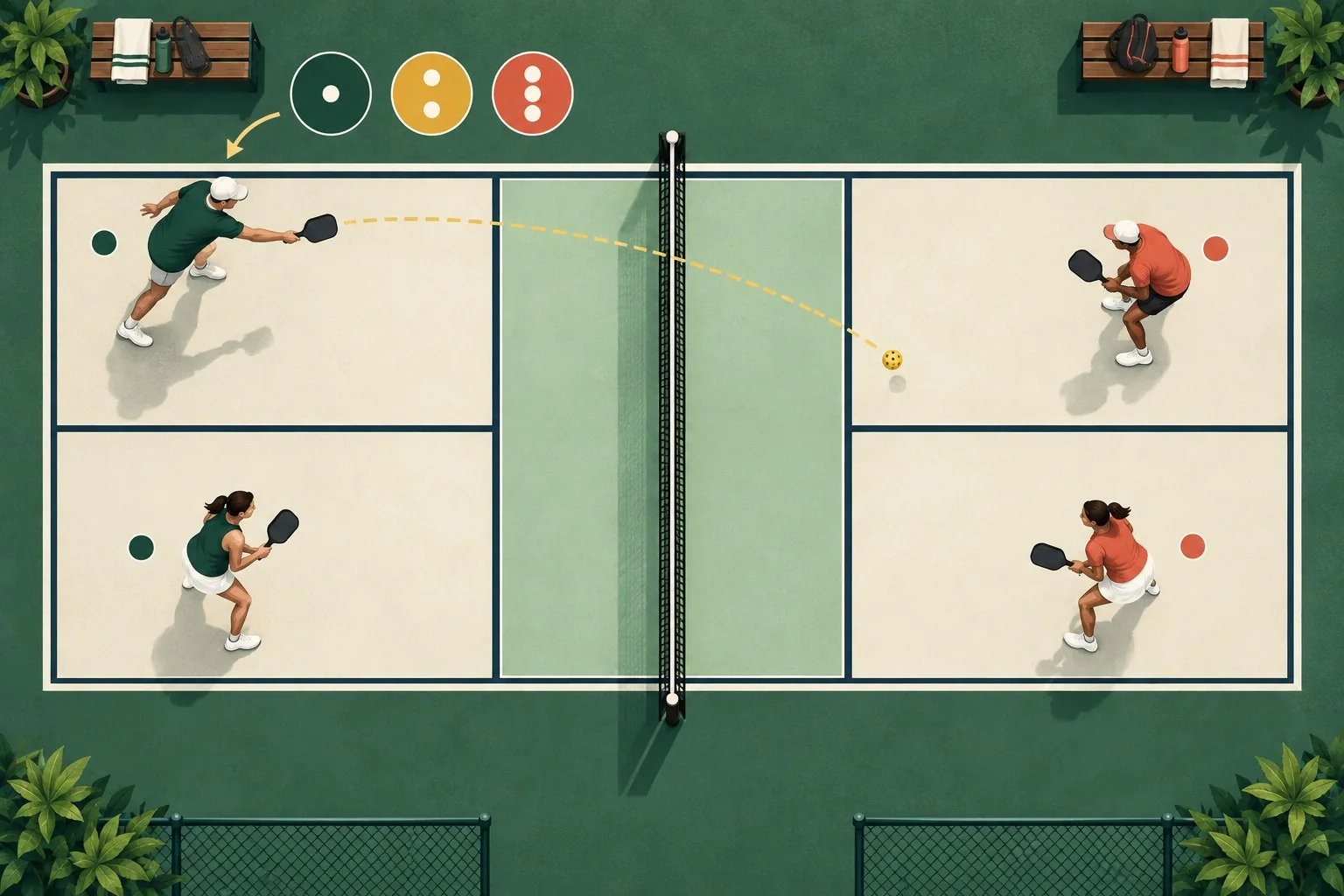
Doubles pickleball scoring becomes much easier once you treat the score call as a map. The first number belongs to the serving team, the second belongs to the receiving team, and the third identifies which server is at the line. A call such as “6-3-2” means the serving team has six points, the receiving team has three, and Server 2 is serving.
How the doubles scoring system works
Standard doubles games are normally played to 11 points, with a team required to lead by two. At 10-10, an 11-10 lead is not enough; play continues until one side is ahead by two. Some organized formats use a different target, so agree on the format before the first serve.
Traditional scoring is side-out scoring. Only the serving team earns a point. If the receiving team wins the rally, it earns the serve but does not add a point. If the serving team wins, its score increases by one and the same server continues. This distinction explains why a good receiving rally can change momentum without immediately changing the score.
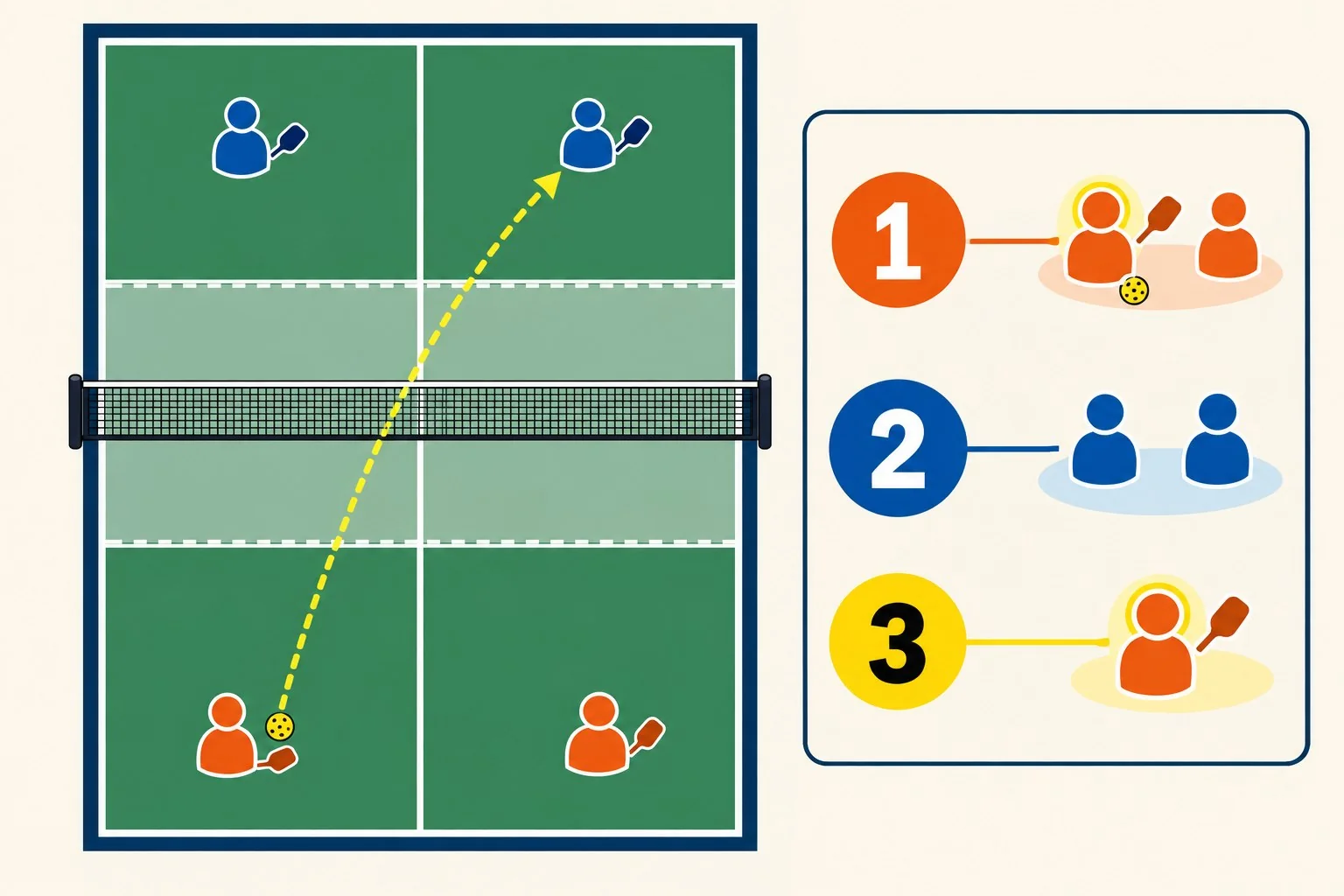
A service fault, an out ball, a ball into the net, or an illegal volley can end the current server’s turn. When Server 1 loses a rally, the serve passes to the partner. When Server 2 loses, the side is out and the opponents begin serving.
What the three numbers mean before every serve
The order never changes: serving-team score, receiving-team score, server number. Thus “4-2-1” tells you that the serving team leads four points to two and its first server is serving. “6-3-2” has the same first two meanings, but the partner is now at the line. The server should call all three numbers clearly before serving.
The server number is local to the current service turn. It is not a permanent label attached to one player for the whole match. After a side-out, the receiving team becomes the serving team, and the right-side player for that rotation is Server 1. The partner is Server 2.
At the start of a doubles game, the call is “0-0-2.” The opening serving team gets only one server before the first side-out, so the starting player is designated Server 2. After that opening exchange, normal two-server rotations begin. Remembering this exception prevents the common mistake of calling “0-0-1.”
If the score is called incorrectly, stop the confusion before the serve whenever possible. A deliberate routine—take position, call the score, pause, then serve—catches many errors. Once a rally is underway, do not stop casually to debate the call; finish the exchange and settle the correct score before the next serve according to the applicable rules.
Server rotation and court position
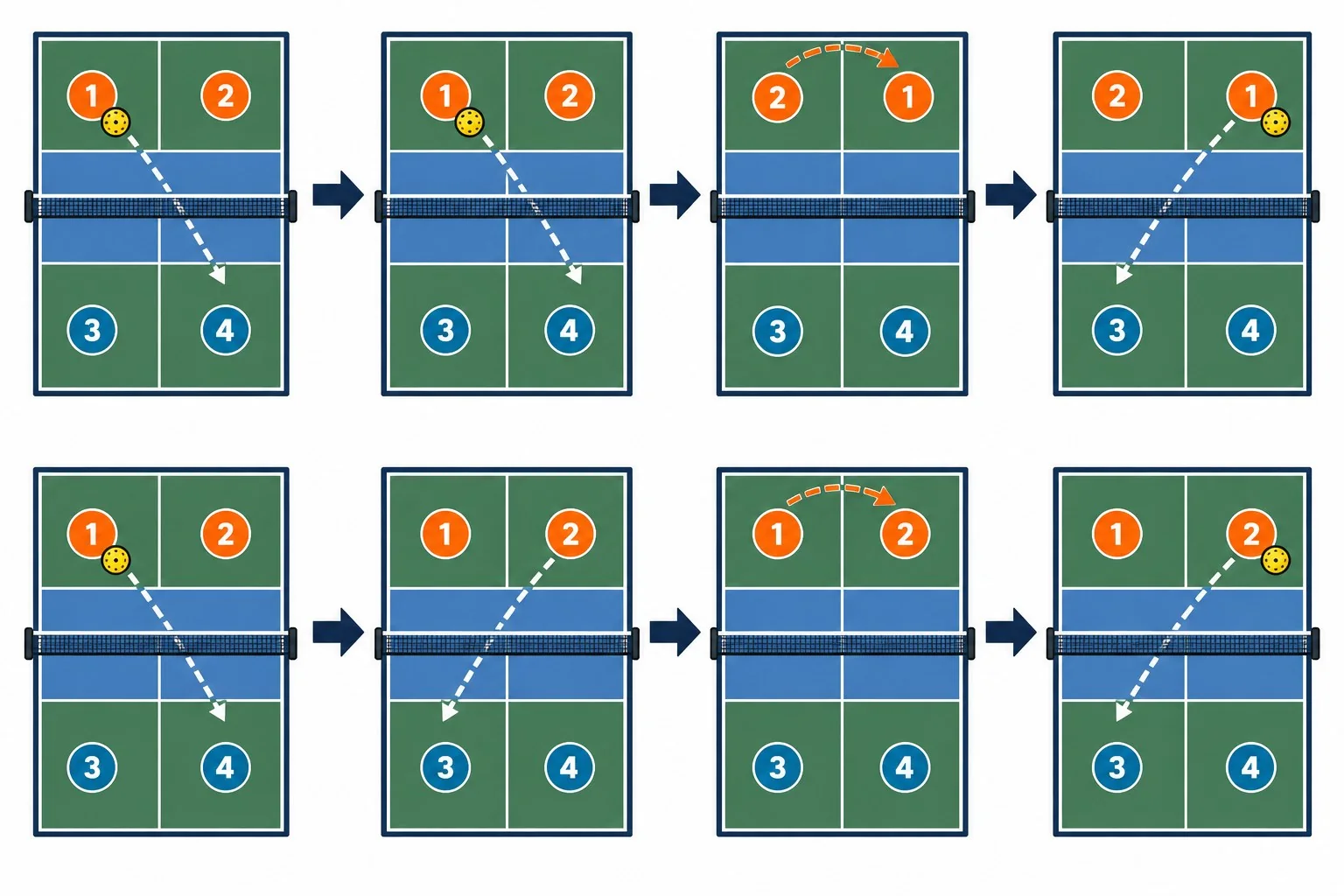
When the serving team wins a rally, it scores and both of its players switch sides. The server moves to the opposite service court, while the receiver’s team stays in place. The same server continues, now serving from the other side. When Server 1 loses a rally, the partner takes over without a score change. When Server 2 loses, the opponents receive the serve and the server designation resets for the new service turn.
The even-and-odd check is a reliable way to catch a positioning error. The player who began the team’s service rotation on the right belongs on the right when that team’s score is even and on the left when its score is odd. For example, if that player’s team has six points, the player should be on the right; at seven points, the player should be on the left.
Do not make the receiving team switch just because the serving team scored. Receivers hold their positions until they win the serve. Also avoid carrying the server number across a side-out: the new serving team starts its own rotation, with the right-side player as Server 1.
A quick checklist for live games
Before each serve, ask four questions: Which team is serving? What are the two scores? Is this Server 1 or Server 2? Does the player’s side match the serving team’s score? Then call the three numbers aloud. If you are receiving, listen for the call and speak up before contact if something clearly needs correction.
A physical marker can help during a long recreational game. Some players use a wristband, a small score tracker, or a written tally, but the tool should support—not replace—the spoken call. The best habit is to connect the sound of the score with the position on court.
Rally scoring is a different format in which a point is awarded after every rally, regardless of which team served. It removes the traditional two-server side-out sequence, so players should confirm the scoring format and target before playing. Do not mix rally-scoring assumptions with a standard side-out game.
Once the sequence is familiar, doubles scoring is less about memorizing exceptions and more about repeating a short routine. Say the serving score, the receiving score, and the server number; check the side; then serve. That rhythm keeps both teams aligned and prevents small rotation errors from becoming a dispute.