How to Read Spin in Pickleball and Adjust Your Return
A practical guide to recognizing pickleball spin early and matching your footwork, paddle angle, timing, and target to the bounce.
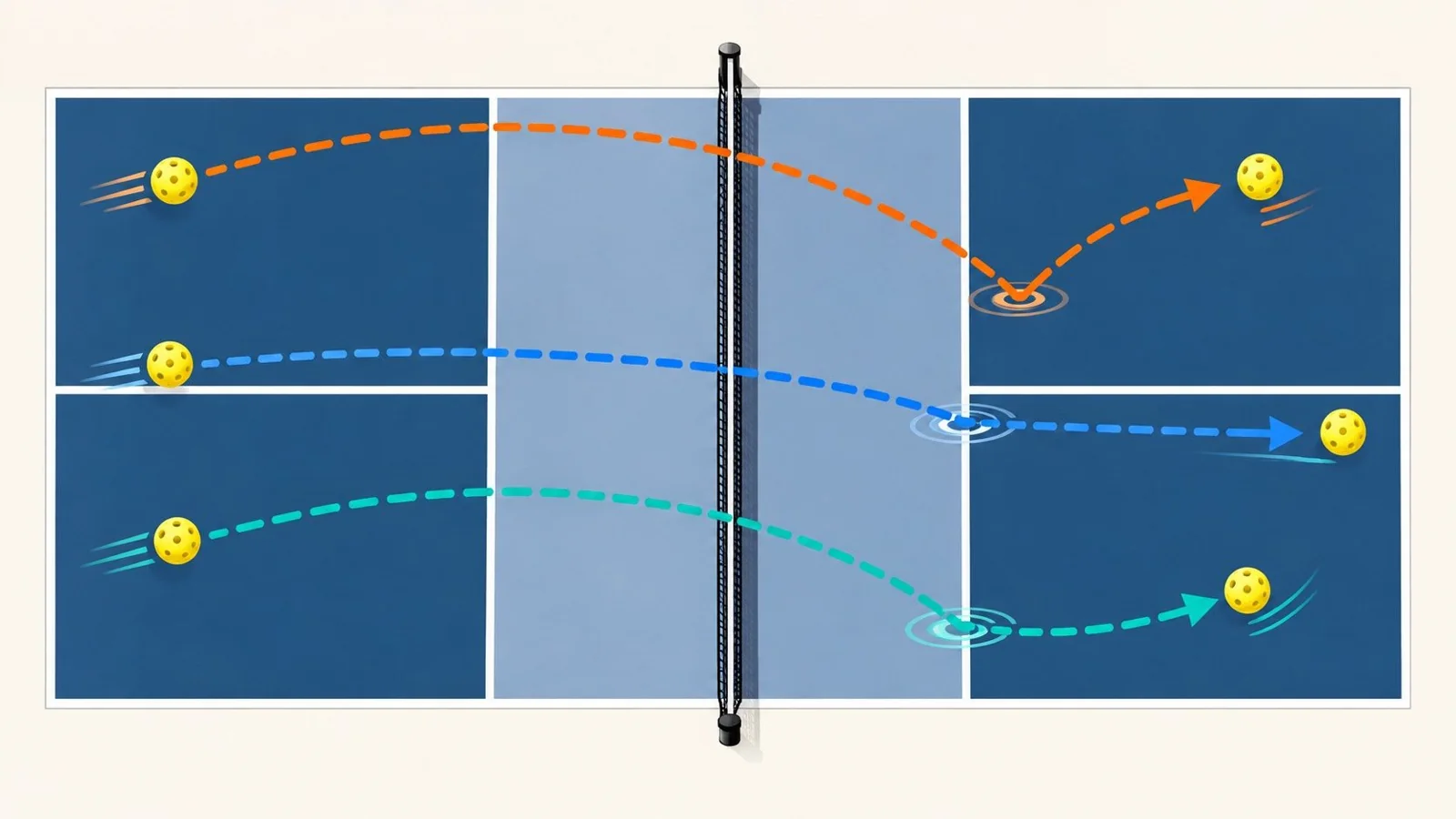
Spin changes more than the ball’s appearance. It changes the time you have, the height of the bounce, and the paddle angle that gives you a dependable return. The goal is not to identify every rotation perfectly. It is to notice a useful cue early, adjust your feet, and choose a target with enough margin.
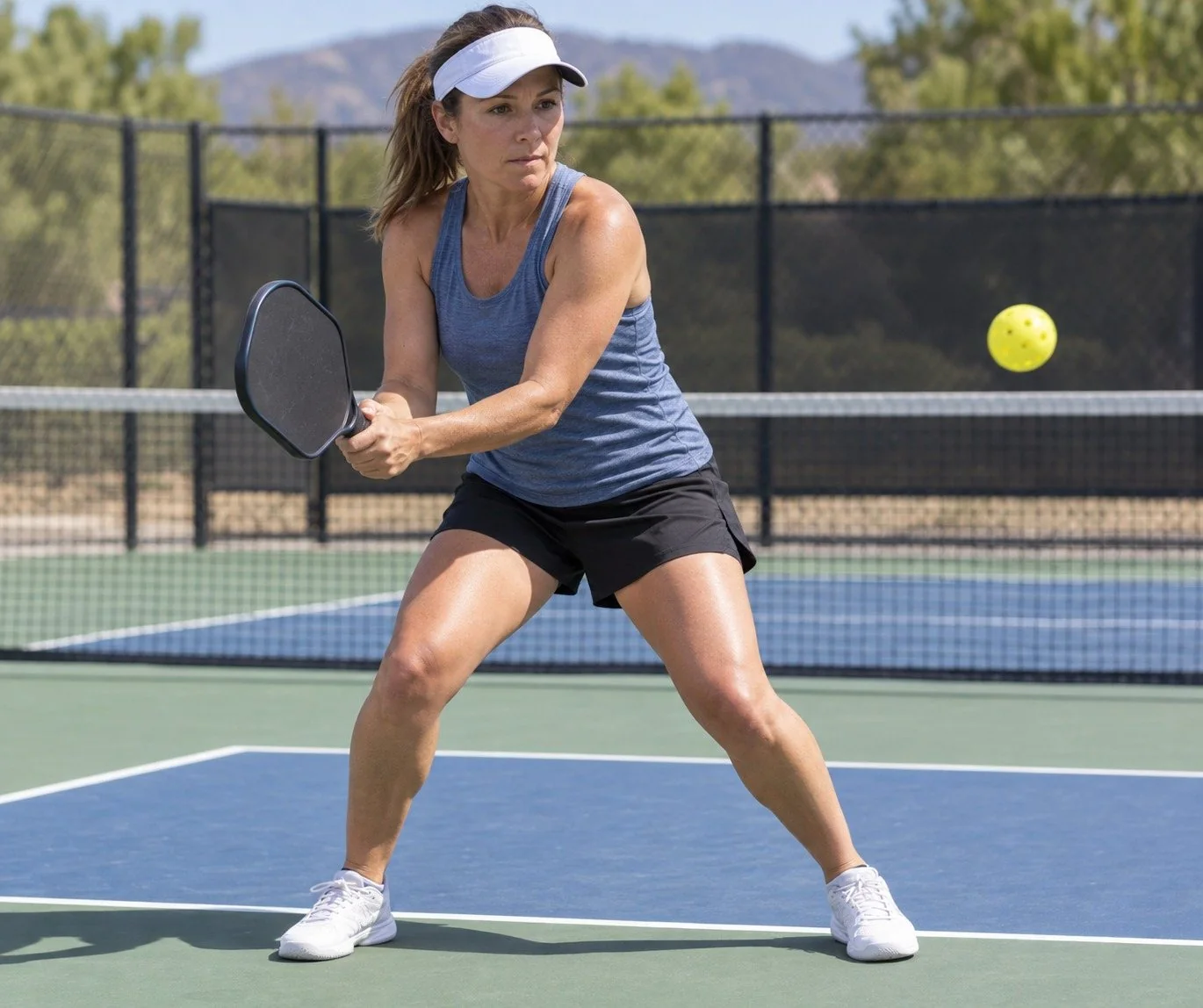
Start with the paddle path and the first bounce
Watch the opponent’s contact window rather than staring only at the ball. A low-to-high brushing motion often signals topspin. The ball may dip sooner in flight and kick up or forward after it lands. Prepare your paddle a little more closed than usual and avoid standing so close that the bounce jams your chest. If you have time, step back or meet the ball early before the kick becomes awkward.
A high-to-low brushing motion suggests slice or underspin. That ball can float, skid, and stay low after the bounce. Move forward with small steps, bend your knees, and give the paddle just enough openness to lift the ball. Do not wait upright for a normal rebound; the ball may never provide one.
Sidespin is harder to read because the curve can be subtle. Look for a sideways brushing path and expect the bounce to move away from the line you first imagined. Keep your feet active, move with the curve, and use the middle of the court as a safer return target while you learn the opponent’s pattern.
Match your adjustment to the ball you actually receive
The spin label is only a starting point. Read the ball’s height, depth, speed, and your balance at contact. A heavy topspin ball that arrives high and in front may be returned firmly, but the same spin arriving at your feet calls for a controlled reset or higher-margin return. A slice that floats short may invite you forward; a deep slice may require more lift and patience.
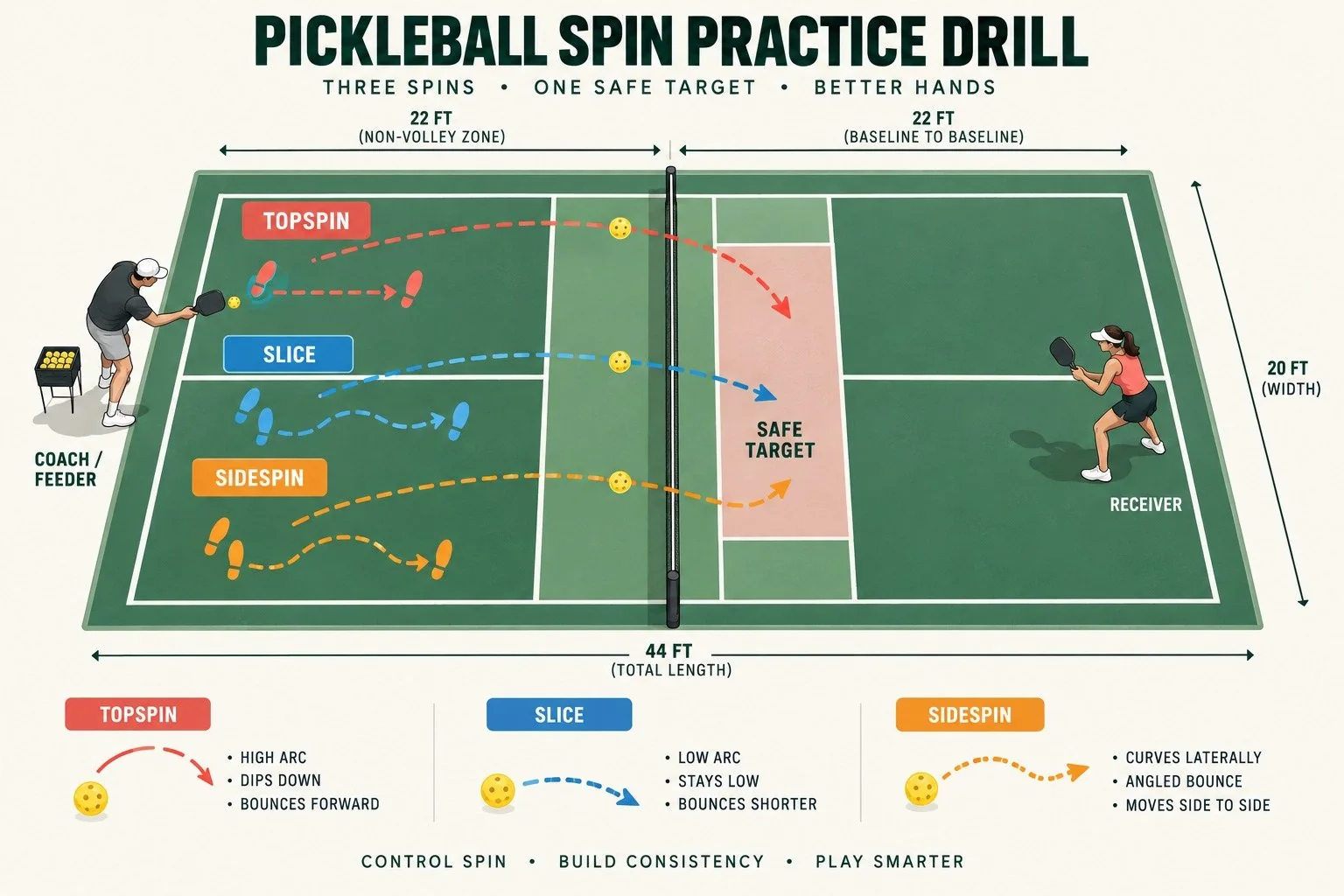
Keep the first response compact. Against topspin, do not swing harder just because the ball is moving quickly; a stable face and an early adjustment often work better. Against slice, avoid chopping down on an already low ball. Against sidespin, resist reaching with the arm alone. Move your body to the ball, then let the paddle angle counter the curve.
When the read is uncertain, choose a large target through the middle and leave room above the net. This is especially valuable on a serve return or a transition ball, when a risky sideline target can turn a small misread into a missed return. Once you see the bounce and the opponent’s recovery, you can choose a more ambitious direction on the next contact.
Build spin recognition into practice
Start with a callout drill. Have a partner feed one topspin, one slice, one sidespin, and one flatter ball in an unpredictable order. Call the likely spin as soon as you see the paddle path, then say the adjustment: “back,” “forward,” or “move with it.” The call is not a test of perfect terminology; it trains your eyes to connect a cue with a response.
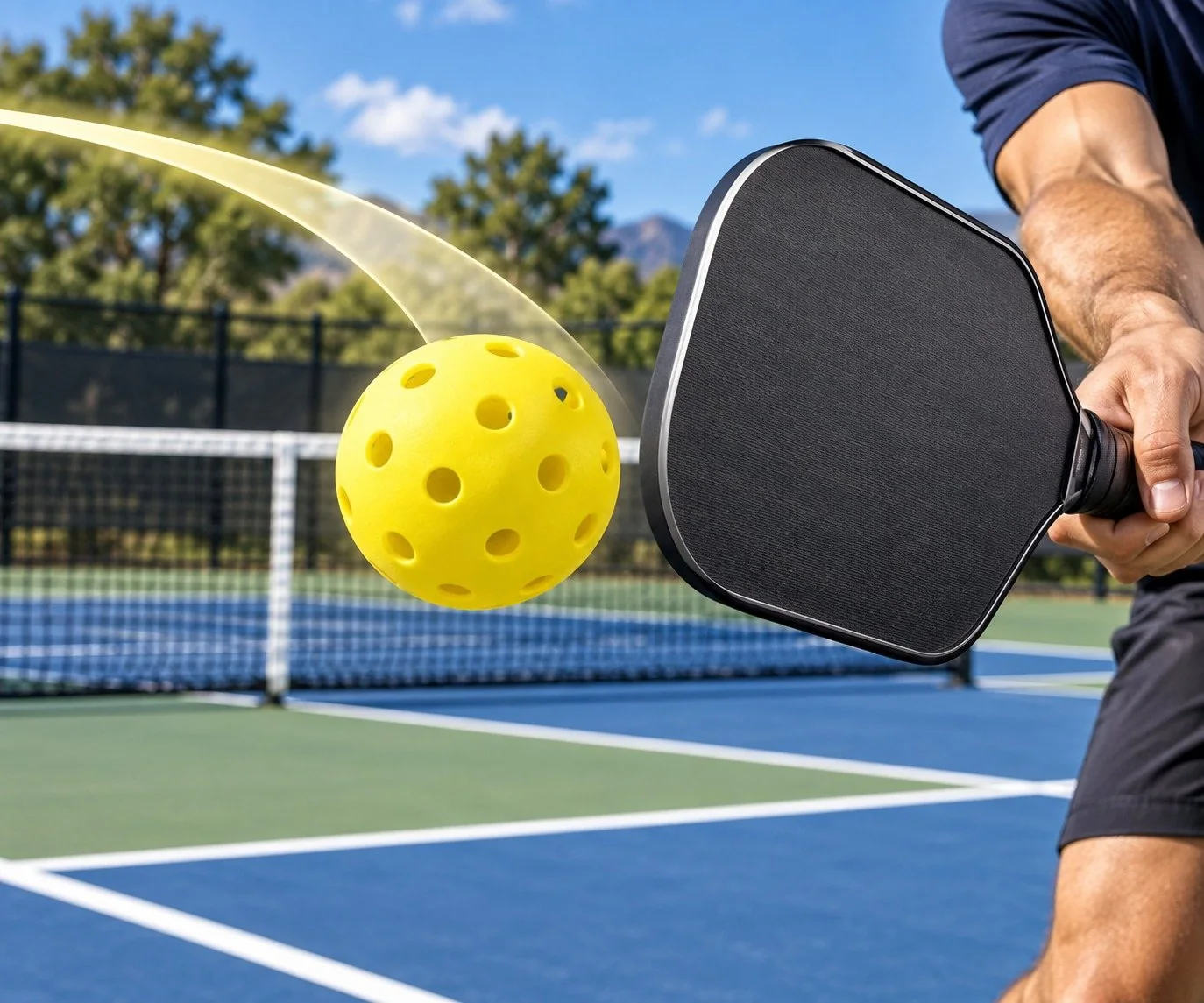
Next, add realistic targets. Return ten balls toward the middle, then repeat while aiming deep crosscourt only when your feet are set. Track whether the error came from the read, the movement, the paddle angle, or the target. That simple note tells you what to train instead of encouraging a larger swing every time a ball behaves unexpectedly.
Common mistakes include watching the bounce too late, planting before the curve is clear, opening the paddle against a kicking topspin ball, and trying to attack a low slice. Use smaller adjustment steps, keep the paddle ready in front, and let the ball’s height determine your ambition. With repetition, spin becomes a timing and positioning problem you can solve rather than a surprise that controls the rally.