Pickleball Backhand Return: Build Control Under Pressure
Build a reliable backhand return with compact preparation, smart shot selection, and drills that connect contact to recovery.
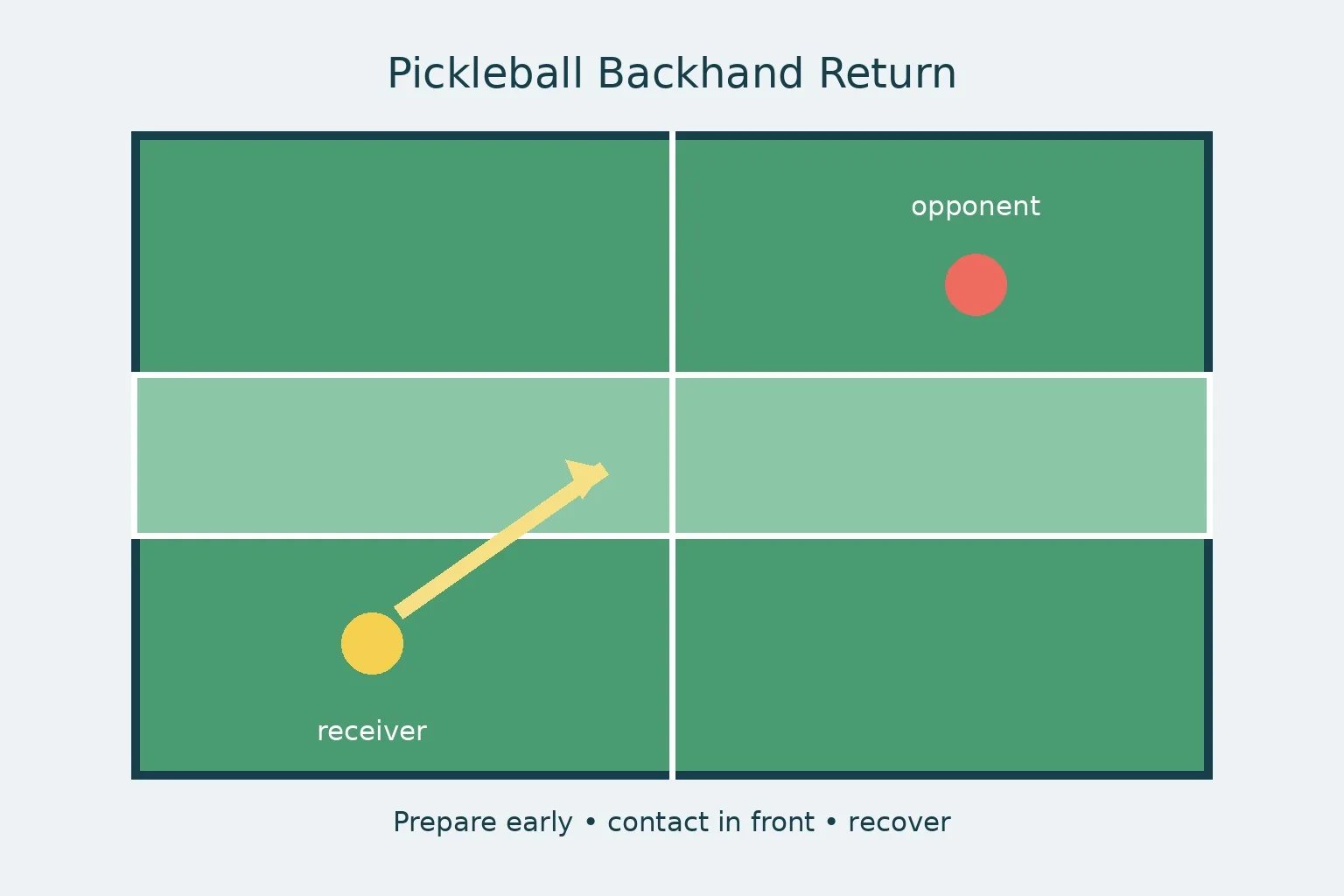
A reliable pickleball backhand return starts before the ball reaches you. Turn your shoulders early, move your feet into a comfortable spacing, and meet the ball in front of your body. You do not need a large swing. The serve already gives the return pace; your job is to send a deep, controlled ball and recover toward the kitchen line.
Why the pickleball backhand return breaks down
Most weak returns have a timing or spacing problem rather than a strength problem. Players often run around the backhand, arrive late, or pull the paddle behind the body. That leaves the contact point beside the hip, where the face becomes difficult to control.
Use a simple check after each miss. Did the ball contact the net? Your paddle may have opened or your legs may have stopped. Did it float long? The swing may have become too large, or contact happened too far behind you. Did the ball sit up? You may have lifted with the hand instead of driving from the legs and torso.
For example, if 6 of your last 10 backhand returns landed short, your short-return rate is 6 ÷ 10 = 60%. That is a practice clue, not a permanent label: shorten the preparation, aim higher over the net, and repeat the same return target for the next 10 balls.
How to prepare for a backhand return
Start in a balanced ready position with the paddle in front of your chest. As soon as you read the serve toward your backhand, turn your shoulders and set the paddle; do not wait for the bounce to begin the motion. Take a small adjustment step so the ball stays at a comfortable distance rather than forcing a reach.
Keep the backswing compact. Your non-dominant hand can guide the paddle into position, especially when using a two-handed stroke. Bend your knees, rotate through the ball, and finish toward the target. The paddle should travel forward, not cut across your body.
One hand or two hands?
A two-handed backhand adds stability and makes it easier to handle a deep or fast serve. Keep the dominant hand relaxed and let the upper hand guide the paddle through contact. A one-handed return can create reach and useful slice, but it demands better spacing and earlier preparation.
Neither choice wins every situation. Use the stroke you can repeat under pressure, then train the other option separately instead of changing technique halfway through a rally.
When to use a slice or a two-handed return
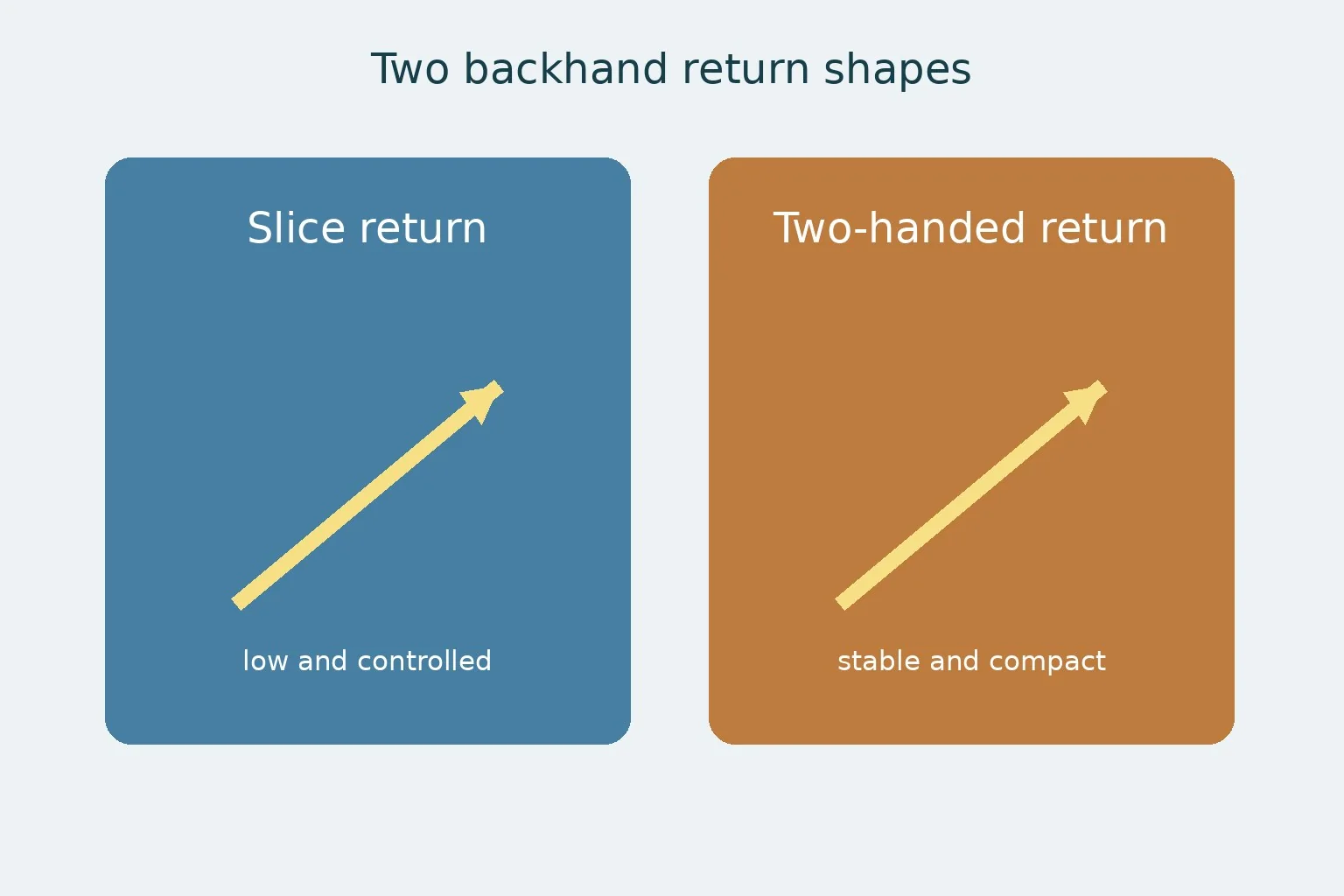
A slice return works when you have time to carve under the ball and keep it low. Use a short high-to-low motion with a stable wrist, then continue forward enough to send the ball deep. Heavy backspin can make the bounce awkward, but a floating slice gives the opponent an attackable ball, so height control matters.
Choose the two-handed return when the serve is fast, deep, or aimed at your body. The second hand helps you resist the incoming pace and direct the ball through the court. Contact slightly in front, keep the face steady, and avoid a dramatic follow-through.
Your target should usually be deep through the middle or toward the opponent’s backhand, but do not aim for a corner when balance is poor. A return landing 3 feet inside the baseline is more useful than a harder ball that clips the sideline.
How to move up after the return
The return is only the first half of the job. After contact, recover with small forward steps while tracking the opponent. If your return is deep and the opponent is still behind the baseline, keep moving. If the return is short or the opponent is set early, stop in the transition area and prepare to block rather than sprint blindly to the kitchen.
Keep the paddle in front during the recovery. A common mistake is admiring the return, then arriving with the paddle hanging beside the leg. Your partner also needs to see the same decision: call “up” when the team can advance, or “hold” when the next ball may come fast at the feet.
Pickleball backhand return drills
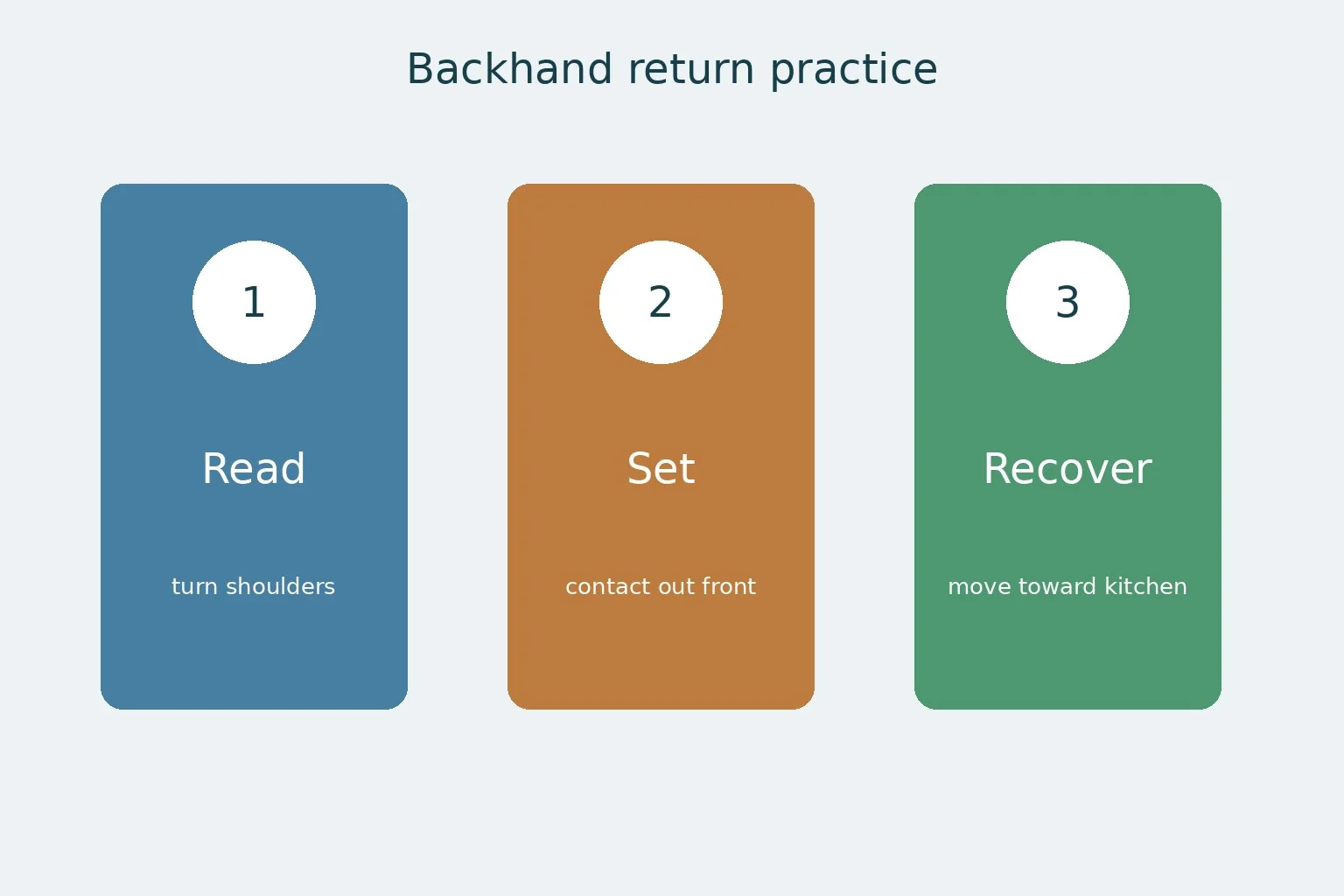
1. Deep-target returns
Place a towel or cone about 3 feet inside the baseline. Hit 20 backhand returns and count the balls that land beyond the target without going long. If 14 reach the target, your rate is 14 ÷ 20 = 70%. Record the number, then work on a smoother preparation rather than adding force.
2. Slice-versus-two-hand decision drill
Have a partner alternate deep, slow serves and faster body serves. Use the slice for the first type and the two-handed return for the second. Pause after every five balls and name the reason for your choice: time, ball height, body pressure, or balance.
3. Return-and-recover drill
Hit a return, take three controlled steps forward, and stop when the partner signals a low or high next ball. Against a low feed, rehearse a block. Against a high feed, rehearse continuing toward the kitchen. Complete four rounds of five returns, switching sides each round.
Common backhand return mistakes
- Late shoulder turn: the paddle starts after the bounce, so contact drifts behind the body.
- Running around every backhand: court coverage shrinks and the forehand becomes rushed.
- Over-swinging: extra motion steals time and sends the ball long.
- Loose paddle face: the ball pops up instead of traveling through the target.
- Stopping after contact: the return looks good, but the team remains exposed at the baseline.
Frequently asked questions
Should I always use a two-handed backhand return?
No. Two hands offer stability, while a one-handed slice can add reach and a lower trajectory. Choose the option that matches the ball and your spacing, then return to a balanced position.
Where should a backhand return land?
Aim deep through the middle or toward a weaker side when the target is clear. Depth matters more than maximum speed because it reduces the opponent’s time to move forward.
How can I stop hitting the net?
Start the paddle slightly below the ball, bend your legs, and finish forward with a modest upward path. If the miss continues, reduce speed and measure your contact point before changing the grip.
A dependable return is built from repeatable preparation, not a heroic swing. Turn early, create space, choose the right shape, and move with the ball after contact.