Pickleball Backhand Roll Volley: Topspin, Timing, and Safer Decisions
Build a reliable backhand roll volley with better timing, topspin, balance, shot selection, and drills for kitchen-line play.
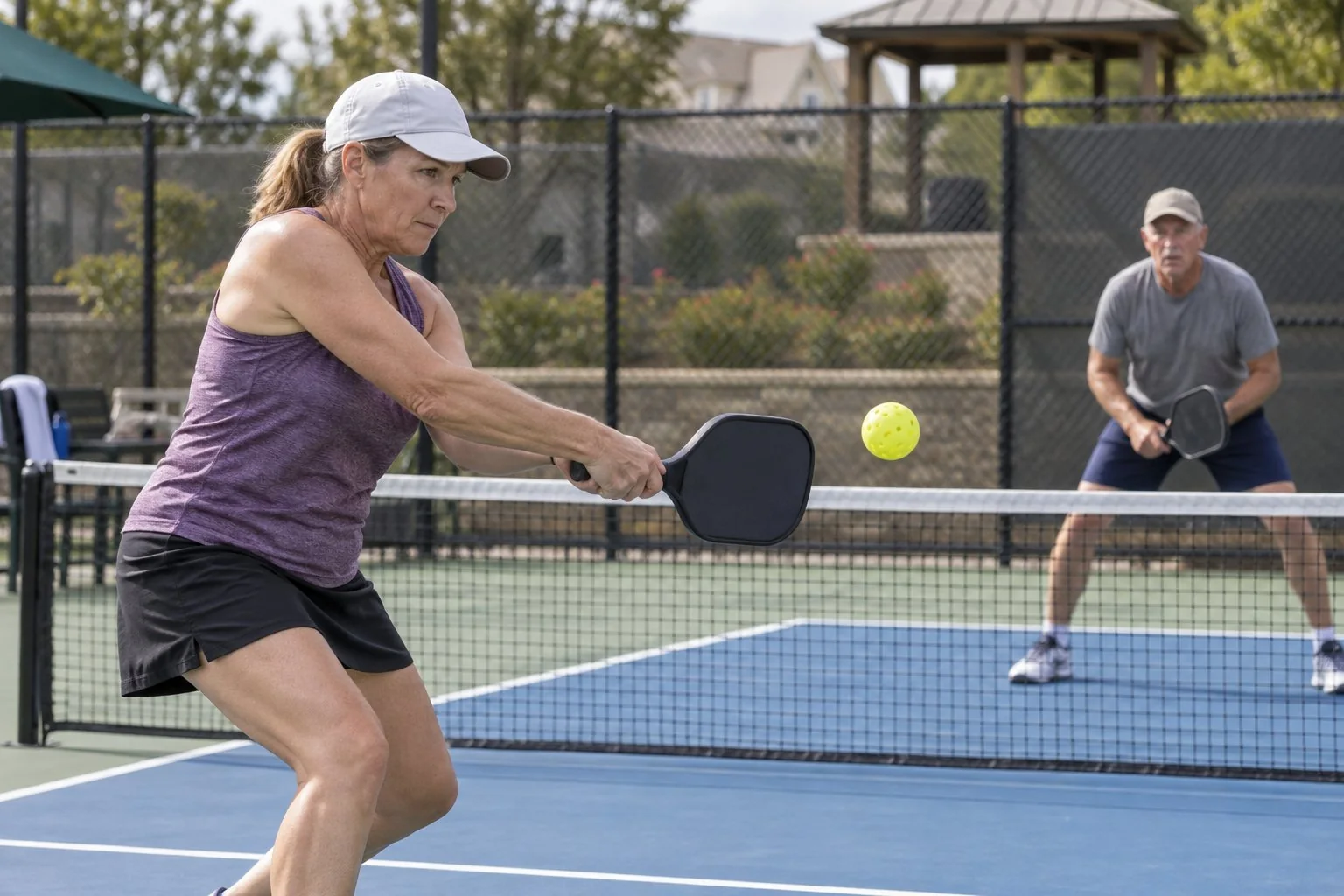
The backhand roll volley is a useful bridge between a safe block and an all-out flick. You take the ball before it bounces, create a little topspin, and send it down with enough pace to make the reply uncomfortable. The shot is not a wrist trick. It is a compact movement built on a stable base, a timely contact point, and a clear reason to attack.
When the backhand roll is the right choice
Look for a ball that is moving toward you and arrives around hip to net height, preferably in front of your body. A ball that is slightly low can still be rolled because the upward path gives it shape. If it is dropping straight down, has fallen outside your stance, or forces you to reach while off balance, let it bounce or play a reset instead. Height alone does not make a ball attackable.
The opponent’s position matters too. A roll is especially useful when the other player is a step or two behind the kitchen line. Topspin can bring the ball down toward the feet and make their next contact awkward. Against a player already planted at the kitchen and leaning forward, a compact punch or flick may be the better answer. Keep the same neutral preparation so your choice is difficult to read.
Build the motion from the ground up
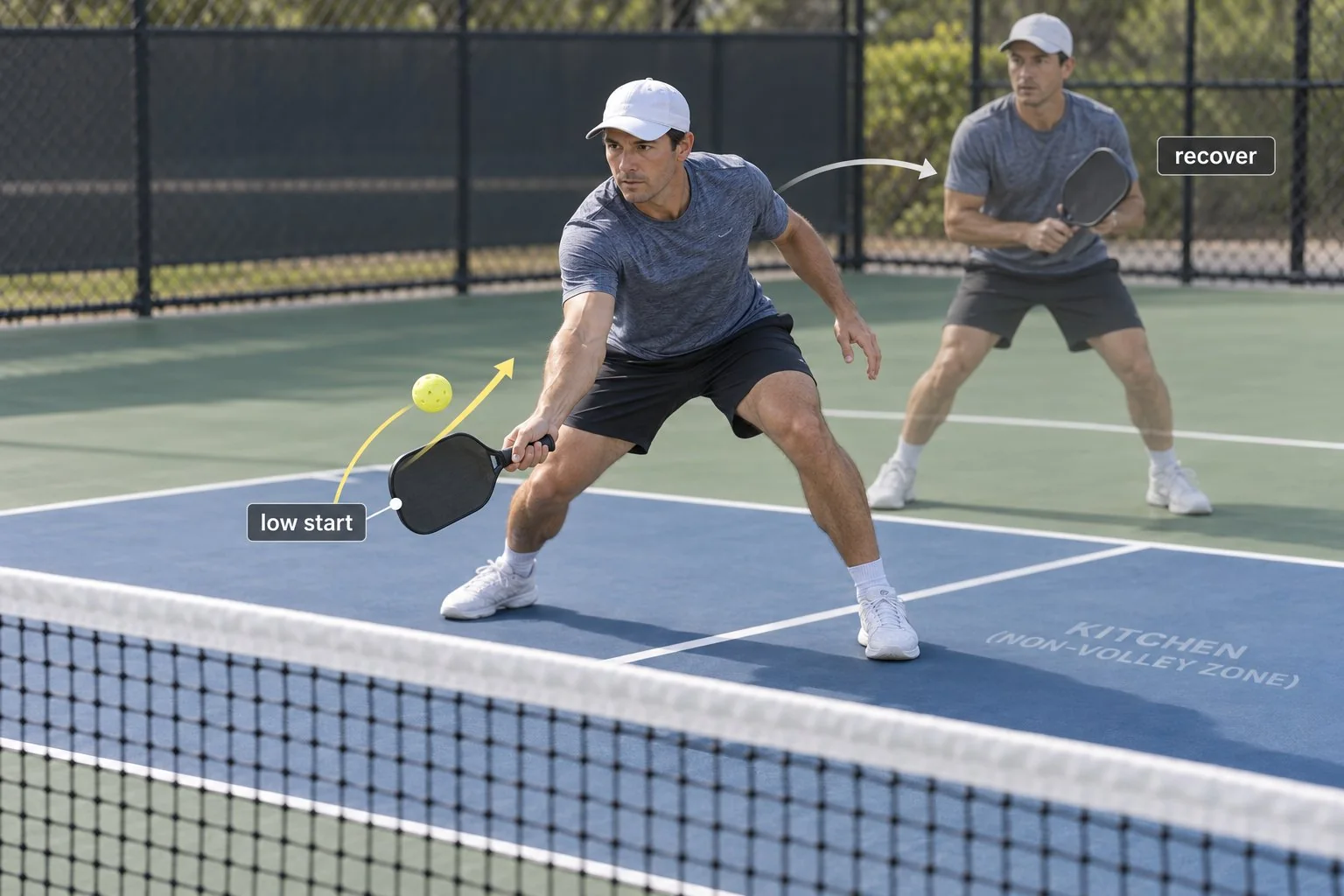
Start in an athletic ready position with your feet roughly shoulder-width apart, knees relaxed, and weight centered over the midfoot. Use a continental or comfortable eastern backhand grip, and keep the paddle in front of your torso. As the ball travels, widen your base by a small amount if you need to get lower. Set your feet before the swing whenever time allows.
Drop the paddle corner below the ball rather than taking the entire paddle far behind you. Keep the elbow reasonably close to the body. Sink through the legs, then rise and extend forward and slightly upward. The shoulder and arm provide most of the motion; the wrist stays firm and makes only a small finishing adjustment. Brushing up the back of the ball creates topspin without requiring a violent snap.
Contact the ball in front of your body, within the protection of your stance. A late contact usually leaves the face open and sends the ball high. A contact too far away forces you to lunge and lose control. Finish with the paddle in front of you, not wrapped around your shoulder, then return immediately to your ready position.
Three practice progressions
Begin with shadow repetitions. Without a ball, rehearse the sequence: split-ready position, small base adjustment, paddle corner down, leg drive, compact extension, and recovery. Keep the swing short enough that you could respond to another ball immediately.
Next, use a cooperative hand-feed. Have a partner feed six balls to the backhand side at a comfortable height. Start slowly and count clean landings in the opponent’s kitchen. Do not chase pace; a controlled arc and balanced finish are the goals. Repeat from both sides of the court.
Finally, add a decision drill. The feeder mixes balls that call for “roll,” “punch,” or “reset.” Say the choice before contact, then make the appropriate swing. Include a few wide or falling balls so you learn to decline the roll rather than forcing it. Finish with a live kitchen exchange in which either player may speed up the ball.
Fix the mistakes that cause pop-ups
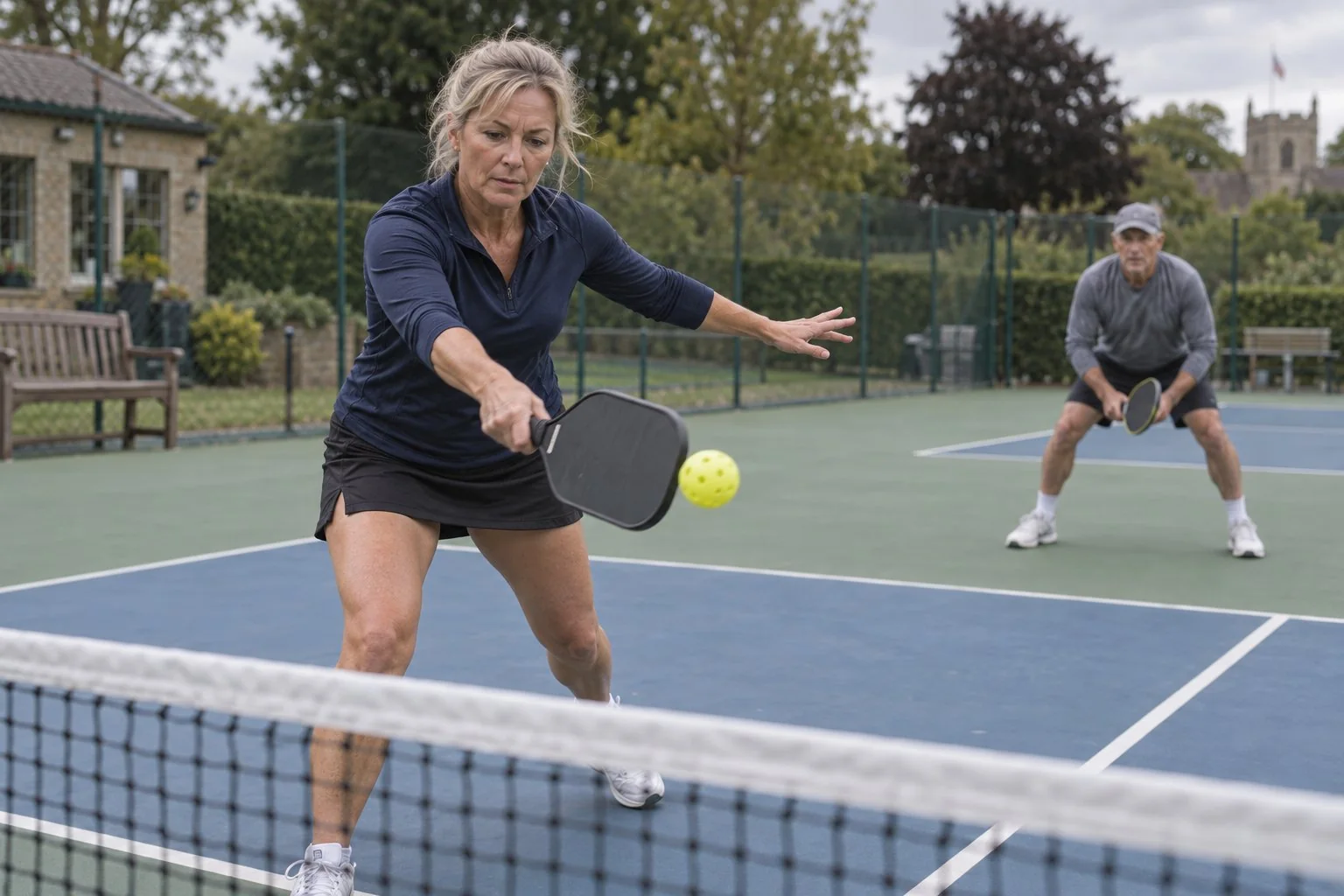
The first common mistake is leading with the wrist. If the ball sprays in different directions, reduce the wrist action and let the shoulder, arm, and legs carry the shot. The second is using a large backswing. A long loop costs time and makes the paddle harder to control; a small drop is enough. The third is rolling from a stretched position. Move your feet first, or choose a safer shot.
Track the opponent after contact instead of admiring the ball. If the roll lands low, be ready for a defensive reply; if it comes back high, you may have a clean next attack. A reliable backhand roll is valuable not because it wins every exchange, but because it gives you a repeatable way to apply pressure without abandoning balance.