Pickleball Backspin Return: Keep the Bounce Low and Recover
Build a dependable pickleball slice return with early preparation, compact backspin, deep targets, and recovery steps that buy time.
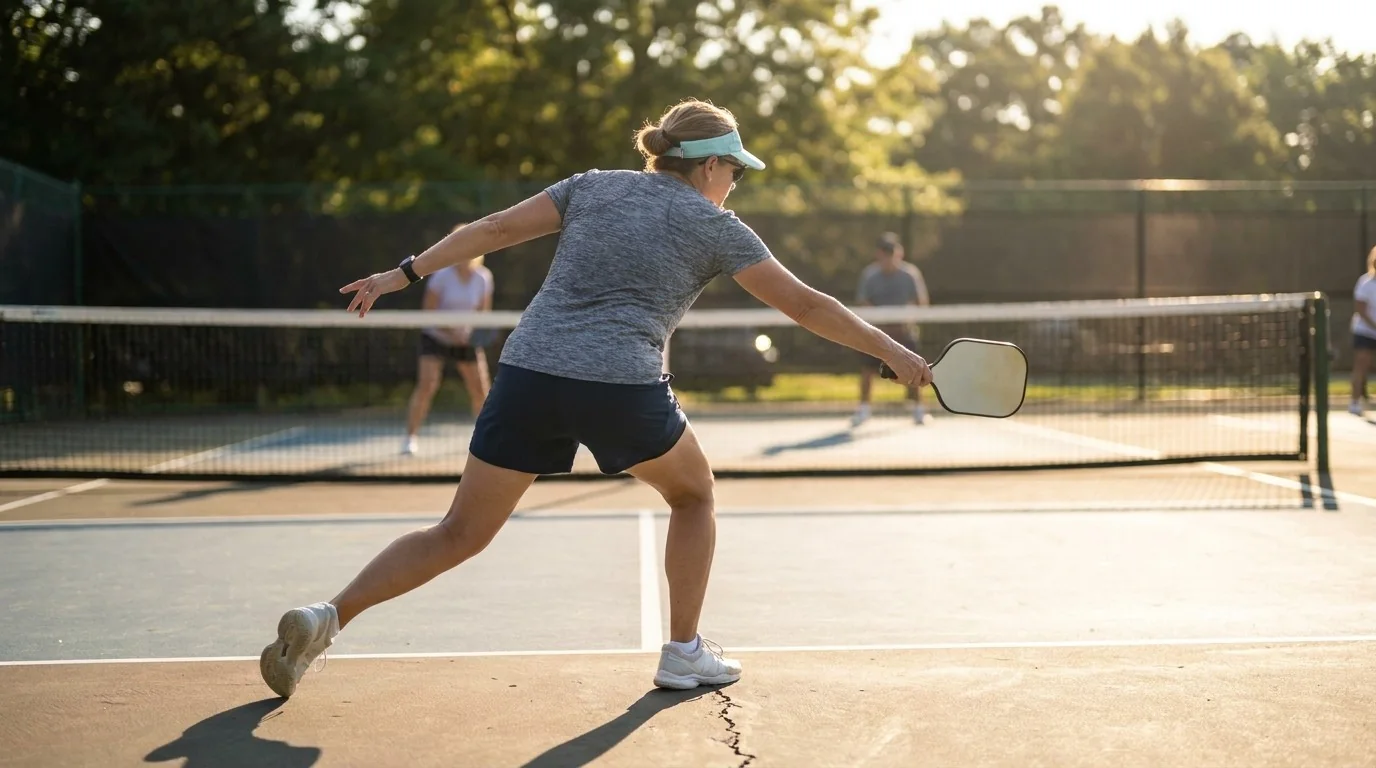
A pickleball slice return is a controlled way to send back a serve with backspin. It is not a desperate chop, and it cannot replace good footwork. When the contact is in front and the ball travels deep, the slice can keep the bounce low and give you time to move toward a balanced kitchen position.
What the slice return needs to accomplish
A return has two practical jobs. It makes the serving team play a third shot after the bounce, and it gives your team time to move forward. A slice can serve both purposes when it clears the net with sensible height and lands deep enough to leave margin. The backspin may slow the ball and keep the bounce lower, which can make the third shot less comfortable.
Spin alone is not the test. A heavily cut ball that lands short can still invite an easy attack. Judge the return by its depth, its height over the net, and what position you reach afterward. Those details matter more than whether the rotation looks impressive.
Set up before the bounce
Start in a balanced receiving stance with the paddle in front of your body and your weight on the balls of your feet. Read the serve early, then use small adjustment steps so the ball arrives in front of you. A late slice from behind the hip usually floats or pulls wide because the paddle is no longer supported by a stable contact position.
Use a compact shoulder turn instead of a large backswing. On the backhand side, two hands can steady the paddle against a fast serve. One hand can give you more reach on a wide ball. In either case, keep the non-dominant hand involved while you prepare, even if it releases before contact.
Build a controlled slice
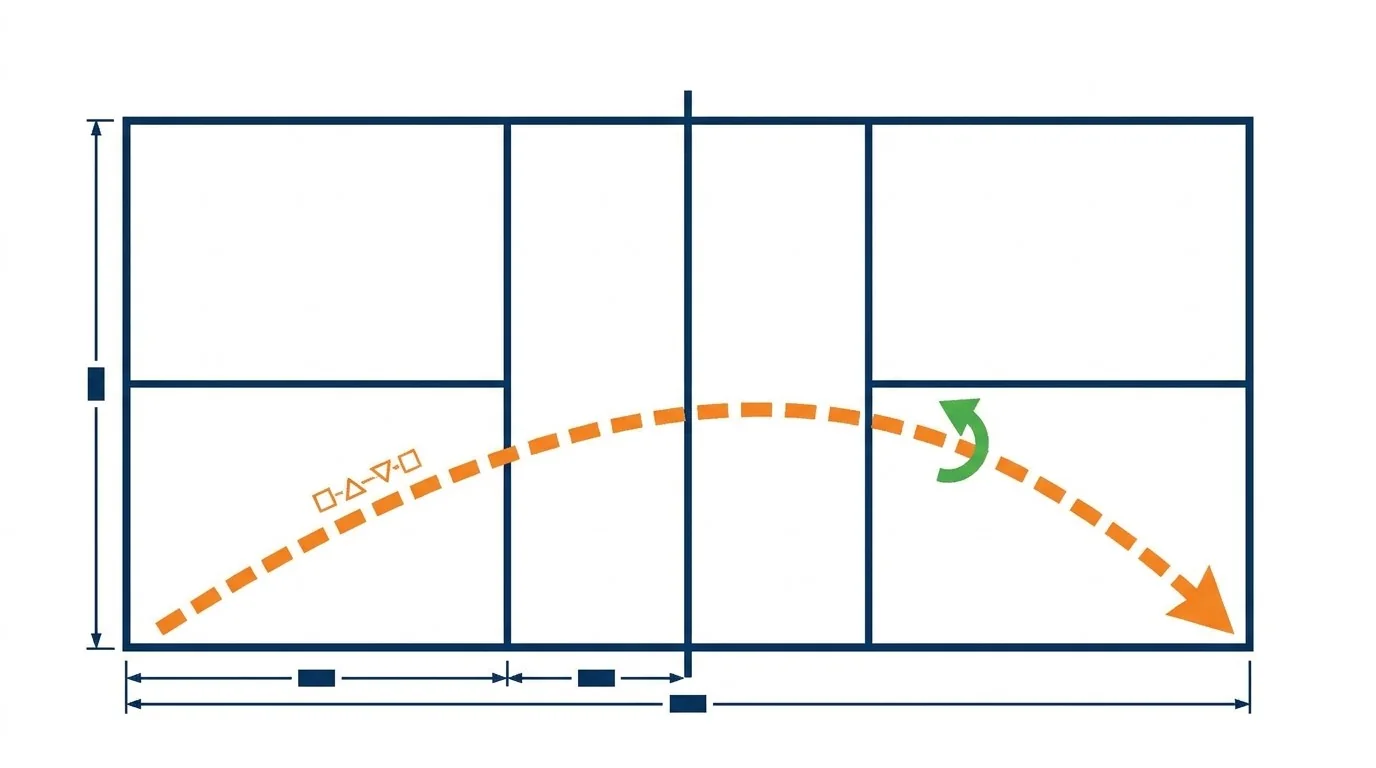
For a basic backhand slice, set the paddle slightly above the expected contact point. Move forward and down through the ball with a short, smooth path. Keep the paddle face stable rather than dramatically open, and use a relaxed grip so the stroke does not become a stiff chop.
Contact should be in front of the lead hip. Paddle angle and swing direction work together. Too much downward action sends the ball into the net; too much open face sends a high ball that the opponent can attack. Begin with a modest cut and adjust only after you can repeat the landing.
Let the paddle travel through the ball instead of stopping at contact. Finish with the paddle and chest generally toward the target, then recover immediately. The purpose is a deep return followed by forward movement, not a long finish at the baseline.
Choose a target with room for error
The deep middle is often a dependable first target. It leaves margin from both sidelines and can make the serving team’s third-shot decision less comfortable. Against a player with a weaker backhand, the deep backhand corner may be useful, but keep enough space for an off-center contact or a small directional miss.
A wide angle can move the server, but it also opens an angle for the next ball. Use it when the serve gives you time and your court position supports the choice. If you are stretched or late, choose height and depth instead of chasing a precise corner.
Keep the return comfortably below the opponent’s preferred volley height after the bounce. A low slice that reaches near the baseline is usually more useful than a faster slice that lands around midcourt.
Recover while the ball is travelling
After contact, take the first step toward the kitchen without sprinting blindly. Watch the serving team’s third-shot contact and use a split step as they play it. If their ball is high, continue forward and prepare to volley. If it is low, stop in a balanced position and be ready to reset.
The two-bounce rule gives the receiving team an opportunity to move forward after the return, but the quality of your return determines how much time you actually have. Keep the paddle up during the approach. Do not allow the swing to finish so low that you have to rebuild your ready position.
Common slice-return mistakes
- Over-cutting the ball: Too much downward action sends the return into the net.
- Opening the paddle face: The ball floats and gives the third shot an easy height.
- Contacting behind the body: Late contact removes control and pulls the ball wide.
- Chasing spin instead of depth: A short, spinning return can still be attackable.
- Admiring the return: Start moving as soon as the ball leaves the paddle.
- Using slice on every serve: Choose a flatter or topspin return when the bounce and body position make that safer.
Practise the slice return
Begin with a cooperative feed from the service line. Have the feeder send comfortable balls to your backhand while you aim beyond the service line with a moderate slice. Count only returns that land deep and leave you balanced after the first recovery step.
Next, receive serves from the baseline and use three target zones: deep middle, deep backhand, and deep forehand. Change targets only when the contact remains in front. Add the approach and split step after each return so the drill connects the stroke to the next decision.
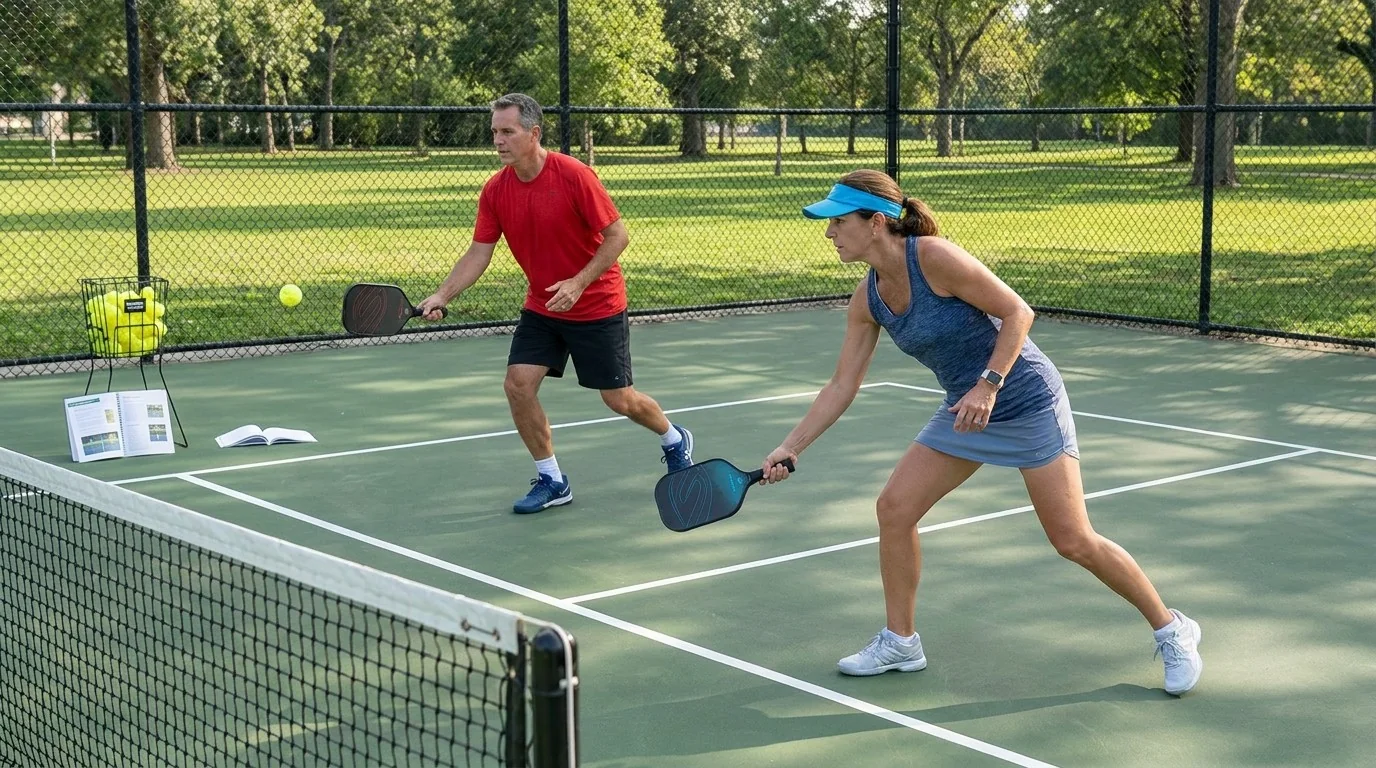
Finish with a constrained game. Use a slice on selected serves, then allow any return after the first exchange. This teaches when the shot is useful instead of turning it into a rule for every ball. Track depth, balance, and the quality of the next contact.
A reliable pickleball slice return is quiet and purposeful: prepare early, contact in front, use moderate backspin, choose a deep target, and recover at once. Build those pieces in that order, and the slice becomes a practical way to buy time without giving away control.