Pickleball Ball Flight Reading: Track Arc Before the Bounce
Read the bounce, set your feet, and choose a controlled pickleball response instead of reaching or deciding too early.
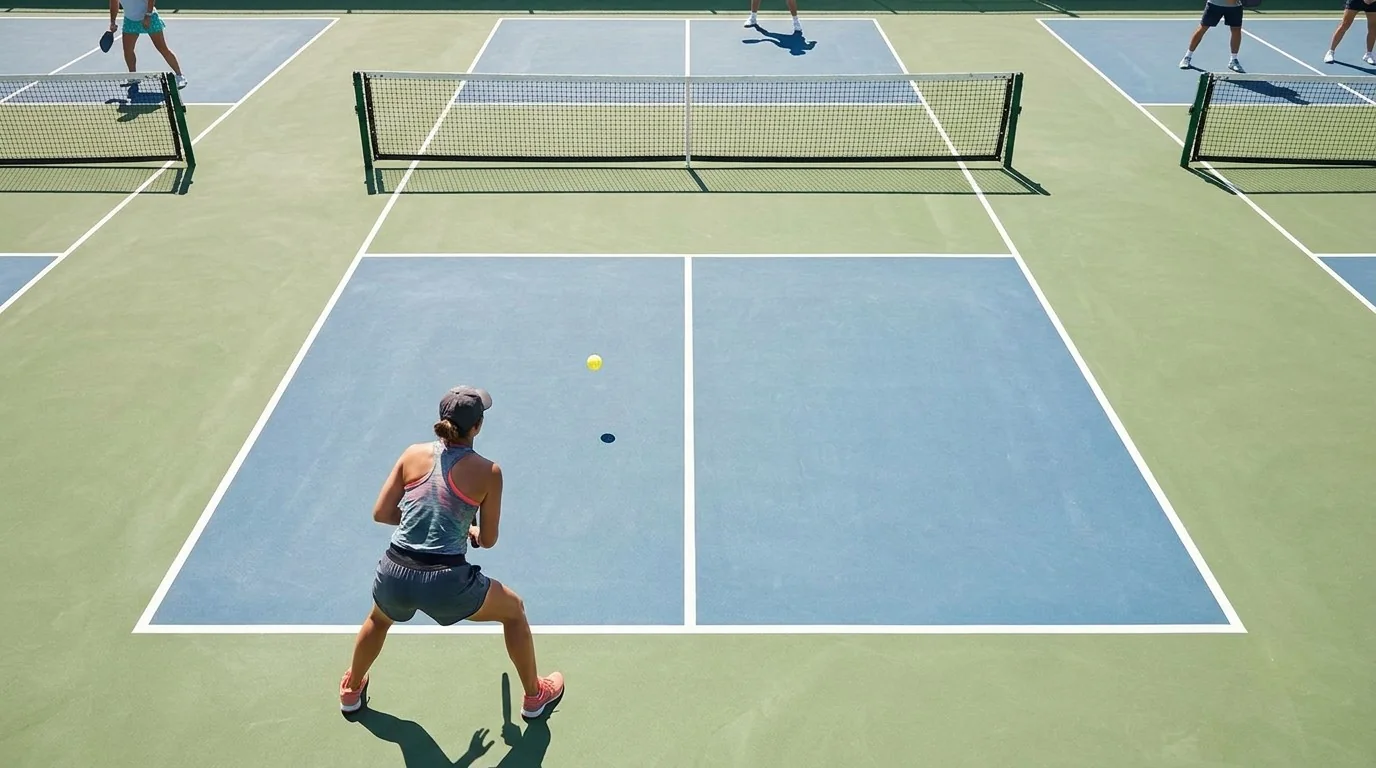
Read the ball’s flight to buy yourself time. Don’t choose a stroke from the first part of the trajectory alone. Watch how the ball drops and bounces, set your feet, then decide. That order reduces reaching, late contact, and rushed swings.
Watch the bounce, not only the incoming flight
The flight before the bounce is only one piece of the read. Notice whether the ball is dropping steeply or arriving on a flatter path. Then watch the bounce height and direction. A low bounce may call for a softer reply or a lower contact point. A higher bounce gives you more choices, but an untargeted lift can give the opponent time.
Read the opponent’s contact early, then keep your eyes on the ball through the bounce. Hold off on the shot decision until you know how the bounce has changed the ball’s height and speed.
Set the feet before the paddle
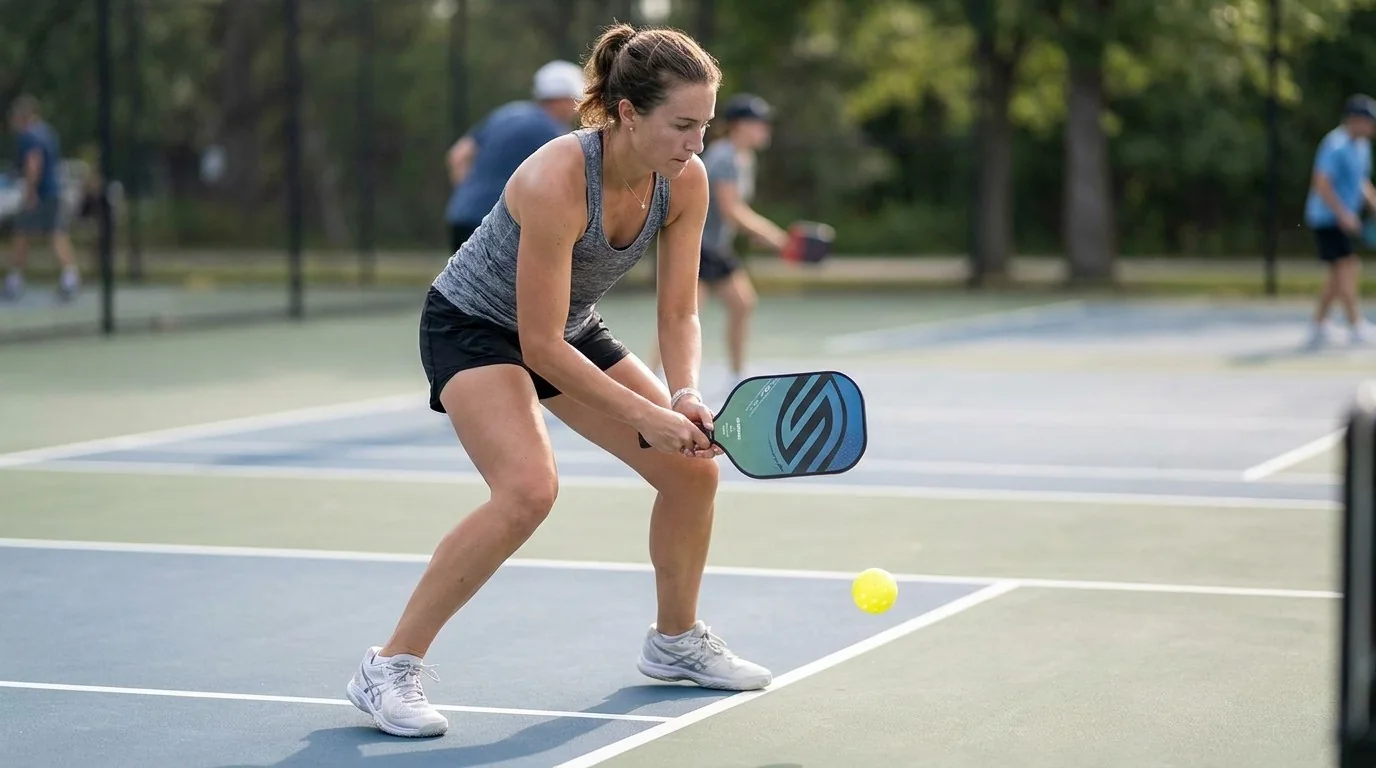
Use small adjustment steps as the ball comes in. Move your body behind the likely contact point, keep your knees comfortable, and avoid reaching with a straight arm. A balanced base makes the paddle face easier to control and keeps you ready to move again after the shot.
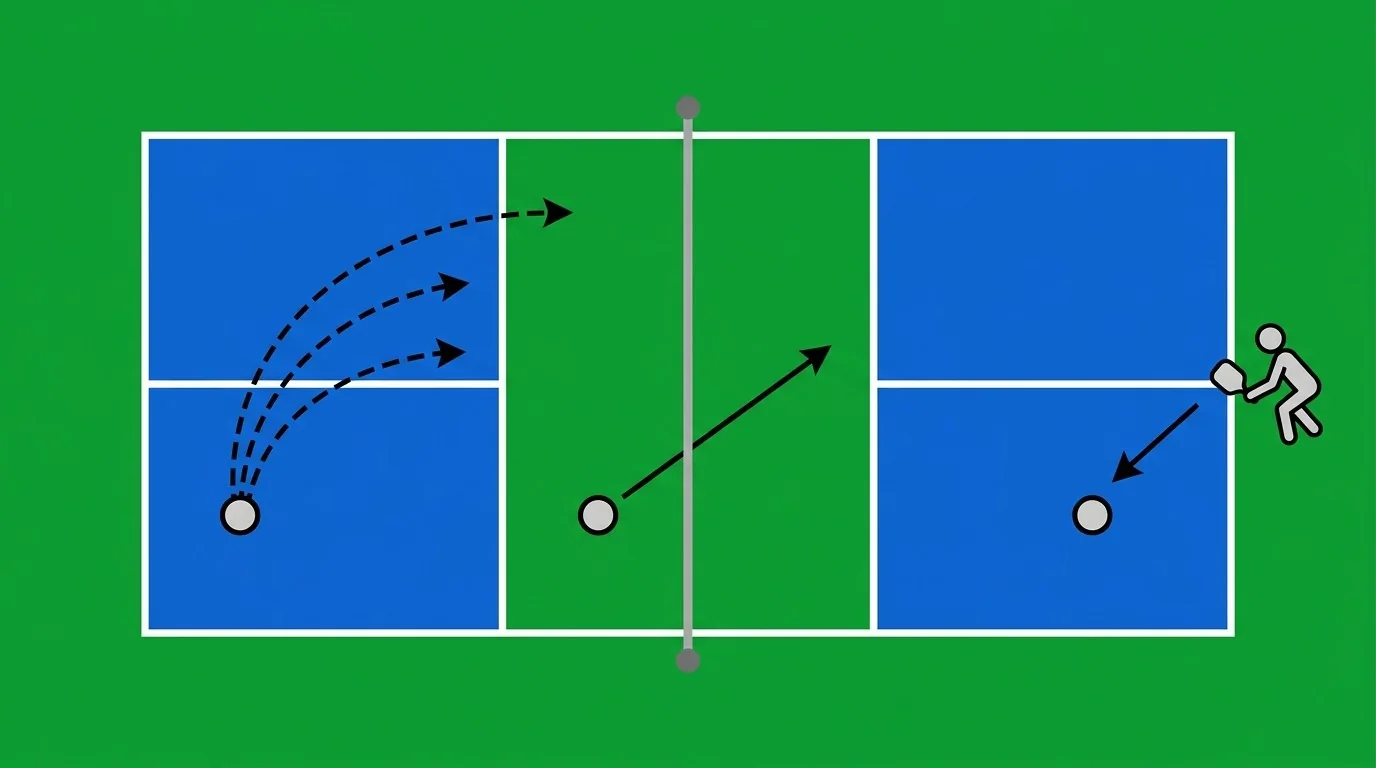
If the ball travels farther to one side than expected, turn and move instead of stretching from a fixed stance. When you are late, choose the response with the most margin that keeps the rally manageable. A narrow target is rarely worth forcing from an unstable position.
Match the response to the bounce
A low ball often calls for a controlled lift over the net, a reset, or another shot with useful margin. A ball that rises into a comfortable contact window may support a drive or firmer placement. Make the choice from your balance, court position, opponent position, and the ball’s height. There is no automatic answer.
At the kitchen line, keep the paddle in front and don’t swing down at a ball that is already low. In the transition zone, protect your balance and prepare to absorb pace. From the back court, use the extra distance and height to send a safer ball while recovering forward.
Recover as part of the stroke
After contact, bring the paddle back to ready position and take the next adjustment step. Watch the opponent’s contact and use a split step as the next ball is played. A good read does not help if you watch your shot and arrive late for the reply.
Practise bounce reading progressively
Start with cooperative feeds that change one feature at a time: bounce height, then direction, then depth. Call out “low,” “high,” “short,” or “deep” before making the stroke. Add a target next, and score both the landing and the quality of your ready position after contact.
Finish with a constrained rally. The feeder changes depth and direction. The receiver must set the feet before each swing and choose a safe response when late. Common errors are watching only the pre-bounce flight, reaching instead of moving, deciding too soon, and standing upright after contact. Slow the sequence down until the read, footwork, contact, and recovery connect.