Pickleball Ball Machine Practice: Turn Repetitions Into Rally Decisions
A practical guide to turning ball-machine feeds into better pickleball contact, placement, footwork, and rally decisions.
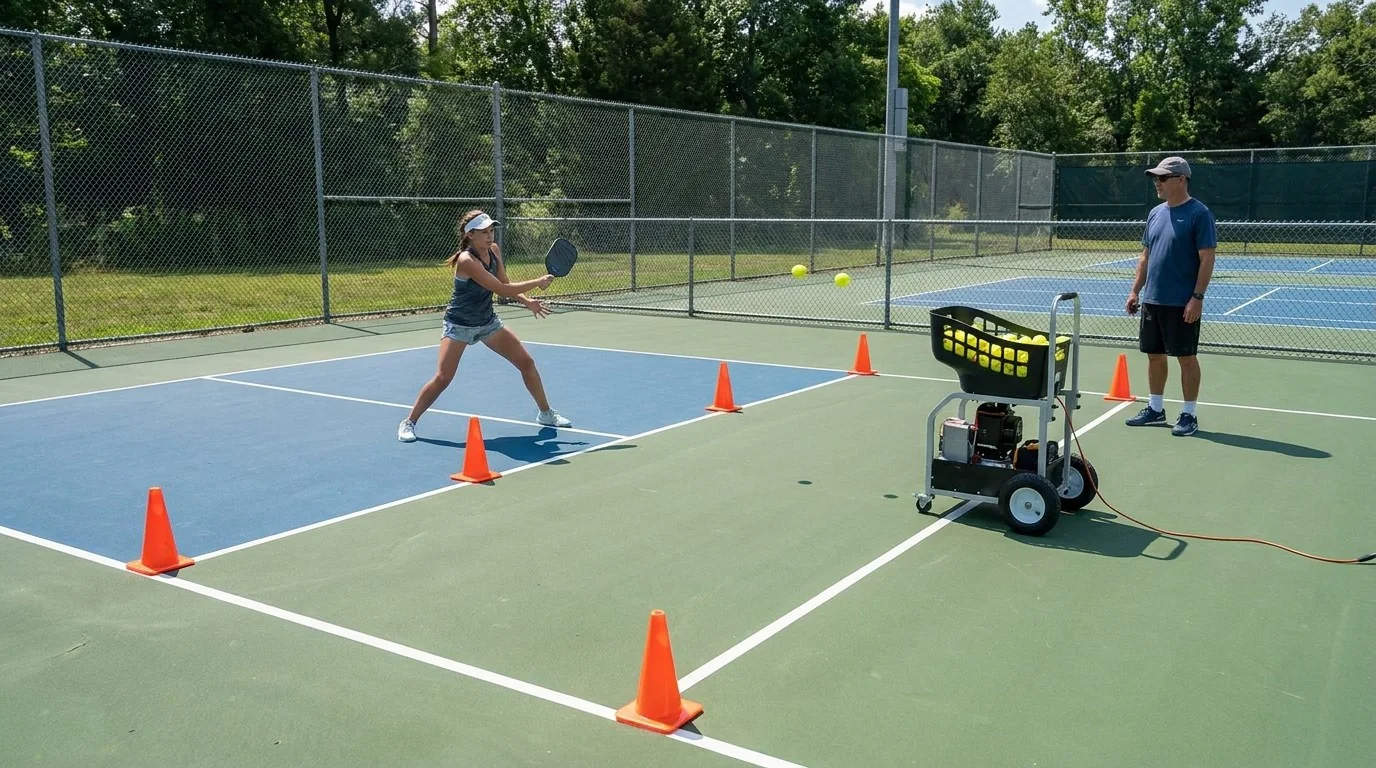
A ball machine is useful when each feed answers a court question. Repetition by itself is not the goal. Use the machine to test height, movement into contact, placement, and recovery, then connect those skills to the next rally decision.
Start with one variable
Begin with a comfortable feed and choose one target you can observe. For a dink, count balls that clear the net safely and land in a broad kitchen window. For a drive, check whether the ball reaches the intended deep area without becoming an easy attack. Keep the feed predictable at first so you can focus on contact, paddle angle, and balance instead of simply surviving the next ball.
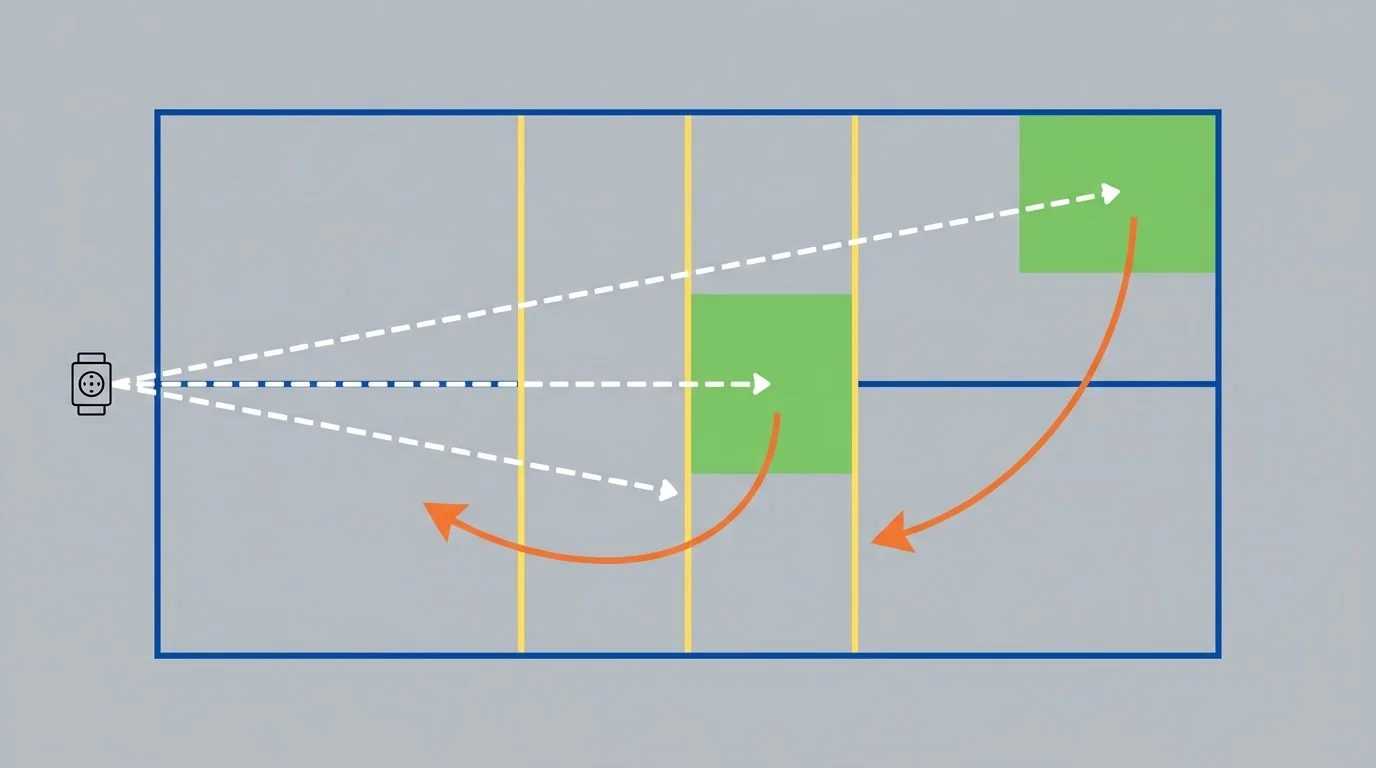
Add targets before adding speed
Place visual targets in the crosscourt, middle, and sideline areas. Work in short sets and change one target at a time. A crosscourt feed trains margin and depth; a middle feed can train compact preparation and decision-making. If the machine allows speed changes, increase pace only after your shape and landing window stay consistent. Faster is not automatically better practice.
Make the feet part of every repetition
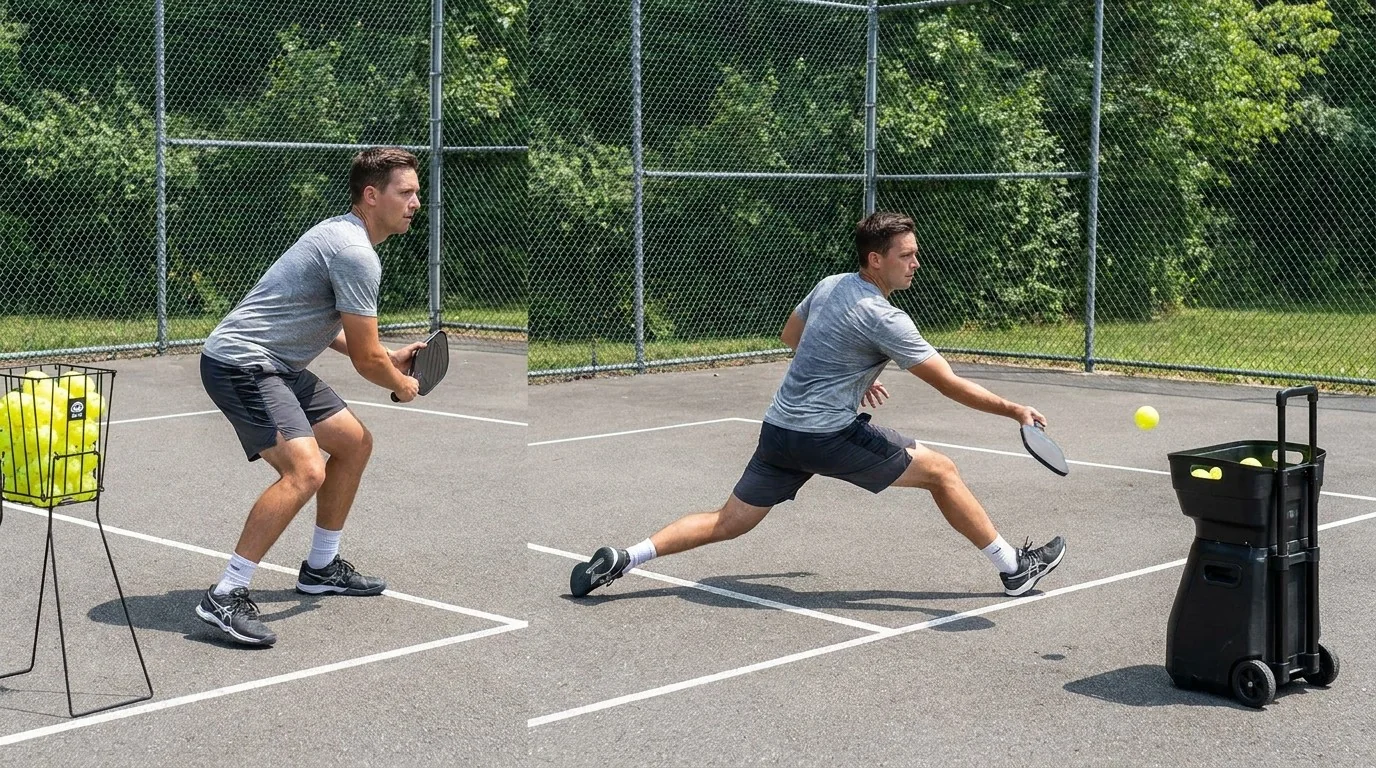
Stationary hitting can hide late preparation. Once contact is reliable, begin one step outside the ideal contact point and move into the ball. Use small adjustment steps, arrive balanced, and recover to a ready base before the next feed. For kitchen work, rehearse the split step as the ball leaves the machine. For baseline work, recover behind the expected reply instead of watching the shot.
Progress from feeds to decisions
Use three stages: fixed feed and fixed target, variable target with the same feed, then variable movement and target. A partner can call the target late, or you can alternate a neutral ball with a wider feed that requires a choice. Include a reset, a drive, and a defensive block so the session does not turn one stroke into an isolated exercise.
Avoid common machine-practice errors
- Too much pace: lower the speed until you can repeat the intended contact.
- No recovery: pause the machine or lengthen the interval so every ball includes a ready position.
- Only one location: alternate forehand, backhand, middle, and movement feeds.
- Chasing perfect winners: score safe depth, margin, and balance before power.
- Ignoring fatigue: stop a set when posture collapses; poor repetitions teach poor timing.
Finish with transfer
End with a short live or shadow sequence. Hit a few machine balls, then visualize the opponent’s contact and split step into the next shot. Record one metric, such as target hits out of twenty, and one observation about movement. The next session should change one constraint, not everything at once.
Build a repeatable session
Write down the machine setting, target, and score before you begin. This keeps practice from becoming a random basket of balls. Set a clear stop rule: if your feet stop recovering, contact becomes defensive, or your shoulder feels painful, lower the feed or take a break. Quality and safety make the next session more useful. Compare the same drill under the same conditions, then test it with a partner or in a game. That transfer step is where practice becomes performance.