Pickleball Body-Shot Defense: Paddle Up, Feet Ready, Reset Low
A practical pickleball body-shot defense guide covering ready position, small footwork, shoulder turn, soft hands, low resets, and pressure drills.
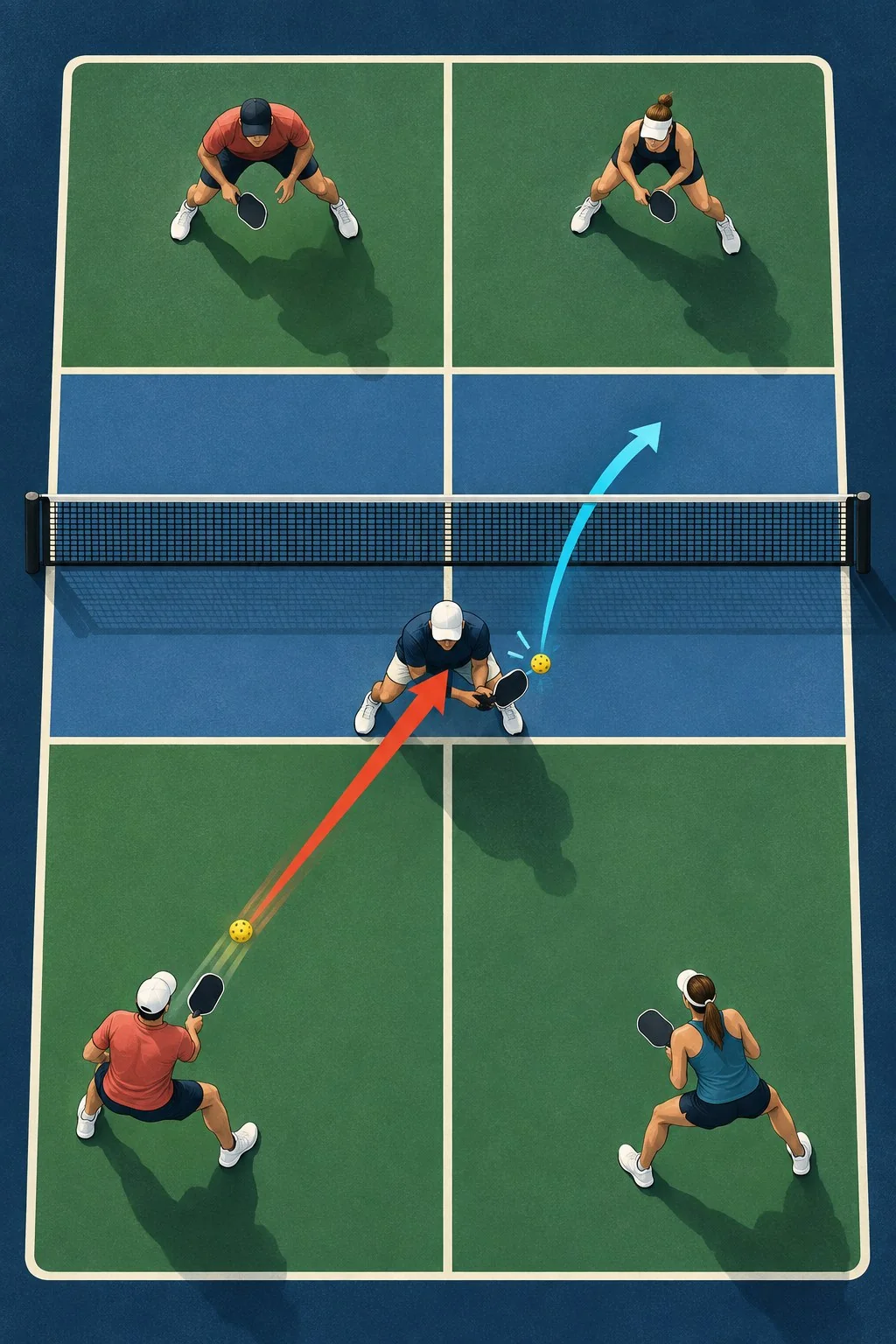
A fast ball aimed at your torso removes the time you normally use to choose forehand or backhand. The best pickleball body-shot defense is therefore prepared before contact: keep the paddle in front, make a small adjustment with your feet, turn slightly if space allows, and use the incoming pace instead of fighting it. The goal is not to win the exchange immediately. It is to block or reset low enough that your opponents lose their easy attack.
Build a ready position that protects the middle
Stand with the feet about shoulder-width apart and your weight on the balls of your feet. Keep the paddle in front of the body around chest height, with the elbows comfortably bent. A neutral ready position gives you a short route to either side; dropping the paddle near the hip creates a large gap before the stroke even begins.
When an opponent is moving forward through transition or setting up with a larger swing, expect pace. Small adjustment steps keep your legs active without committing you in one direction. Watch the opponent’s preparation and paddle angle, not only the ball after it has already been launched. That early read is often the difference between a compact block and a panicked swing.
Absorb the ball instead of countering wildly
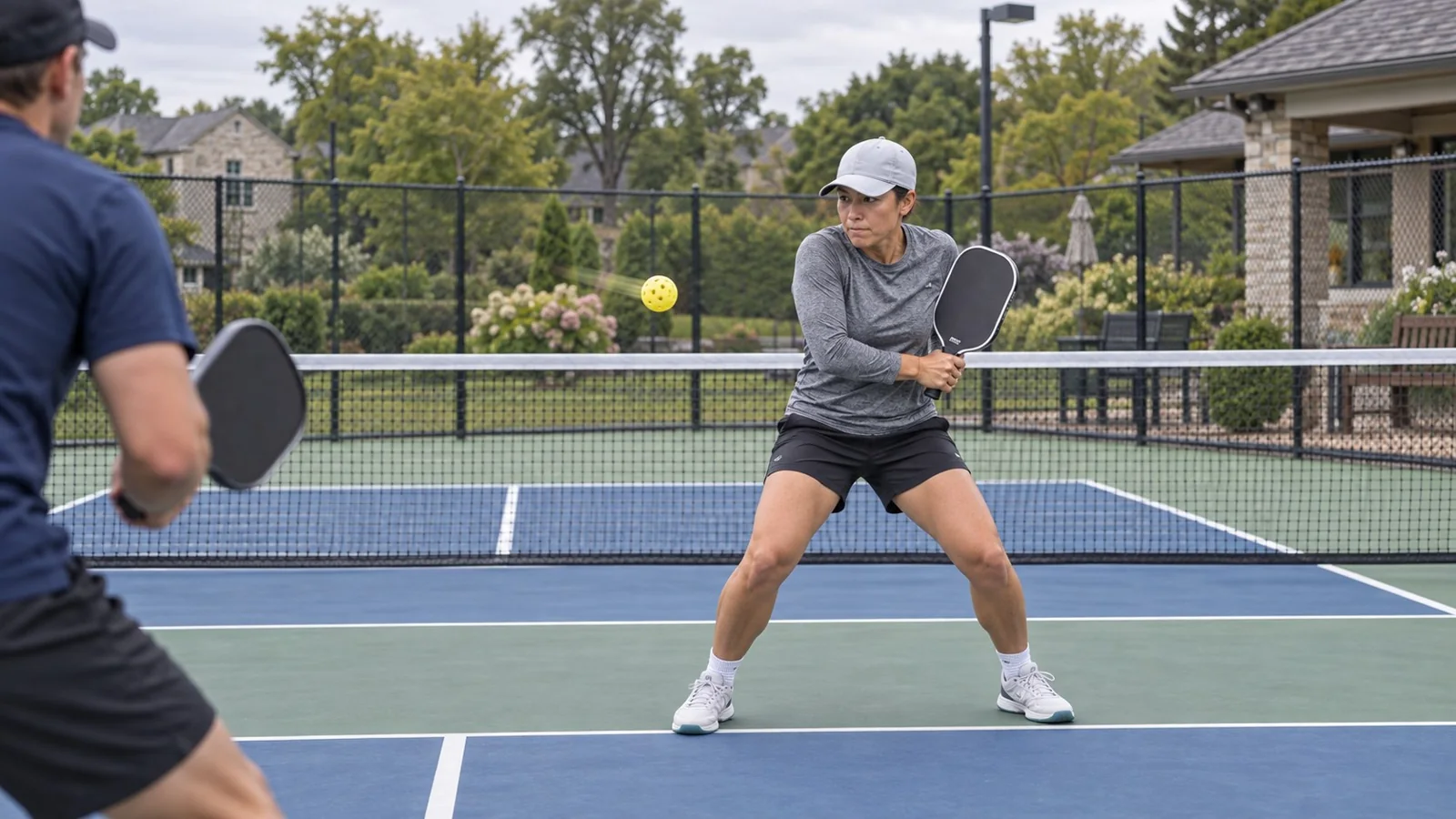
Your first instinct may be to swing harder. Resist it when the ball reaches your body. Use a compact motion with a stable paddle face and slightly relaxed grip pressure, allowing the incoming pace to do much of the work. Think of receiving the ball rather than trying to overpower it.
Keep the shoulders relatively square to the net when possible. Excessive rotation opens the body and makes the contact point less predictable. If the ball is moving toward one side, a small lateral step or a slight turn of the upper body can create room for the paddle. Move before swinging; even a few inches can turn a jammed contact into a controlled block.
From transition, the safest target is usually low in the opponent’s kitchen. A block that merely travels back high may keep the rally alive but invite another attack. A soft reset that descends near the non-volley zone line changes the height of the next exchange and gives you a chance to recover forward.
Practise the body-shot response under pressure
Begin with a partner feeding ten balls toward chest height from the kitchen line. Keep the task narrow: paddle up, shoulders calm, compact block. Do not chase a winner. After the first set, alternate hip and shoulder targets so you learn to create space rather than freezing in front of the ball.
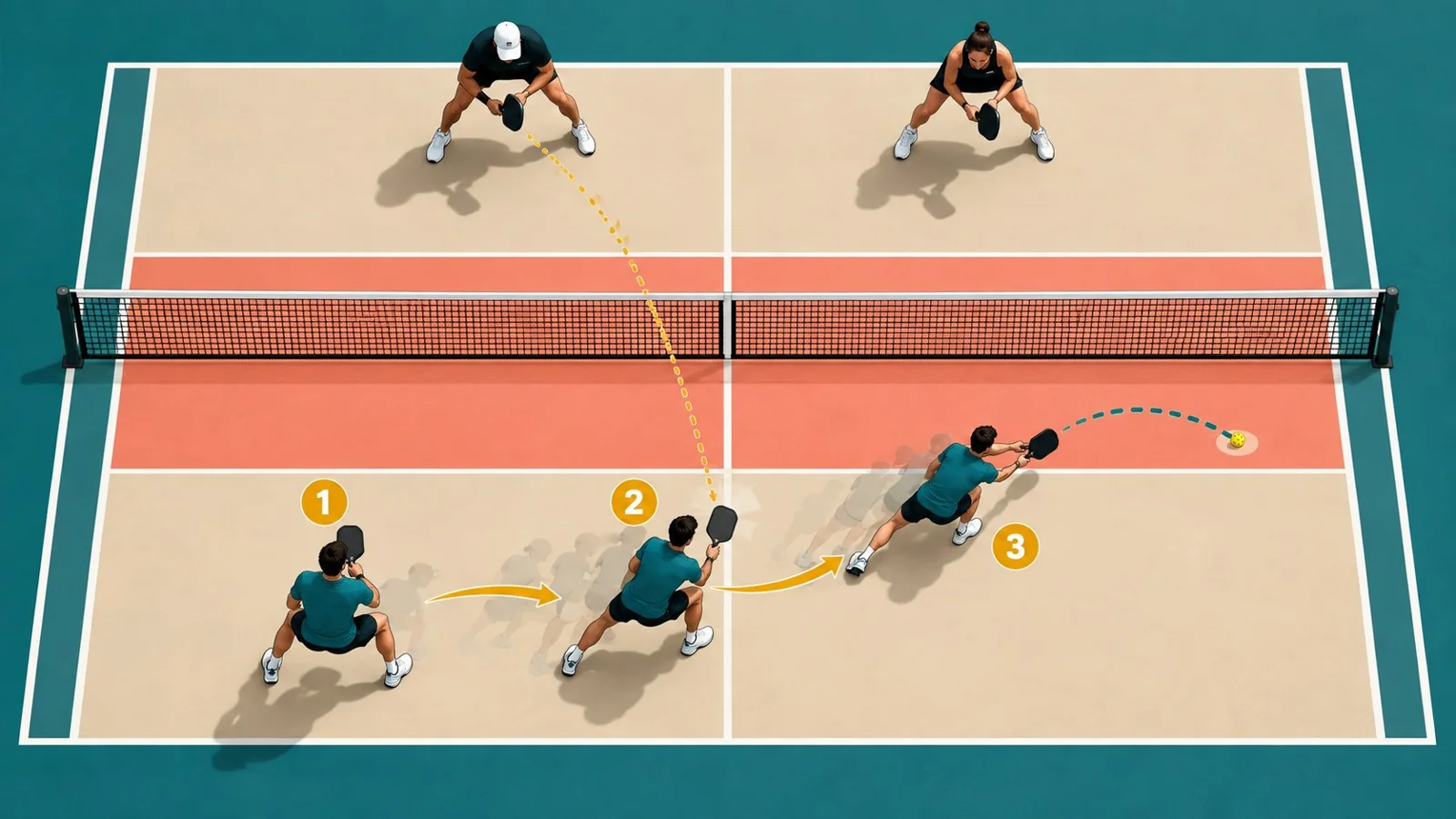
For the next progression, require every defensive ball to land inside the opponent’s kitchen. Relax the grip at contact, soften the paddle just enough to remove pace, and recover to a balanced stance immediately. In transition, add controlled forward movement before the feed, then stop as the feeder prepares to hit; continuing to walk into contact is a common reason body shots feel impossible.
Avoid giving opponents the ball they want. Low drops, careful dinks, and deep returns reduce the number of attackable balls that reach your body. If a shot is clearly heading out and you can safely move aside, let it go. In doubles, communicate when one partner is under pressure and keep the middle covered without crowding the defender.
Confidence comes from repetition. Treat the body shot as information about your ready position and spacing, not as a reason to retreat from the kitchen. Hold your ground when possible, absorb the pace, reset low, and prepare for the next ball.