Pickleball Court Access Routes: Gates, Width, and Safer Shared Play
A practical guide to pickleball court access routes, gate clearance, stable surfaces, circulation, and safer shared play.
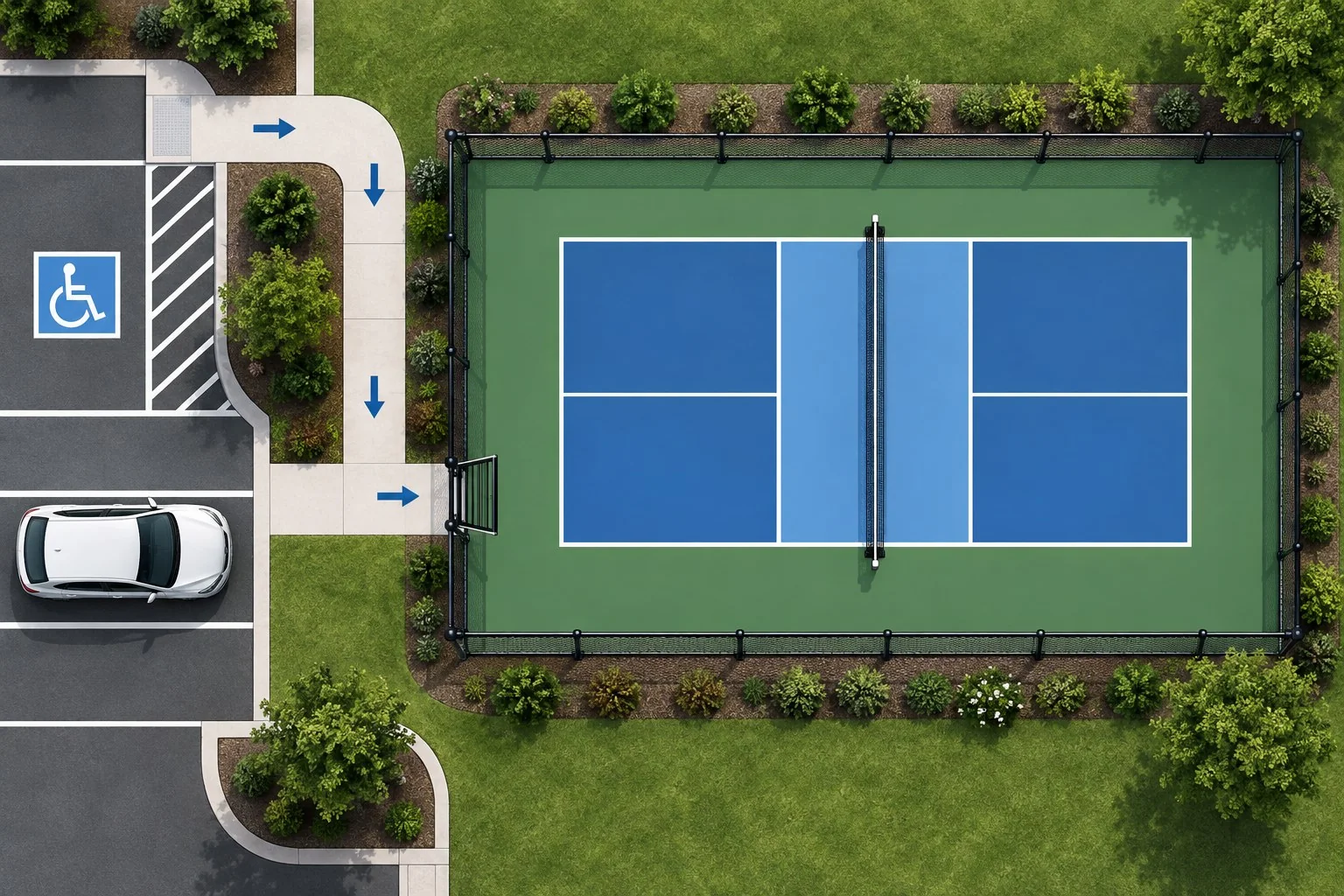
Good pickleball court access routes should let players, spectators, maintenance staff, and emergency responders reach the courts without improvising around benches, bags, uneven surfaces, or a locked gate. Access is part of court quality, not an afterthought. A route can look spacious on a plan and still become difficult when several games are running.
Map the route before choosing court details
Begin at the accessible parking area or public entrance and walk to every court. The route should be continuous, stable, firm, and slip-resistant, with no loose gravel, abrupt lips, standing water, or objects narrowing the way. Check the route in the conditions in which the facility is actually used, including after rain and during busy open play.
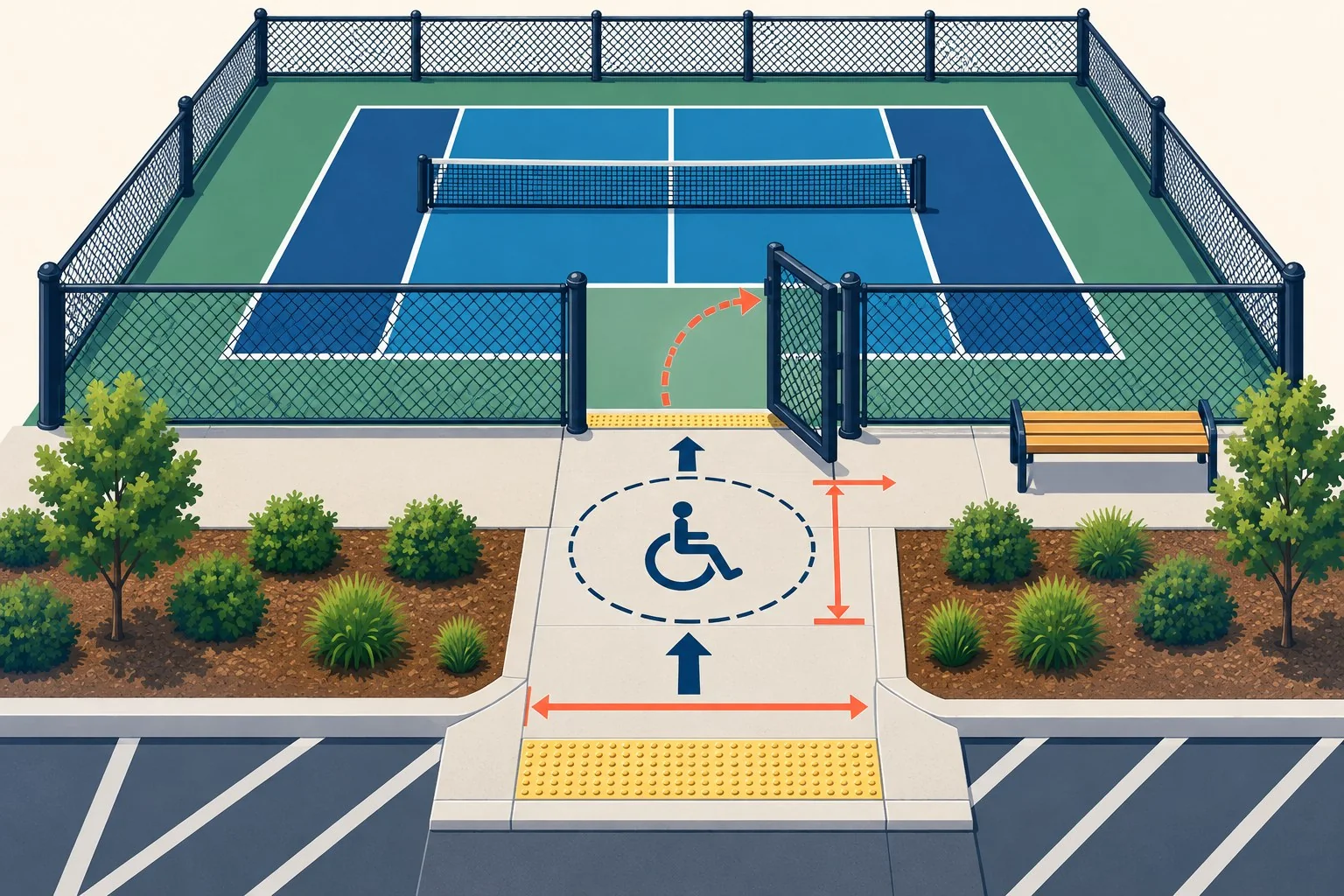
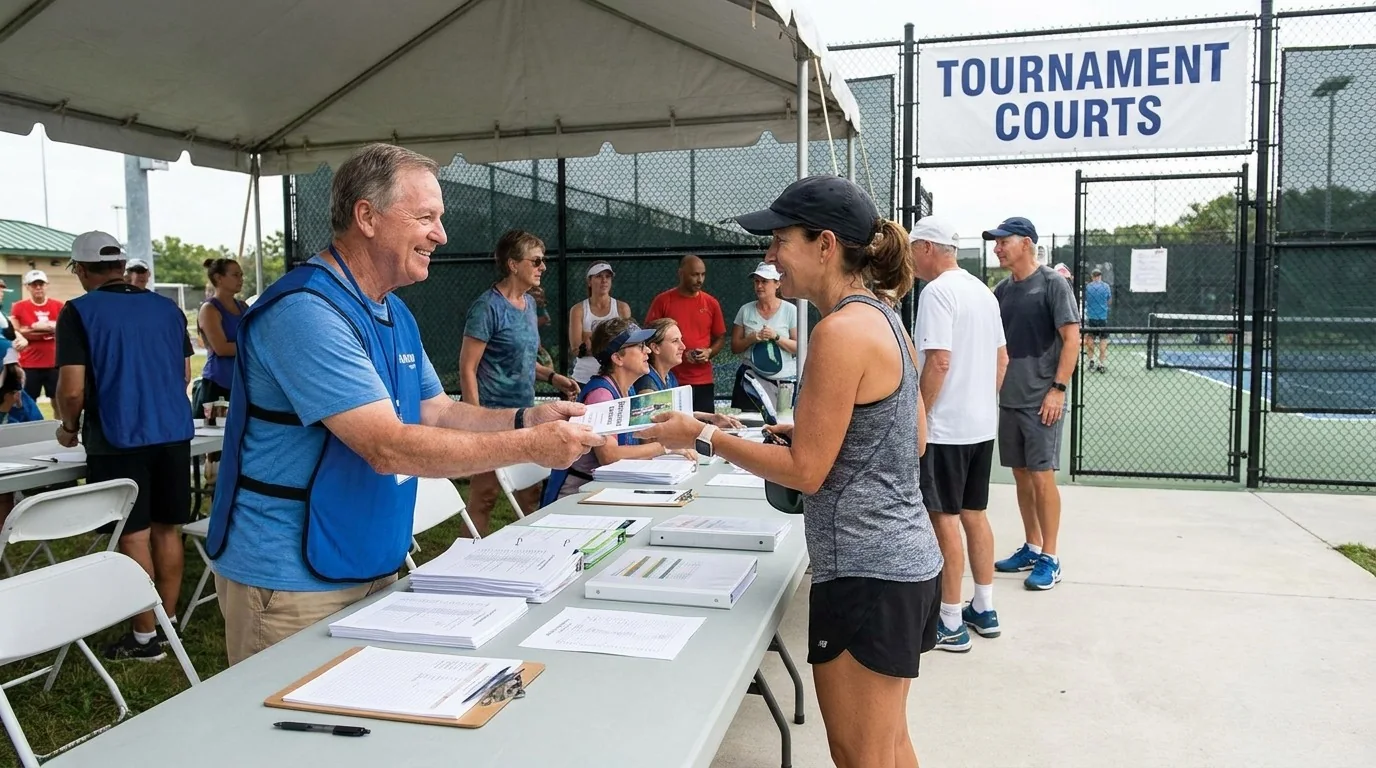
A practical route is more than a straight line. It needs room for people to turn, wait, retrieve equipment, and pass without stepping into an active rally. Keep ball carts, coolers, chairs, and spare nets in a consistent storage area away from the circulation path. If two courts share an approach, make the crossing points obvious and keep sightlines open.
Treat the gate as a working part of the facility
Measure the clear opening rather than relying on a nominal gate size. A gate that appears wide enough may lose usable space to the frame, latch, or hardware. Check that it opens fully, does not swing into a playing path, and can be operated without unusual force. Thresholds and transitions should be low, stable, and easy to cross.
The gate should close reliably while remaining practical for authorised access. Inspect hinges, latches, posts, and exposed edges. A loose hinge or protruding tie can turn a routine entry into a trip or snag hazard. On public or shared sites, confirm that staff know how emergency access is managed; do not leave the only workable route dependent on a player finding a key.
Keep circulation separate from active play
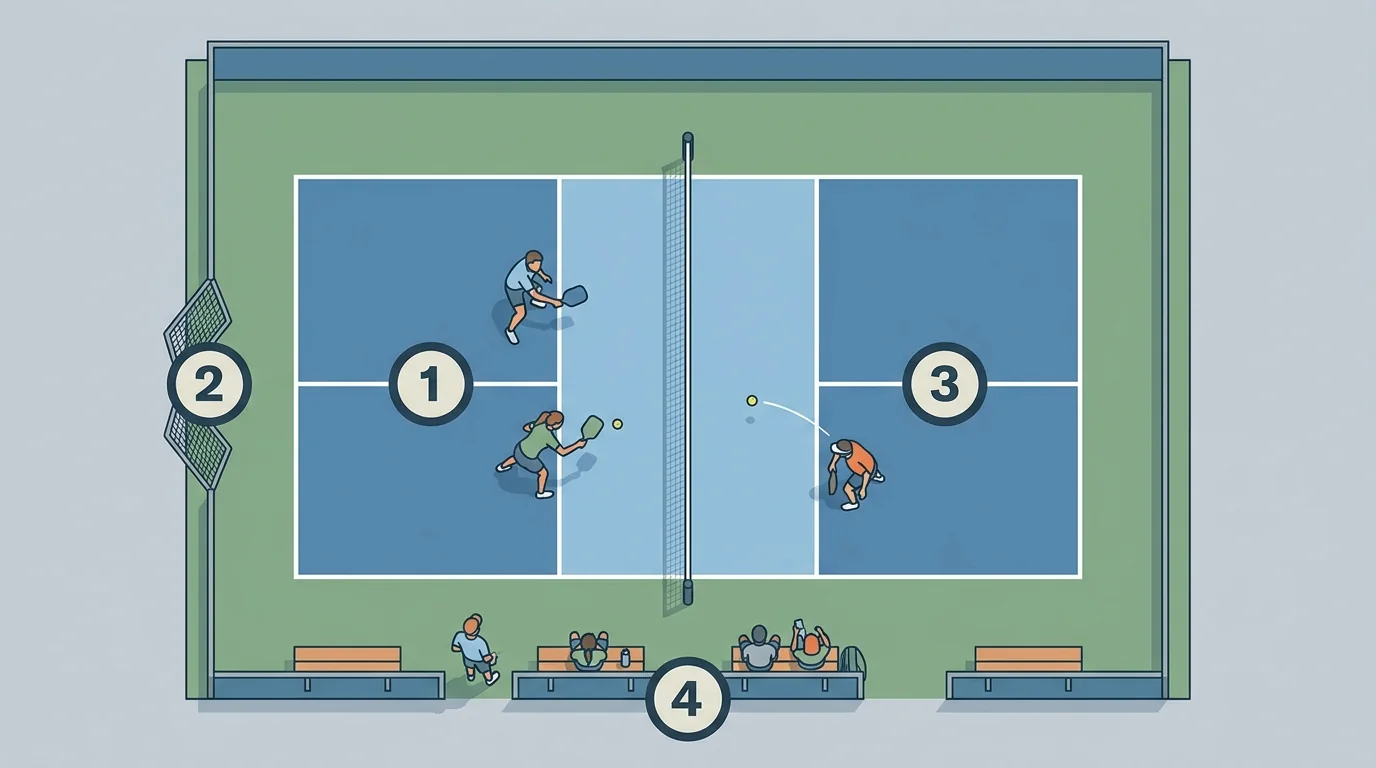
Players need a clear boundary between the court and the route around it. Spectators should have a place to wait that does not force others into a gate opening or behind a player chasing a ball. On multi-court sites, divider fencing can reduce interruptions, but it should not create a blind corner or a narrow passage.
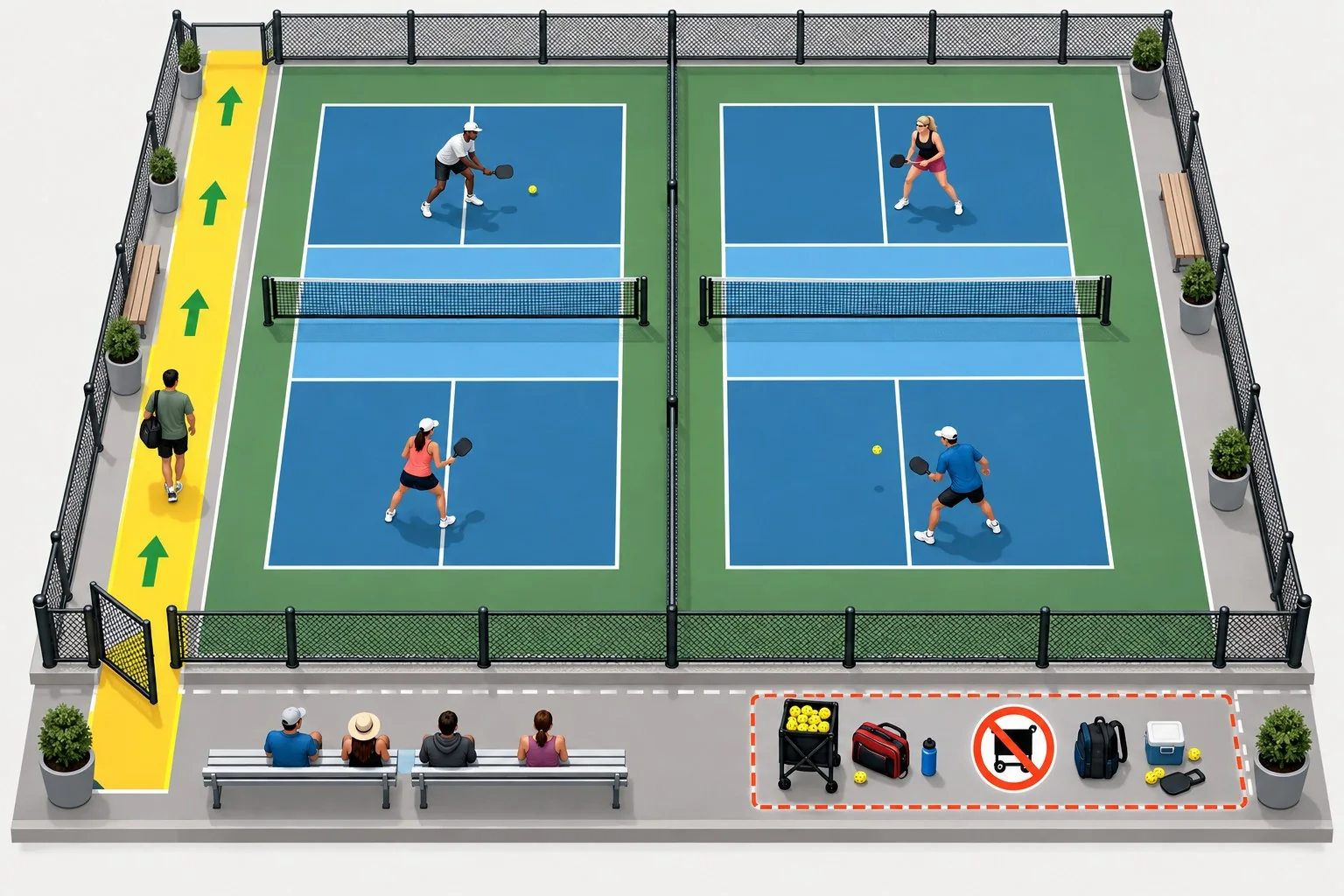
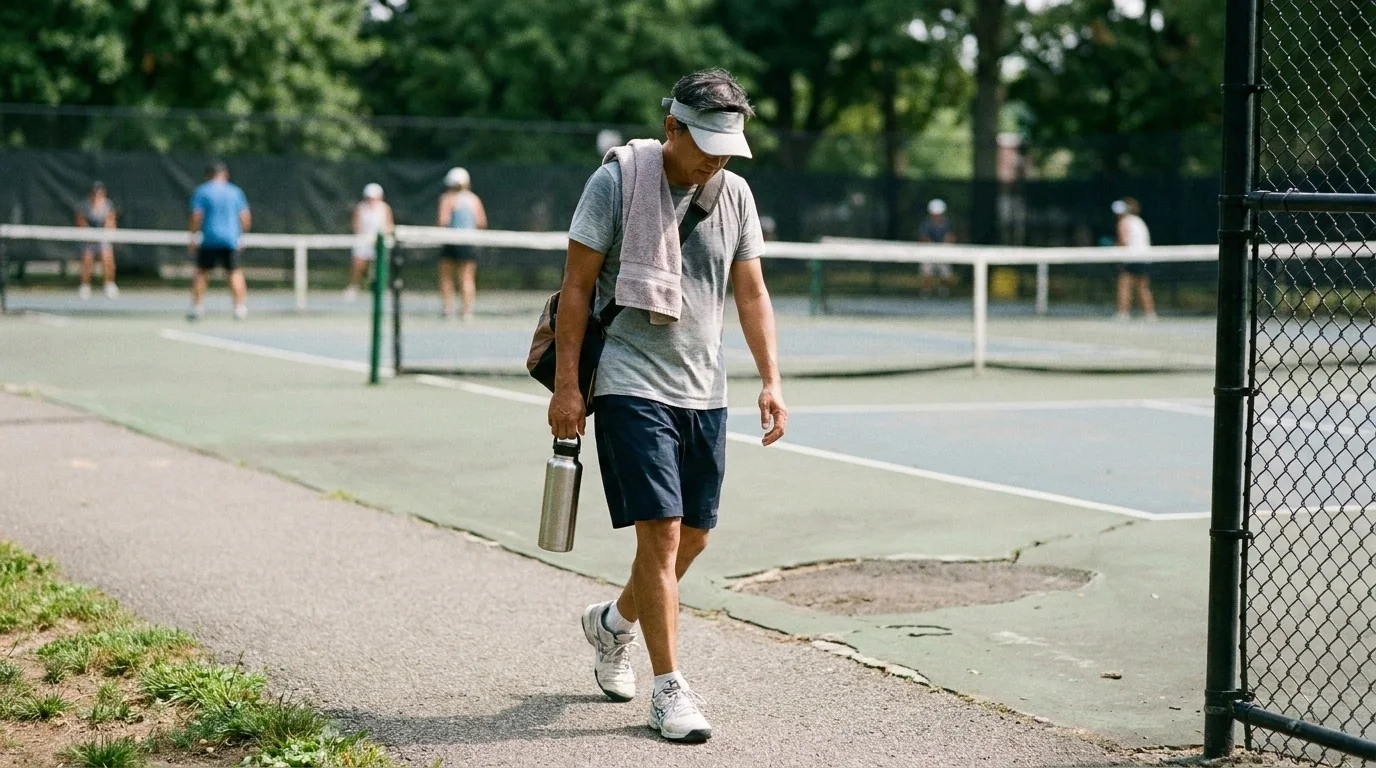
Review the surface as carefully as the gate. Look for cracks, raised edges, drainage problems, slippery leaves, cables, and temporary signs. After construction, resurfacing, storms, or a layout change, repeat the walk-through because settlement and stored equipment can change the route even when the court itself looks unchanged.
Use a repeatable access checklist
Before a busy session, confirm four things: the route is clear from entrance to court, each gate opens and latches properly, the surface is stable and free of trip hazards, and spectators and equipment are positioned outside the circulation path. Ask people who use mobility equipment or need more time to move where the route feels tight; their feedback can reveal problems a quick visual inspection misses.
Record the location of any obstruction, the temporary control, and who is responsible for correction. A short inspection does not replace local building or accessibility requirements, but it gives a club or community facility a practical way to catch everyday hazards early. When access is continuous, visible, and usable during real play, the court serves more people with fewer interruptions.