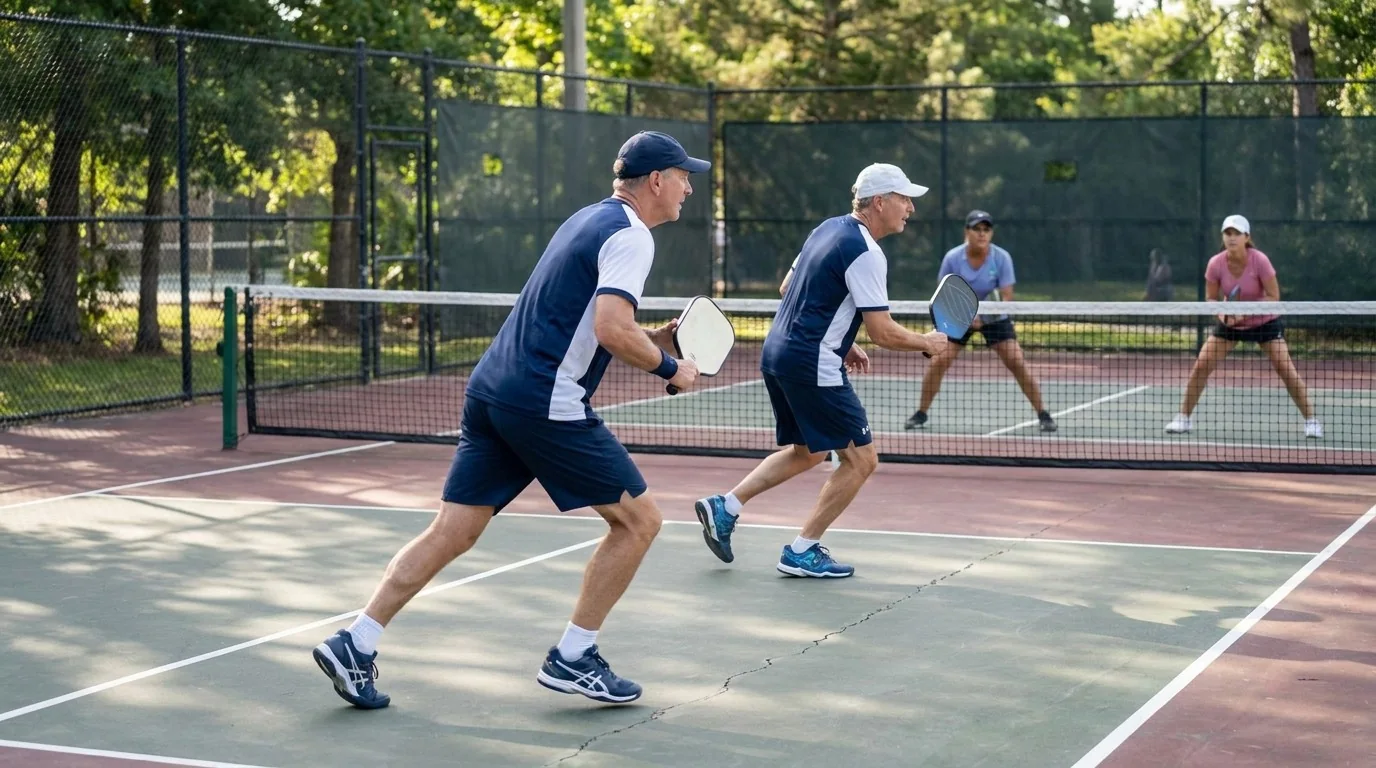
Pickleball Court Noise Etiquette: Keep Shared Games Focused and Safe
Learn how to share busy pickleball courts with clear calls, safe movement, and respectful noise habits that keep every rally focused.
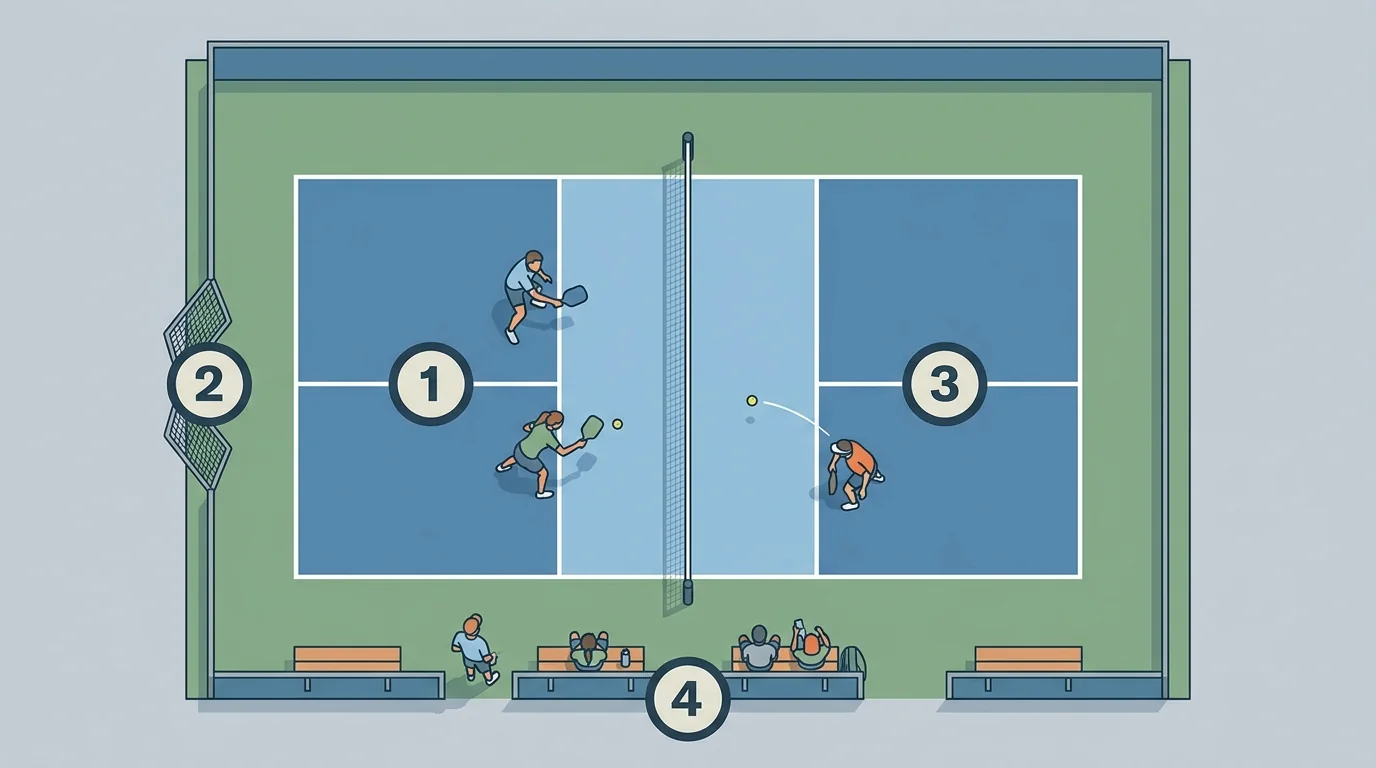
Busy pickleball courts are easier to share when everyone follows the same few habits. Wait for the point to finish before crossing behind a court, call a clear warning when a stray ball moves toward another court, and keep nearby conversations quiet enough for players to hear the score and safety calls. None of this requires a silent facility. It simply keeps movement and sound predictable.
Wait for a natural gap before moving
If you need to open a gate, walk behind a baseline, or reach a bench on the far side, wait until the rally is over. A person appearing at the edge of a court can pull a player’s eyes away from a fast ball, and someone turning to enter may collide with a player moving backward.
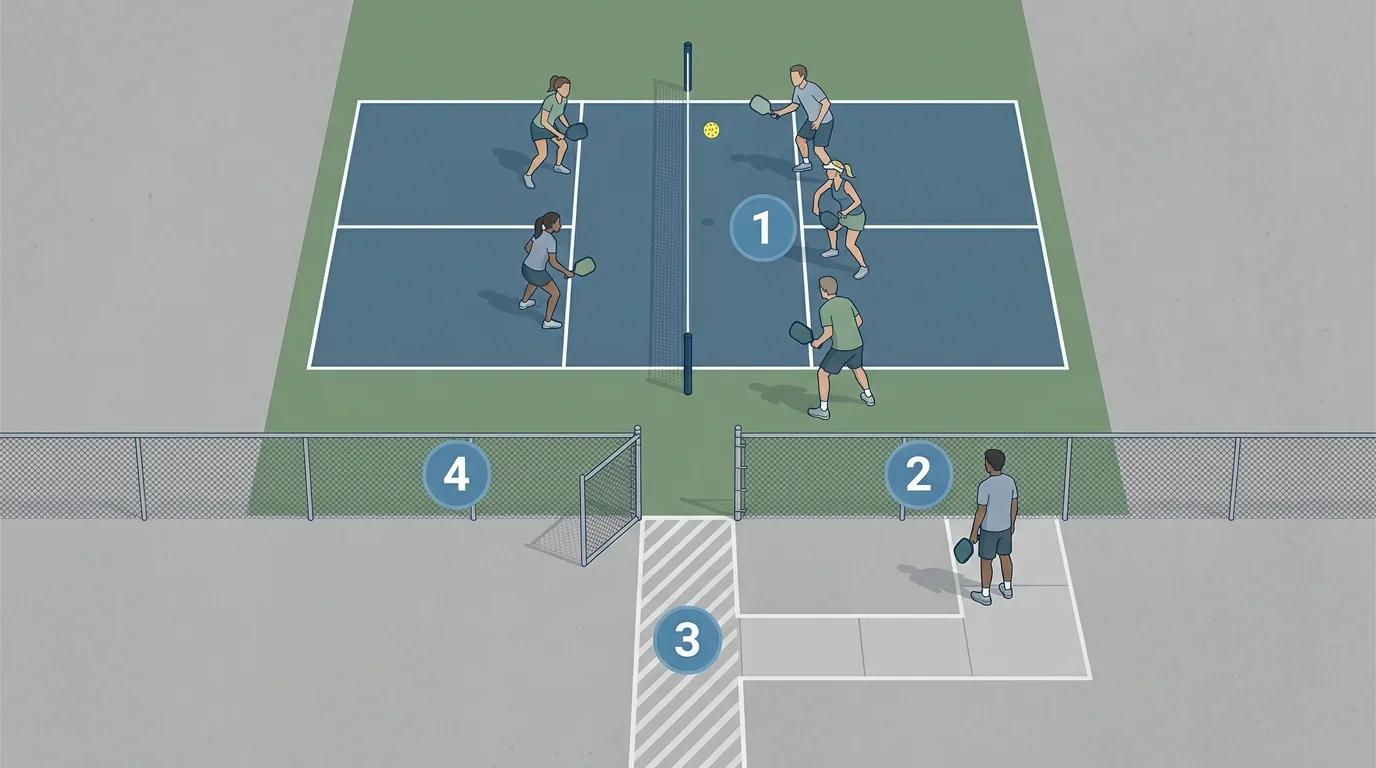
Stay outside the playing area while you wait. Keep bags, drinks, and spare balls out of walkways, and use the designated entrance instead of cutting through a neighboring court. When the point ends, move calmly and promptly. A short pause lets the players see you; there is no reason to hurry behind them while they reset.
If you are waiting for a partner, remember that shared court time belongs to the full group. Drilling is useful, but do not occupy an entire court for a casual warm-up when a complete group is ready to play. Asking, “Are you waiting for this court?” is usually enough to clear up the queue without creating an argument.
Use your voice for safety
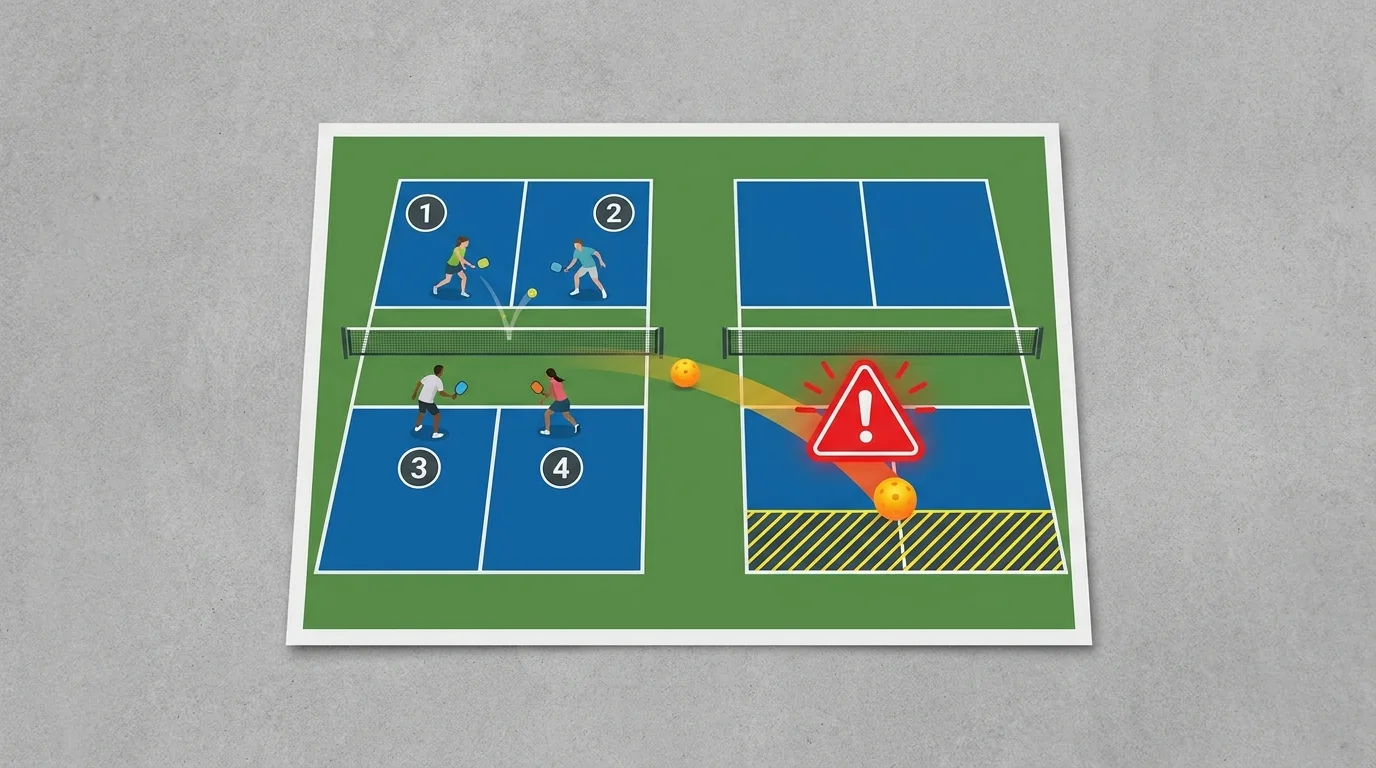
A ball leaving your court can become a trip hazard on the next one. Call “Ball!” loudly and clearly as soon as you see it rolling or flying toward neighboring players. The call is a warning, not an order and not a reason to blame someone for the miss. Once the other rally has stopped, retrieve the ball safely or ask for it to be rolled back. Never run onto another court while a point is active.
Conversation follows the same rule. Greetings, jokes, and coaching do not have to disappear, but they should stay at a level that lets nearby players hear their own score and safety calls. If your voice makes someone look away, miss a warning, or hesitate during a point, lower it or move farther from the court.
When another court calls “Ball!”, stop and look before reacting. The ball may be moving quickly, and players may need a moment to locate it. Do not swat it back through an active court. Roll it gently toward a safe edge, or wait until the point has ended. If you are unsure whether play has stopped, ask instead of stepping in.
Keep the shared-court routine simple
Before entering, scan the nearby courts and wait for a natural pause. During play, keep the entrance, sidelines, and space behind the baseline clear. If a ball escapes, call the warning early and pause until the neighboring players are safe. After your game, collect your ball and leave through a gap between points rather than lingering in the playing area.
Describe the behavior you need instead of judging the person. “Let’s wait for the point to finish before crossing” or “Ball coming left, please hold up” addresses the immediate problem without embarrassing a beginner. Short, specific calls also show new players how the facility works.
The aim is not to police every sound or movement. It is to make the space predictable: players can focus, waiting groups know when to enter, and everyone can react quickly to a stray ball. That small amount of awareness protects court time and keeps community play welcoming for beginners and experienced players alike.