Pickleball Recovery After Play: A Simple Five-Minute Cool-Down
A practical five-minute pickleball recovery routine: walk, mobilize, stretch gently, hydrate, and recognize when discomfort needs more than a cool-down.
Pickleball recovery after play works best as a gradual transition, not an abrupt stop. A few minutes of easy movement, comfortable mobility, fluids, and gentle stretching can help you come down from a session and notice how your body feels. This is general guidance, not a diagnosis or a substitute for medical care when pain persists.
Start by lowering your pace
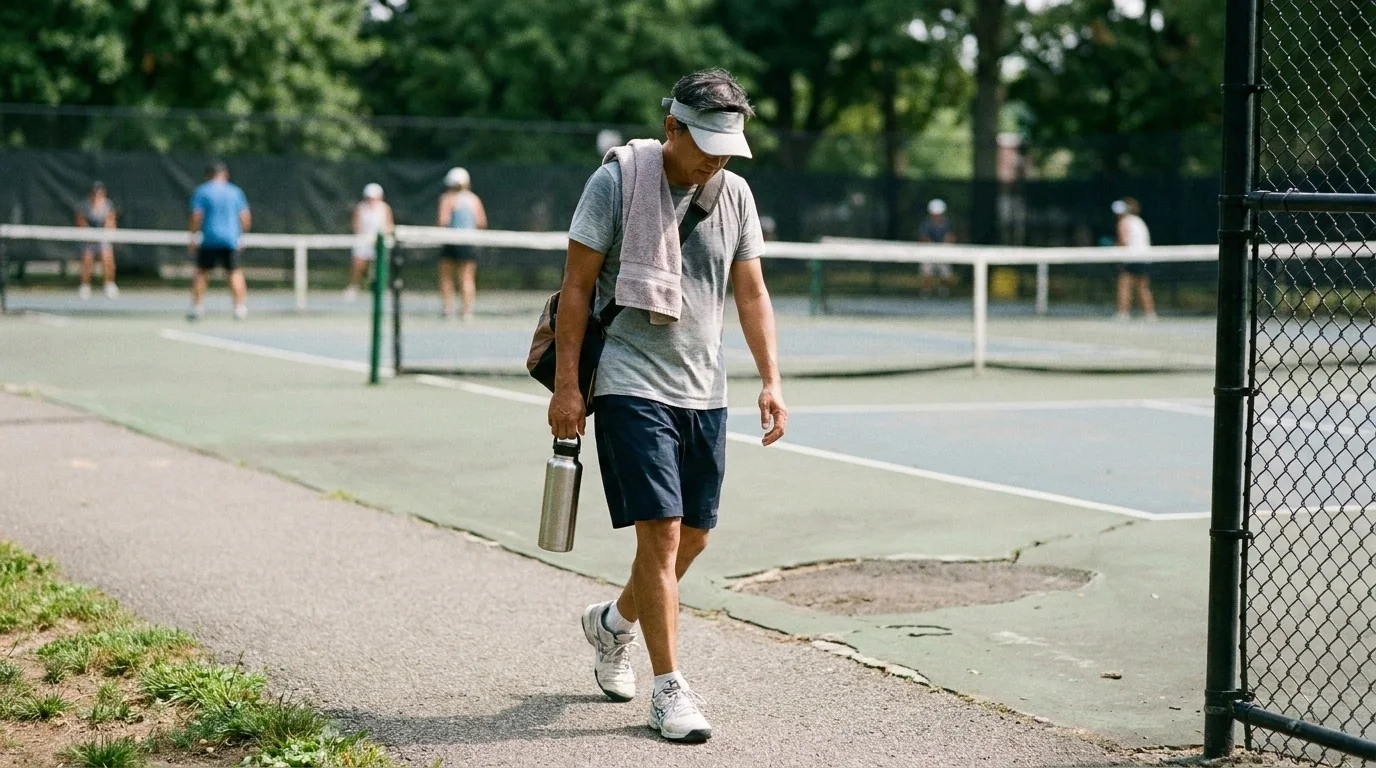
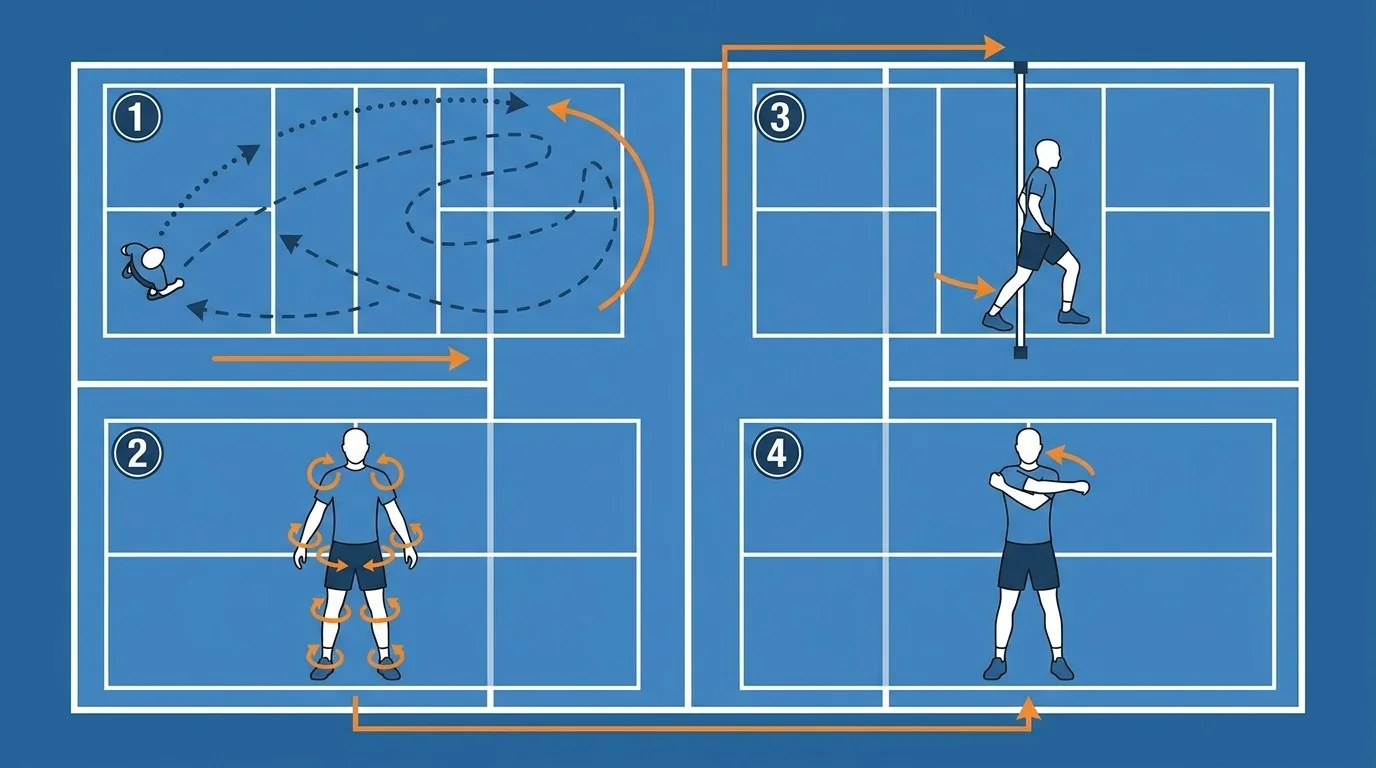
Walk slowly around the court for one or two minutes. Let your breathing settle without stopping suddenly, swing your arms loosely, and keep the first lap easy enough that you can speak normally. This is a transition out of play, not another conditioning block.
Add gentle joint movement
When your pace has come down, move the joints that worked repeatedly. Make comfortable ankle circles, bend and straighten your knees through a small range, roll your shoulders, and turn your torso without forcing the motion. Keep everything smooth. A sharp pinch, increasing pain, or loss of control is a reason to stop, not a cue to push deeper.
Use a few controlled stretches
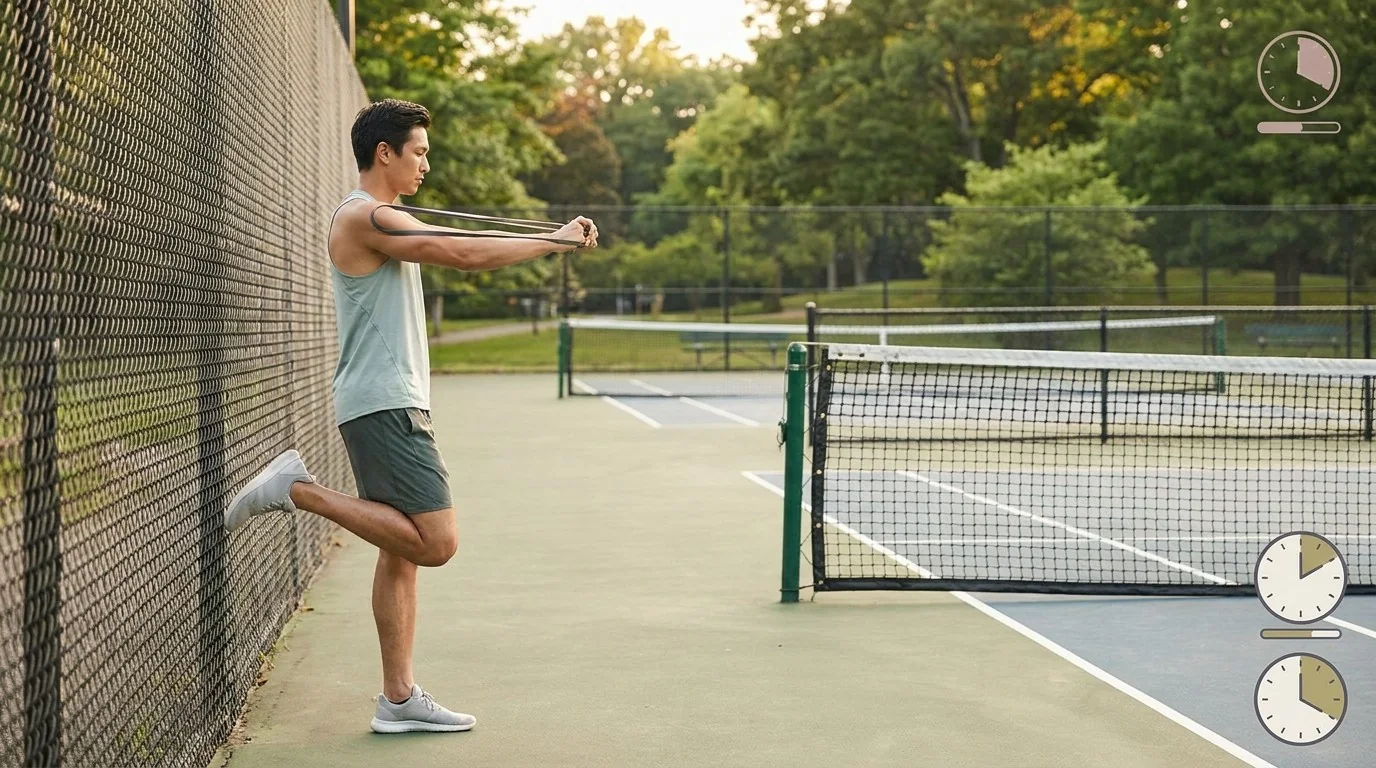
Choose two or three areas that feel loaded instead of trying to stretch everything. A wall-supported calf stretch, a comfortable front-thigh stretch while holding something stable, or a gentle cross-body shoulder stretch can fit after play. Hold each position calmly and breathe. Do not bounce or force the end of the range.
Balance can be less steady when you are tired, so stretch away from the playing surface and use a fence or wall for support. The point is a comfortable transition, not a test of flexibility.
Rehydrate and review how you feel
Drink according to your thirst and the conditions of the session. If the day was hot, the match was long, or you lost a lot of fluid through sweating, give yourself extra time before driving or starting another demanding activity. Make a short note of any movement that felt restricted and whether the discomfort settled as you cooled down.
Know when recovery is not enough
Do not treat a cool-down as proof that an injury is harmless. Stop and seek appropriate professional guidance for severe or worsening pain, significant swelling, chest pain, fainting, unusual shortness of breath, or symptoms that do not settle. If you have a known condition or injury, follow the plan from your clinician rather than copying a general routine.
A repeatable recovery habit can stay simple: walk, move the joints gently, choose a few comfortable stretches, drink, and check your symptoms. The goal is to leave the court calmer and more aware, not to force your body through one more workout.
Make the routine easy to repeat
Keep the sequence consistent even when the exact duration changes. After a short recreational session, a few minutes may be enough. After a long match, hot-weather play, or a session with repeated lunges and direction changes, extend the walking phase and take more time to observe your breathing and balance. Write down what felt limited, whether the sensation improved while moving, and how you felt later that day. Those observations can help you choose a sensible next session, but they do not replace an evaluation for ongoing pain.
The most useful cool-down is the one you can perform calmly every time: leave the court moving, restore comfortable range, drink, and respect warning signs.