Pickleball Court Ball Retrieval: Safer Ways to Clear Adjacent Courts
A practical court-community guide to calling a ball, waiting for a safe pause, and retrieving loose pickleballs around adjacent active courts.
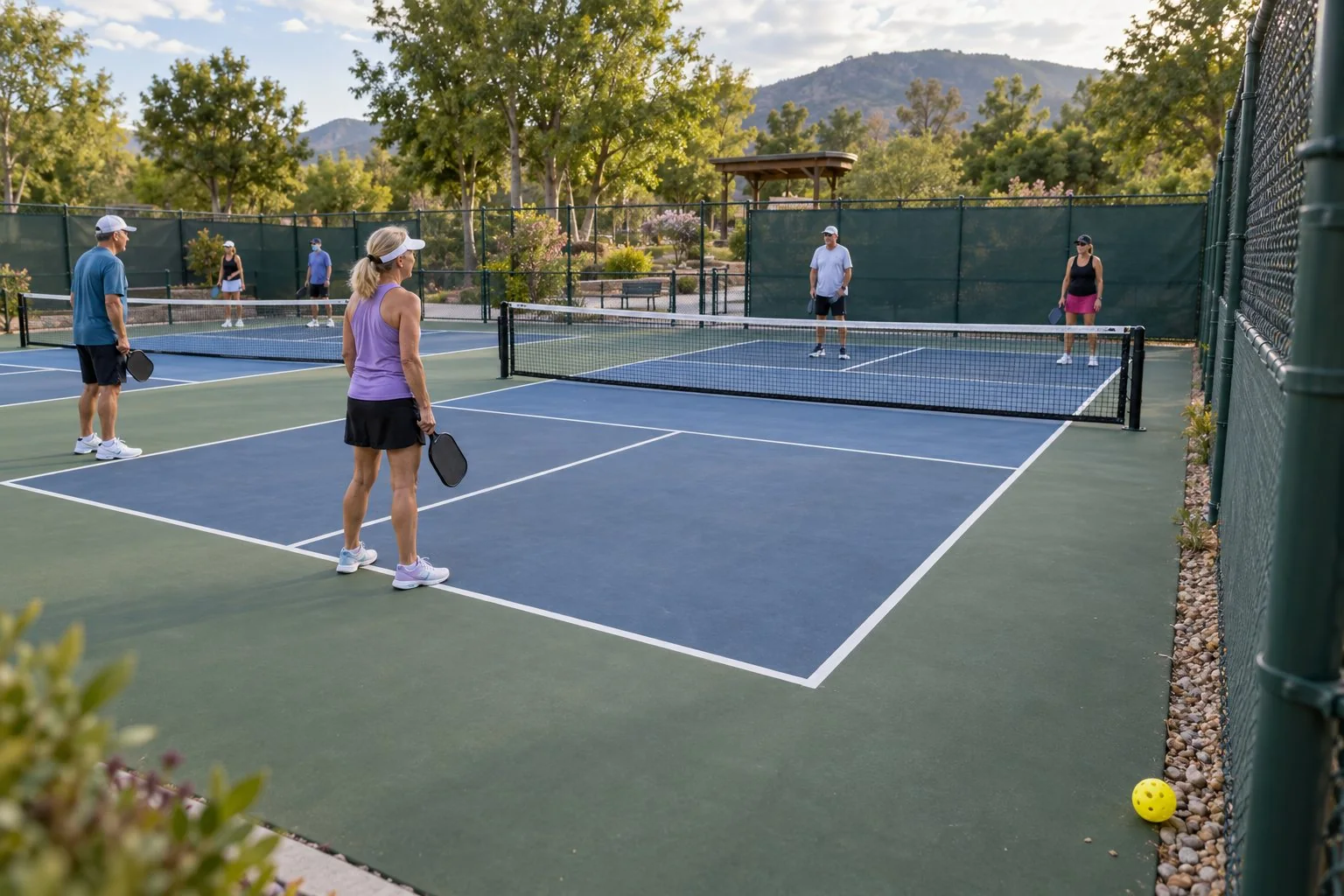
A loose pickleball can turn a friendly session into a collision, a distraction, or an argument about whether the rally should continue. The safest habit is simple: do not rush onto an adjacent court just because you see the ball. First protect the players who are already moving, then communicate, then retrieve it through the safest available route.
Pause before you cross or enter
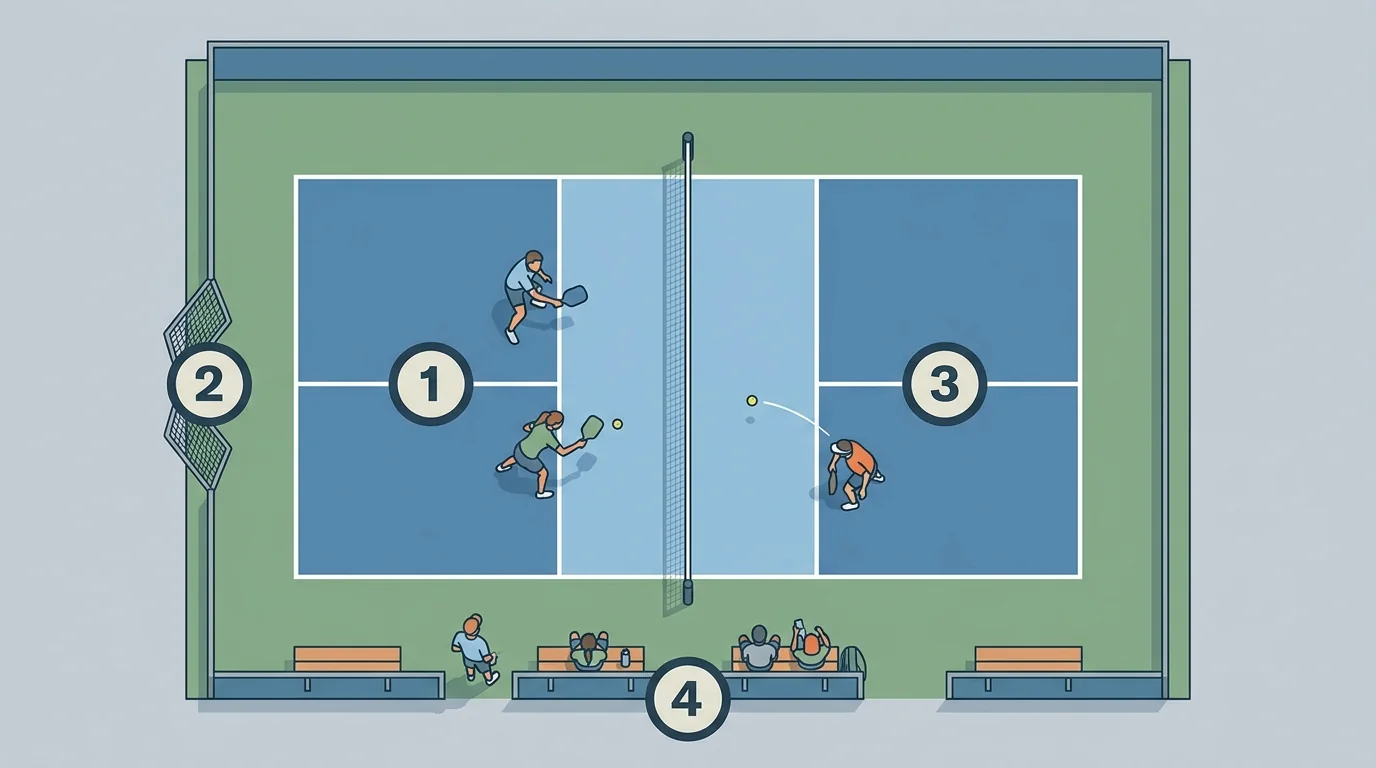
Look at both courts before taking a step. A ball near a sideline or gate may seem harmless, but players can be chasing a wide shot, backing up for a lob, or moving through a blind angle. If either court is active, stay outside the playing area and wait for a natural pause. Never walk behind a player during a point and never assume that a quiet-looking court is empty beyond your field of view.
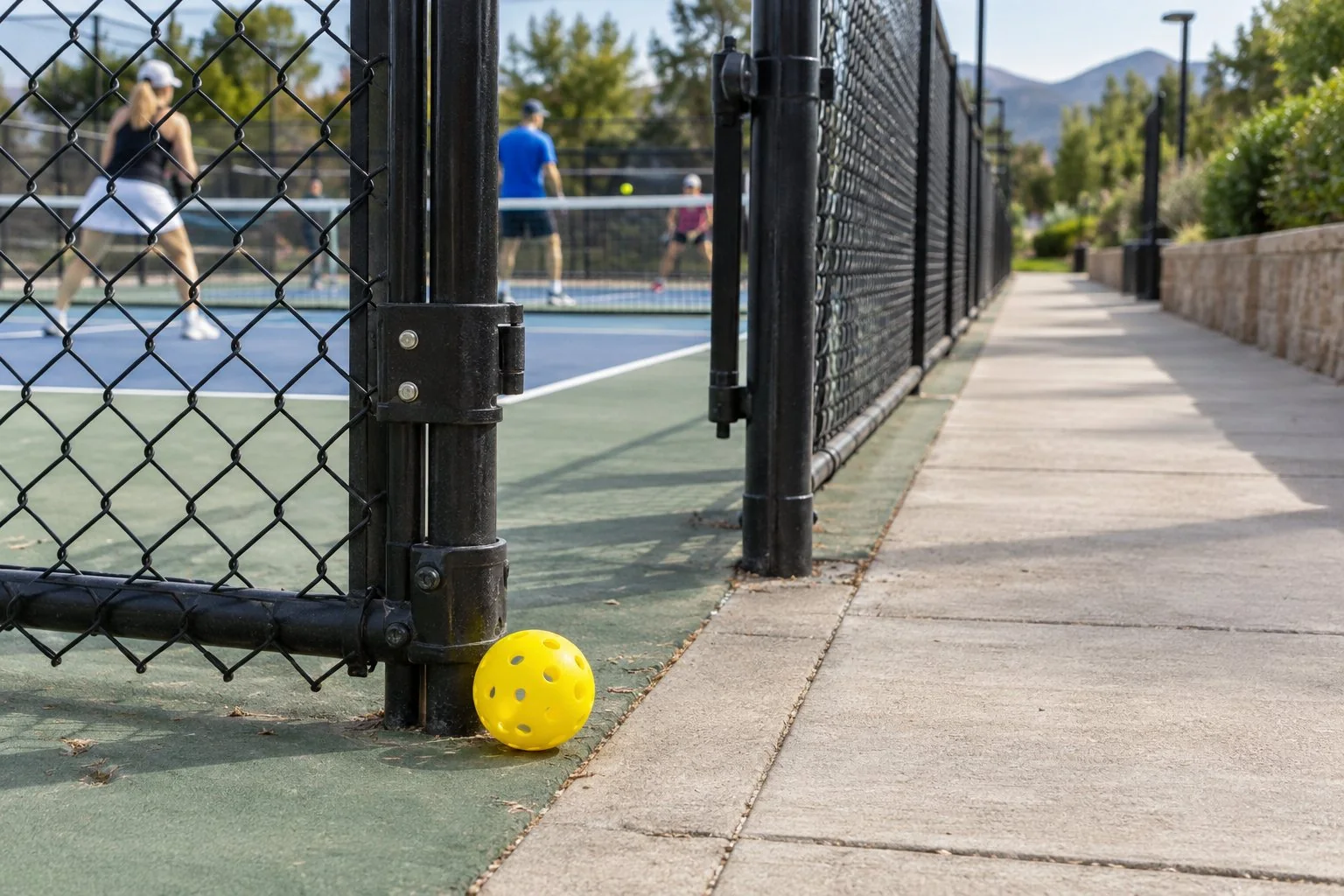
Use a clear, brief call such as “Ball on court” when the ball has entered an active playing area. Speak loudly enough for the players to hear, but do not shout in a way that sounds like coaching or a line call. The player who notices the ball should point to its location and let the rally stop in an orderly way. If the ball is outside the court and not affecting play, leave it where it is until the nearby point ends.
Retrieve the ball without creating a second hazard
When the players have acknowledged the interruption, choose the route with the least traffic. Use a gate or open walkway rather than stepping over a net, ducking under a divider, or reaching through a narrow gap. Check for loose balls, bags, benches, and fence hardware before moving. Keep your eyes on the ground while walking, but also glance up at the adjacent court before entering any shared passage.
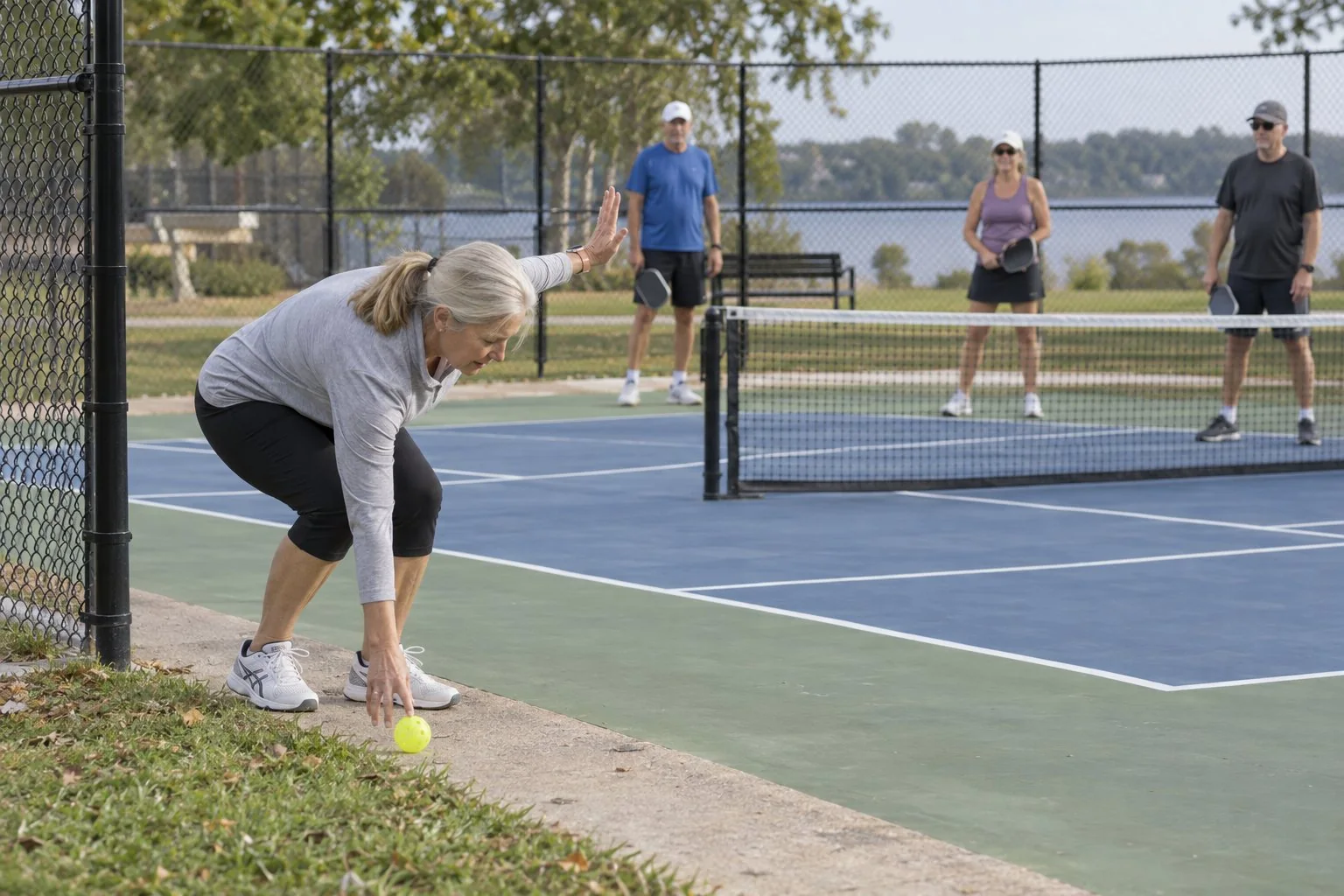
If the ball is on the far side of an active court, ask the players there to return it after their point. Do not send someone sprinting across the court to save time. A short wait is safer than an ankle collision or a player changing direction unexpectedly. When several courts share one walkway, the person closest to the ball should communicate rather than leaving the retrieval to a newcomer who may not know the layout.
A routine for open play
Agree on a local routine before games begin: call “Ball,” stop when the ball affects play, identify whose ball it is, and return it only after the court is safe. If the ball belongs to another group, place it at a visible edge or hand it back when the owner is ready. Avoid tossing it across an active court, because a thrown ball can distract players or arrive at head height.
For facility managers, keep gates easy to see, remove trip hazards from shared paths, and avoid storing equipment where a retrieved ball will be left underfoot. A small reminder near the entrance can explain the pause-and-signal routine without covering sightlines or making the court feel over-regulated.
The goal is not to stop every point for every distant ball. It is to recognize when a ball can influence movement, communicate early, and use a route that keeps active players in control. That small pause protects the rally and makes shared pickleball courts easier for everyone to use.