Pickleball Court Courtesy: Safe Calls and Smooth Rotations
A practical doubles communication system for agreeing on calls, taking middle balls, switching safely, covering after ownership, and training the habits with focused drills.
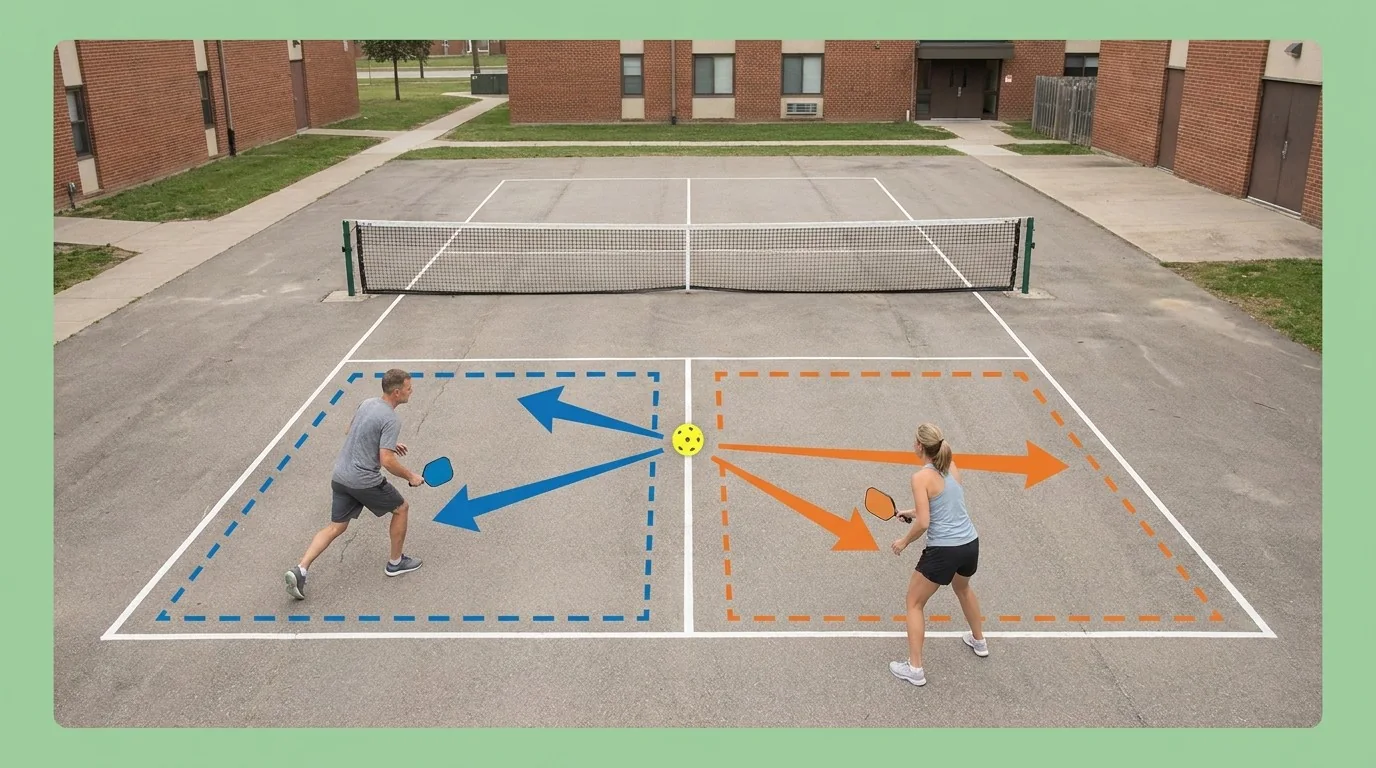
Doubles communication is not about talking through every shot. It is a simple system for two players: agree on responsibilities before the point, use short calls while the ball is moving, and cover the space your partner leaves. When both players understand the words and the next action, the team gives away fewer points to hesitation.
Agree on the team language before the serve
Start with words that remain clear through noise and pressure. "Mine" means the caller is taking the ball. "Yours" or "You" transfers responsibility. "Switch" means trade sides after a crossing movement, while "stay" means hold the current formation. "Bounce" asks the hitter to let a questionable ball land. "Out" gives a stronger judgment that the ball will miss. Use "go" when there is a clear chance to advance and "hold" when a high or compromised ball makes moving forward unsafe.
The exact vocabulary matters less than using it consistently. Before the first serve, decide who gets the first look at middle balls and whether the forehand normally owns that space. Also decide whether an "out" call is advice or a signal the hitter is expected to trust. Agree on one movement cue for the play after the third shot. A short agreement before the game is more useful than a long strategy discussion once the rally is underway.
Call early, then cover the consequence
A call helps only if it arrives before the other player commits their weight or paddle. Claim a middle drive while it is traveling, not when both paddles are already moving. Call responsibility on a lob as soon as its flight is clear. Signal a planned switch before the serve or return. During a fast hands exchange, one clear word is better than a sentence.
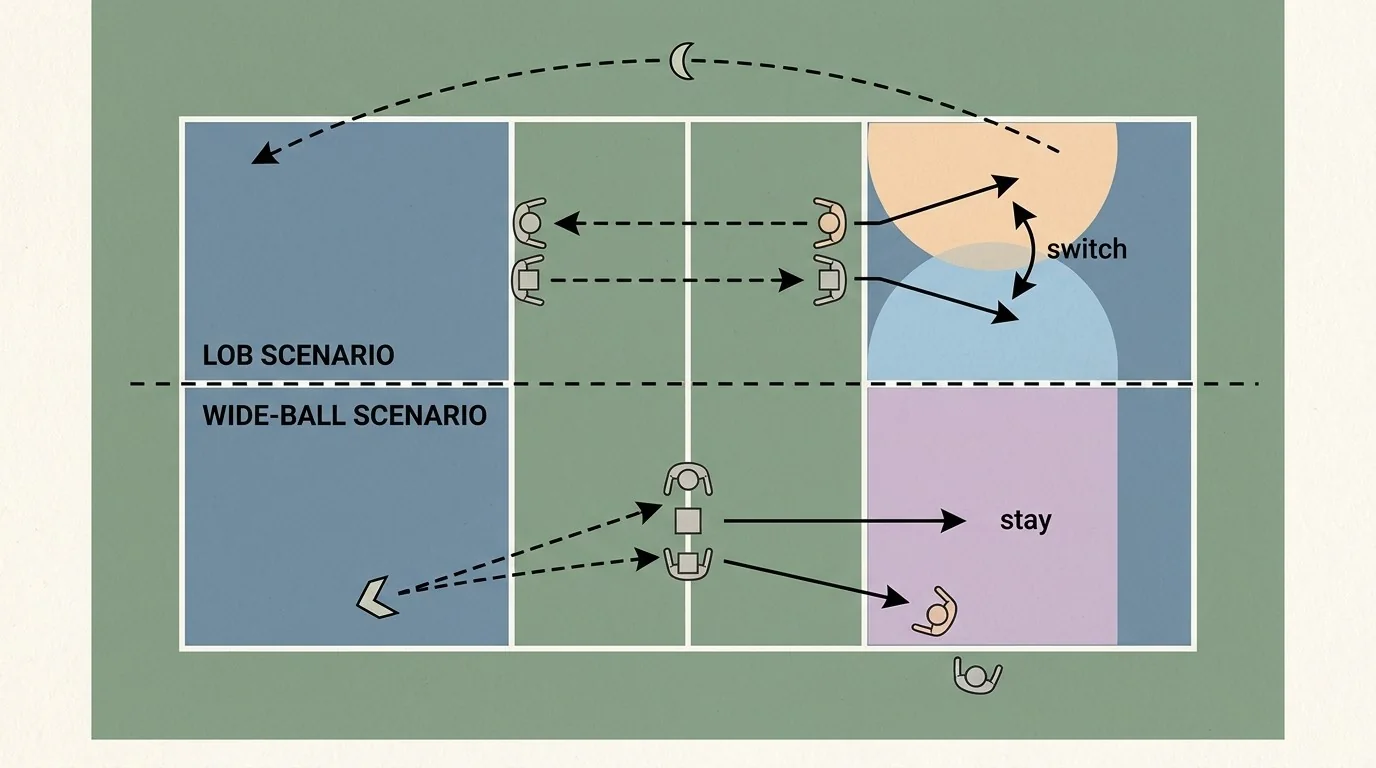
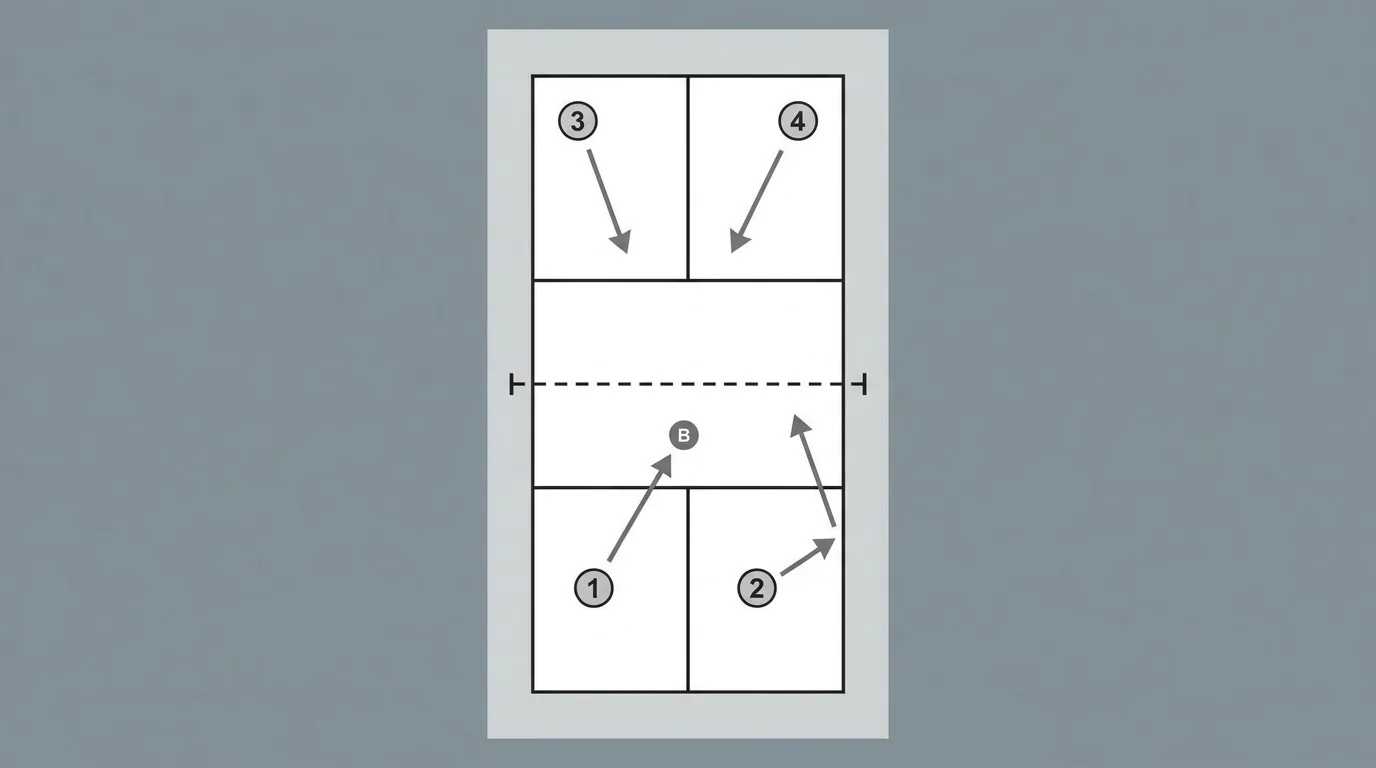
The non-hitter still has a job. When your partner says "mine," release the ball, move out of the swing path, and cover the angle most likely to open. When your partner says "you," commit instead of waiting for a second invitation. After a wide chase, "switch" means one player follows the ball while the other fills the vacated side. It never means both players run toward the same space. If the chasing player can recover without crossing, "stay" keeps the formation simpler.
Make the call fit the ball and the moment
A default middle rule is useful, but it should not overrule balance and position. A forehand player falling backward may be a worse choice than a stable partner with a clear view. The player toward whom the ball is traveling may also have the better contact. Use the default to remove hesitation, then call the exception early when the rally changes.
"Bounce" and "out" are not interchangeable. Bounce buys time on a deep drive, lob, or shoulder-high ball whose landing is uncertain. Out tells the hitter that leaving the ball is the better decision. The partner with the cleaner view can help, but a late call should not force a dangerous last-second withdrawal. When the ball is already committed, let the hitter finish and discuss the communication pattern between points.
Keep between-point feedback narrow. Name one repeated pattern and one job for the next rally. For example, say, "They are speeding up our outside dink, so keep the next ball below the knee," or, "We are arriving separately, so call go or hold after the third." Encouragement paired with a usable instruction builds more trust than blame.
Train communication as a movement skill
Begin with a middle-ball drill. Two partners start at the kitchen while a feeder sends balls through changing gaps. The team must say "mine" or "you" before contact, and the non-hitter must cover the next angle. Score the decision and the cover separately. A missed shot can still be a successful communication repetition.
Next, run a switch-or-stay drill with lobs and wide feeds. The chasing player calls the movement early, while the partner fills behind or protects the seam. Add a rule that the team must stop advancing when a reset sits high. This connects communication to shot quality, not just court movement.
Finish with a short game in which the team may make only one tactical sentence between points. Review three questions afterward: Was the call early enough to change the decision? Did the partner release and cover? Did both players move together after the next contact? Repeat the drill until the words become automatic. The goal is not to become louder. It is to replace guesses with one shared next move.