Pickleball Court Divider Nets: A Safer Setup for Shared Play
A practical guide to placing, anchoring, inspecting, and storing pickleball court divider nets without blocking play or creating trip hazards.
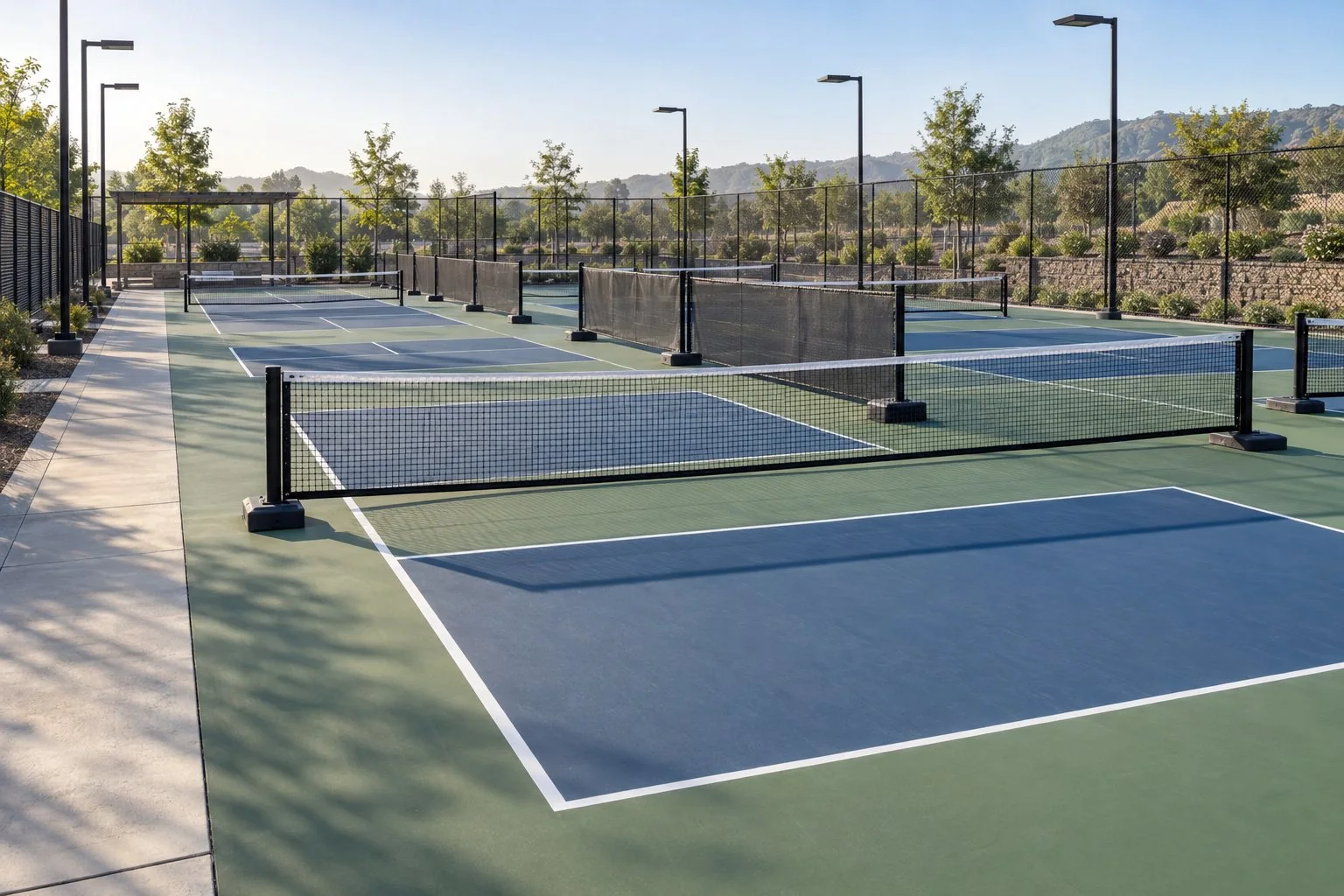
A divider net can make a busy pickleball facility calmer and safer, but only when it is treated as equipment rather than decoration. A loose base, a sagging mesh panel, or a net that narrows a walkway can create a trip hazard and interfere with play on the neighbouring court. This guide gives a practical setup and inspection routine for shared courts.
What a court divider net should accomplish
The main job is to reduce ball travel and give neighbouring games a visible boundary. It should separate activity without changing the dimensions of the playing court, blocking the view of a server, or forcing players through a narrow gap. Choose a panel tall enough for the venue’s purpose, with a stable lower edge and a base that stays outside the lines and normal player routes.
A divider is not a substitute for a perimeter fence. Balls can still pass over or around it, and players must still call a loose ball before entering an adjacent active court. Keep the mesh reasonably visible in the available light. A dark panel against a dark background can disappear at the edge of vision, while a bright or reflective surface can distract players.
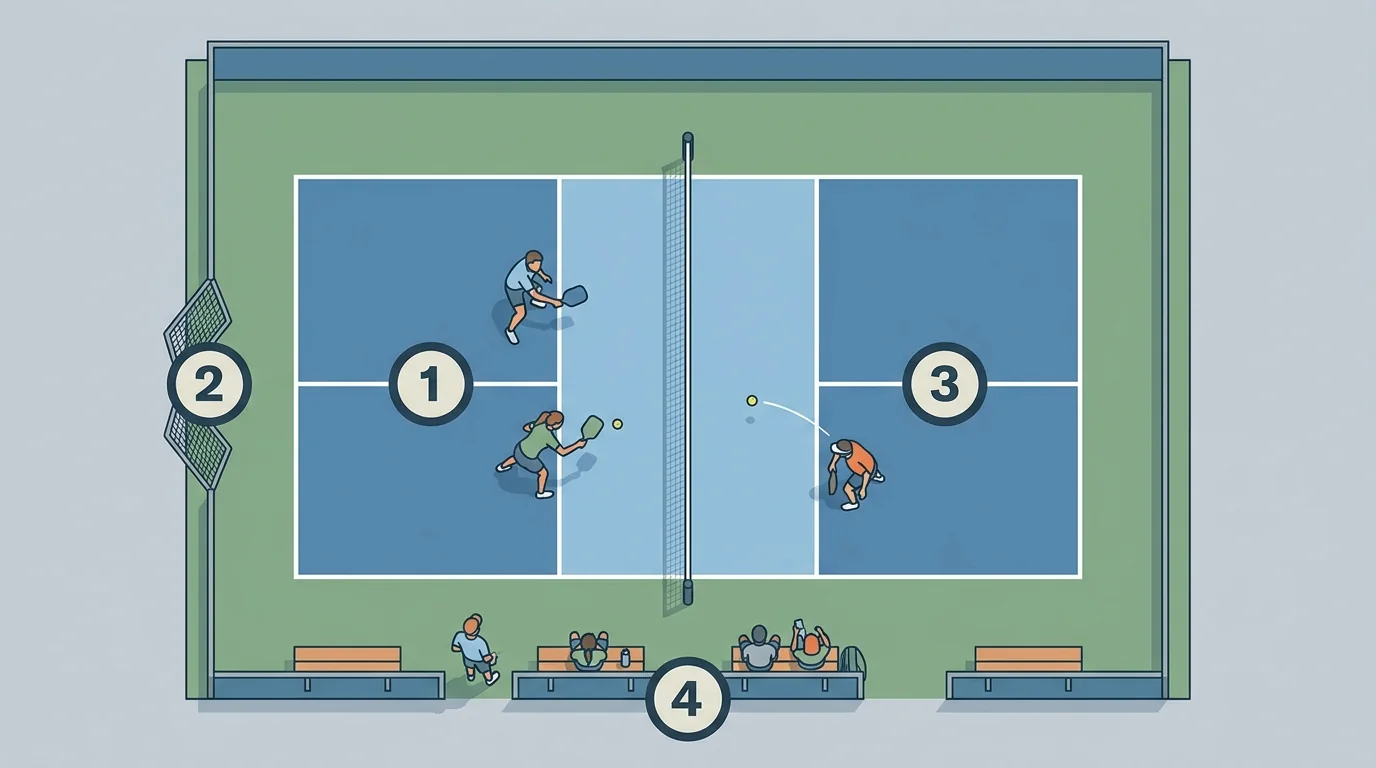
Before installation, walk the entire proposed line. Mark gates, benches, equipment carts, drains, accessible routes, and places where a player may back up after a shot. The safest position is usually a clean separation between courts that leaves both playing areas and access paths unobstructed.
How to install and anchor the divider
Lay out the bases before raising the mesh. Keep each foot flat, fully supported, and outside the court lines. Do not balance a base on a crack, drain cover, loose gravel, or a sloping edge. If the system uses ballast, confirm that every weight is seated as designed rather than improvising with bottles, bags, or objects that can roll.
Raise the panel with two people when its length or wind resistance makes it awkward. Connect sections in the order stated by the manufacturer, then check that the lower edge is not curled into a loop. A taut panel is easier to see and less likely to catch a shoe than a folded section lying across the ground.
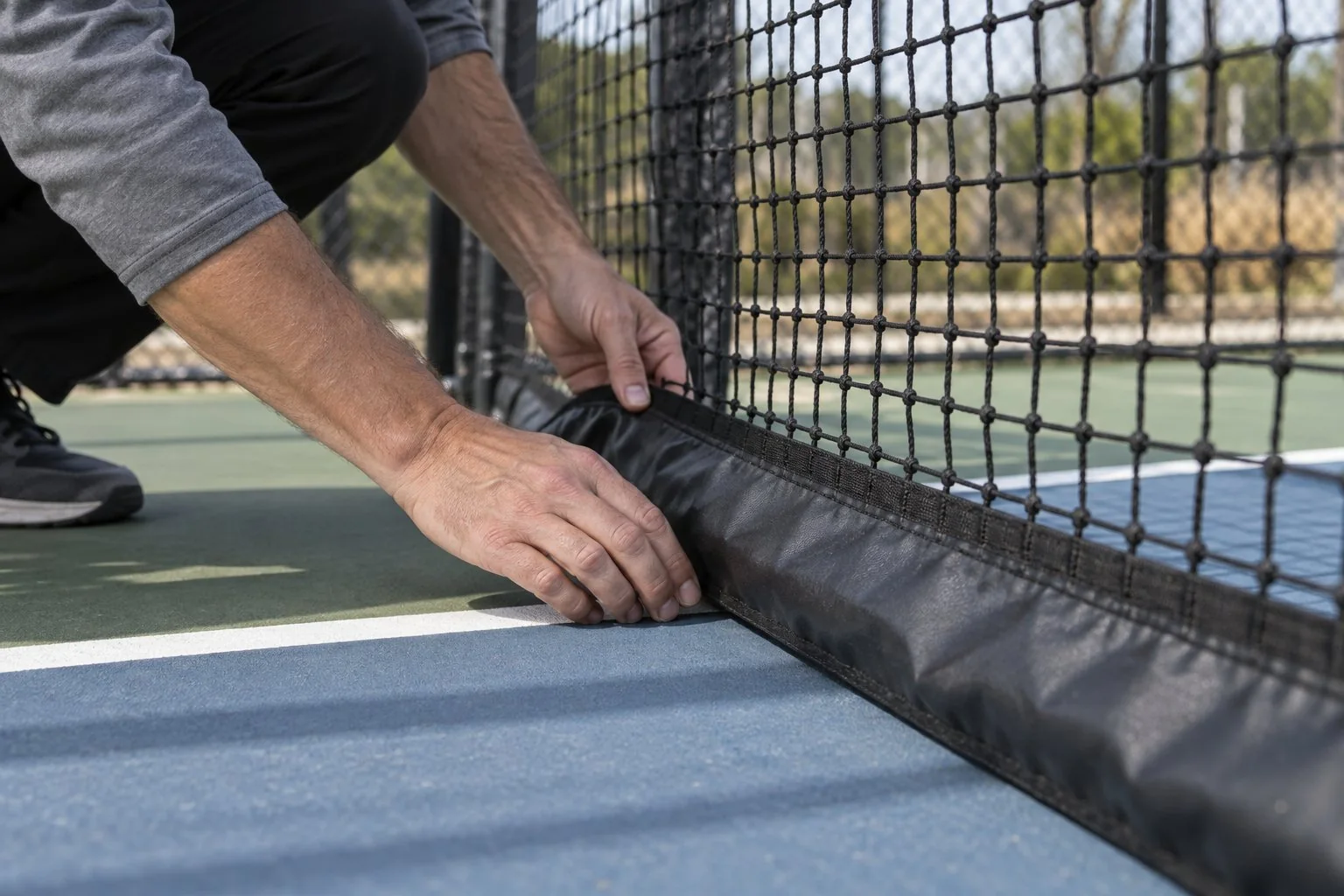
After setup, test the route rather than only the net. Walk from every gate to each court, carry a ball basket through the space, and stand at the baseline and kitchen line to check sightlines. Ask one player to move normally while another observes whether the divider sways, shifts, or intrudes into a recovery path. If wind is present, test again before opening the courts.
Do not attach a divider to a permanent fence, net post, or light pole unless that connection is specifically designed and approved for the system. An improvised tie can transfer force to equipment that was not built for it and may leave a sharp or snagging end. Secure loose straps and keep hardware covered or positioned away from feet and hands.
A quick inspection before each session
A staff member or session leader can complete this check in under two minutes:
- Confirm every base is flat, stable, and outside the playing lines.
- Look for torn mesh, exposed wire, split tubing, and sharp connectors.
- Check that the lower edge is not curled into a walkway.
- Walk the access route and confirm gates open fully.
- Look for puddles, leaves, or debris hidden behind the panel.
- Recheck stability after a gust, heavy rain, or a layout change.
Remove the divider from service if it tips, slides, has a sharp broken part, or blocks a required route. Do not ask players to work around a defect during a live session. Mark the equipment clearly for repair and record what failed so the same problem is not returned to the court.
Storage and shared-court etiquette
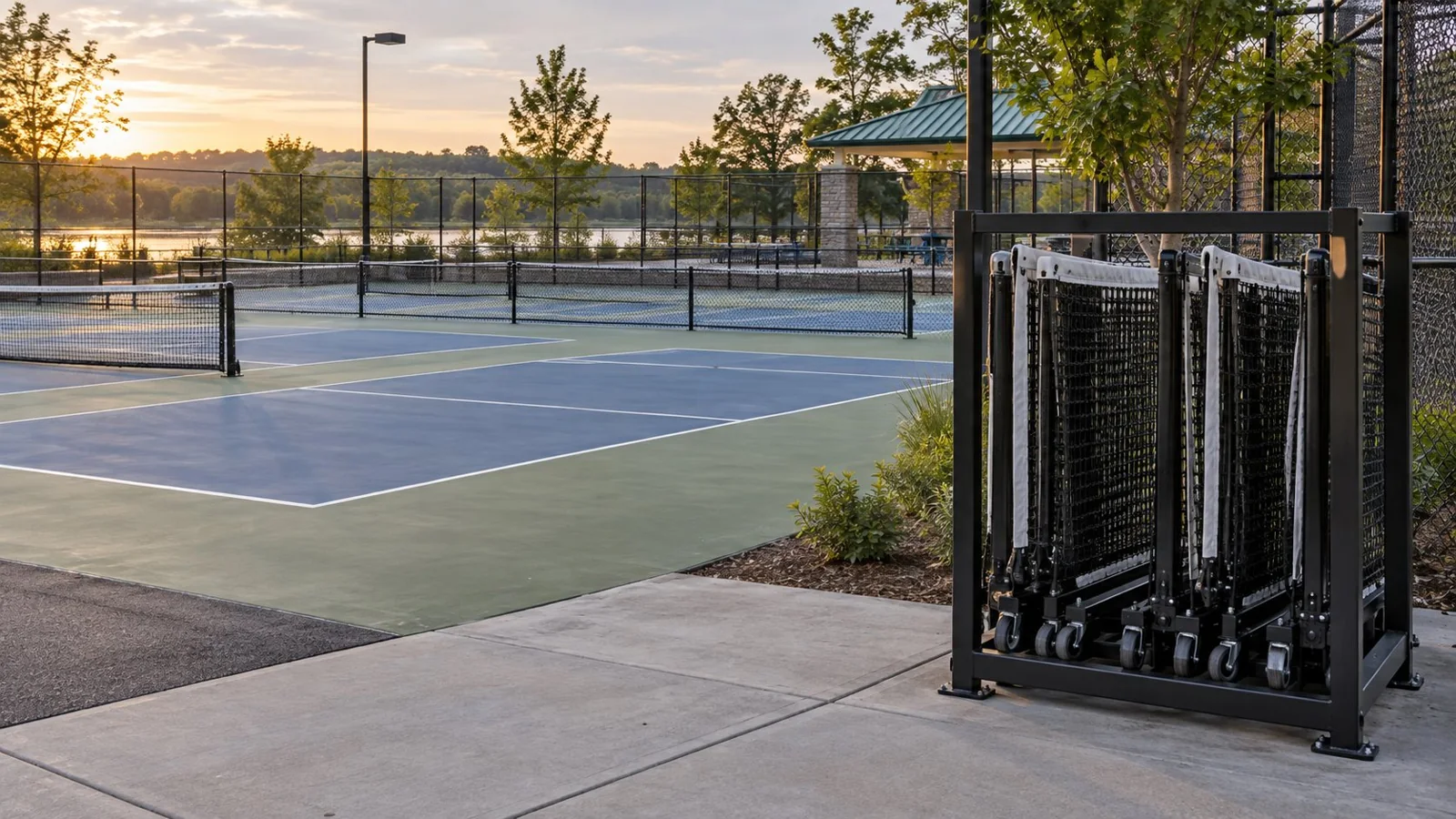
When play ends, clear balls and people from the route before folding the net. Brush off grit and dry wet fabric according to the equipment instructions. Fold panels without crushing connectors, then place bases and mesh together in a rack or marked storage area. Never leave a folded panel leaning across a gate or stacked where it can fall onto a walkway.
Tell players which court is separated and where the exit path runs. A short announcement is enough: keep bags outside the marked route, call balls before crossing, and report any movement in the divider. That small routine protects neighbouring games while preserving the welcoming, shared-court feel.
The best divider setup is easy to ignore during a rally: stable, visible, out of the way, and checked before use.