Pickleball Court Drainage: How to Check Standing Water
Check pickleball court drainage after rain: find standing water, test traction, inspect drains, and decide when the court is safe to reopen.
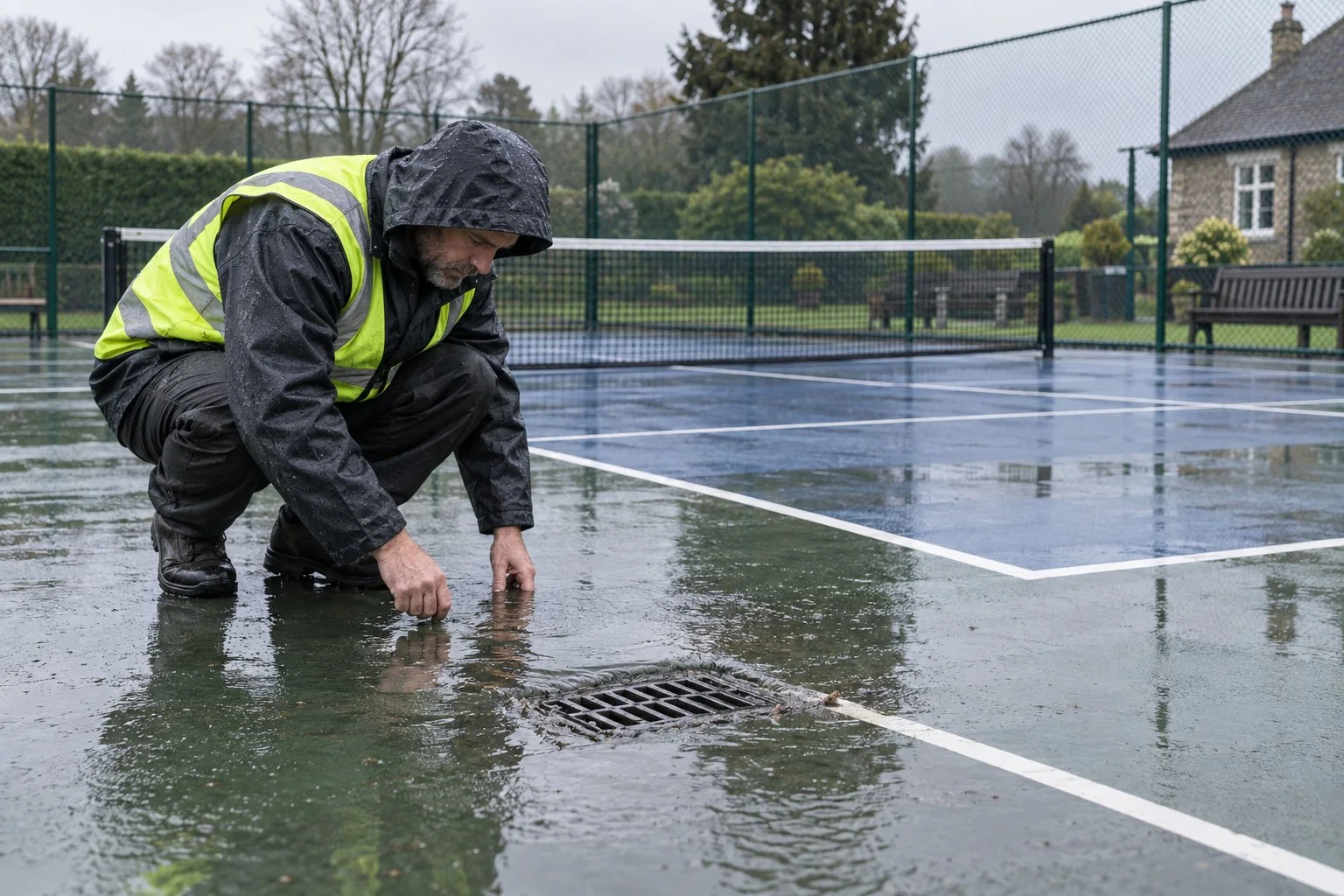
Pickleball court drainage needs a practical inspection after rain, not a quick glance from the gate. Look for standing water, slow-drying low spots, blocked drains, and slippery areas near the kitchen and baselines. A court can look dry overall while one wet patch still makes a hard stop unsafe.
Where does water collect?
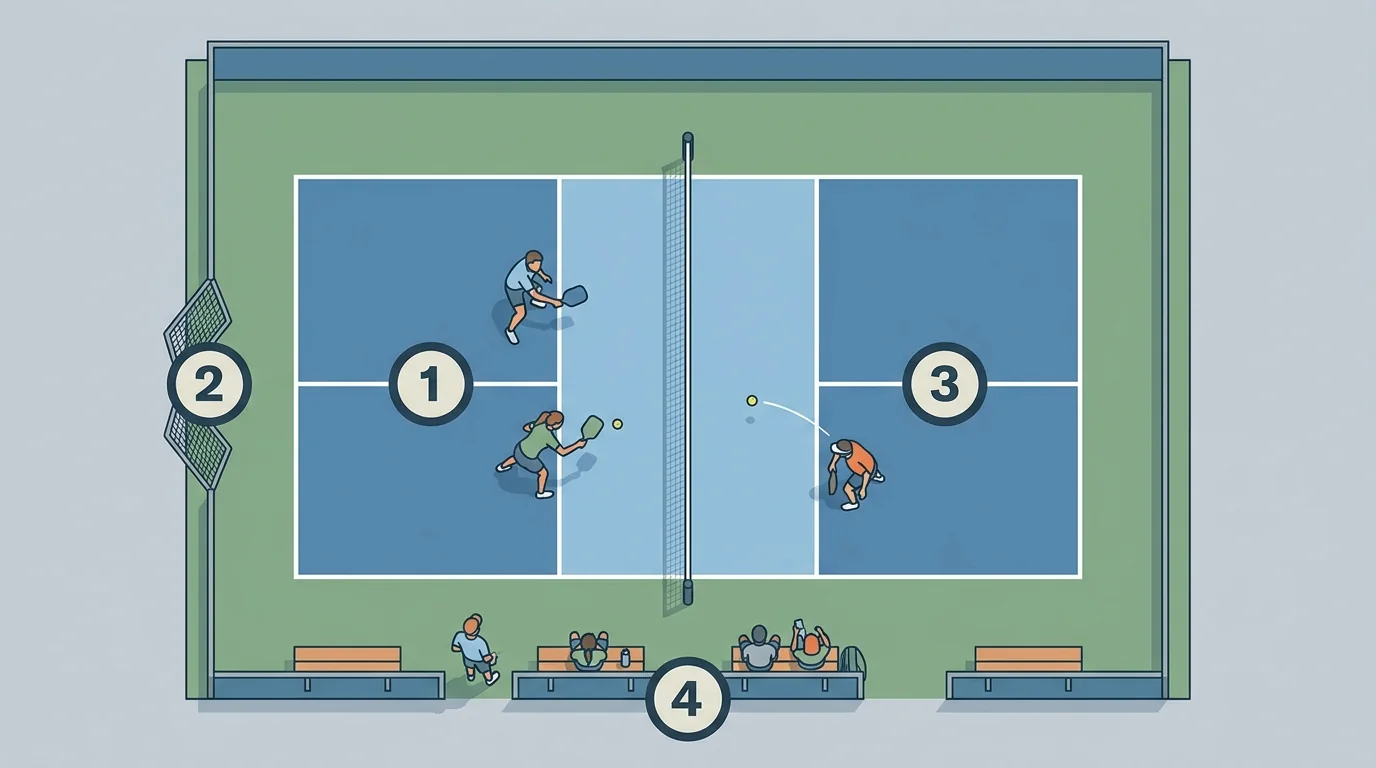
Start at all four corners, then walk along both baselines and the non-volley zones. Players brake and change direction near the kitchen, so a thin film there deserves attention even when it is hard to see. Darker color alone does not prove a puddle; inspect from a low angle and look for reflections, ripples, or a continuous sheen.
Check the fence line and nearby ground. Runoff can move back onto the playing surface, while leaves and grit can partly block an outlet. Do not assume a drain is clear because water eventually disappears. Record how long it takes and whether the same location stays wet after each storm.
How to test traction safely
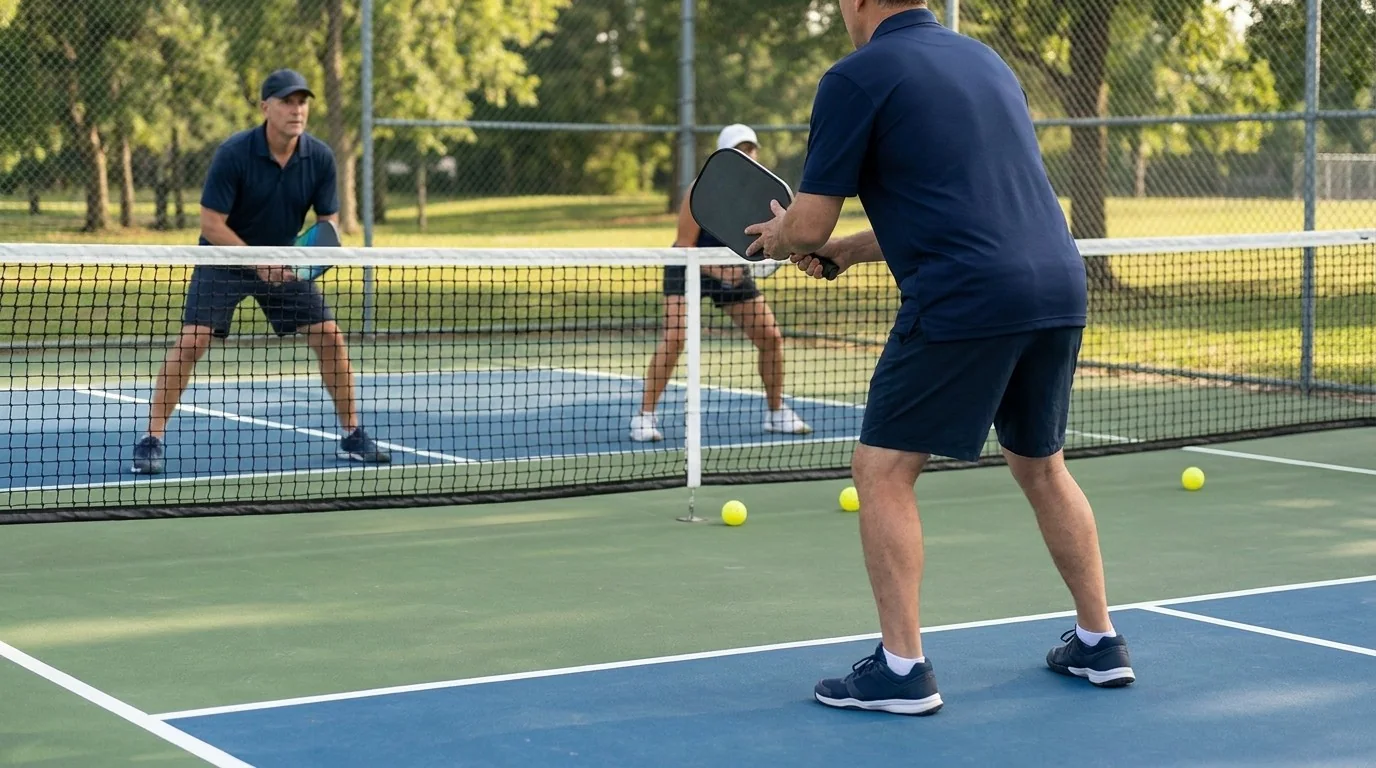
Do not sprint onto a damp court. Wear clean court shoes and take two slow lateral steps near the baseline, then repeat beside the kitchen line. If the sole slips, leaves a wet streak, or feels inconsistent, keep players off that area. A simple example: if the left baseline feels stable but the kitchen-side step slips twice, close that section rather than reopening the whole court.
Squeegee shallow water toward a functioning drain when the facility allows it. Never push debris into the outlet, and do not use a towel to hide a large low spot. After clearing the surface, wait and test again; a returning puddle points to drainage, slope, or runoff that needs more than another pass with a squeegee.
When can the court reopen?
Reopen only when the surface is visibly free of standing water and traction is consistent in stopping and lateral movement areas. Mark a closed court or section clearly while it dries. If rain returns, the same low spot remains, or the coating is lifting, ask a qualified facilities professional to assess the surface. Keep a record of rainfall time, drying time, location, and action taken so the next inspection starts with useful evidence.
What to record after rain
Write down the inspection time, the court section, the weather, the drying pattern, and the action taken. Repeat the same route after the next storm. A repeated wet patch is more useful evidence than a single glance, especially when runoff from a path or fence line changes during the season.
Keep neighbors in the plan
If the court sits near homes, schools, or quiet public space, publish playing hours and a clear contact for concerns. Do not promise that one screen will eliminate every sound. The practical goal is to reduce reflections and avoid the most disruptive periods. Recheck the site when the number of active courts or surrounding surfaces changes.
Before choosing a material, ask how it will be cleaned, secured in wind, and kept transparent enough for safe play. A barrier that is difficult to maintain can create a new facility problem.