Pickleball Court Entry Areas: Safety Checks for Shared Play
A practical guide to placing, installing, and maintaining pickleball court wind screens without compromising safety or visibility.
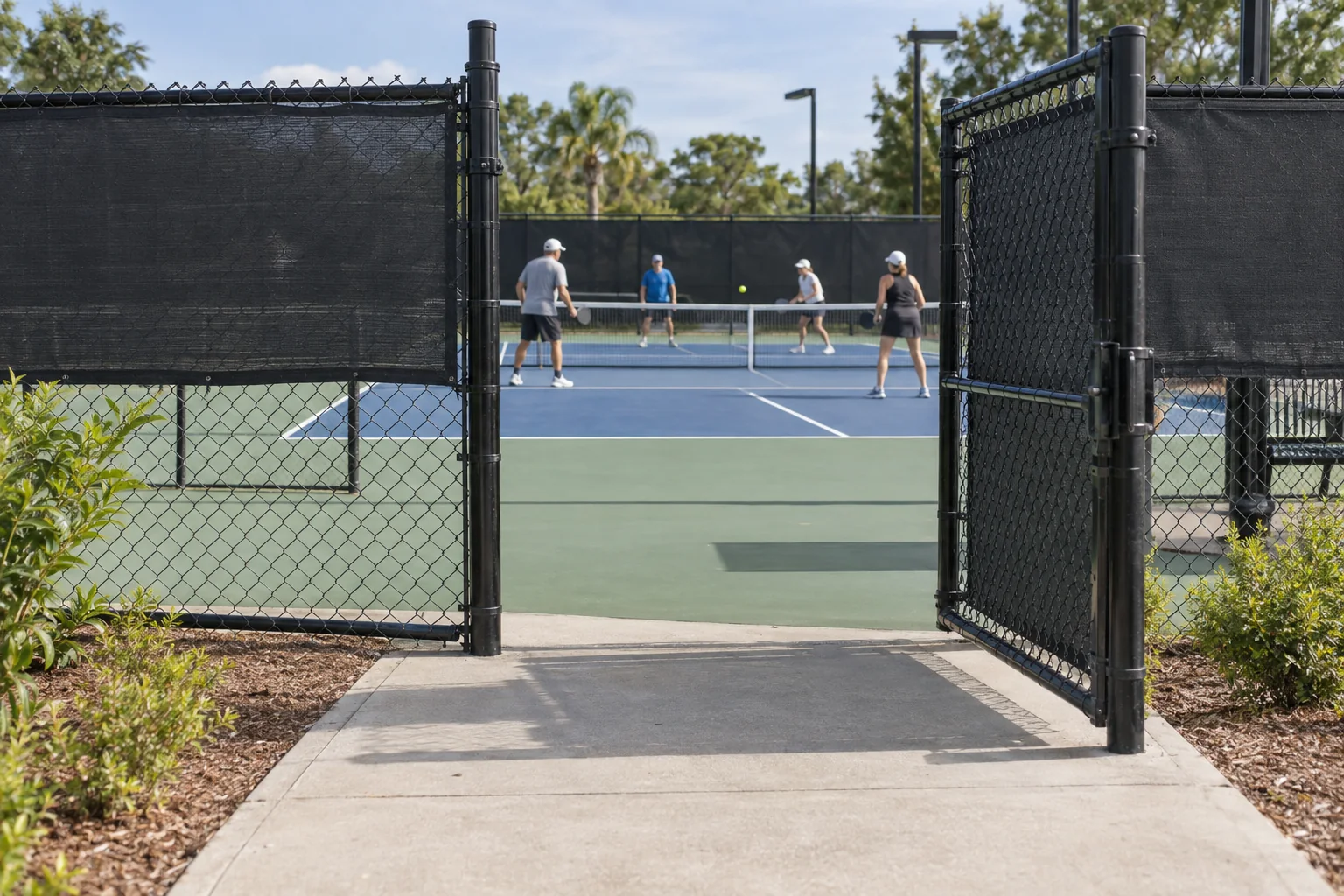
The entry area is part of the playing environment, not an afterthought at the edge of the fence. Its opening, swing, latch, threshold, and approach path affect how safely players enter, how easily maintenance equipment reaches the surface, and whether visitors with mobility aids can use the facility. A good gate feels unremarkable: it opens predictably, stays clear of the playing area, and does not create a trip point.
Check the approach before checking the hardware
Walk the route from parking, sidewalk, or clubhouse to the gate with a paddle bag, ball basket, and—where relevant—a wheelchair or mobility aid. Look for broken pavement, abrupt lips, loose gravel, standing water, and furniture that narrows the approach. The route should remain usable when players are waiting and when a maintenance cart is moving through.
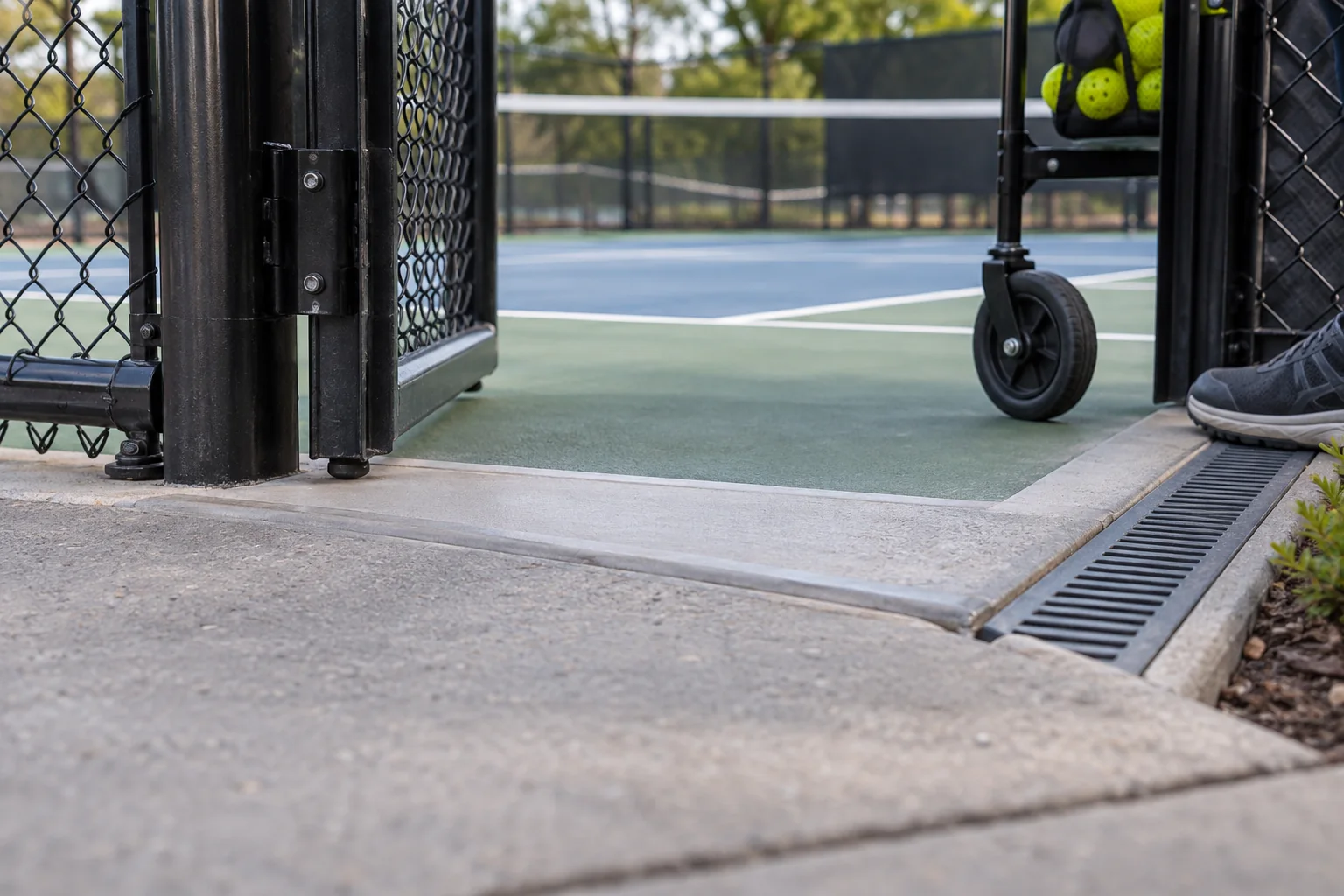
Measure the clear opening rather than relying on the nominal gate size. Confirm that the latch can be operated without awkward reaching, that the gate does not drag, and that its swing does not push a waiting player into an active court. Keep the gate visible from nearby courts so people can notice someone entering.
Inspect hinges, latch, and threshold
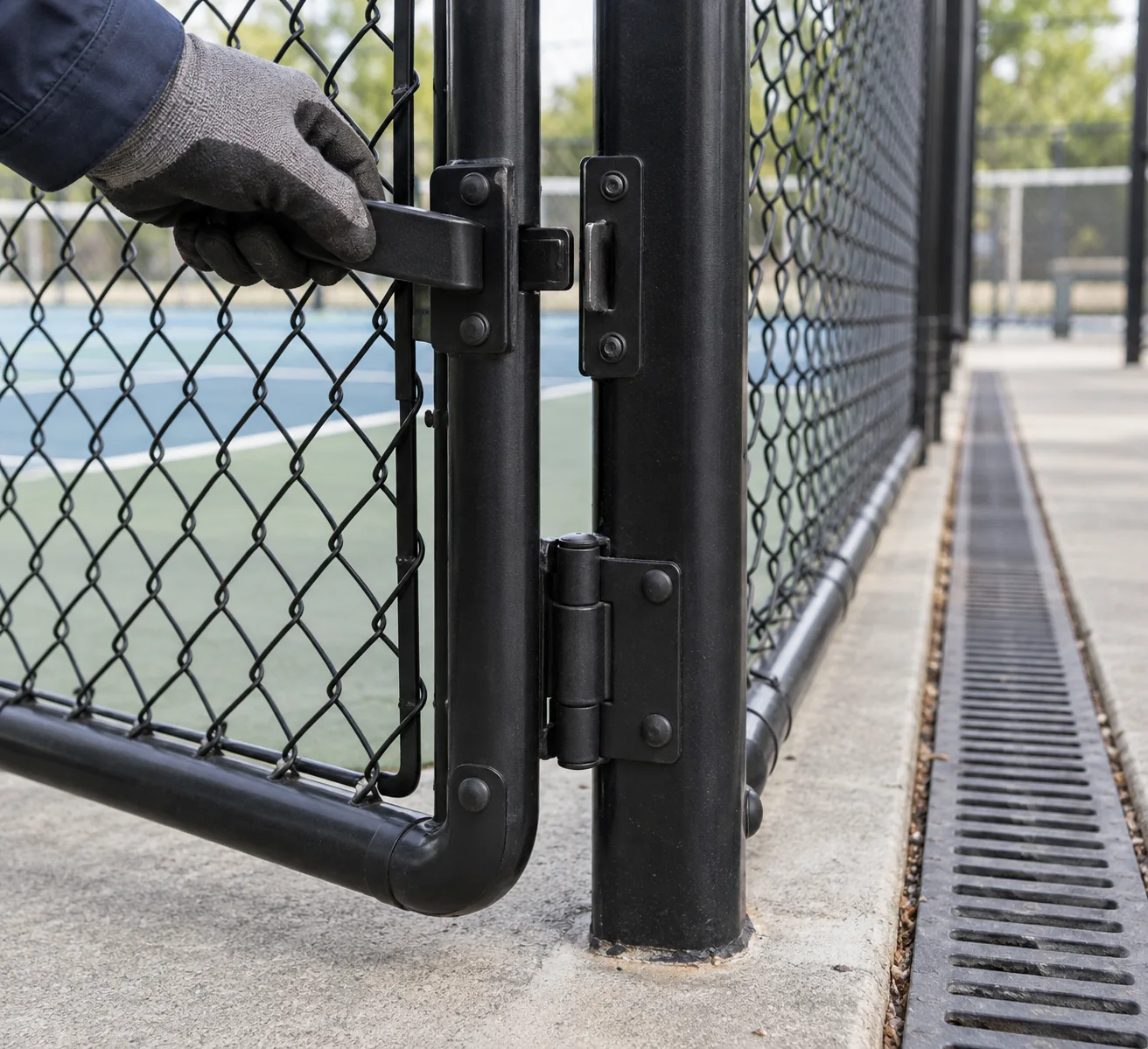
Open and close the gate several times before a busy session. Check for loose hinges, sharp edges, protruding bolts, rust, a latch that fails to catch, and a gap that could trap fingers. The gate should remain stable when released and should not swing freely into the playing surface. Repair the fence post before adjusting the gate; a sagging post will make repeated latch fixes temporary.
Pay special attention to the threshold. A raised edge, cracked concrete, or channel drain placed directly across the entrance can catch a toe or a small wheel. Keep the transition firm, stable, and slip-resistant, and coordinate repairs with drainage so rainwater does not pool at the gate. Never leave tools, hoses, or ball carts in the access path.
Protect visibility and shared-court play
The gate should support visibility without becoming a distraction. Check the view from the baseline, kitchen line, and neighbouring courts. Keep the opening free of signs, bins, or loose equipment. If the gate is near a corner, use a simple local notice or staff routine to prevent a person entering from stepping into an active rally.
On multi-court sites, agree on a consistent layout. Screens that stop at different heights can create uneven backgrounds and different wind pockets. Leave enough separation for players to retrieve balls safely and keep walkways free. Community courts work better when the installation supports both organised sessions and casual open play.
Maintain the gate through the season
Inspect hinges, latch, frame, mesh, fasteners, and the approach after storms or heavy use. Look for a loose closer, bent frame, damaged mesh, corrosion, sharp wire, and new settlement at the threshold. Clean dirt with water and a suitable mild product; do not leave a slippery film on the handle or path.
At the start of each season, repeat the route test with players present. Confirm that the gate opens fully, latches without force, and leaves the walkway clear. Record defects and close the court temporarily if the entrance creates an immediate fall or collision risk. A small repair made early is cheaper and safer than asking users to work around a failing gate.
The best court signage plan is site-specific: provide a clear approach, smooth the threshold, protect the swing zone, maintain reliable hardware, and test the entrance with the people who actually use it. These checks improve safety and make community play more welcoming without complicating the court.