Pickleball Court Equipment Carts: Safe Storage Without Blocking Play
A practical guide to parking, loading, securing, and checking pickleball equipment carts around shared courts.
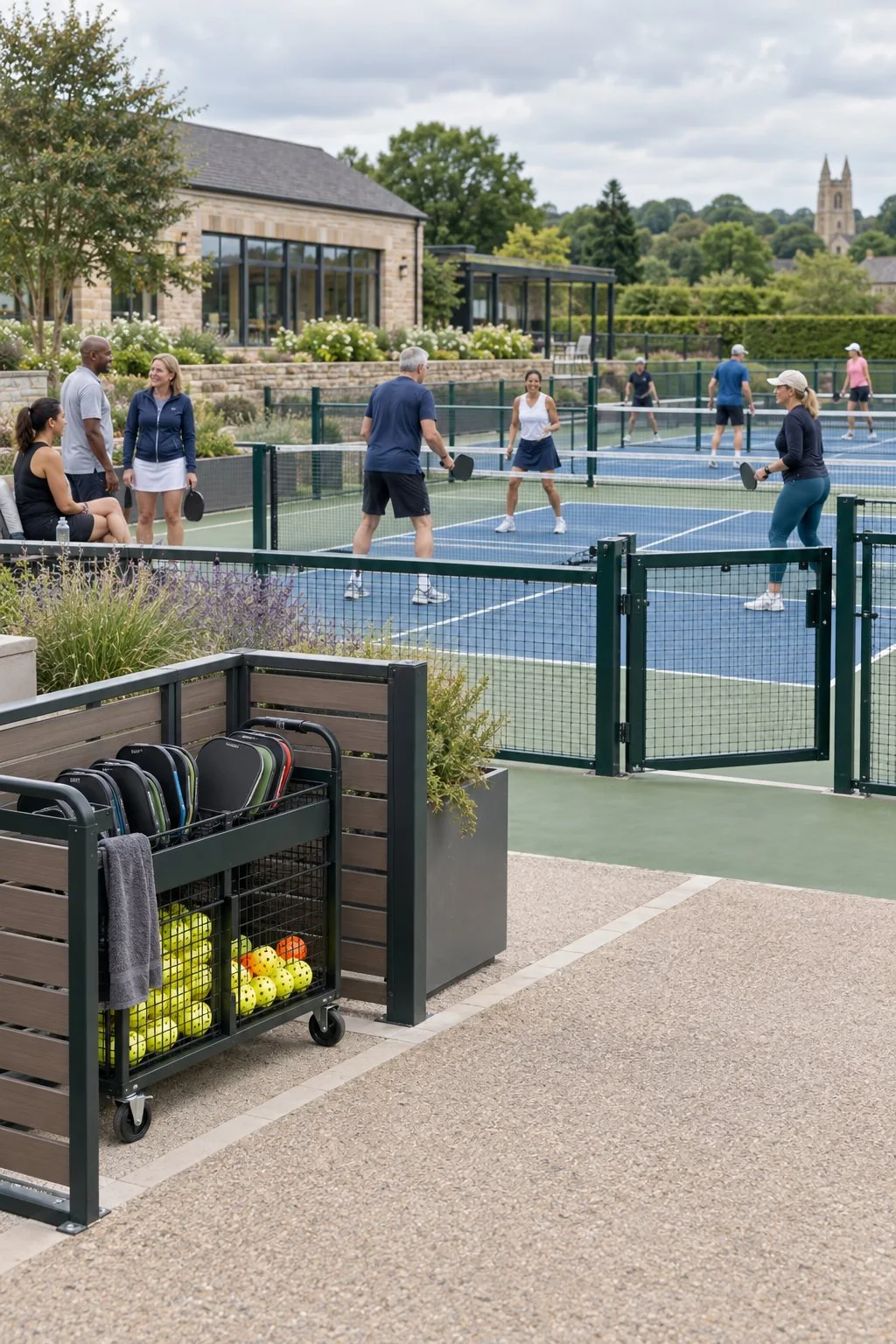
An equipment cart can make open play faster, but only if it stays out of the places people need to walk, turn, and see the ball. A cart left beside a gate can narrow an entrance; one parked behind a baseline can become a collision hazard; a heavily loaded cart can roll when a player brushes past it. A simple storage plan keeps the gear useful without making the court harder to share.
Choose a storage bay before the first game
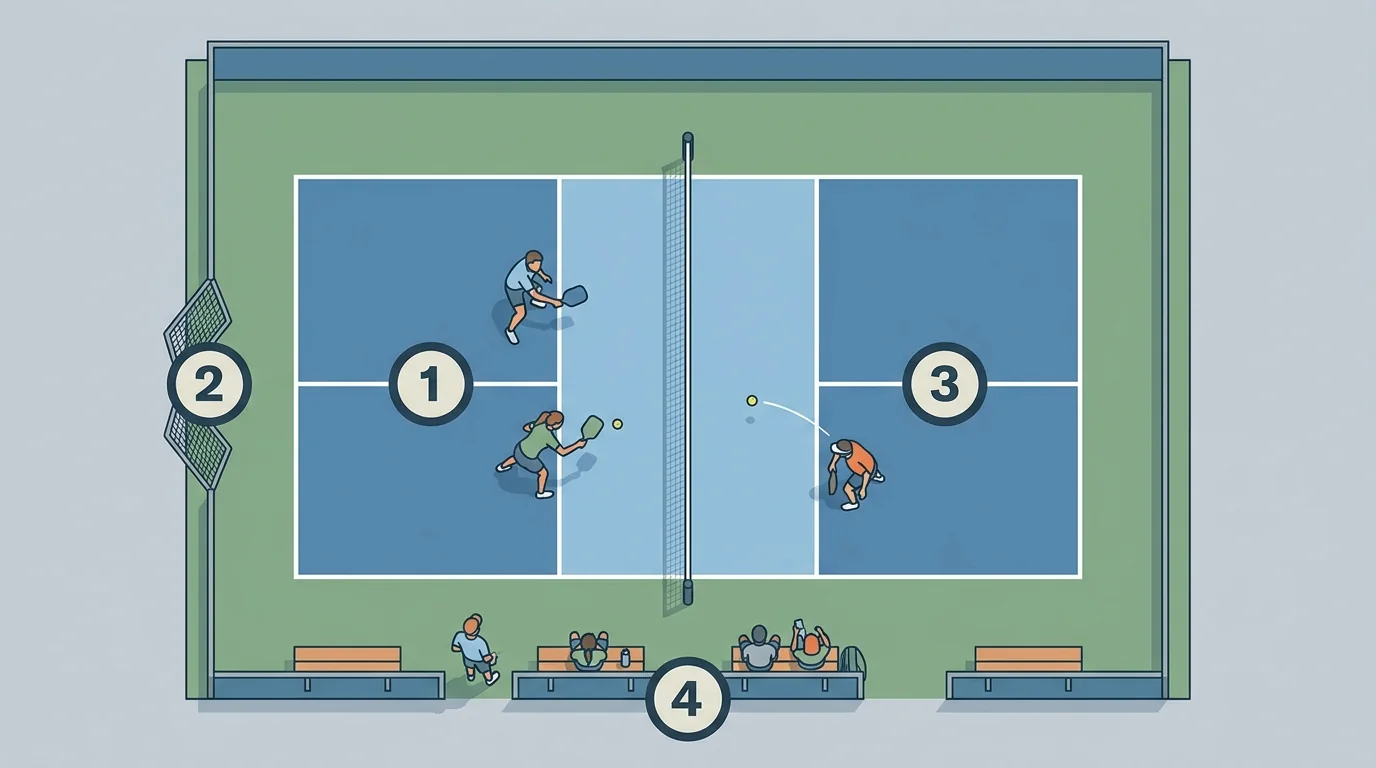
Start by identifying one parking location that is visible from the courts but outside every playing area. Keep the cart away from gates, emergency routes, benches, drinking stations, and the space behind a baseline where players may retreat for a lob. The best bay has enough room for someone to pass without turning sideways and does not force players to step into another court to reach the equipment.
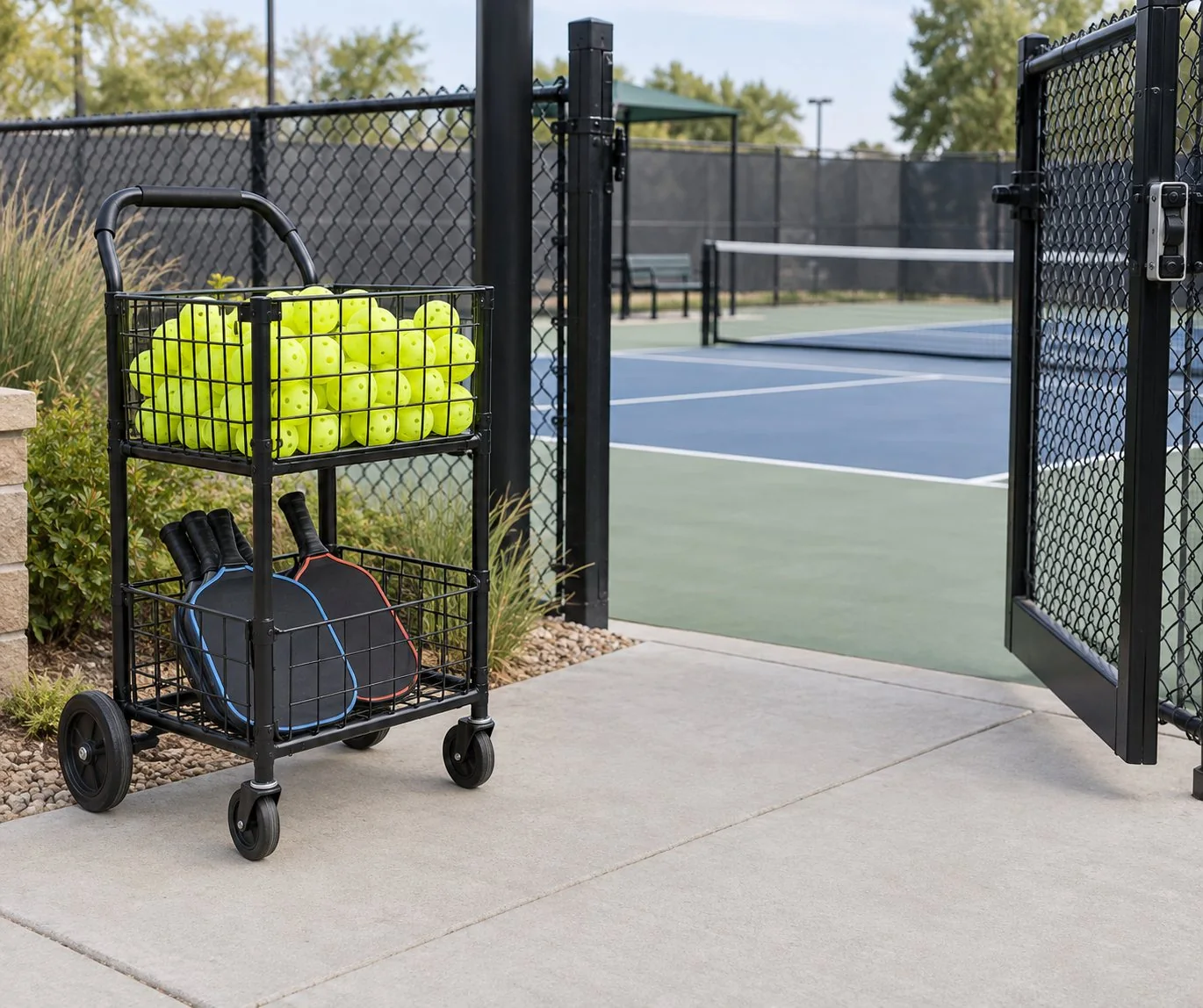
Give the cart a visible home and a repeatable orientation. Handles should not project into the traffic lane, and baskets should not hide a gate latch or a sign. If the facility uses several carts, leave a gap between them rather than creating one long obstacle. A low-profile marker on the wall or floor can identify the bay without adding a sign that blocks sightlines.
Secure the cart and manage the load
Before a session, check that each wheel rolls freely and that brakes or wheel locks engage firmly. Load the heaviest container low, keep handles and straps inside the cart, and avoid stacking gear so high that it blocks a player's view. Do not leave loose balls scattered under the cart. At the end of play, count the equipment, close lids or baskets where possible, and return the cart to its bay rather than leaving it beside the last court used.
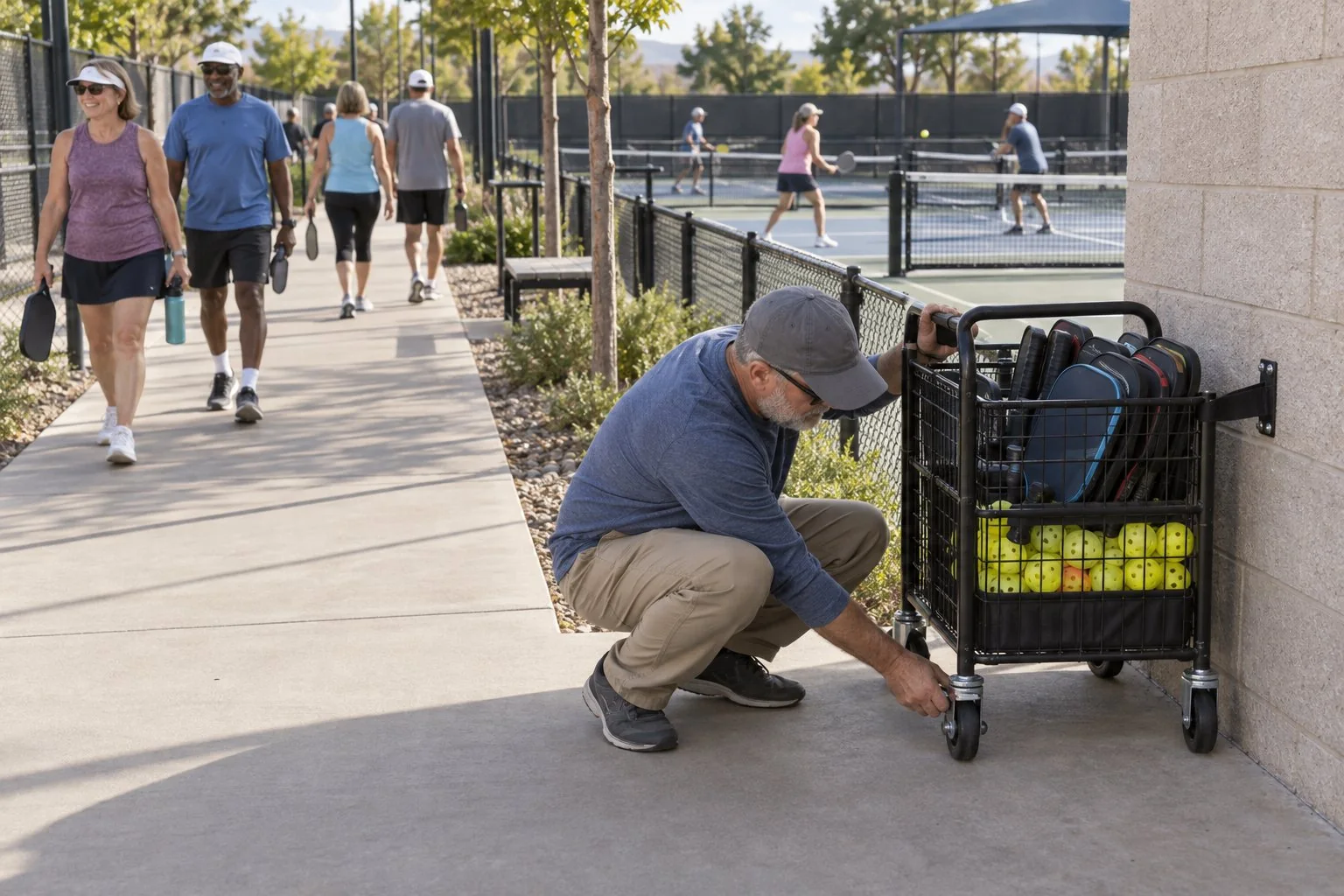
Assign responsibility during organised sessions so the cart is not moved mid-rally. A host or court captain can reposition it during a natural pause, while players should not drag it through an active court to save a few steps. If rain, wind, or a crowded event changes the traffic pattern, move the cart to the safest clear bay and tell the next group where it belongs.
A quick opening and closing checklist
Before play, check four things: the cart is outside the court, the nearest gate opens fully, the walkway remains clear, and the load cannot roll or spill. During play, keep the cart in its bay and report a damaged wheel or broken brake instead of improvising with a loose strap. After play, remove rubbish, secure the balls, and return the cart to the same visible location.
For facility managers, inspect the bay weekly, especially after busy sessions. Look for worn wheels, sharp basket edges, cracked plastic, and gear that has migrated into the walkway. A small reminder near the storage area can explain the parking routine without covering sightlines or making the court feel over-regulated.
The goal is not to hide equipment away. It is to make the safe choice the easy choice: one visible bay, a secure load, clear access, and a quick check before play. That small amount of organisation protects movement and makes shared pickleball courts easier for everyone to use.