Pickleball Court Fencing: Plan Safer Ball Containment
A practical pickleball court fencing guide covering dimensions, clearance, height, materials, visibility, gates, and safety checks.
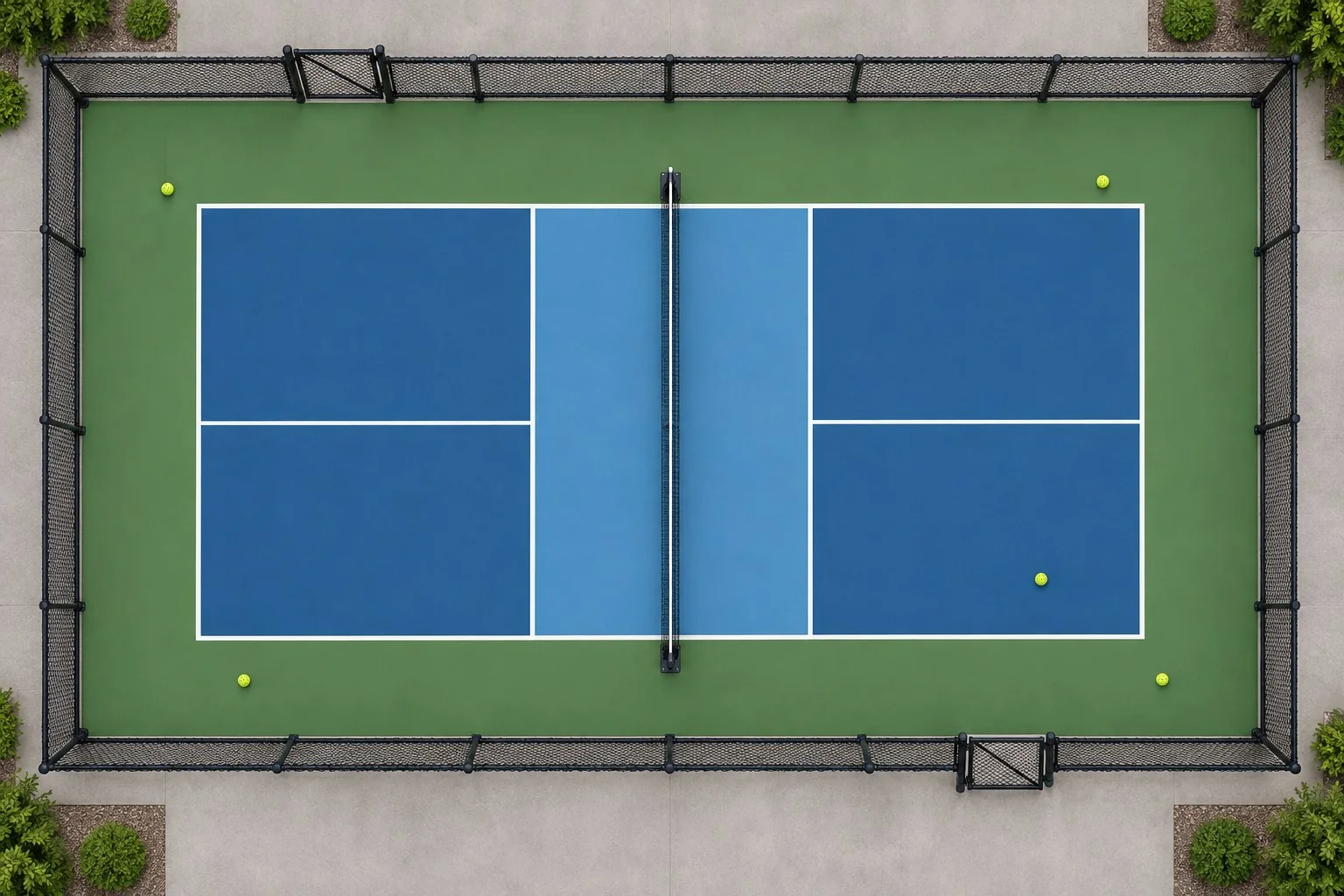
Good pickleball court fencing does more than keep balls from escaping. It protects nearby walkways, helps players stay focused, separates neighboring courts, and gives the whole facility a predictable boundary. The planning decision is a balance between containment, visibility, airflow, access, durability, and the character of the surrounding property.
Start with court dimensions and clearance
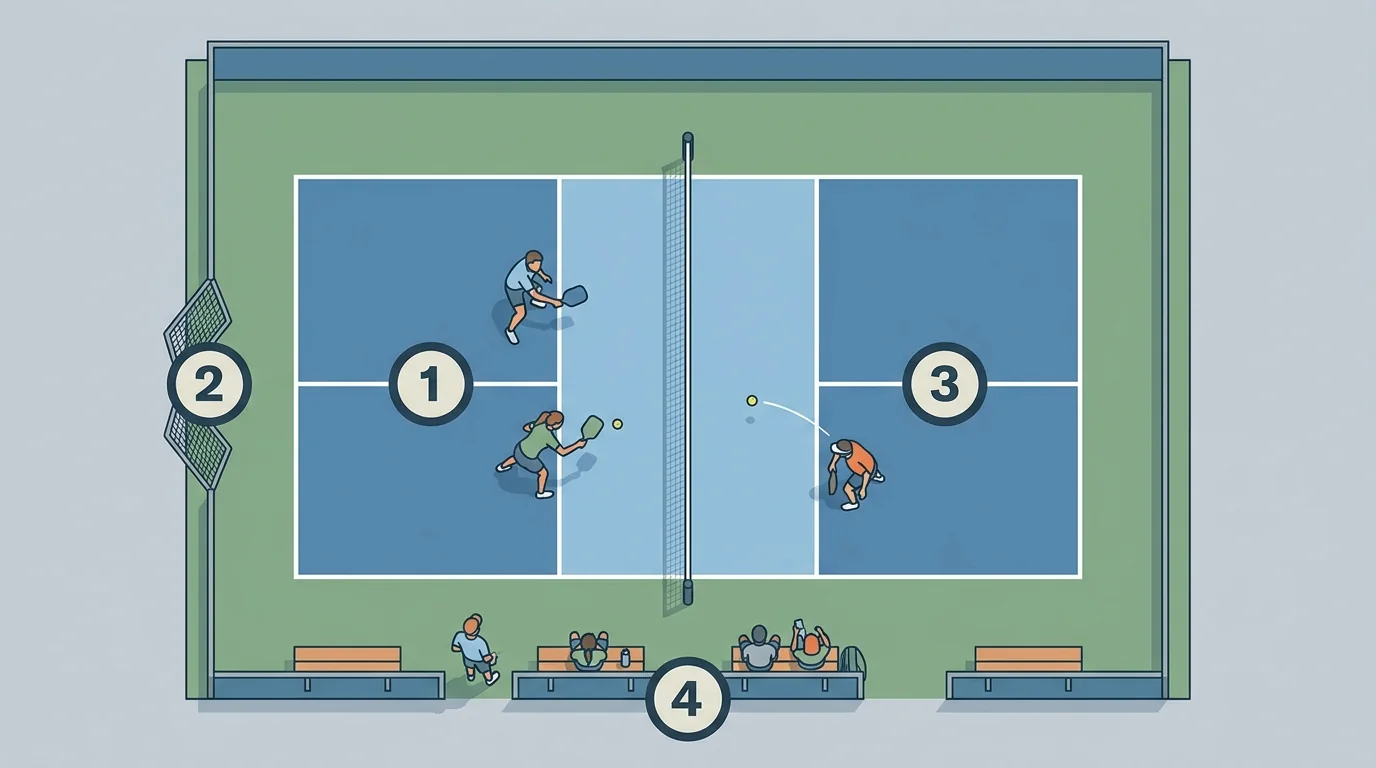
A pickleball court is 20 by 44 feet for both singles and doubles play. The fence should not be placed directly against the playing lines. Leave practical clearance around the court so players can move safely, retrieve balls, and avoid colliding with posts or gates. The available property, nearby paths, landscaping, and maintenance route all affect the final footprint.
Gate placement deserves attention early. Players need a natural entry point, while staff may need to bring in equipment without crossing an active court. On a multi-court site, divider fencing can reduce interruptions, but it should not create blind corners or narrow passageways.
Height should follow the way the court will be used. Many installations use fencing in the roughly 8-to-10-foot range, with taller containment considered where courts sit near property boundaries, busy paths, or multiple neighboring games. A private court may favor visual openness, while a busy facility may place more value on keeping play contained.
Choose materials for visibility and weather
A fence takes repeated ball impact and must remain stable through sun, rain, and temperature changes. Strong posts, secure framing, reliable hardware, and careful anchoring matter as much as the surface material. A fence that shifts, fades, warps, or develops rough edges eventually becomes both a maintenance problem and a safety concern.
Open post-and-wire systems preserve sightlines and airflow, which is useful when spectators watch several courts or players need to see neighboring games. Solid sections can provide privacy and a more architectural appearance, but they change wind behavior and may make the space feel enclosed. A hybrid design can place more open material where visibility matters and a solid or lattice section where screening is useful.
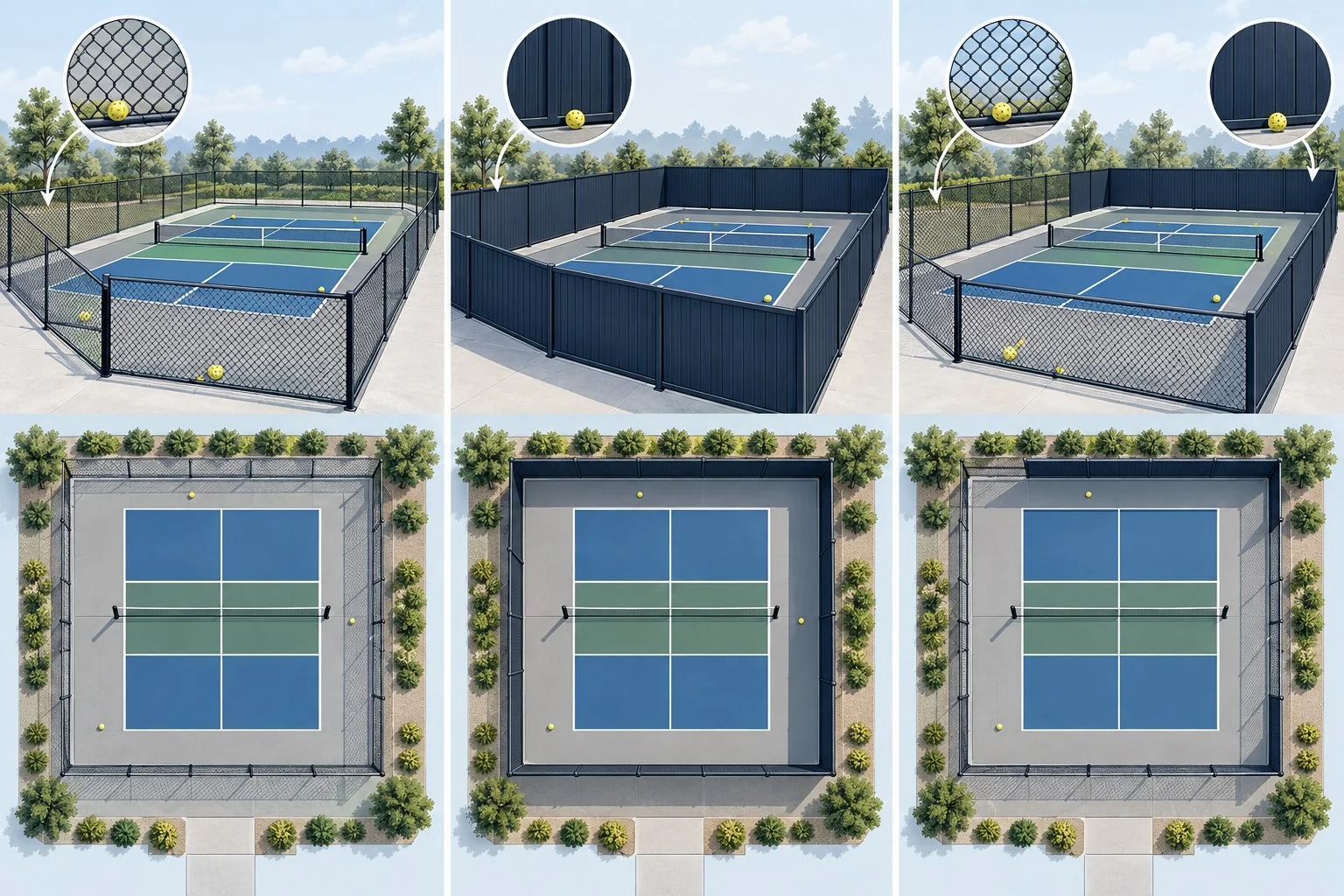
Do not treat appearance as an afterthought. Post color, gate style, lower sections, and the relationship to nearby buildings can make the fence look integrated rather than temporary. The best choice supports the court’s purpose without creating visual clutter.
Keep access, visibility, and safety working together
Clear sightlines help active players, spectators, and people moving around the facility. Mesh spacing, framing, and gate locations should contain balls without hiding an approaching player or obstructing emergency access. Finish exposed edges smoothly, use hardware that latches reliably, and keep gates easy to operate without swinging into a playing path.
Check the area around the fence as well. Avoid placing fixed objects where a player might run after a ball. Make the circulation route obvious, keep maintenance access usable, and separate neighboring courts enough that an errant ball does not turn into a collision. Divider fencing can help, but it should support safe movement rather than simply fill every gap.
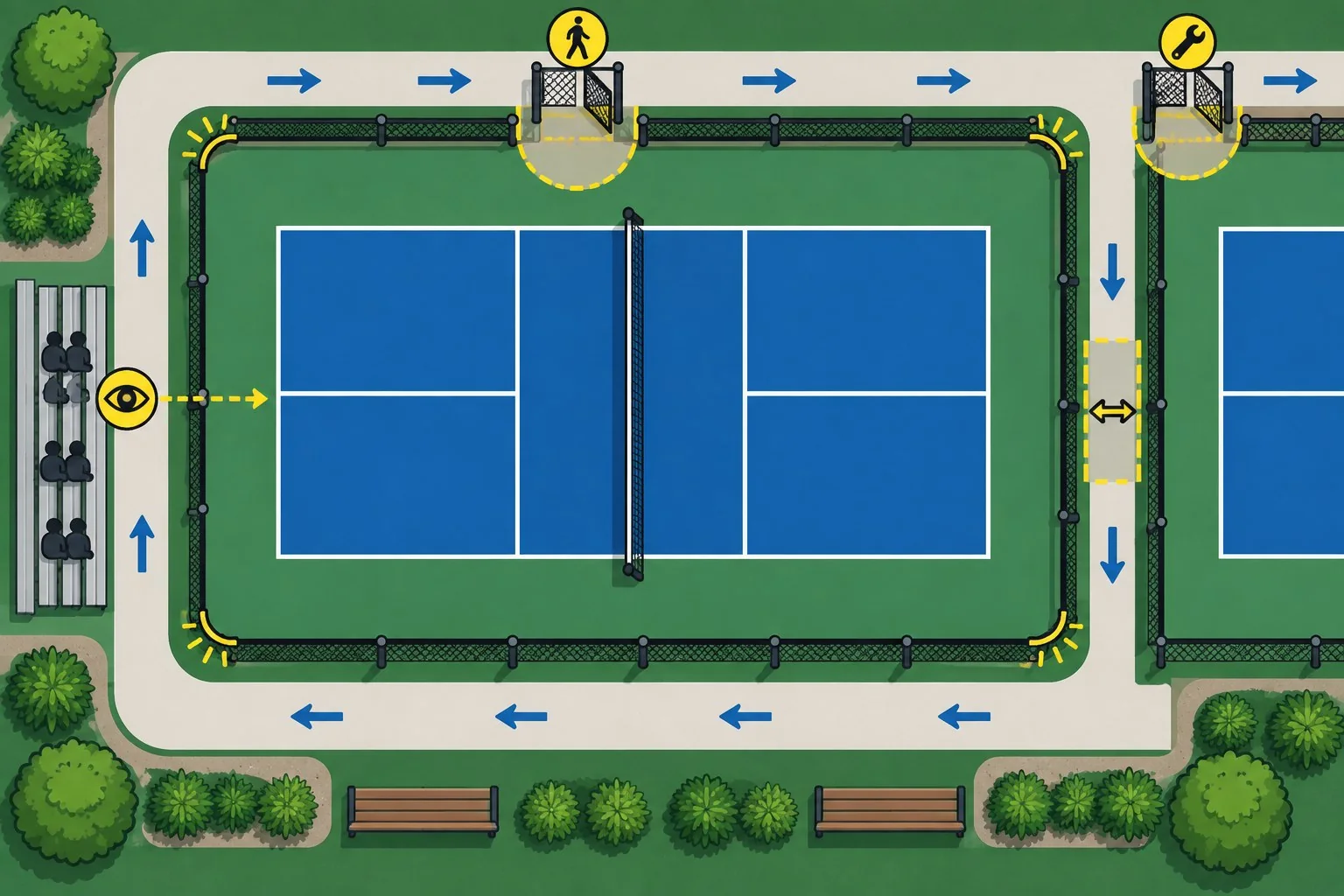
Before installation, walk the planned perimeter as if you were playing a fast rally. Look toward the baseline, turn toward the gate, and imagine a partner or spectator nearby. That simple check can reveal a post, corner, or narrow route that looks harmless on a plan but feels risky in motion.
Use a practical planning checklist
Confirm the court footprint and clearances first. Then decide where players, spectators, maintenance staff, and emergency responders will enter. Choose the fence height and material by considering ball containment, wind, visibility, privacy, and expected weather exposure. Finally, inspect posts, gates, latches, edges, and drainage as one connected system rather than selecting a finish in isolation.
A durable enclosure should make play easier to manage, not make the court feel trapped. When the boundary contains balls, preserves useful sightlines, provides safe access, and fits the surrounding space, it supports both casual sessions and busy community play.