Pickleball Same-Read Drill: Move With Your Partner
A practical doubles drill for reading the same pickleball cue, moving together after third shots and wide balls, and rebuilding team shape under pressure.
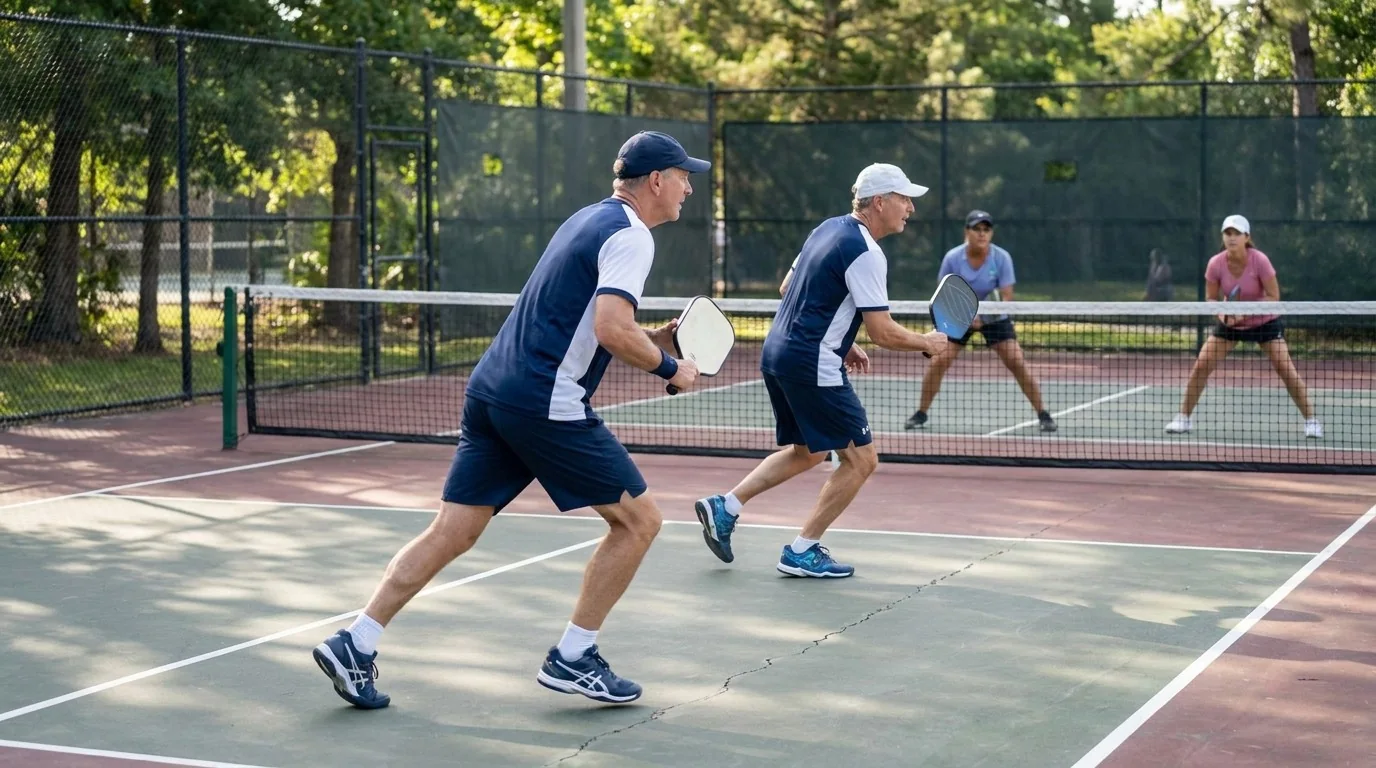
The best doubles teams do not need identical strokes. They need the same read of the rally. When one partner sees a ball that earns forward movement and the other sees a ball that demands defense, the gap appears before either player can fix it. This pickleball same-read drill trains the cue, the movement, and the recovery as one habit.
Start with one shared cue
Use plain calls that describe the next job: “move,” “hold,” “bounce,” “attack,” or “reset.” The player who hits the ball still owns the shot, but both partners should understand what that shot is meant to create. A drop that forces a low reply can earn a step forward. A high ball that leaves the opponents balanced is a reason to stop and prepare.
Do not judge the shot only by whether it lands in the kitchen. Judge what the opponents can do with it. A ball that lands short but sits up may invite an attack. A deeper or less attractive ball that forces a low block may give your team a better path forward. The decision belongs to the result, not the label of the shot.
Drill 1: serve, return, and third-shot read
Set up a normal doubles point. The serving team starts in its legal position, and the receiving team returns deep enough to create a realistic third shot. After the third shot, pause for one breath before anyone advances.
The third-shot hitter says what the ball should do: “move,” “hold,” or “reset.” The partner repeats the call and makes the same movement decision. If the ball forces a weak, low contact, both players take a controlled step. If the opponents are balanced and ready to attack, both players hold their shape. Restart the point if the partners make different decisions, then repeat the same situation.
The pause is not meant to make match play slow. It exposes whether the pair is reading the same ball. Remove the pause only after the movement choice becomes reliable.
Drill 2: connected movement on wide balls
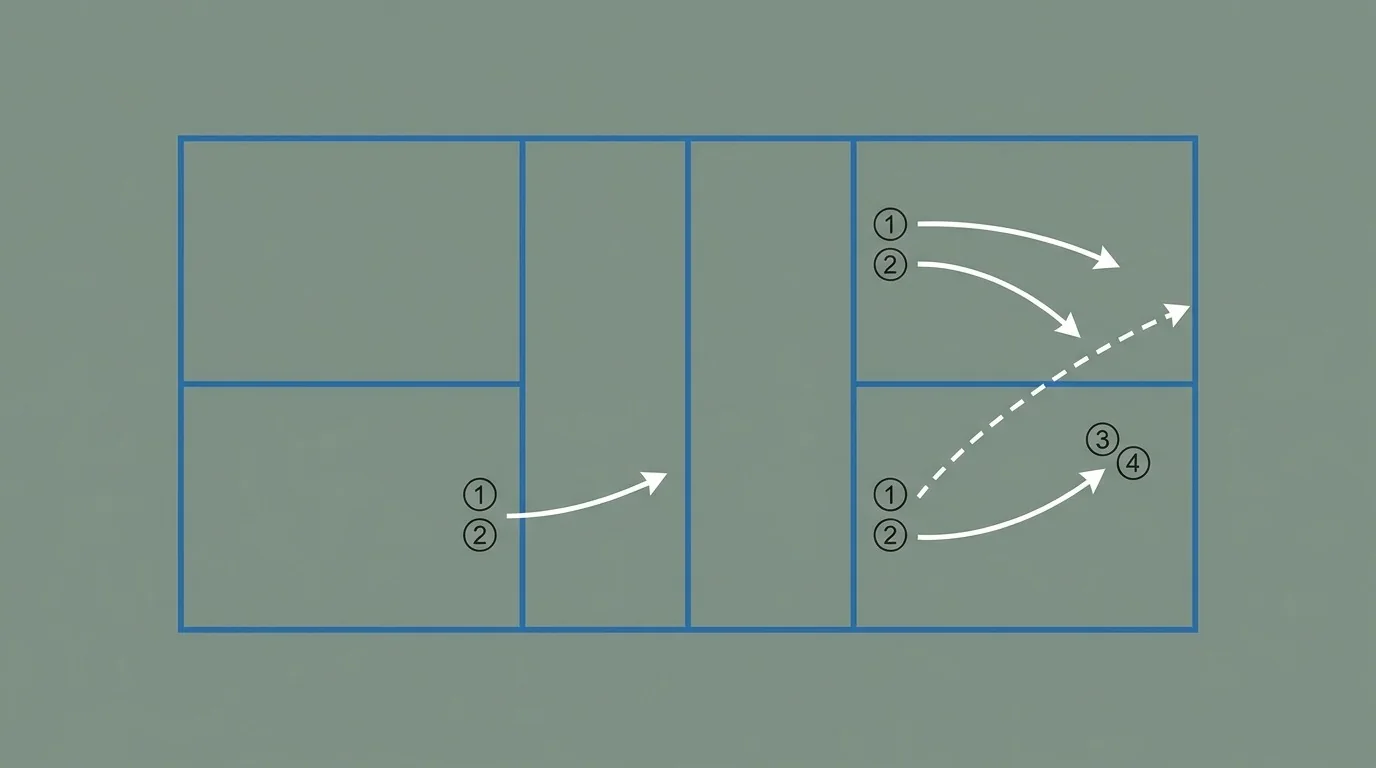
Begin with all four players at the kitchen line and feed cooperative dinks across the court. When the ball travels wide, both partners shift toward that side. The ball-side player protects the line and the nearest angle. The inside partner closes the middle without crowding the teammate.
Imagine an elastic band between the partners. It can stretch while someone reaches, but it should not break. After the feed, both players recover to a useful shared depth before the next ball. Stop the drill when one player stays planted while the other moves, then replay the feed at a slower pace.
Use simple calls such as “mine,” “you,” “stay,” and “switch.” The words matter less than their timing. A late call cannot repair a partner who has already committed to the wrong space.
Drill 3: transition reset ladder
Place one team near the baseline or transition area and the other team at the kitchen. Feed the advancing team a sequence of manageable balls. The advancing pair may move only after a reset or drop gives them a safer ball. After each contact, both partners split and show a ready paddle before the next feed.
If one player is pulled wide or forced low, the next task is to rebuild team shape, not to force an attack. Keep the feed cooperative first. Then vary the depth and width so the partners must recognize the same cue under movement. A successful repetition requires both a playable ball and a connected recovery.
What to check after the drill
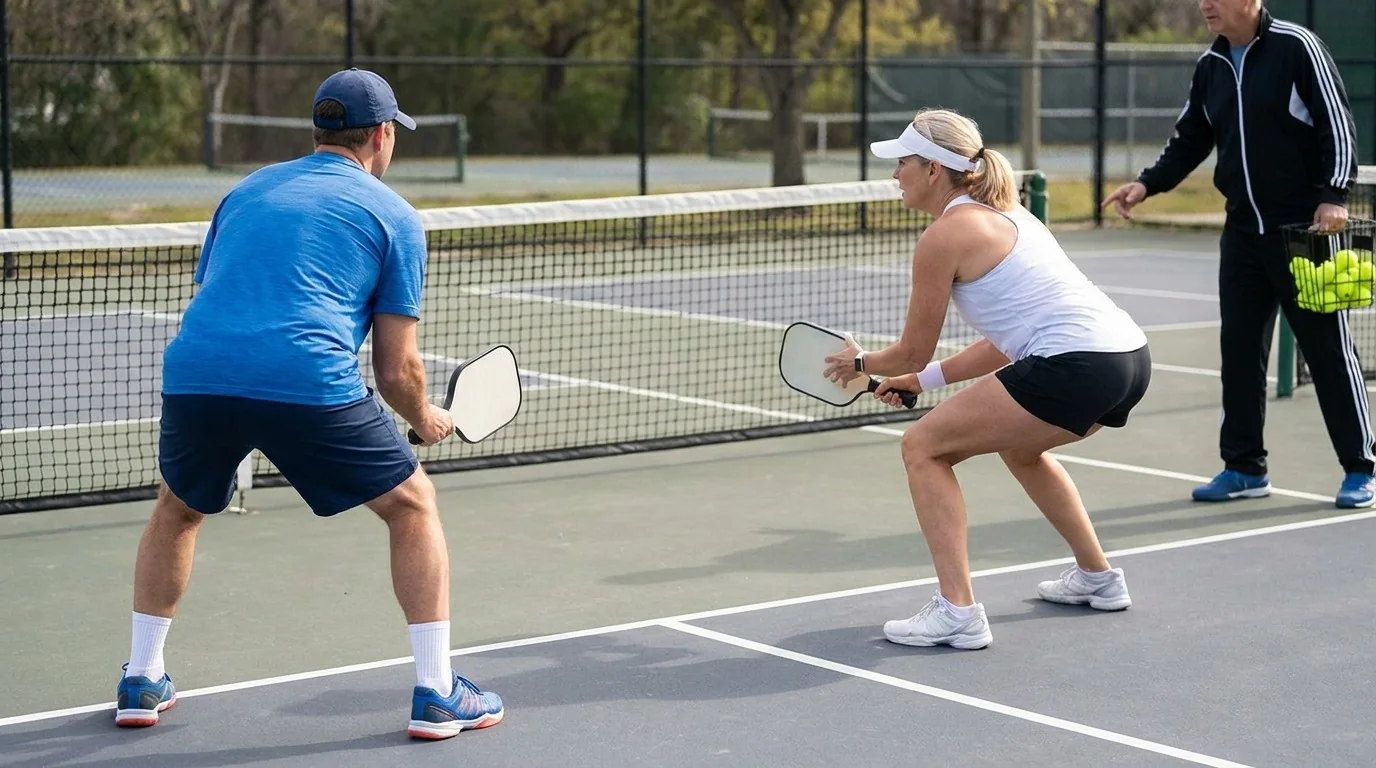
Ask four questions: Did we move on the ball we hit, or on the ball we hoped to hit? Did both partners stop before the opponent’s contact? When one player was stretched, did the other close the useful space? After the exchange, were we on compatible depth lines?
Keep one correction for the next round. If the pair is trying to fix calls, spacing, shot quality, and attack selection at once, the drill becomes noisy. Start with the shared cue, then add movement, then add live pressure. The goal is not to make partners play the same style. It is to make their decisions fit together when the rally changes.