Pickleball Court Noise: Practical Ways to Support Neighbour-Friendly Play
A practical guide to reducing avoidable pickleball court noise while keeping community play welcoming, safe, and considerate of nearby homes.
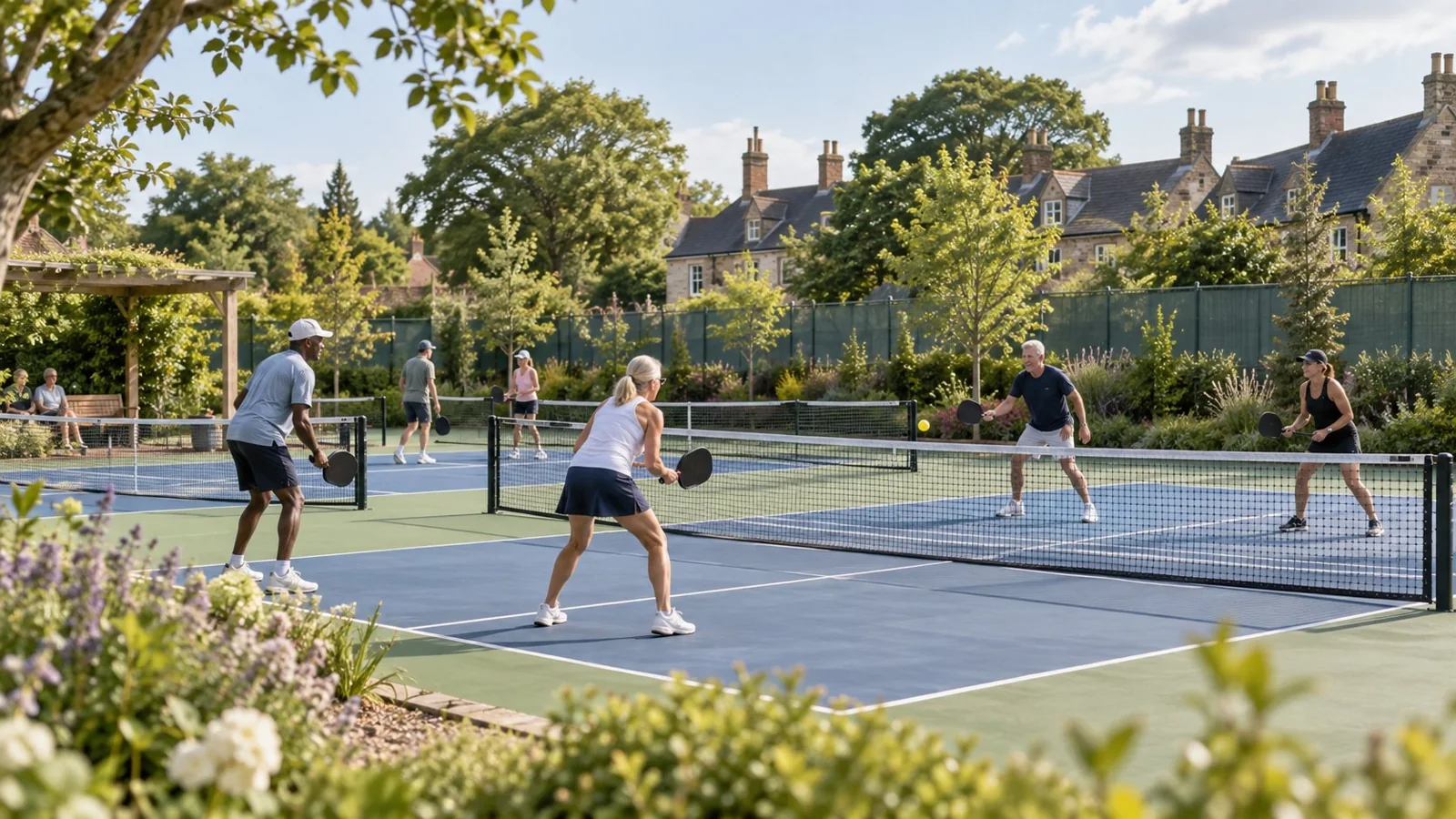
A lively pickleball court can be a great community asset, but repeated pops and shouts may travel farther than a facility expects. The answer is rarely to make play silent. A better goal is to keep the court usable while reducing avoidable noise, choosing considerate hours, and giving nearby residents a clear way to raise concerns. Good planning starts with the whole site: the court layout, fencing, surfaces, access routes, programming, and maintenance all shape what people hear beyond the property.
Find the real source of the disturbance
Visit the facility during a busy session and listen from several locations: the nearest property line, a side street, a parking area, and the quietest nearby room or garden. Note whether the strongest sound comes from paddle-ball contact, players calling scores, balls striking a fence, gates slamming, benches scraping, or vehicles arriving and leaving. A short observation at more than one time of day is more useful than assuming every complaint has the same cause.
Record conditions that change the result. Wind direction, open gates, hard walls, tree cover, and a full court rotation can all affect how sound travels. Ask players to keep normal volume during the test; the aim is to understand ordinary use, not a staged best-case or worst-case moment.
Use layout and landscaping before adding equipment
Keep the noisiest court activity as far from homes as the site allows. If several courts are available, place practice or high-turnover areas nearer existing buildings, parking, or other active recreation, while quieter community play sits closer to residential edges. Maintain clear gates and walkways, and do not create a sound solution that blocks emergency access or makes ball retrieval unsafe.
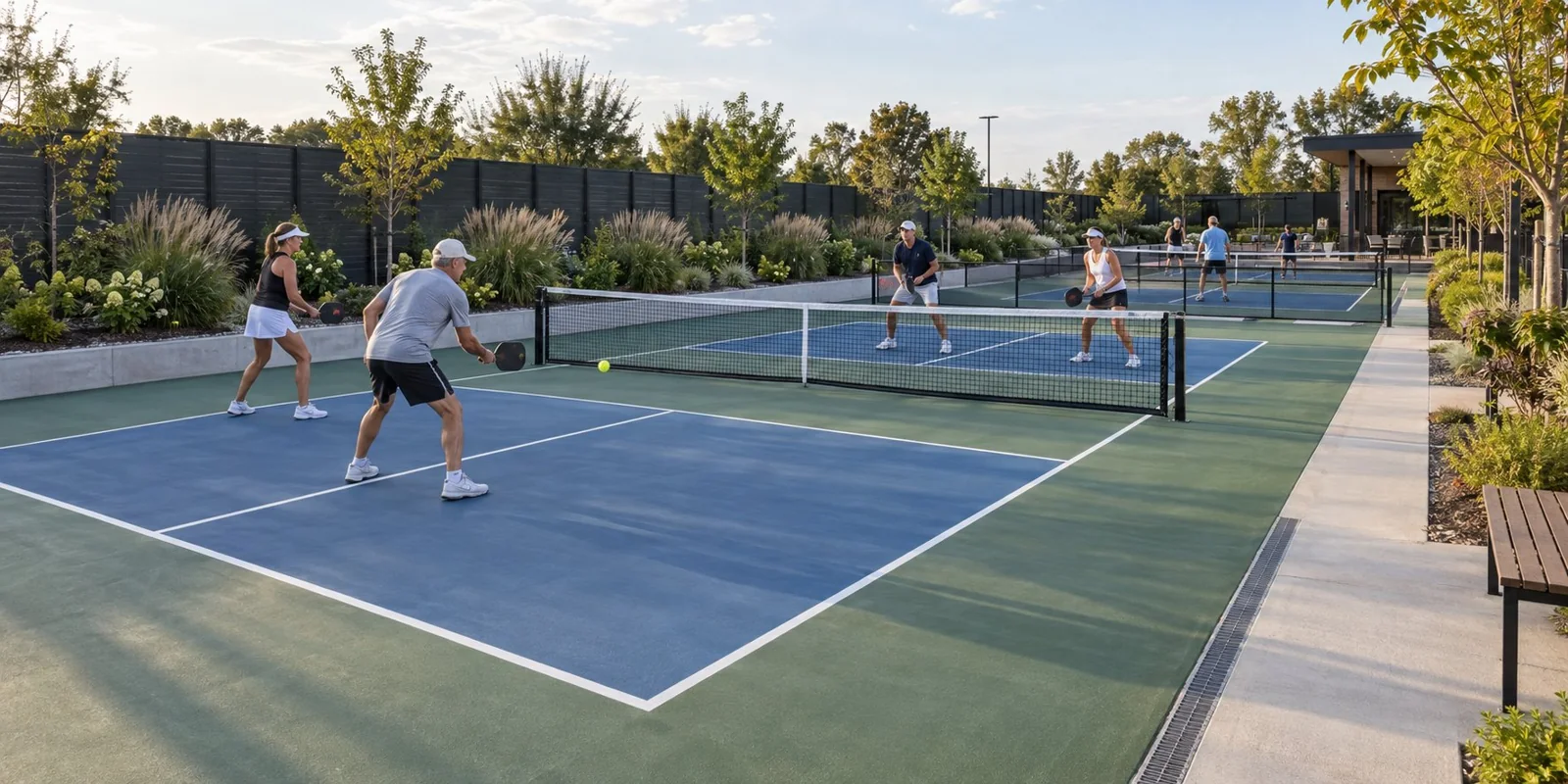
A landscaped buffer can soften the experience of a court edge and make the facility feel less abrupt. Dense planting, earth shaping, and a well-designed fence may help, but a thin row of decorative shrubs should not be treated as a complete acoustic barrier. Check sightlines, irrigation, drainage, and long-term maintenance before planting. Keep branches away from lights, fences, and the playing route.
Hard surfaces can reflect sound toward a neighbouring wall. During a renovation, review nearby masonry, metal fencing, and covered structures as a group rather than selecting one product in isolation. Any acoustic panel or screen should be designed for outdoor weather, securely anchored, and compatible with local approvals.
Set hours and habits that people can understand
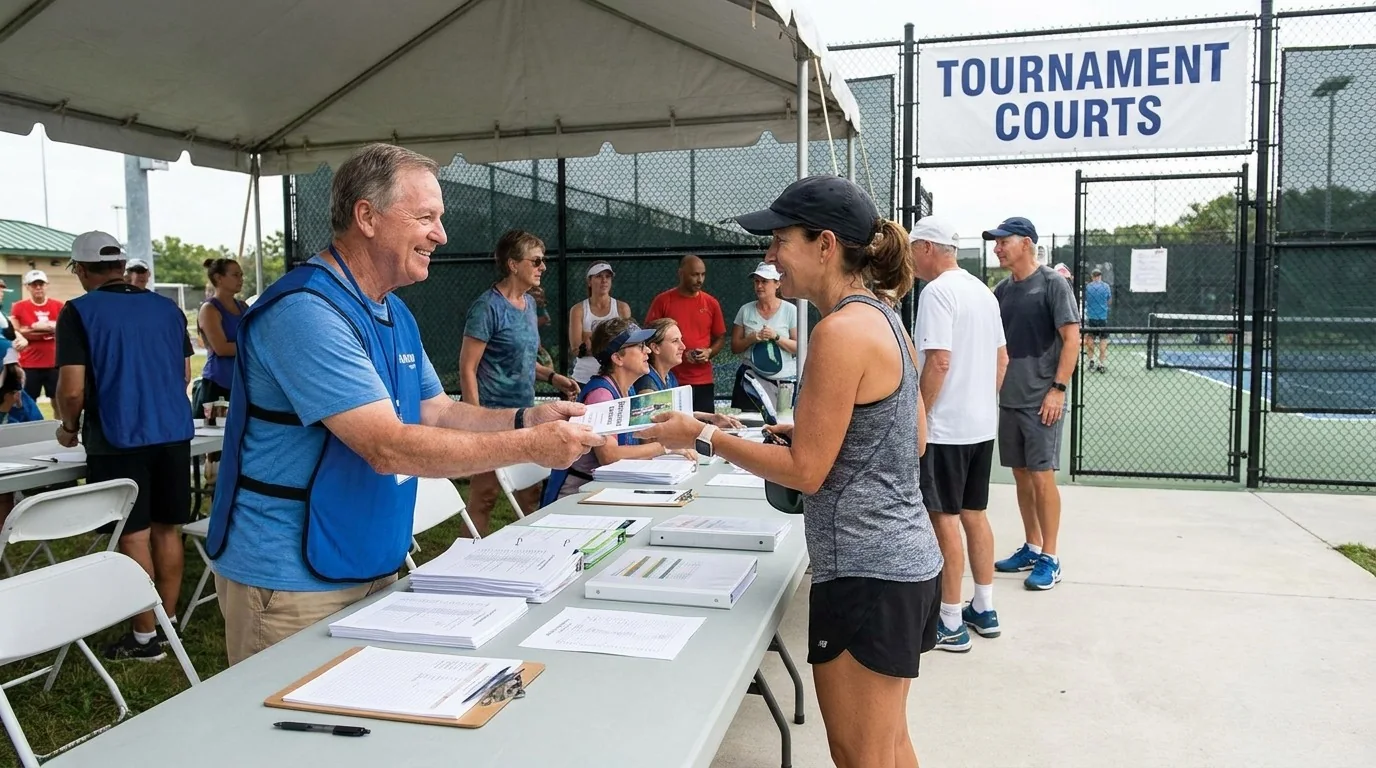
Publish playing hours and apply them consistently. Early morning and late evening sessions deserve extra care, especially near homes. A simple schedule can reserve quieter periods for casual play and avoid concentrating lessons, tournaments, and open-play changeovers at the most sensitive times.
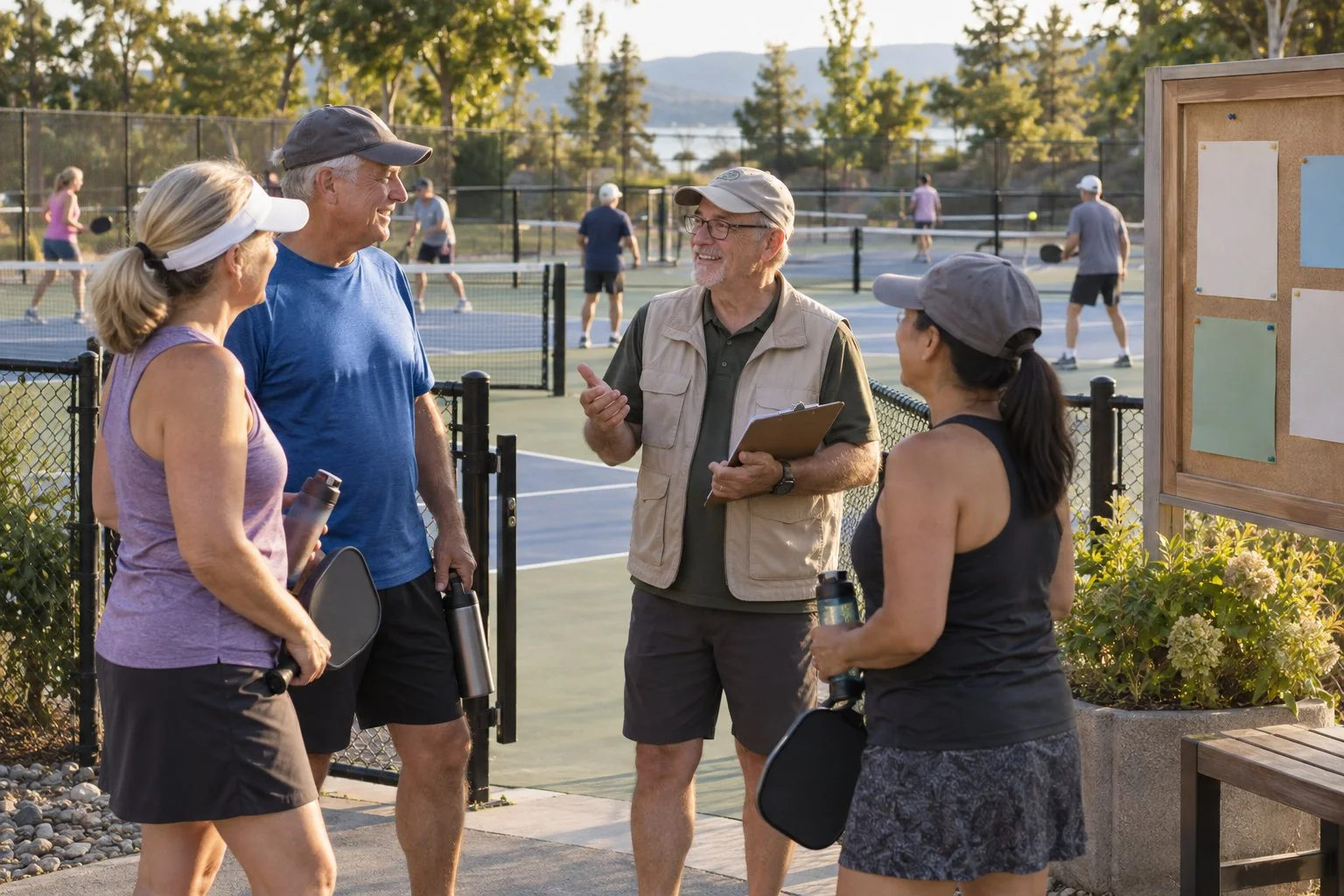
Noise etiquette should be specific rather than scolding. Encourage players to close gates gently, keep score calls clear but not shouted across courts, collect balls without striking the fence, and move bags and chairs quietly. Coaches and event organisers can explain these habits at the start of a session. A visible reminder near the entrance is useful when it stays short and does not clutter the facility.
Respond to concerns and maintain the site
Give neighbours one practical contact route and acknowledge reports without promising an instant fix. Ask for the date, time, location, and type of sound. Compare the report with the facility schedule and your own observations. If a complaint repeats, test a targeted change—such as moving a practice block, adjusting hours, repairing a slamming gate, or relocating a noisy ball machine—before making several changes at once.
Inspect fences, gates, benches, ball machines, and drainage after storms and heavy use. A loose panel can rattle, a closer can slam, and a damaged surface can make balls bounce unpredictably into metalwork. Keep a small maintenance record with the defect, action, and follow-up date. Review the arrangement after a tournament or a change in court capacity.
Neighbour-friendly play is a continuing operating practice, not a single installation. Listen at the property edge, fix mechanical noise, protect access, plan sessions thoughtfully, and communicate clearly. Those modest steps let communities enjoy active courts while treating nearby homes with the consideration they deserve.