Pickleball Court Signage: A Clearer Plan for Shared Play
A practical guide to placing and maintaining pickleball court signage so players can understand rotation, access, safety, and shared-play etiquette.
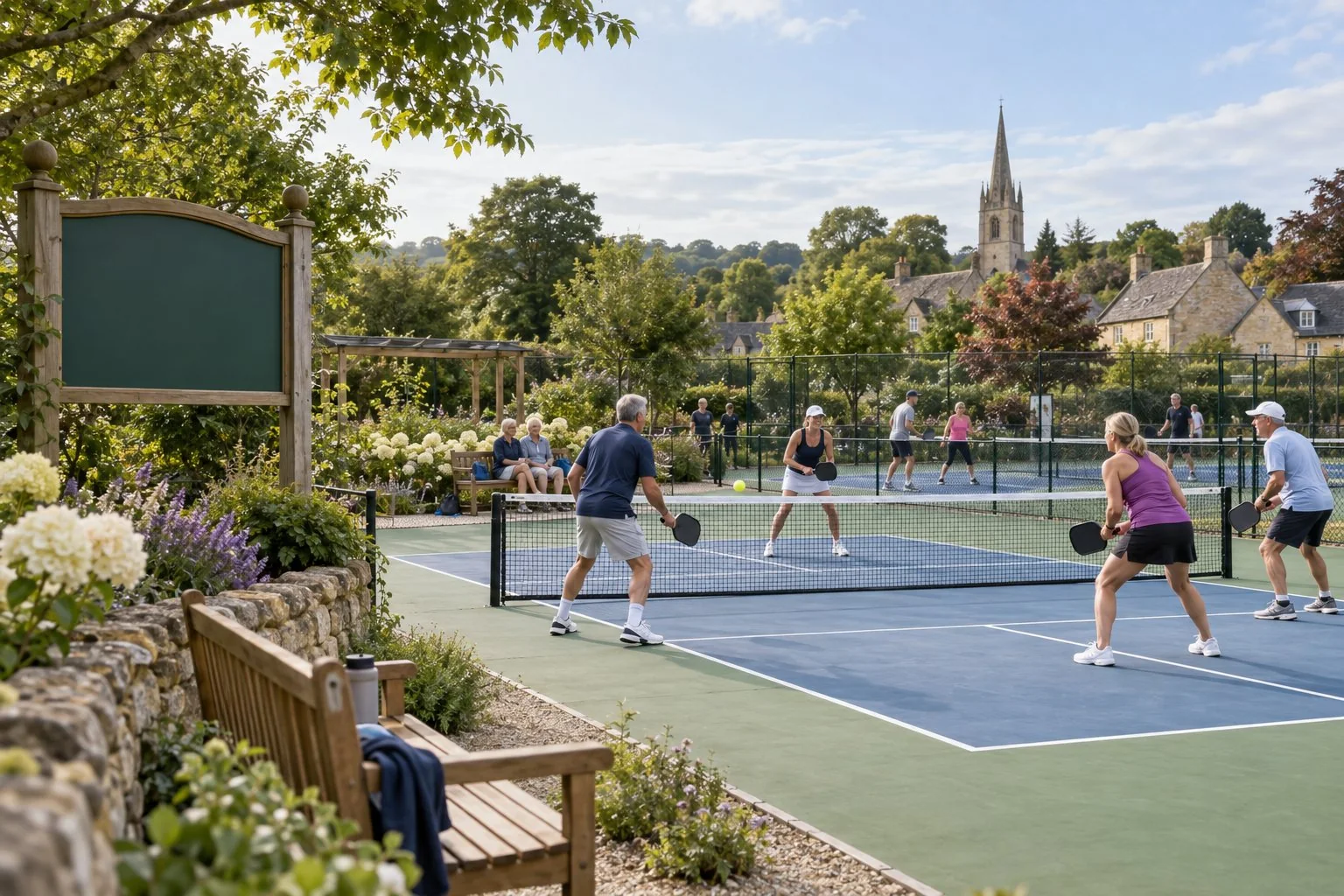
Good court signage does more than decorate a fence. At a busy pickleball facility, a short, well-placed message can answer the questions that otherwise interrupt every rotation: Where do players wait? How does open play work? Which gate should people use? What should stay outside the playing area? The goal is not to cover the site in rules. It is to make the next safe action obvious.
Put the right message in the right place
Start with a walk-through during the busiest session, not when the courts are empty. Watch where newcomers pause, where players gather between games, and where bags or water bottles begin to narrow a walkway. Each decision point deserves only the information needed at that location.
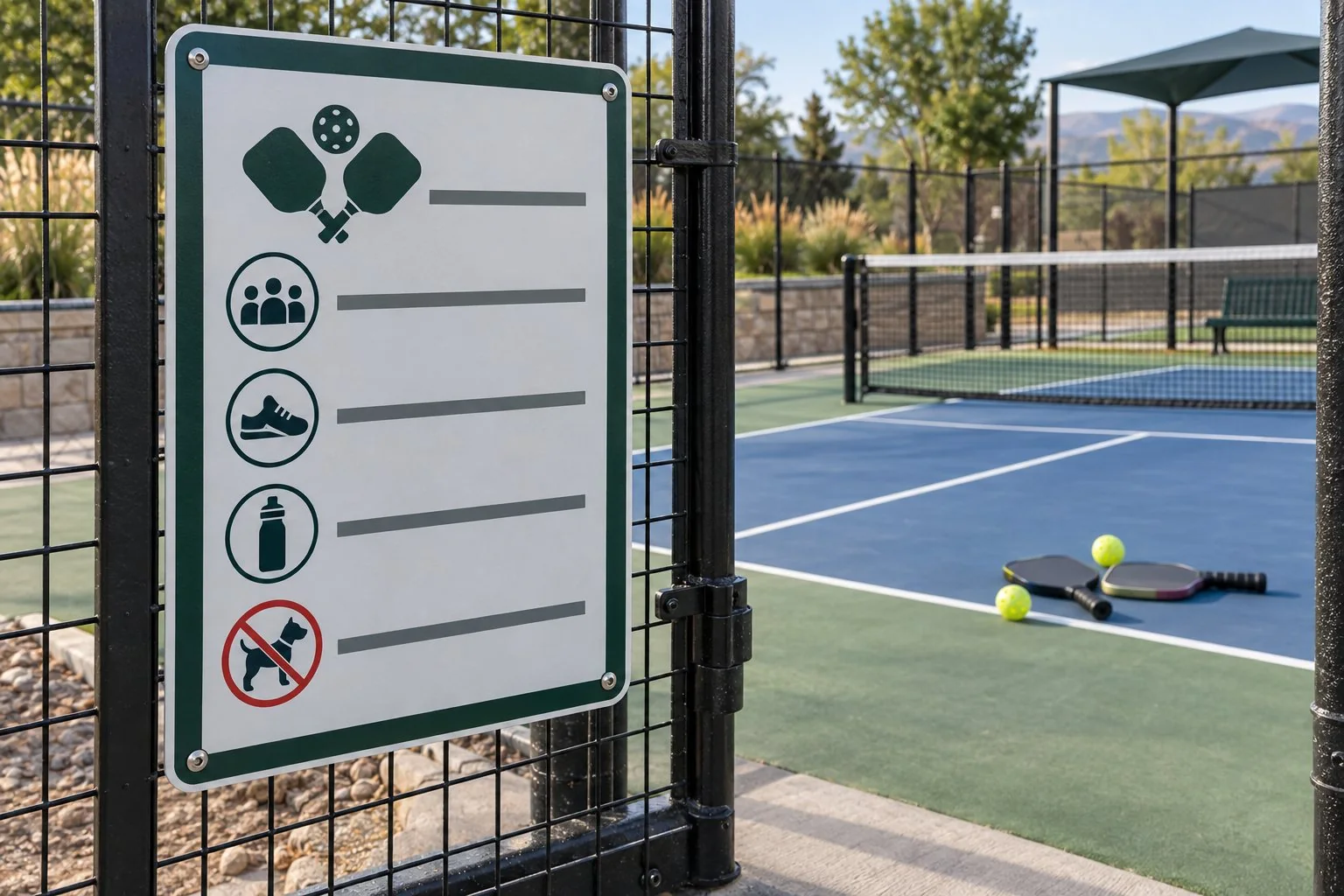
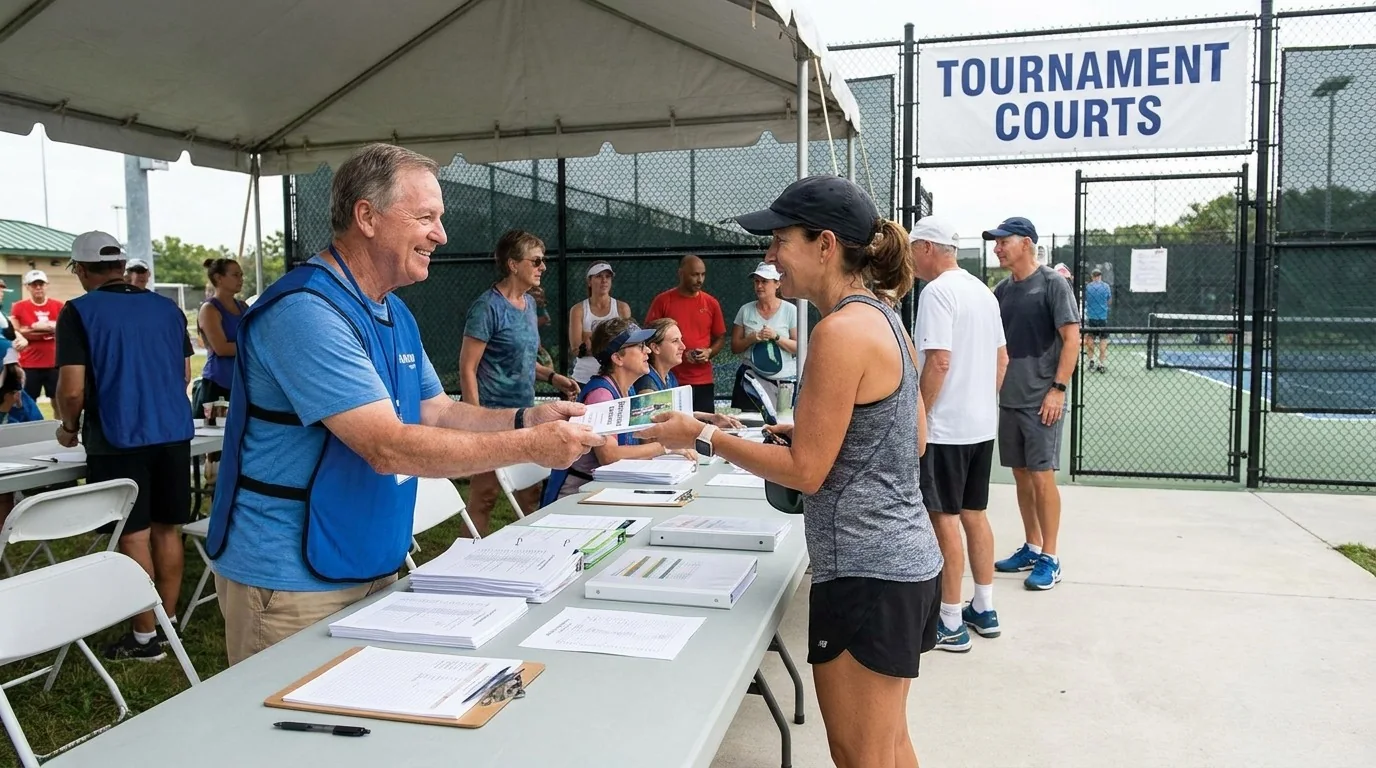
At the entrance, identify the court area, check-in point, restrooms, drinking water, and emergency route. Near a waiting area, explain the rotation method in plain language: how players join, when a game ends, and where the next group forms. At a gate, remind people to look before stepping through. A safety reminder belongs where the risky action happens, not on a distant noticeboard.
Keep the main sign easy to scan from a few steps away. Use a clear heading, short lines, generous spacing, and a small number of consistent symbols. Avoid a dense paragraph that players must study while a rally is underway. If the facility serves visitors who speak different languages, use simple wording and universally understandable icons rather than shrinking several translations onto one crowded panel.
Explain open play without creating friction
Rotation signs should describe the local system rather than assume every facility uses the same one. State whether players stack paddles, join a numbered queue, or wait for a host to call the next group. Explain what happens after a game and where players should stand while waiting. If winners stay on, or if courts rotate on a timer, say so plainly.
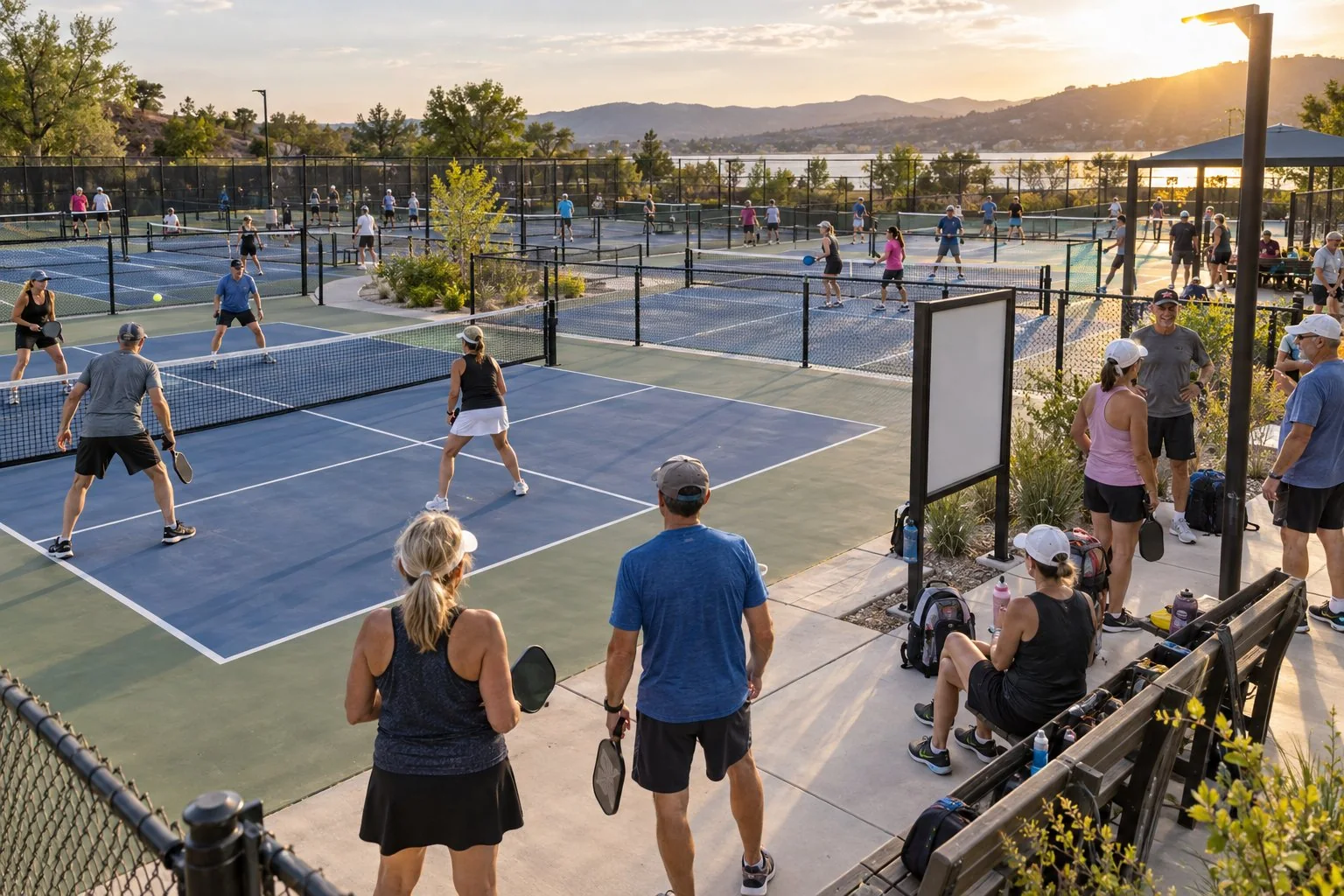
A good sign also protects social fairness. Tell players how to include someone arriving alone, how to ask for a mixed-skill game, and whom to approach when a disagreement cannot be settled informally. Keep the tone welcoming: the sign should reduce uncertainty, not sound like a warning aimed at beginners.
Separate play instructions from facility etiquette. A small panel can cover keeping bags clear of the court, closing gates, using appropriate footwear, and reporting damaged equipment. Avoid promising that a sign replaces supervision. On a crowded site, a visible host or club volunteer may still be needed to help new players understand the rotation.
Check visibility, access, and maintenance
Place signs where they do not block a gate, narrow an accessible route, create a sharp corner, or become a distraction behind a baseline. Mount them at a comfortable viewing height and consider glare at morning, midday, and evening. Dark lettering on a calm, matte background is usually easier to scan than shiny material or low-contrast decoration.
Use weather-resistant materials and inspect fasteners, corners, posts, and surfaces regularly. Replace faded panels before players start guessing at missing words. Update the sign when the rotation process, opening hours, court numbering, or contact information changes. A small date or version mark helps staff know which panel is current without making the public message cluttered.
Ask several players to find one piece of information while standing where the sign will be used. If they cannot locate it quickly, rewrite before adding more text. Recheck the view from a wheelchair, from a child’s eye level, and from the approach to an active court. Clear signage is a practical part of the facility, just like safe paving and visible court lines.
A strong signage plan is deliberately modest: one clear message at each decision point, a friendly explanation of local rotation, visible access routes, and a routine for keeping every panel accurate. That is enough to make shared play calmer without turning the court into a wall of instructions.