Pickleball Court Surface Checks: Cracks, Drainage, and Safe Play
A practical guide to adding shade around pickleball courts while preserving clear sightlines, airflow, drainage, access, and comfortable shared play.
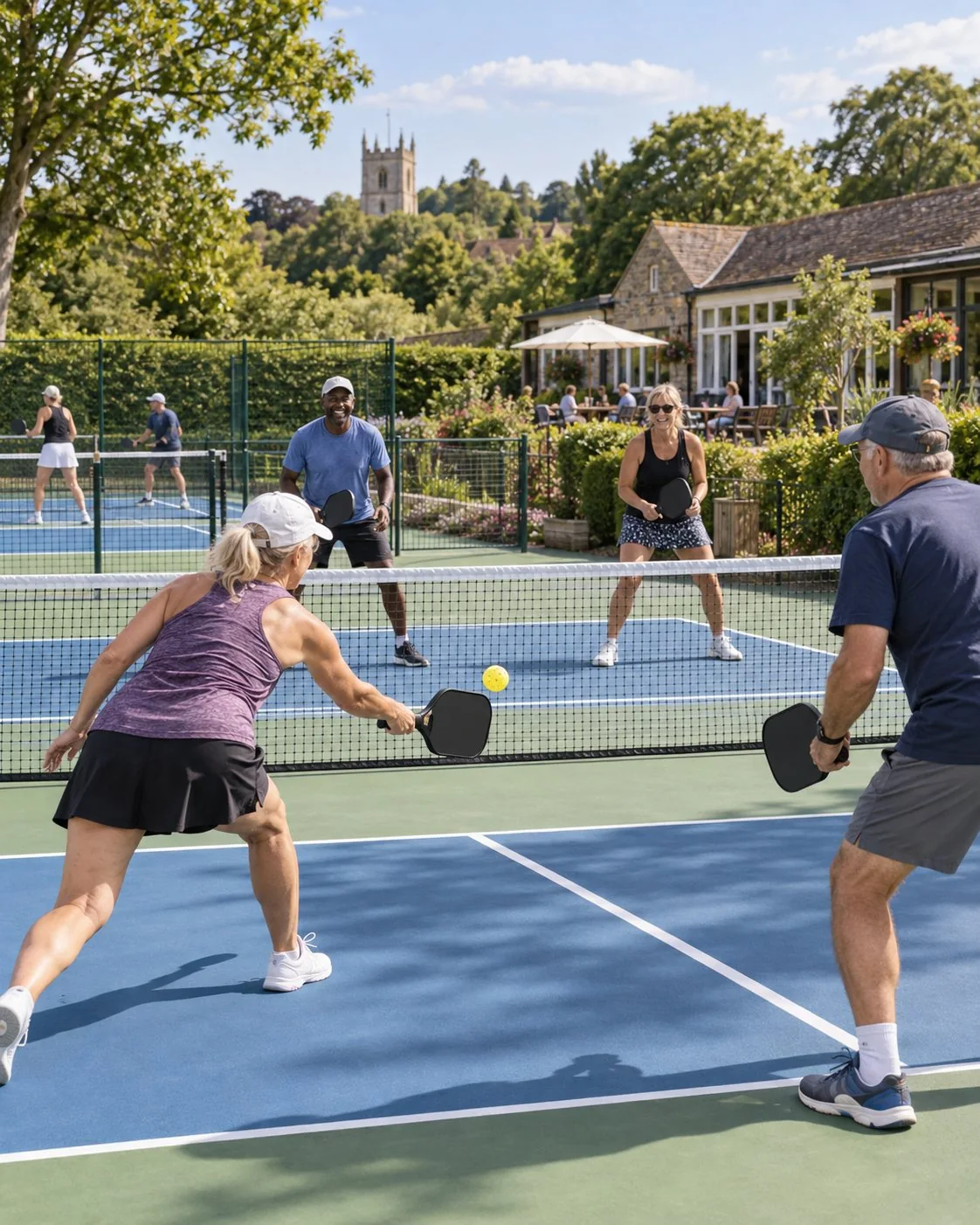
A pickleball court can look fine at a glance while small surface problems create trips, odd bounces, or standing water. Regular checks help a club decide what needs immediate attention, what can be monitored, and when a specialist should repair or resurface the area. The aim is not cosmetic perfection; it is a predictable, safe surface that supports welcoming shared play.
Inspect the surface in a repeatable route
Walk every court before a busy session, starting outside the baseline and moving around each sideline. Look for raised edges, cracks, loose coating, worn line paint, blistering, and places where the surface has become slick. Run a flat straightedge across suspicious areas if your maintenance team has one, and photograph changes from the same viewpoint so gradual movement is easier to notice.

Give extra attention to transitions: the gate threshold, the area around net posts, joints between old and new surfacing, and any patch near a drain. A crack that seems harmless in dry weather may open after rain or winter movement. Do not fill or paint over a defect without identifying why it appeared; water, roots, settlement, and failing edges require different remedies.
Check the playing lines as part of the same route. Faded markings can make close calls harder, while thick repair paint can create a visible ridge. Lines should remain clear without becoming a patchwork of mismatched coatings. Keep records of the inspection date, weather, court number, and action taken.
Treat water and traction as safety issues
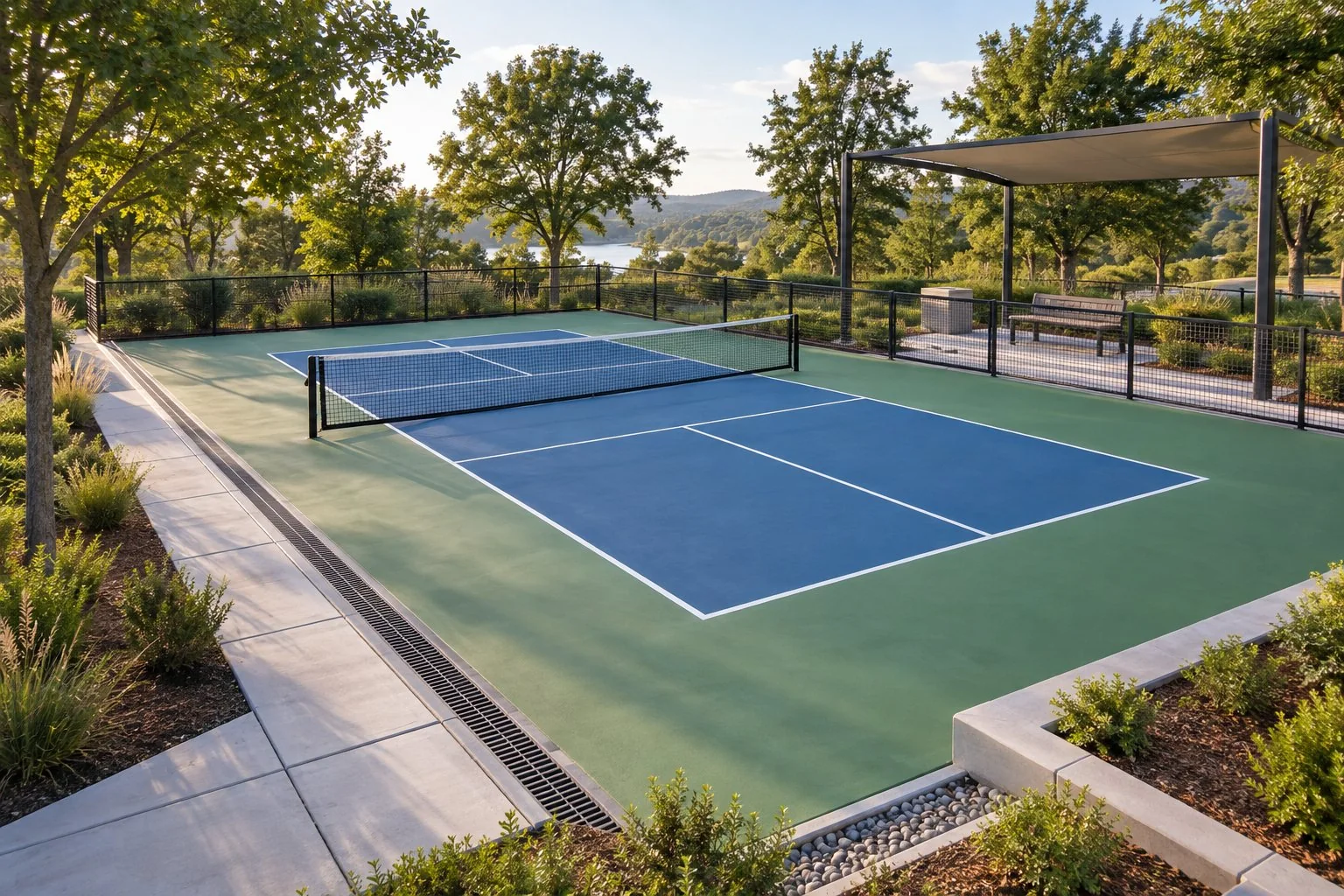
After rain, inspect how quickly the court dries and where water gathers. A shallow puddle near the baseline or kitchen can change the bounce and make a sudden stop risky. Check drains, nearby slopes, gutters, and low edges for leaves or sediment. Never sweep debris into a drain if it will block another part of the facility; remove it and dispose of it according to the site’s maintenance plan.
Traction also changes with dust, algae, sunscreen residue, and worn coating. Clean using the surface manufacturer’s approved method rather than guessing with harsh chemicals or pressure that could damage the finish. If a damp area remains slippery, close that section until it is assessed. A warning sign is helpful, but it does not make an unsafe court playable.
Separate routine cleaning from repairs. Volunteers can often remove leaves and report problems, but structural cracks, widespread delamination, drainage failure, and resurfacing should be evaluated by qualified contractors. Keep players away from uncured coatings, tools, and taped-off work areas, and reopen the court only after the surface is ready for normal footwear.
Use records to plan repairs
Rank findings by risk and change. A sharp raised edge, loose hardware, or persistent wet patch deserves faster action than a small stable cosmetic mark. Recheck every logged defect after heavy rain, freezing weather, nearby construction, or tree work. If several courts show the same symptom, investigate the shared cause instead of treating each mark as an isolated repair.
A compact checklist can cover cracks and height changes, line wear, surface cleanliness, drainage, traction, net-post surroundings, gates, and accessible routes. Share the date of the last inspection where staff and players can find it, and give the facility a clear way to report new damage. Good records make it easier to budget resurfacing before a minor issue becomes a closure.
A court surface deserves the same practical attention as a net or gate. Inspect on a repeatable route, watch what rain reveals, clean with compatible methods, isolate hazards quickly, and bring in qualified help for repairs beyond routine care. Those habits protect predictable play and help a community facility stay open.