Pickleball Court Trash Stations: A Cleaner Plan for Shared Play
A practical guide to placing, sizing, securing, and maintaining trash and recycling stations around shared pickleball courts.
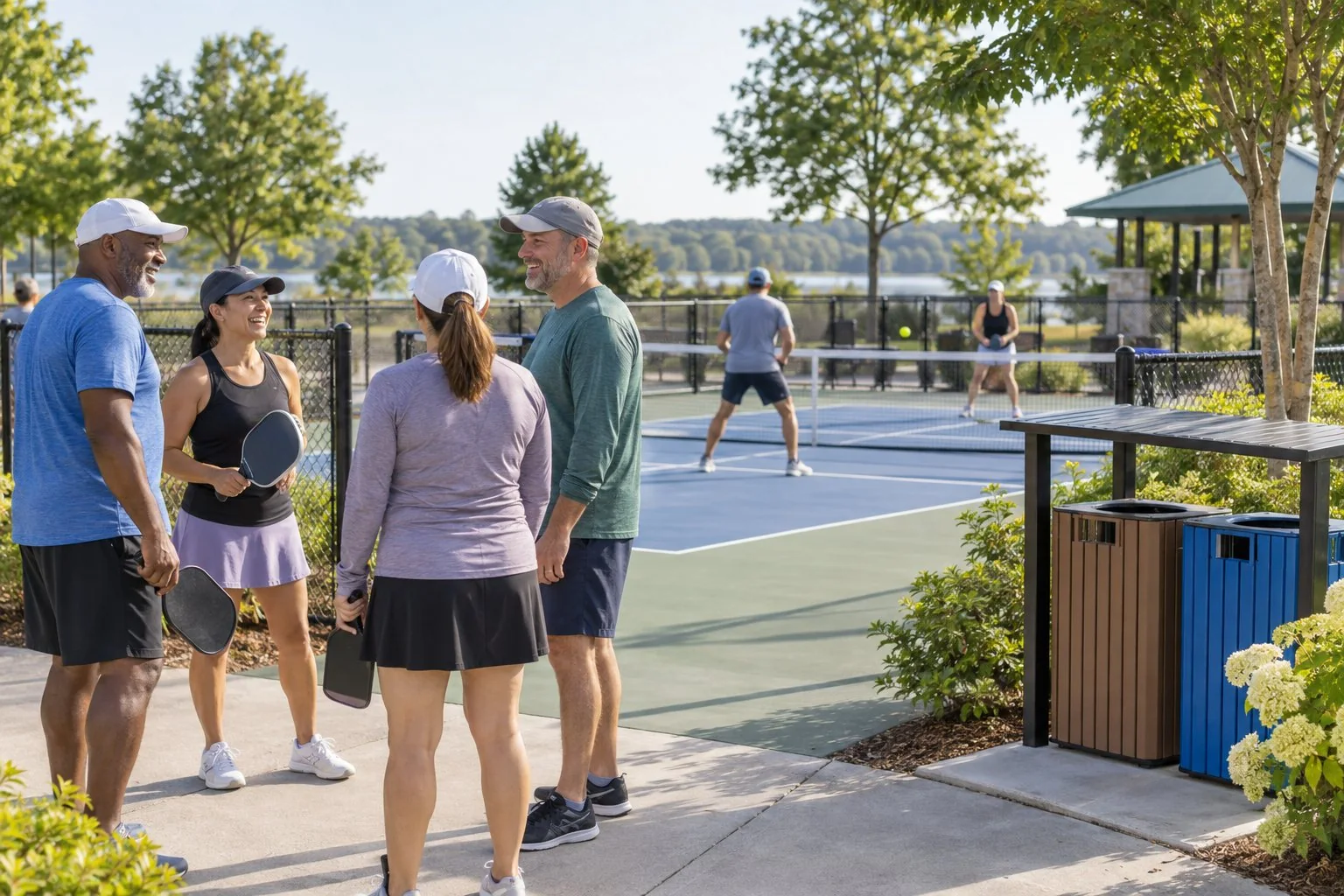
A clean court is easier to enjoy, but waste stations can create problems when they are treated as an afterthought. A bin that blocks a gate, blows open in the wind, or overflows beside the fence quickly becomes a safety and neighborhood issue. A practical pickleball court trash station should support easy disposal without competing with the court’s circulation, visibility, or playing space.
Put disposal points where people actually walk
The best location is usually near an entrance, seating area, or shared circulation route rather than next to the baseline or directly behind a player. People should be able to reach the station before entering the court, after leaving a game, or while taking a break. Keep the gate swing, accessible route, and space around benches clear. Nobody should have to step into an active court or squeeze between a bin and a fence to throw something away.
Avoid placing containers where they hide the net, create a blind corner, or encourage players to leave bags on the ground. If several courts share one entrance, a central station may work well, provided the route remains obvious and wide enough for normal traffic. On a single court, a smaller station can sit outside the main playing area while remaining visible from the rest zone.
Choose containers that stay stable and closed
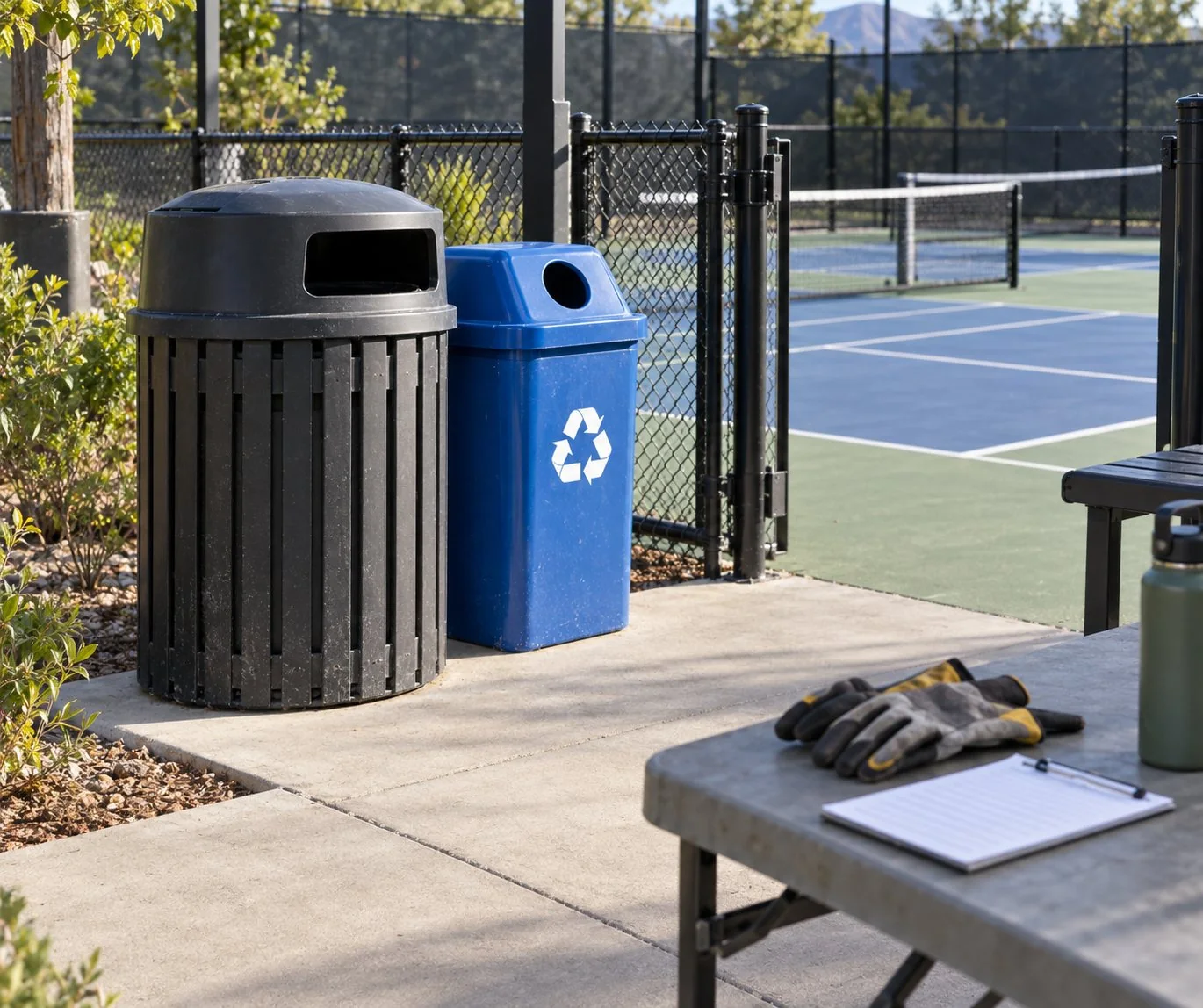
Outdoor courts need containers designed for weather and repeated use. A lid helps keep lightweight packaging from escaping and discourages animals from getting inside. The base should be stable on a level surface; a top-heavy or wheeled bin that rolls toward a gate is a poor fit even if it is convenient to empty.
Use a size that matches the busiest session, not the quietest hour. A small container that fills after one tournament creates litter around the court, while an oversized bank of bins can make a compact facility feel cramped. Where local collection allows it, separate general waste and recycling with simple, high-contrast labels that can be understood quickly. Labels should be short and weather-resistant, not dense instructions that nobody reads during play.
Build a simple inspection routine
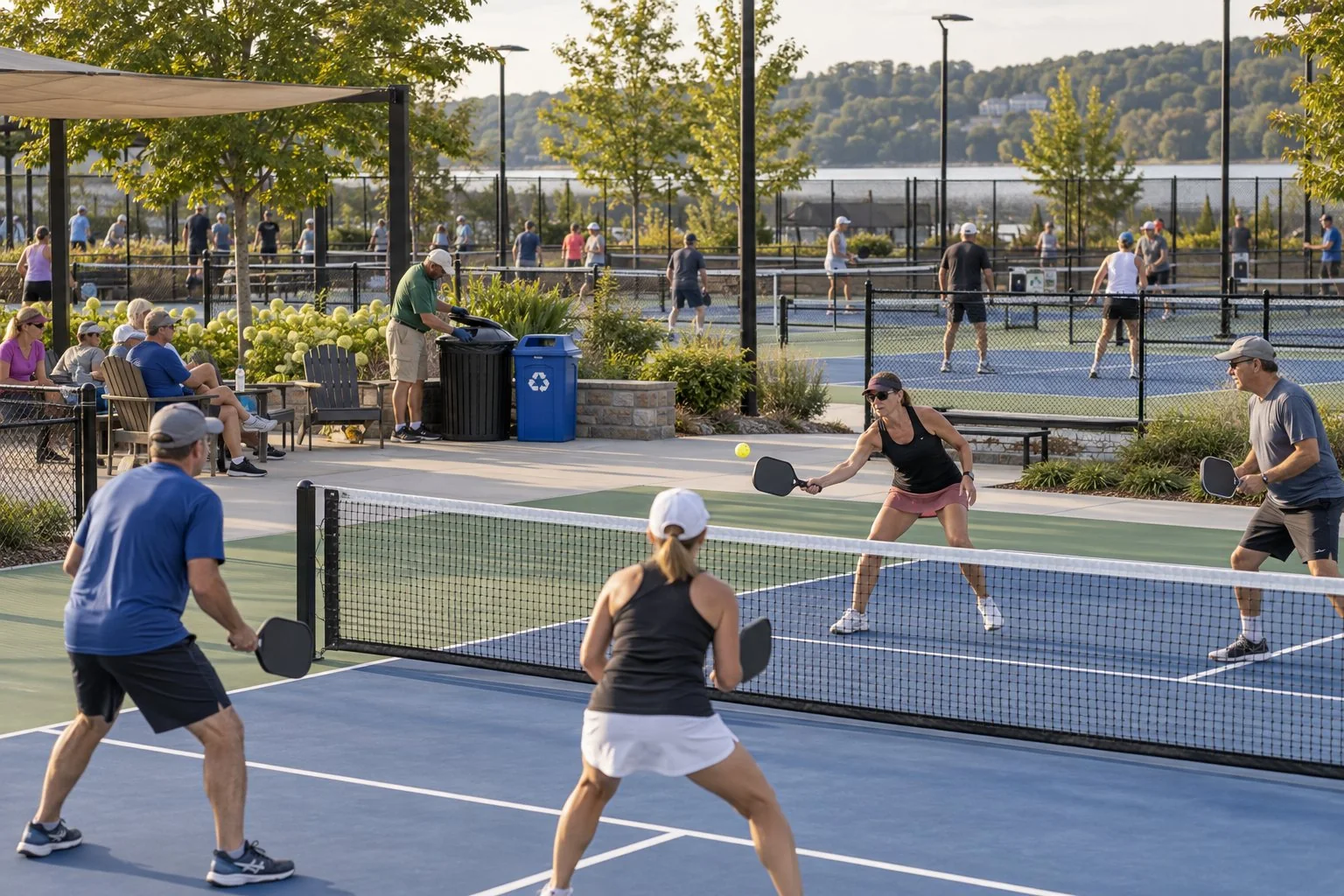
A volunteer, facility manager, or opening-shift player can check the station in less than a minute. Confirm that the lid closes, the container has not moved, the approach is free of bags and spilled liquid, and the surrounding surface is dry. Look for sharp objects, cracked wheels, loose fasteners, or overflow that could be carried onto the court by wind.
Empty the container before a scheduled league night or tournament rather than waiting for a complaint. After storms, check both the station and the area downwind. A fallen lid, scattered cups, or a tipped bin should be corrected before play resumes. Keep cleaning supplies and replacement liners in a secure storage area, not beside the court where they can become trip hazards.
Make shared-play expectations easy to follow
A short sign near the station can ask players to close lids, sort recyclable items when appropriate, and report a full container. Place the message where it is visible without adding visual clutter to the court. If the facility has different rules for food, glass, or drink containers, state those rules plainly and use the same wording across every court.
The station should also fit the tone of the community. Keep it tidy, repair damaged parts promptly, and review its location when courts, seating, or access routes change. A clean waste point is not just a maintenance detail: it reduces loose objects, protects court access, and shows neighbors that shared pickleball space is being managed thoughtfully.
A quick placement checklist
Before installing or moving a station, walk the route as a player, spectator, wheelchair user, and maintenance worker. Check that the container is outside the playing area, does not narrow the gate or walkway, remains visible without hiding court sightlines, and can be emptied without crossing an active rally. Confirm that the lid and base suit local weather, the capacity matches peak use, and the inspection responsibility is clear.
These small decisions keep waste under control while preserving the open, welcoming feel that makes community courts work.