Pickleball Paddle Storage: Protect the Face From Heat, Water, and Pressure
A practical storage routine for keeping a pickleball paddle dry, protected from heat and pressure, and ready for the next session.
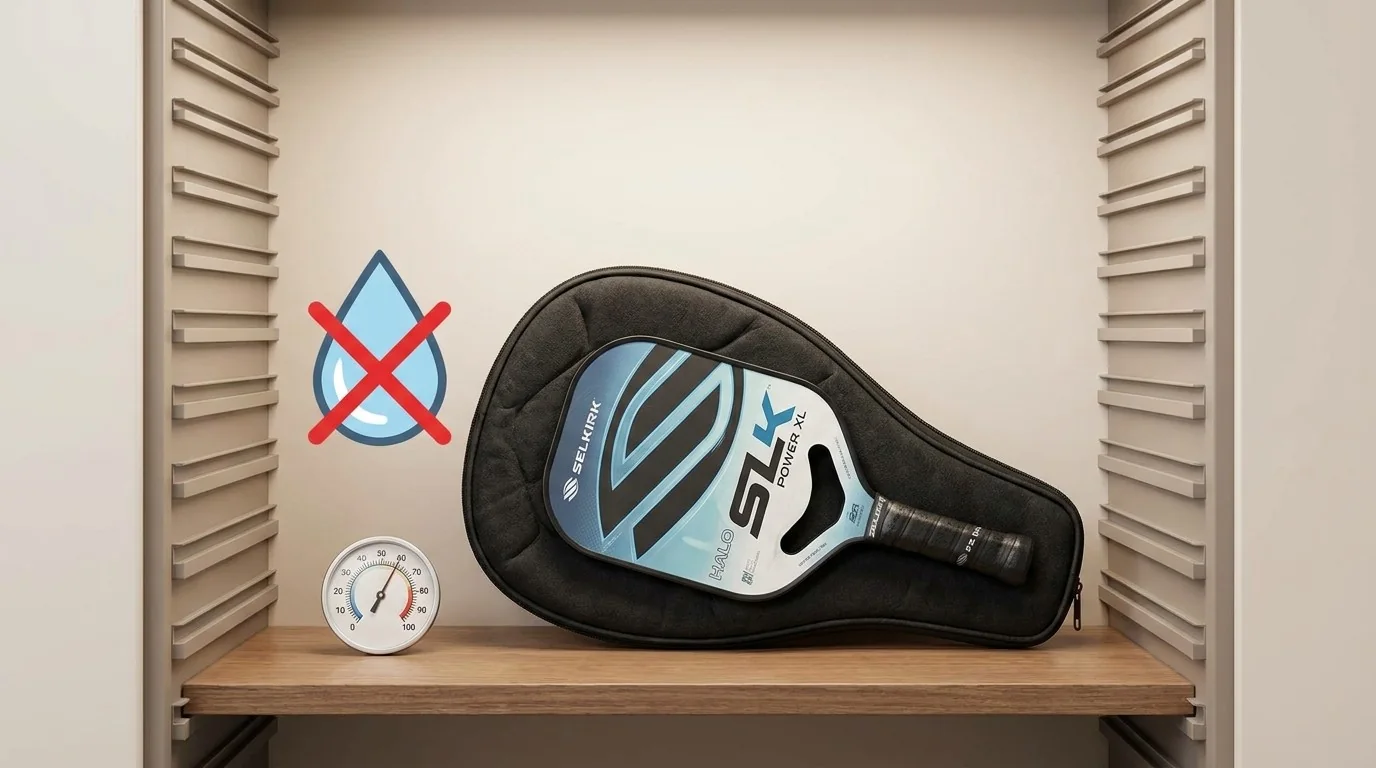
Your paddle still needs protection after the game ends. A few deliberate habits keep the hitting surface, edge guard, grip, and core away from the damage that comes from moisture, heat, pressure, and careless transport. The routine is not complicated: dry the paddle, let it stay near room temperature, cover the face, and give it a place where nothing heavy can land on it.
Give the paddle a dry, steady place
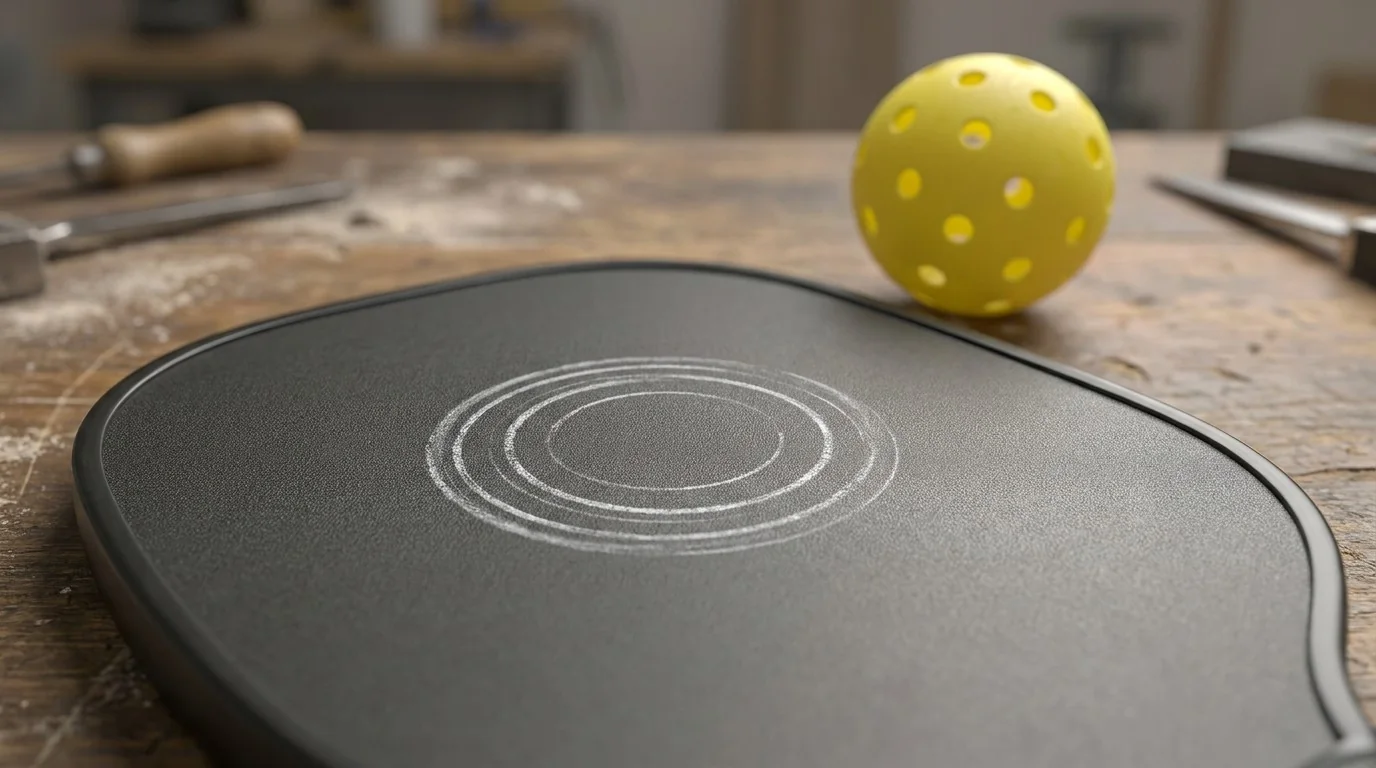
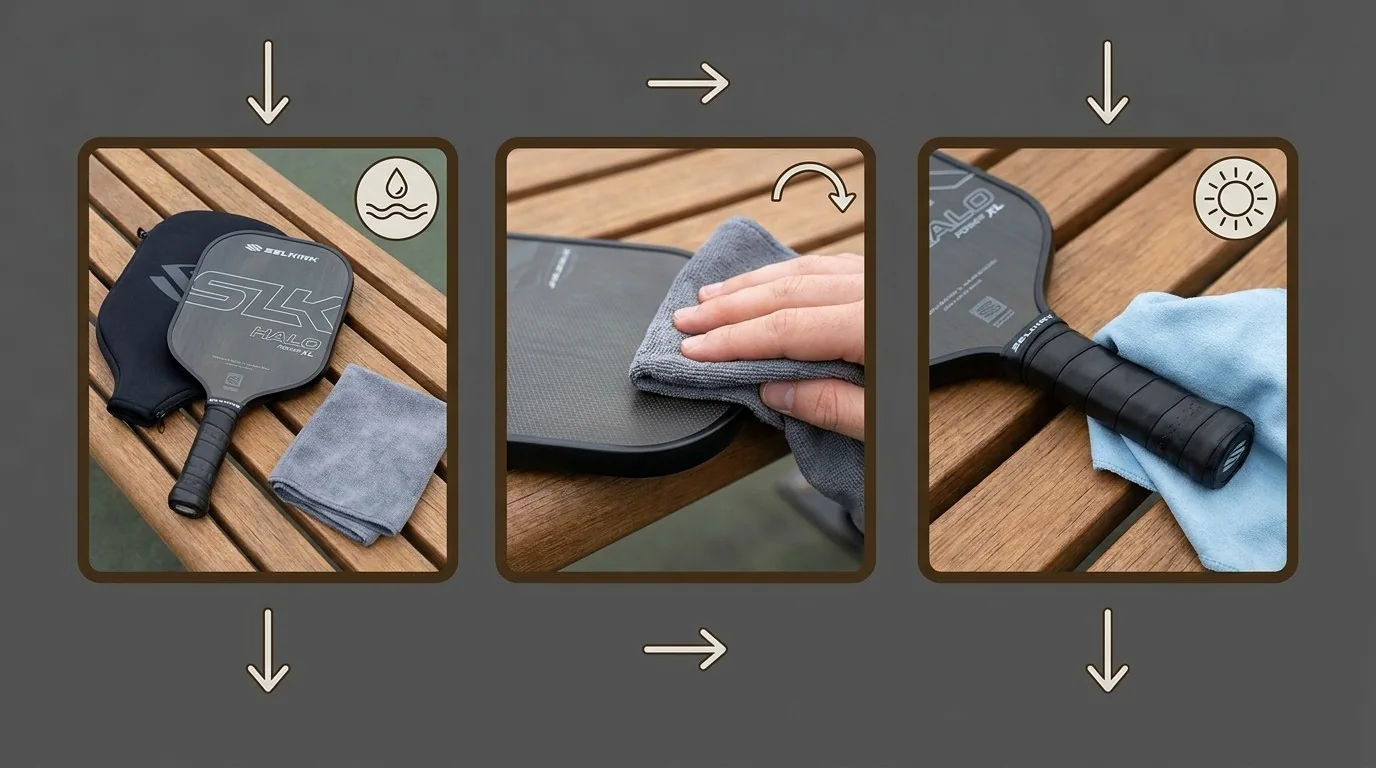
After play, wipe the face and edge guard with a lint-free cloth lightly dampened with water. Avoid household cleaners unless the manufacturer specifically recommends one. Cleaner residue can remain on the hitting surface and affect how the ball comes off it. If you use a raw carbon-fiber paddle, follow the care method for that surface, such as a carbon-fiber cleaning block, instead of trying an abrasive product at random.
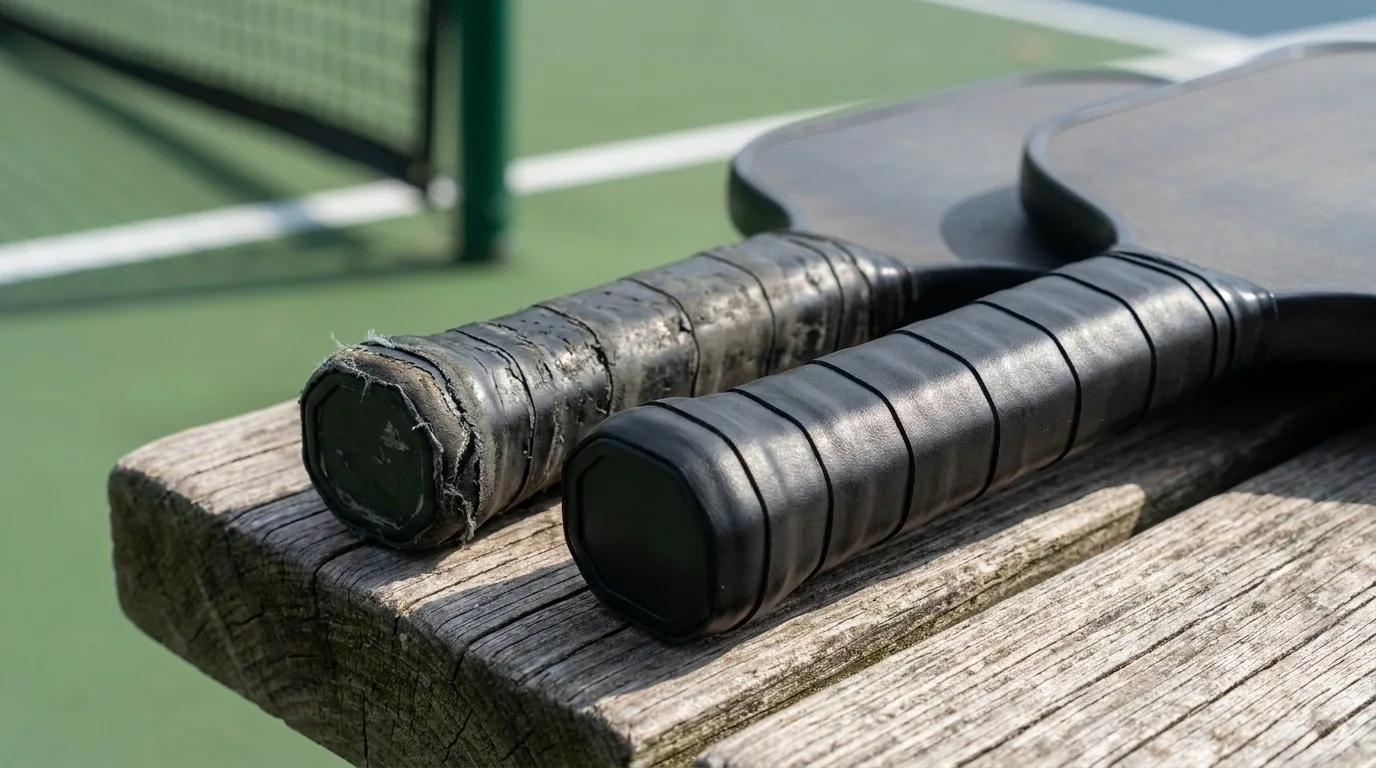
Do not overlook the handle. Sweat and outdoor dirt collect on the grip, so wipe it after each session and dry it with a separate cloth. Pack the paddle away only when it is dry. A paddle's honeycomb-style core can retain liquid if the equipment is submerged or repeatedly exposed to moisture. A little rain is not the same as soaking, but the safe response is still to dry the paddle promptly rather than store it damp.
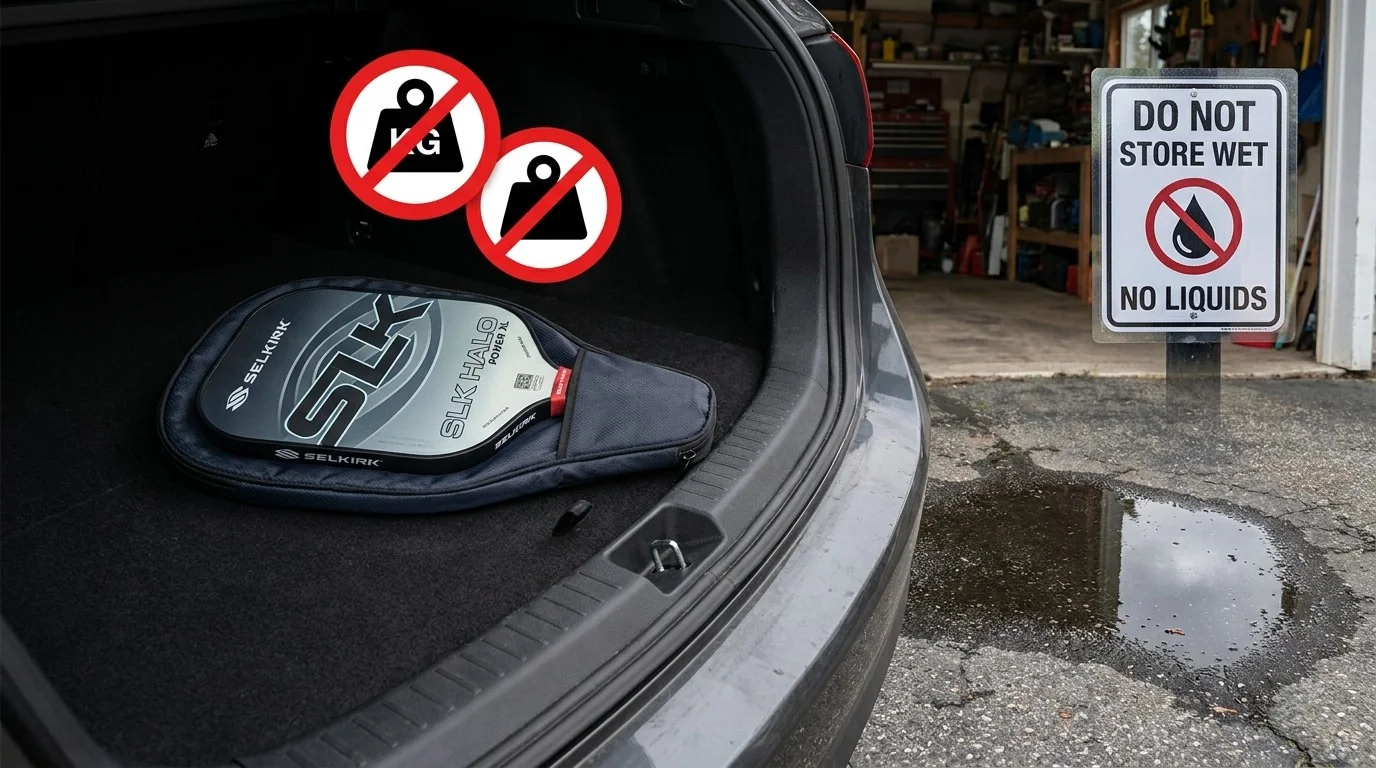
Choose an indoor closet or equipment shelf at a comfortable room temperature. Long periods of cold can make sporting equipment more brittle, while excessive heat can soften materials and contribute to delamination. Bring the paddle inside instead of leaving it in a car, an unheated garage, or another place exposed to strong heat.
Use the cover to prevent rubbing and scratches
A cover keeps the face from rubbing against keys, bottles, grit, and other equipment in a bag. Put it on before placing the paddle in a crowded bag, but first look over the face so a grain of court debris is not trapped against it.
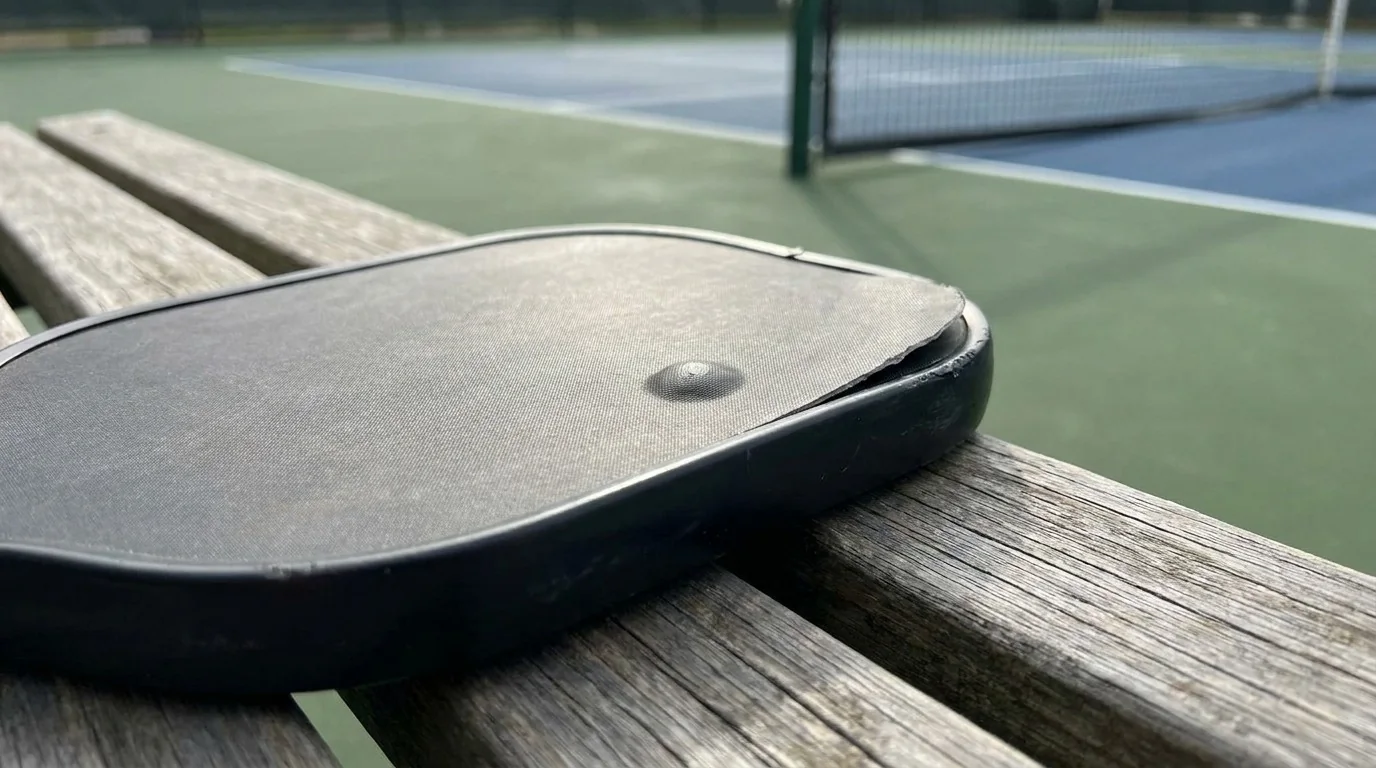
Storage also means managing pressure. Do not slide the paddle beneath a heavy stack, put equipment on top of it, or leave it where someone might step. Repeated compression and accidental impacts are not normal ball contact; they can damage the face, edge guard, or core. After a session, inspect the edge guard for fresh scrapes. Wear there can show that the paddle is touching the ground.
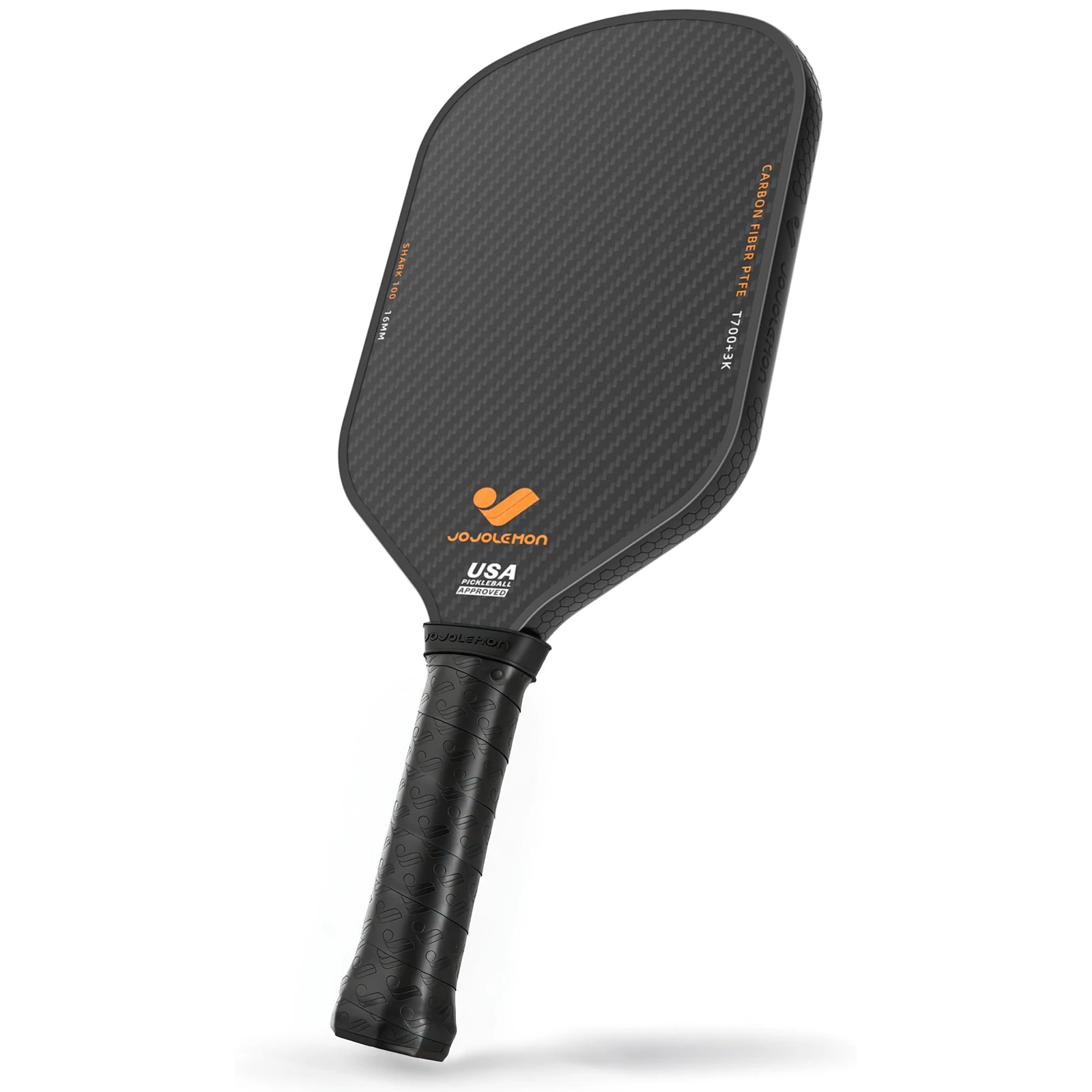
Edgeless designs need extra care at their exposed ends. Edge-guard tape can help with ordinary scrapes, but it is not protection against a hard impact. Replace worn tape instead of treating it as permission to drag, slam, or use the paddle to scoop balls from the court.
Run the same return-home checklist
- Wipe dirt and ball residue from the face and edge guard with a lint-free cloth and water.
- Wipe the grip, then dry the handle with a separate cloth.
- Check for a new crack, chipped edge, loose component, or unusual change in feel.
- Put the paddle in its cover once it is dry.
- Store it indoors, away from heat, water, pressure, and foot traffic.
Graphics may wear from repeated ball contact, and cosmetic wear alone does not mean the paddle must be discarded. Pay closer attention to cracks, delamination, serious edge damage, or a component that has come loose. If any of those appear, stop treating the paddle as normal-use equipment and ask the manufacturer or a qualified service contact what to do next.
Care will not make a paddle last forever. Usage and handling still affect its service life, and ordinary wear is expected. But a dry wipe, a cover, indoor storage, and a firm no-pressure rule remove several avoidable problems before they turn into performance issues.