Pickleball Crosswind Targets: Leave Margin Before the Ball Drifts
A practical guide to moving pickleball targets inside the line when crosswind changes the ball’s path.
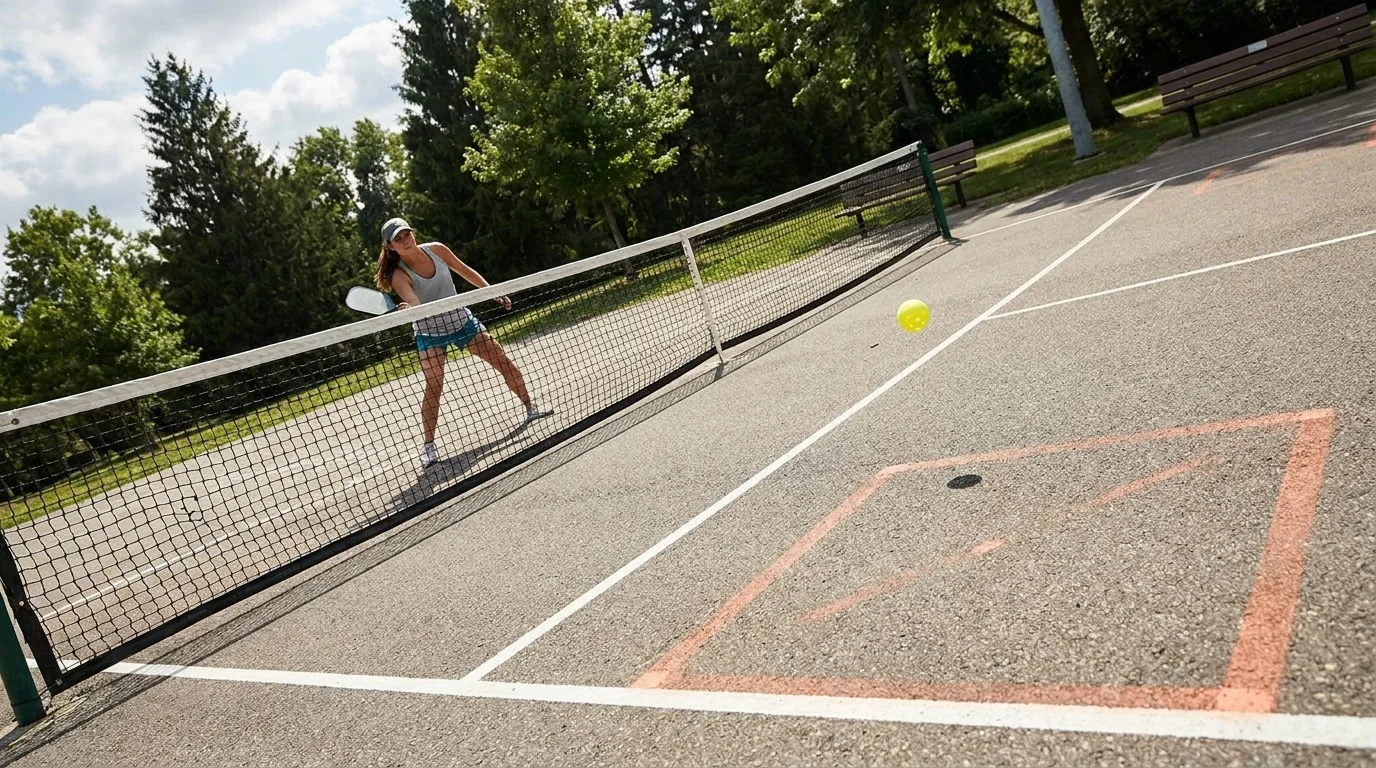
Crosswind turns a familiar target into a moving one. Useful pickleball crosswind targets start with the ball’s actual sideways drift: notice where the wind is pushing it, move the target inside the line, and recover instead of judging the first result too quickly.
Read the ball before changing your stroke
Use the warm-up to see whether the ball rises, drops early, moves sideways, or reaches you sooner than usual. Wind can behave differently at the baseline and at the kitchen, so trust the flight in front of you rather than a forecast alone. Start with a target comfortably inside the lines and adjust after you see the result.
Keep the paddle ready and take small adjustment steps. A large swing committed too early can magnify a gust. Stable feet and compact preparation give you time to change direction or height without losing balance.
Add margin when playing into the wind
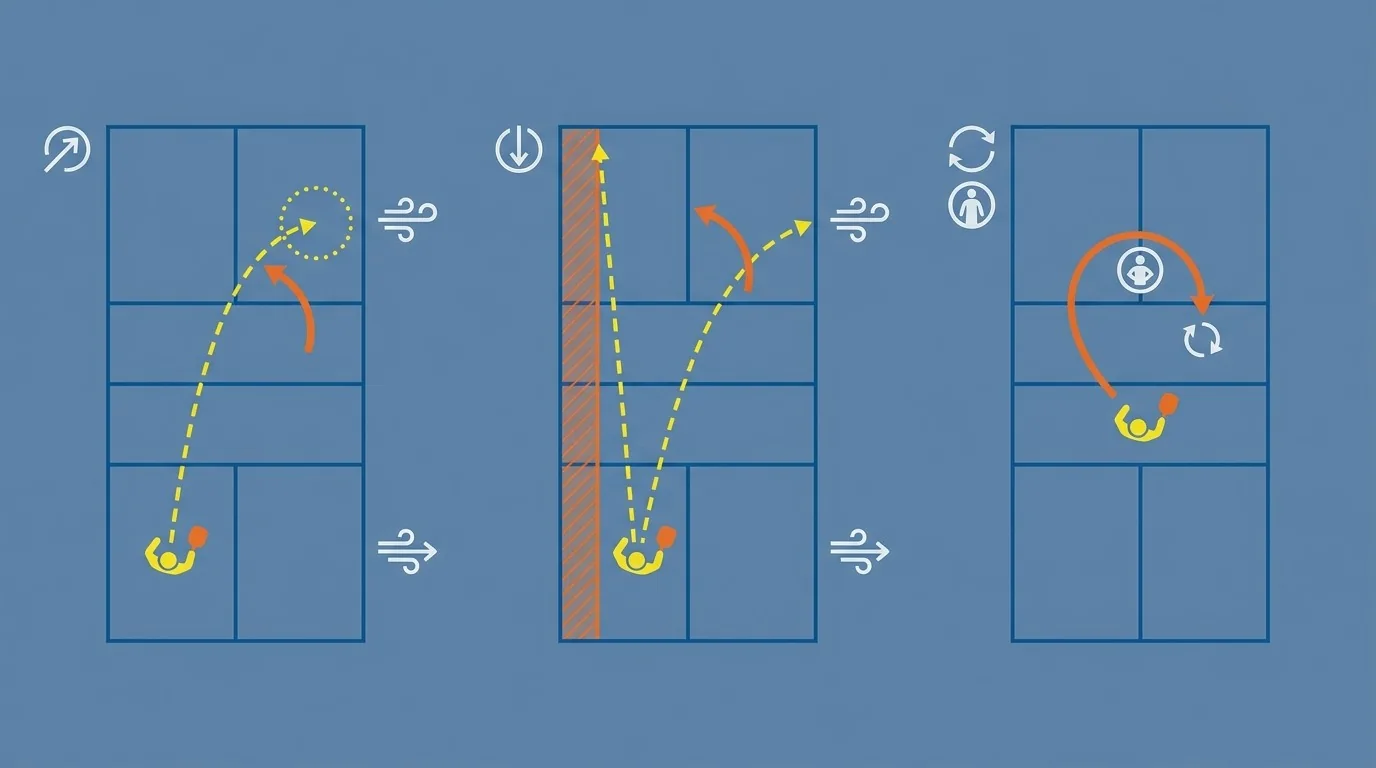
When the ball travels into the wind, a little extra height can help preserve net clearance and depth. Do not trade control for maximum power. More force can make the ball climb or become unpredictable when the gust changes.
For a drop or reset, use a safe arc over the net and judge the shot by its low landing, not by how narrowly it clears the tape. If the ball is low, use a compact motion and accept a conservative target instead of forcing a flat shot.
Shorten and lower the target with the wind
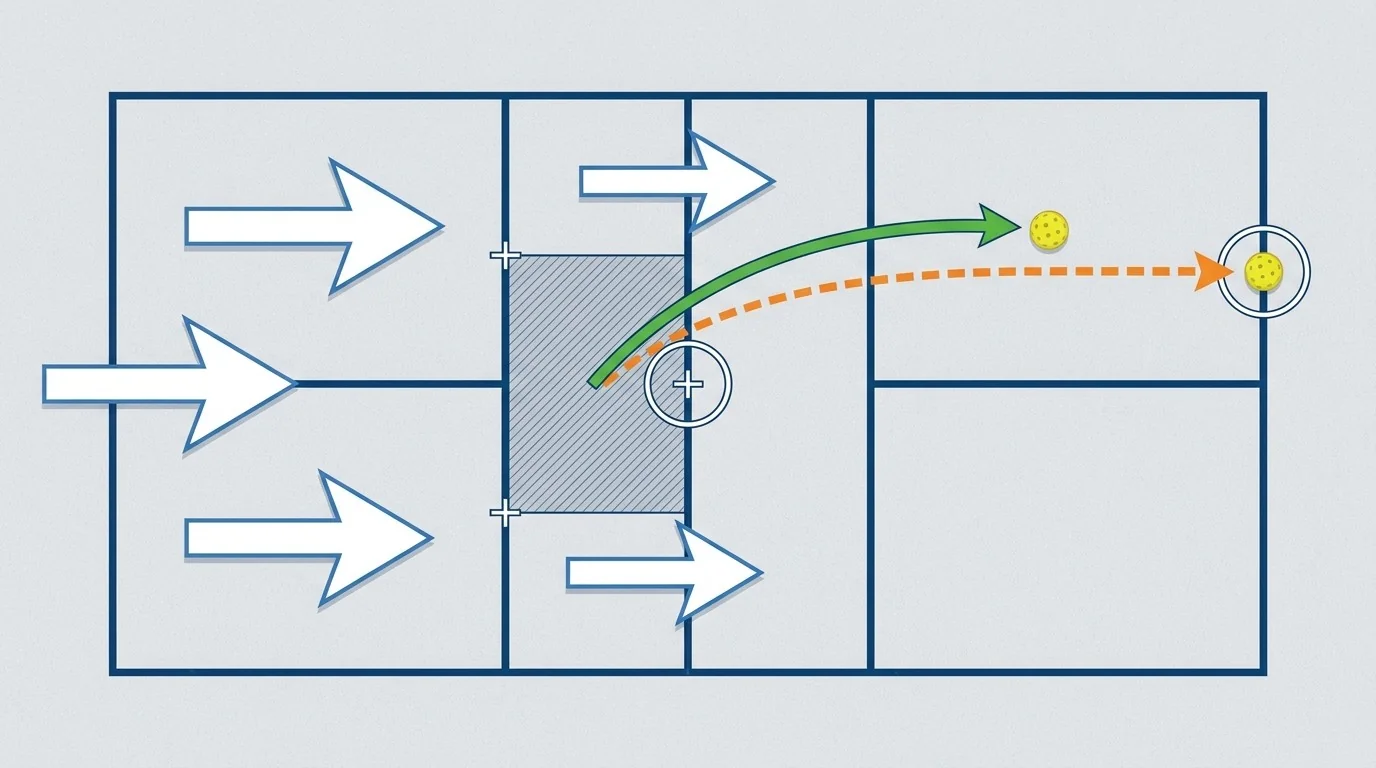
A ball hit with the wind may carry farther than expected. Reduce height and pace before trying to add precision. Choose a landing area short of your normal target when that still leaves a safe window, and keep the paddle face quiet through contact.
At the kitchen, wind exposes an open paddle face. Use shorter swings for dinks and blocks, keep the ball low, and soften the hands. If the ball starts to float, make a modest face adjustment instead of chasing it with the wrist.
Allow for crosswind drift
A crosswind can push a crosscourt ball toward the sideline. Aim farther inside the line and account for the drift before contact. When defending a wide ball, move your feet first, keep your head steady, and choose a direction that gives you time to recover.
In doubles, communicate early when the wind changes a middle-ball decision. Call the ball, protect the seam, and avoid both players moving toward a shot that the wind is pushing across the court.
Practise one variable at a time
Start with ten cooperative balls in one direction. Record whether each lands short, long, or wide, then repeat in the opposite direction. Mark a broad target inside the court and count only shots that clear the net with margin, land in the zone, and leave you balanced.
Next, change only one variable: height, pace, or target depth. Finish with a three-ball sequence: one deep ball, one controlled transition shot, and one kitchen ball. Use the first to read the wind, the second to protect margin, and the third to keep the paddle quiet.
Mistakes that make wind harder
- Using maximum power for every gust: protect margin instead of chasing speed.
- Aiming at the lines: leave room for lateral drift and changing wind.
- Keeping one target all day: reassess after the ball’s flight changes.
- Standing tall while waiting: use an athletic base and small adjustment steps.
- Watching the result instead of recovering: reset the paddle and feet after contact.
Wind rewards patience. Control height when the ball wants to float, protect depth when it wants to die, allow for sideways drift, and recover before the next decision.