Pickleball Doubles Communication: Call the Ball Before the Seam Opens
Use early, simple calls to share middle balls, cover a partner pulled wide, and recover as a connected pickleball doubles team.
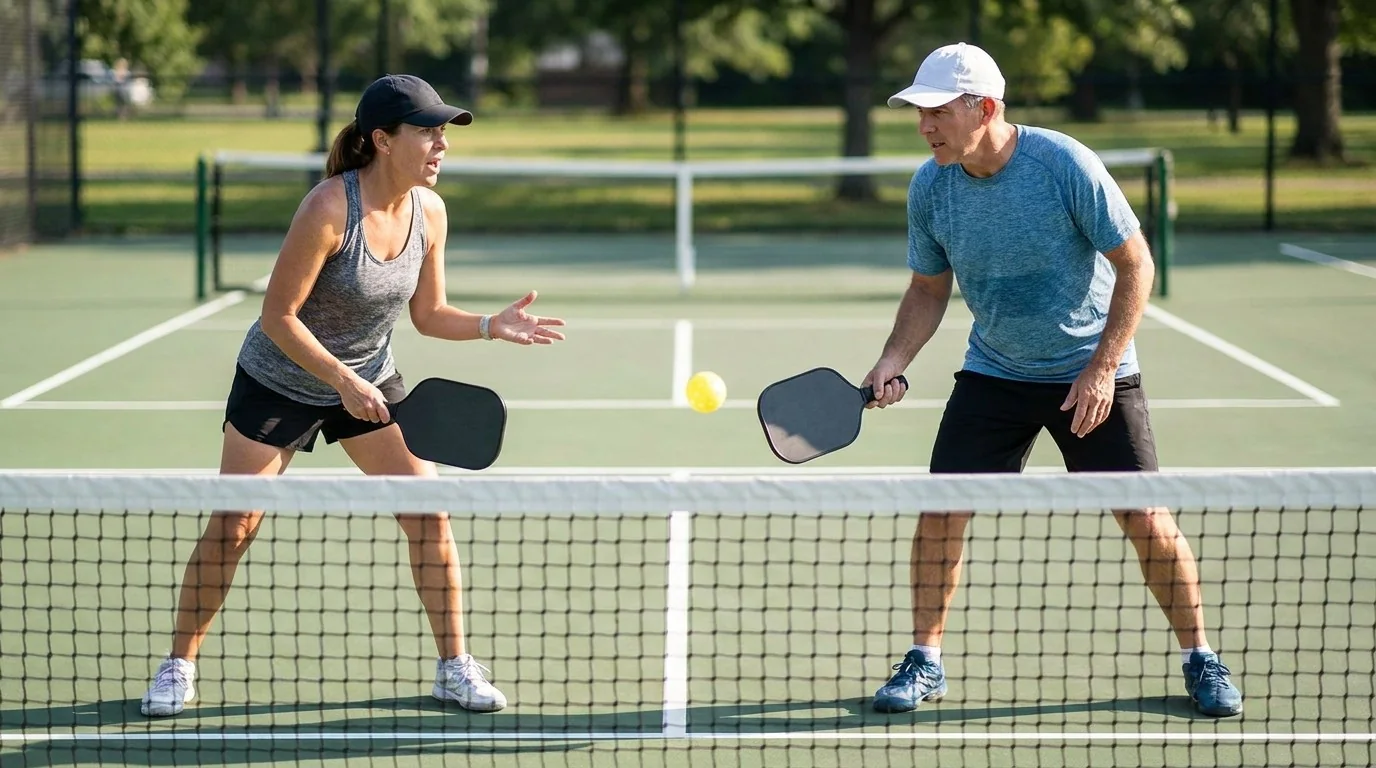
Good doubles communication is not constant chatter. It is a short call made early enough to remove doubt. When a ball travels toward the middle, both partners should already know who is taking it. When one player is pulled wide, the other should recognise the open space and adjust before the next shot.
Agree on the call before the rally
Talk about your default plan before the first serve. Decide which player normally takes a ball in the middle, and say what happens when one partner has a clear forehand or is pulled out of position. The plan does not have to be complicated. A simple agreement gives both players a starting point instead of making them negotiate while the ball is already crossing the net.
Use short words that everyone understands. “Mine” means you are taking the ball. “Yours” means your partner should take it. A call only helps when it is loud, early, and unambiguous. If you are unsure, call sooner rather than waiting for the bounce or for the ball to reach the seam.
Signals can support a plan before the point, but they do not replace a call during a fast exchange. If the rally changes the picture, update your partner with your voice.
Take the middle without creating two defenders
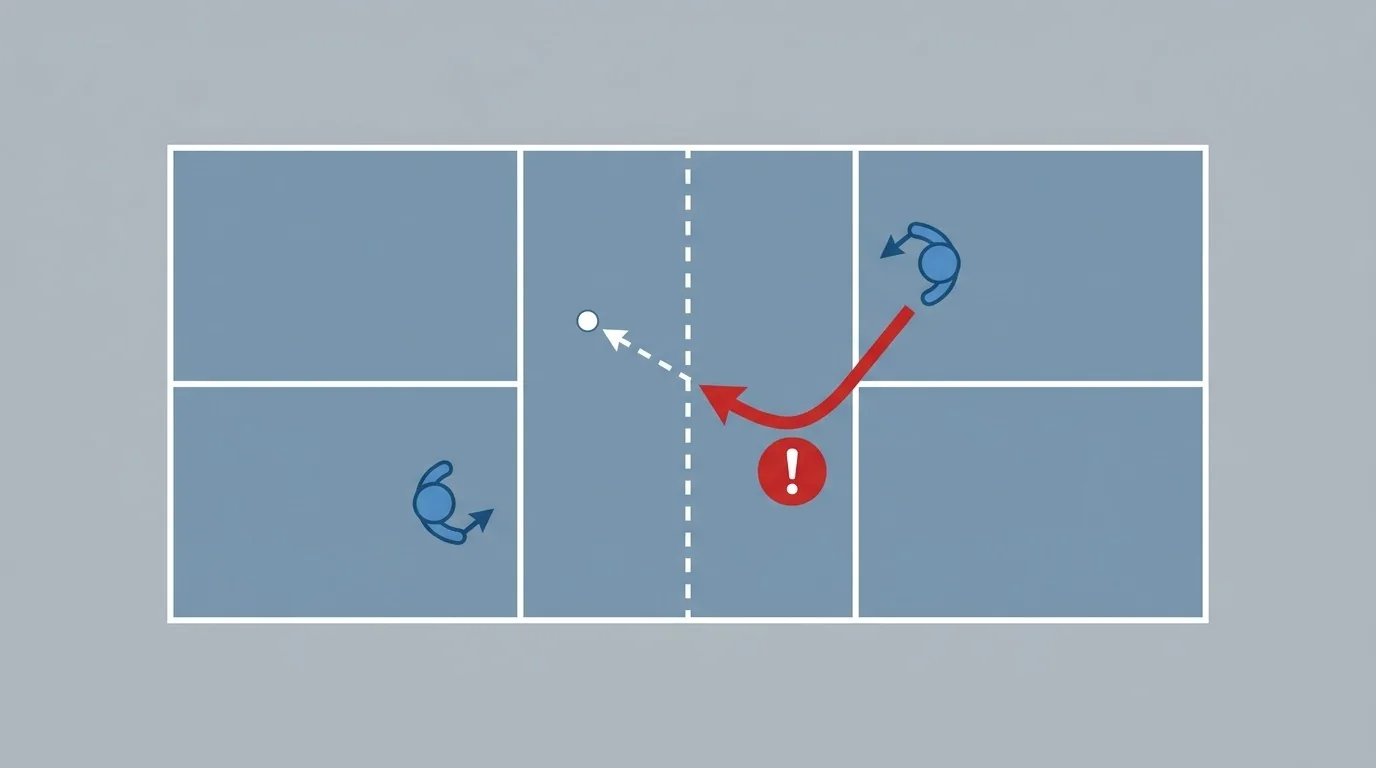
The middle ball is a shared space, so ownership should come from the agreement and the player with the clearer position, not from two paddles reaching at once. The player who calls moves decisively and the partner yields space while staying ready for the next ball. Do not call “mine” and then hesitate. Do not stay silent and expect your partner to read your mind.
Keep the call connected to the next movement. After taking the ball, recover toward your team’s normal shape rather than admiring the shot. The partner who yielded should close the gap when it is safe, so the seam does not remain open for the reply.
Communicate when a partner is pulled wide
A wide ball changes coverage. The player chasing the ball may need to focus on balance and contact, while the partner protects the middle and watches for the next direction. Use a quick call such as “cover” or “middle” if that is part of your shared vocabulary. The exact word matters less than agreeing on it beforehand.

After the wide shot, recover in stages. The stretched player regains court position without sprinting blindly across the middle. The partner closes the open space, then both players reset their spacing as the ball travels. If a switch is needed, call it clearly; a silent switch often leaves both players watching the same lane.
A simple communication practice
- Start with feeds. A partner or coach sends balls alternately to the middle, forehand side, and backhand side. The taking player calls before contact, and the other player stays ready.
- Add uncertainty. Send some balls between the players and make them follow the agreed middle-ball rule rather than guessing late.
- Add the wide ball. Pull one player toward the sideline, then send the next ball toward the middle. The partner calls the coverage cue and closes the seam.
- Add the lob. One player calls “lob” as soon as the ball is recognised. The partners turn, recover safely, and call any switch before crossing.
- Review one failure. After each short round, identify whether the problem was a late call, an unclear word, or a missed recovery. Fix one issue before adding more speed.
Common communication mistakes
Calling after the decision is already made. A late call creates hesitation. Speak while the ball is travelling, not after both paddles are committed.
Using different meanings for the same word. Agree on a small vocabulary and keep it stable.
Both partners chasing the same ball. The player who called owns the contact; the partner protects the next space.
Going silent after a wide ball. Wide coverage is when your team needs the clearest update, not less communication.
Clear calls do not guarantee that every ball is covered. They give both partners the same information early enough to move with purpose. Practise the words together, connect each call to a recovery step, and keep the vocabulary simple when the rally speeds up.