Pickleball Doubles Middle Attack: How to Pressure the Seam Without Forcing It
A practical guide to attacking the middle seam in pickleball doubles without forcing low-percentage shots.
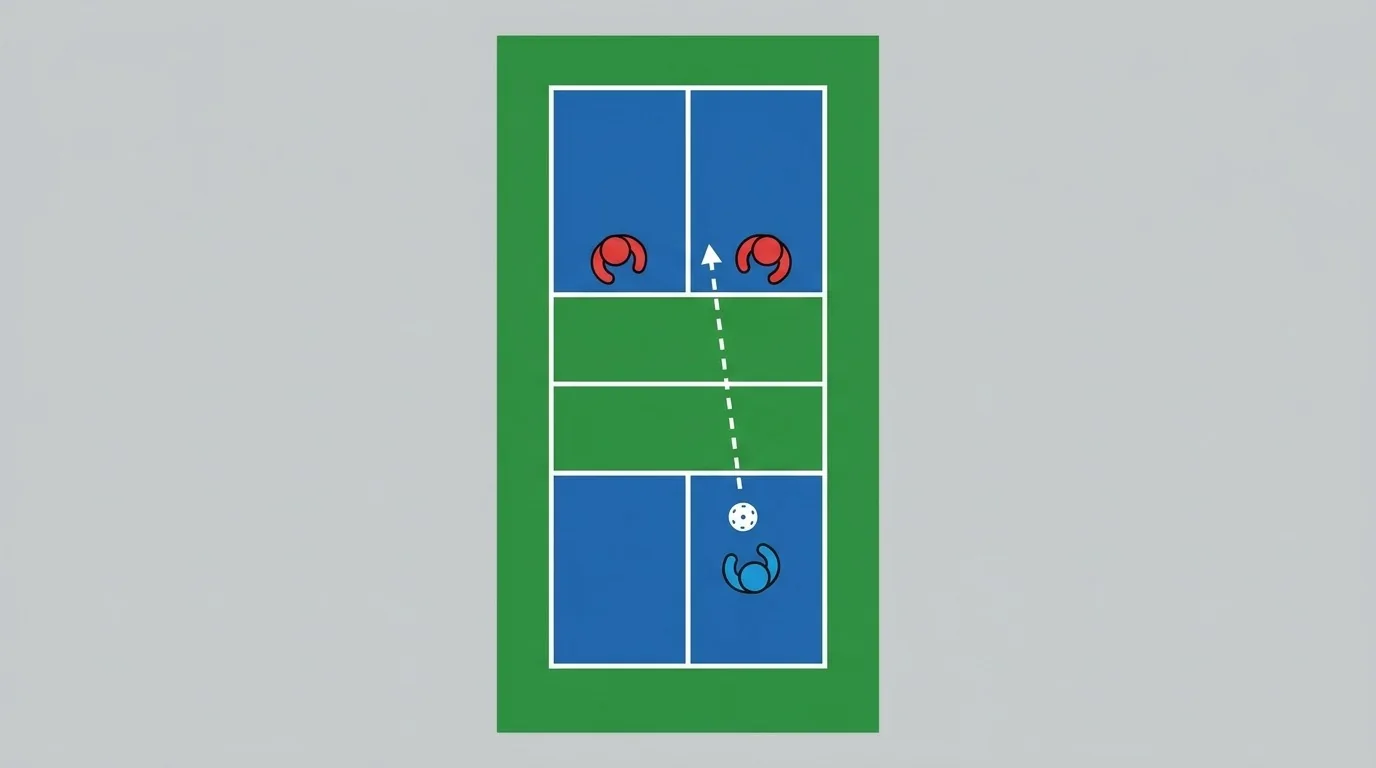
Why the middle is such a strong target
In doubles pickleball, the space between two opponents creates a decision problem. Both players may hesitate over who owns the ball, especially when their forehands compete for priority. A controlled middle attack can reduce angles, expose movement and create a weaker reply without requiring maximum power.
Step 1: Build the right spacing first
Middle pressure begins before you swing. At the kitchen line, avoid standing so wide that a large seam opens between partners. Move slightly toward the center while keeping enough room to react to your outside lane. Your paddle should remain in front and your weight should stay balanced.
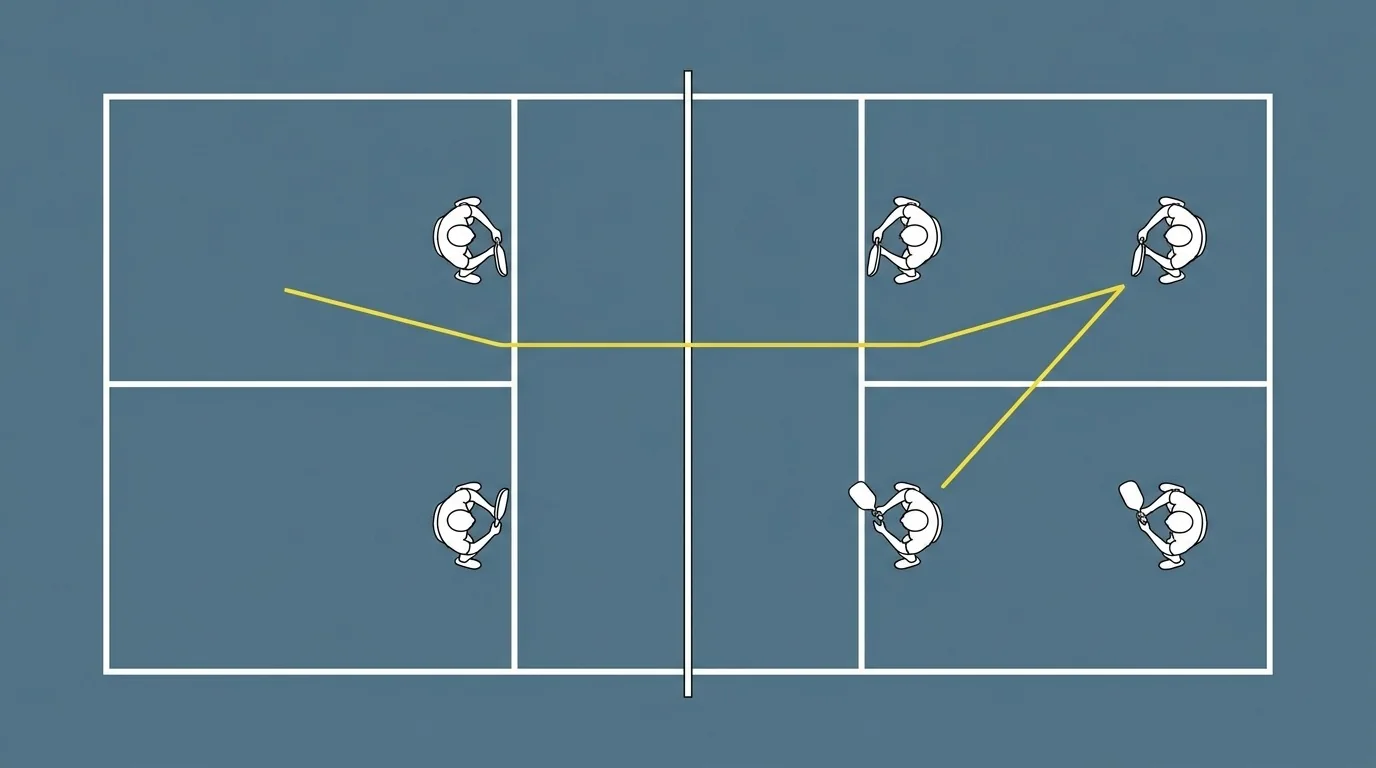
If your partner is pulled wide, compress inward rather than mirroring the movement. The goal is to protect the highest-probability danger area, not to stand symmetrically at all times.
Step 2: Wait for an attackable ball
Do not attack the middle simply because it looks open. If the ball is below net height, you are reaching or your feet are unstable, use a reset or a controlled dink. The best middle attack comes when the ball is clearly above the tape and you can contact it in front while balanced.
A low ball in the middle is usually a neutral or defensive ball. A high ball gives you permission to apply pressure.
Step 3: Use controlled pace, not maximum power
A middle attack does not need to be hit at 100 percent. Around 70 percent pace with a reliable trajectory is often more useful than a full swing that misses the court or leaves you out of position. Aim between the defenders or toward the player who must move the farthest to cover the seam.
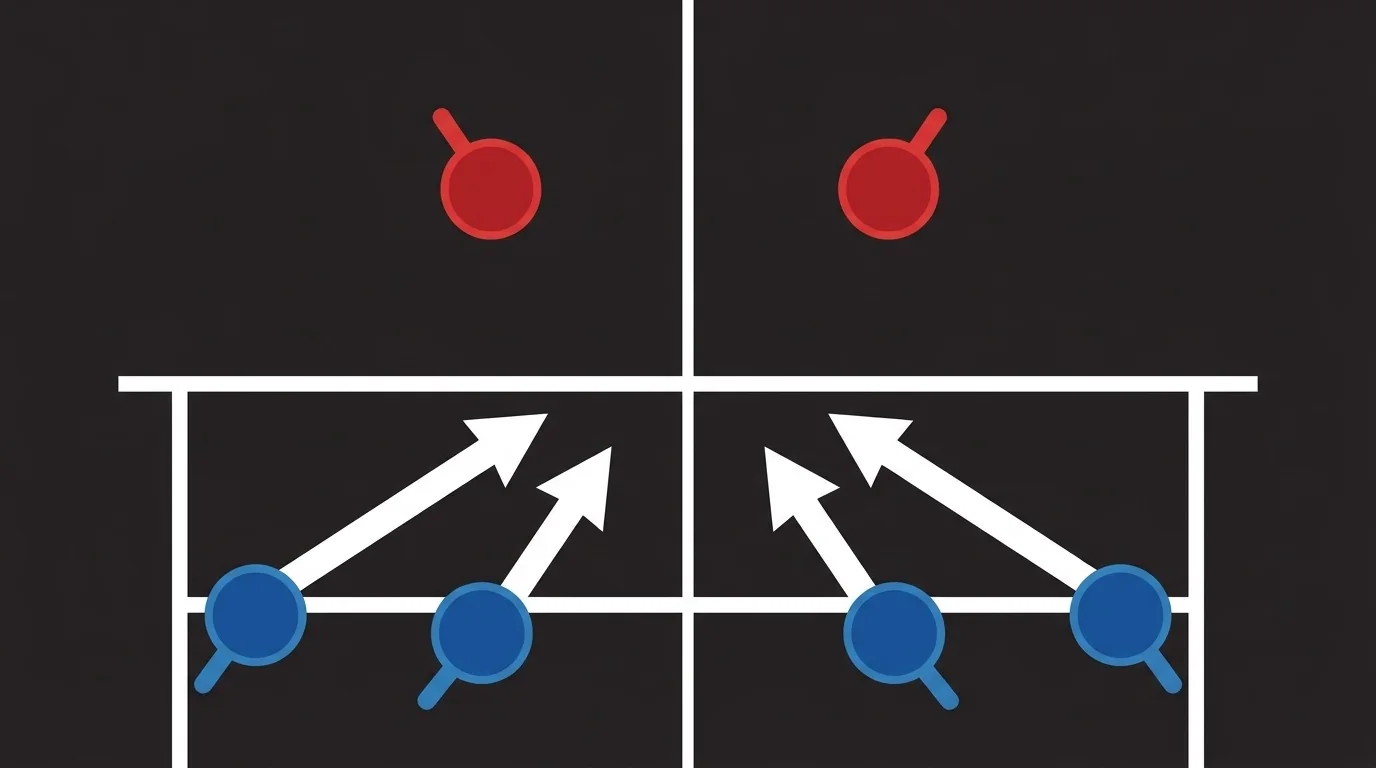
Keep the swing compact and recover immediately. Your goal is to make the next ball harder, not to prove that you can end the rally with one hit.
Step 4: Read the defenders after contact
Watch the opponents’ feet and paddles. If both players turn toward the middle, the outside lane may open for your next ball. If one defender reaches late or pops the ball up, stay ready to finish. If they absorb the attack cleanly, return to a neutral pattern instead of forcing another acceleration.
The middle attack is pressure, not a guarantee of an immediate winner.
The control ladder
Use this sequence during a rally:
- Survive: reset when you are stretched, low or off balance.
- Stabilise: establish balanced kitchen positioning and crosscourt control.
- Compress: move closer to the center and apply measured pressure.
- Finish: attack only when the reply is high, slow or clearly exposed.
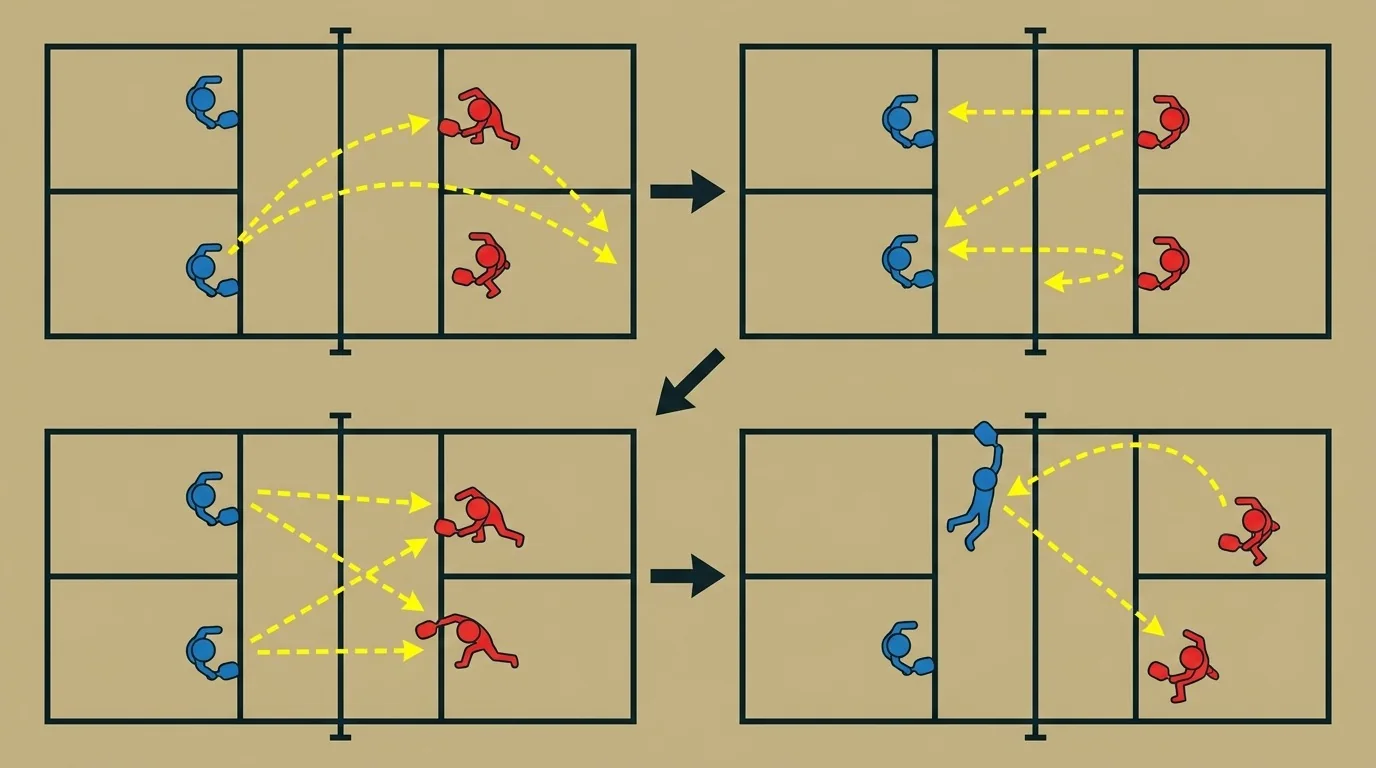
Skipping directly from survival to attack is one of the fastest ways to lose a rally. Patience creates the height that makes the middle attack safe.
Three common mistakes
Attacking from below net height
A low ball forces an upward swing and often produces a pop-up. Reset or dink instead.
Standing too far apart
Wide spacing leaves the seam open and makes every middle ball a communication problem. Compress when your partner is under pressure.
Changing direction without balance
A sudden line change while stretched is low percentage. Keep the ball through the middle until the defenders give you a clear reason to redirect.
Practice drill: middle-only pressure
Start with both teams at the kitchen line. Play dink exchanges, but every intentional acceleration must travel through the middle. Award a point when the attack forces a hesitation, pop-up or weak reset. Do not award points for raw speed.
Progress by allowing the defenders to counter, then play live points while keeping the same decision rule: no attack until the ball is clearly above net height and the hitter is balanced.
Quick checklist
- Are both partners close enough to protect the seam?
- Is the ball above net height?
- Am I balanced with contact in front?
- Can I use controlled pace rather than maximum power?
- Who is most likely to own the middle ball?
- After attacking, am I ready for the counter?
The middle wins points because it creates decisions. Build the spacing first, wait for the right height, apply controlled pressure and let the defenders reveal the next opening.