Pickleball Doubles Positioning: Move as a Team
Build reliable pickleball doubles positioning with partner spacing, coordinated movement, middle-ball communication, lob coverage, and simple drills.
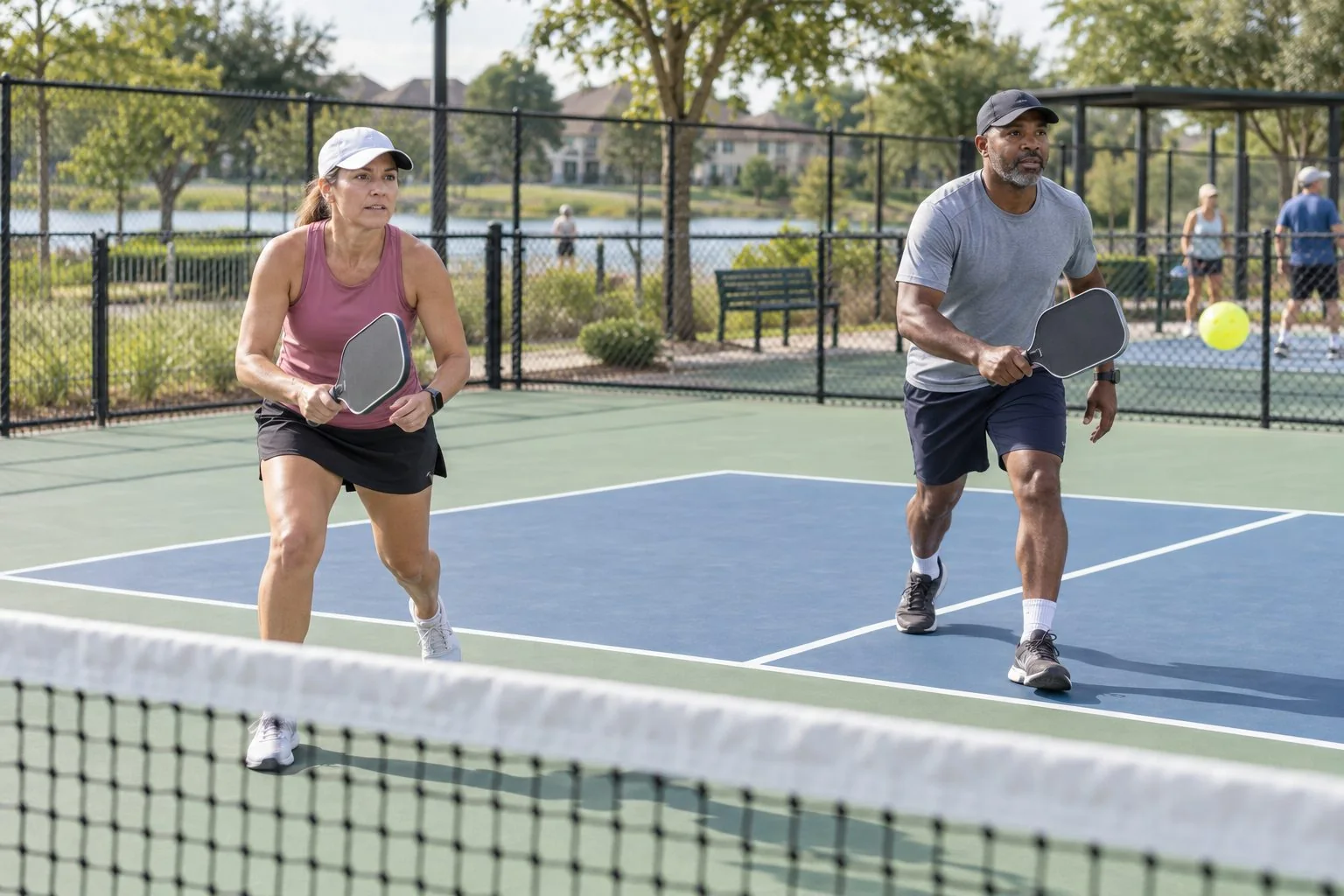
Pickleball doubles positioning becomes easier when partners treat the court as a shared space rather than two separate lanes. The goal is not to stand on an exact mark. It is to keep a useful connection with your partner, protect the middle, and move forward or backward in response to the ball.
The basic idea: stay connected
In a normal doubles rally, both partners should be able to cover their responsibilities without leaving a large gap between them. If one player charges forward while the other remains deep, the middle and the space between the two players become difficult to defend. If both players drift toward the same sideline, the opposite side opens.
Use your partner and the ball as references. Keep enough lateral space to avoid crowding, but remain close enough that a ball through the middle can be called and covered. The right spacing changes with reach, court position, opponent pressure, and whether your team is attacking or defending.
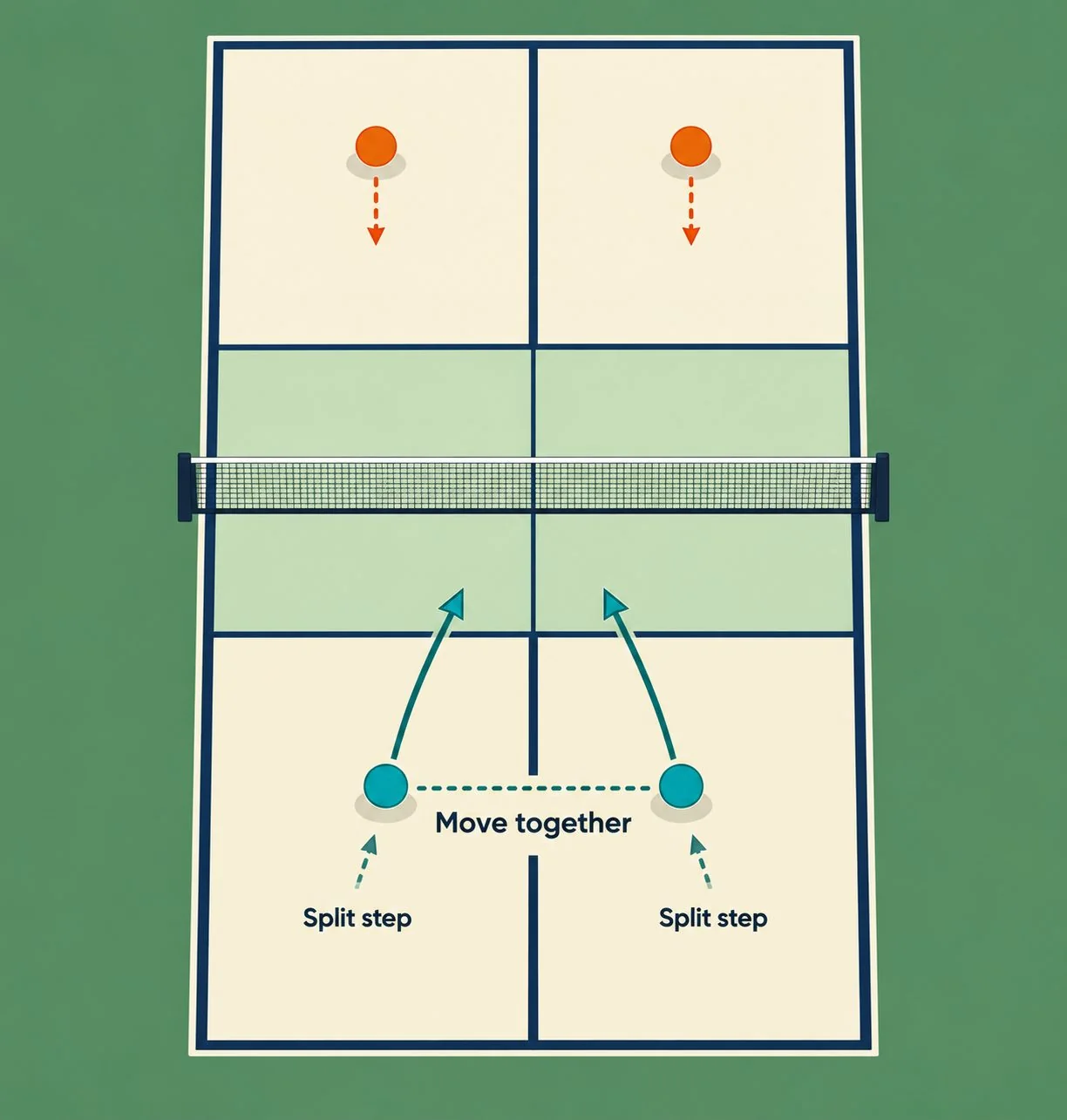
When the opponent contacts the ball, use a small split step. It keeps both feet available for the next move and helps you react in the same moment as your partner. Watch the ball first, then check whether your partner is moving with you. Good positioning is a repeated adjustment, not a pose you hold for an entire rally.
Where each team starts
The receiving team usually has the first chance to establish both players near the non-volley line. The returner can hit a deep return, then advance behind it while the partner moves into a supportive position. The non-returner should not sprint blindly; move when the return and the opponent’s reply make the advance sensible.
The serving team starts at a disadvantage because the serve must be followed by the required bounce before the team can volley freely. After the third shot, the serving pair should look for a manageable ball that allows forward movement. A low or short ball may require a reset or another controlled shot before either player reaches the kitchen line.
Do not confuse forward movement with automatic forward movement. If the ball is high, rushed, or likely to be attacked, stop in a balanced transition position. A team that advances together but cannot defend the next contact is still out of position.
Move forward and backward as a unit
Imagine an invisible line connecting the partners. When the ball gives your team time, both players can advance in small steps. When the opponents create pressure, both players may need to retreat or hold a defensive position. The line does not need to be perfectly straight, but it should not stretch so far that one player cannot help the other.
As you move toward the kitchen, keep the paddle in front and finish with a split step as the opponent prepares to hit. Avoid running through the ball while watching only your own shot. Your next position should let you defend a drive, protect the middle, and respond to a dink.
If your partner is pulled wide, slide toward the open middle enough to help without abandoning the sideline completely. If your partner is recovering from a wide ball, communicate early and hold a responsible position until the court is covered again.
Middle balls and communication
A short, early call is better than two players reaching for the same ball. Use a clear word such as “mine” when you are taking the ball, and use a partner’s name or “switch” when responsibility changes. The exact vocabulary matters less than agreeing before the rally begins.
The player with the stronger forehand or better angle may take some middle balls, but that is a team decision rather than a universal rule. Talk about it during warm-up. If the ball is traveling between you and the call is late, the safest choice may be the player already balanced and moving toward contact.
Handle a lob without breaking the team
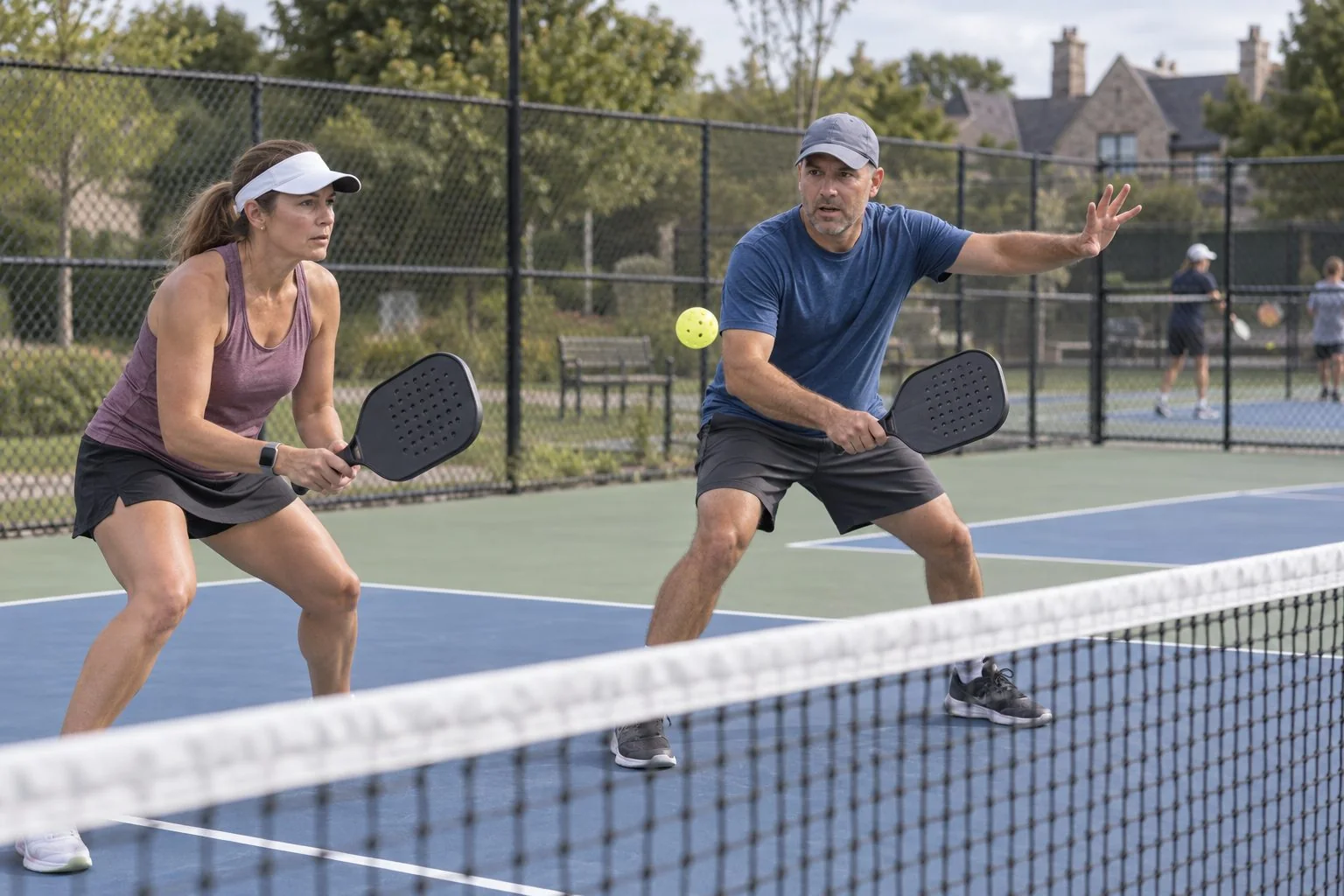
When an opponent lobs, the nearest player should call early while the partner covers the likely return space. Do not have both players turn and chase the same ball. One player can track the lob; the other can prepare for a short reply, a bounce, or a recovery ball.
After the lob is returned, rebuild your spacing before trying to attack. A hurried recovery often leaves the middle open or sends both partners to the same side. Take the next split step together and regain a shape that can defend the following shot.
Three practical drills
Start with a shadow drill. Without a ball, begin in two balanced positions, then have one player point to a target area. Both partners slide, advance, or retreat together and finish with a split step. Keep the movement small and quiet.
Next, use a controlled feed. One pair starts deep, plays a soft transition ball, and advances only when the ball is manageable. The feeder varies the height and direction. Count whether the pair finishes connected and balanced, not whether every ball reaches the kitchen.
Finally, add communication. Feed middle balls, wide balls, and occasional lobs. Require an early call before the receiver moves. Stop and reset if both players chase the same ball or if the gap between them becomes too large.
Common positioning mistakes
Following the ball with both players. Shift toward the ball, but keep enough court covered for the next reply.
Advancing at different speeds. Slow down until both partners can split step together.
Standing too close to the kitchen line. Leave room for balance and recovery; being near the line is useful only if you can handle the next ball.
Silence on middle balls. Agree on a call before play and use it early.
Watching the shot instead of recovering. After contact, return your attention to the opponents and your partner’s position.
Final takeaway
Reliable doubles positioning is a team habit: communicate, preserve useful spacing, move in response to ball quality, and finish each adjustment ready for the next contact. Practice the movement without a ball first, then add feeds and live decisions. The result is not a rigid formation, but a pair that can cover more court with less panic.