Pickleball Doubles Strategy: Seven Decisions That Keep Partners Connected
Seven practical doubles decisions for deeper serves and returns, connected movement, decisive choices, crosscourt dinks, and purposeful middle shots.
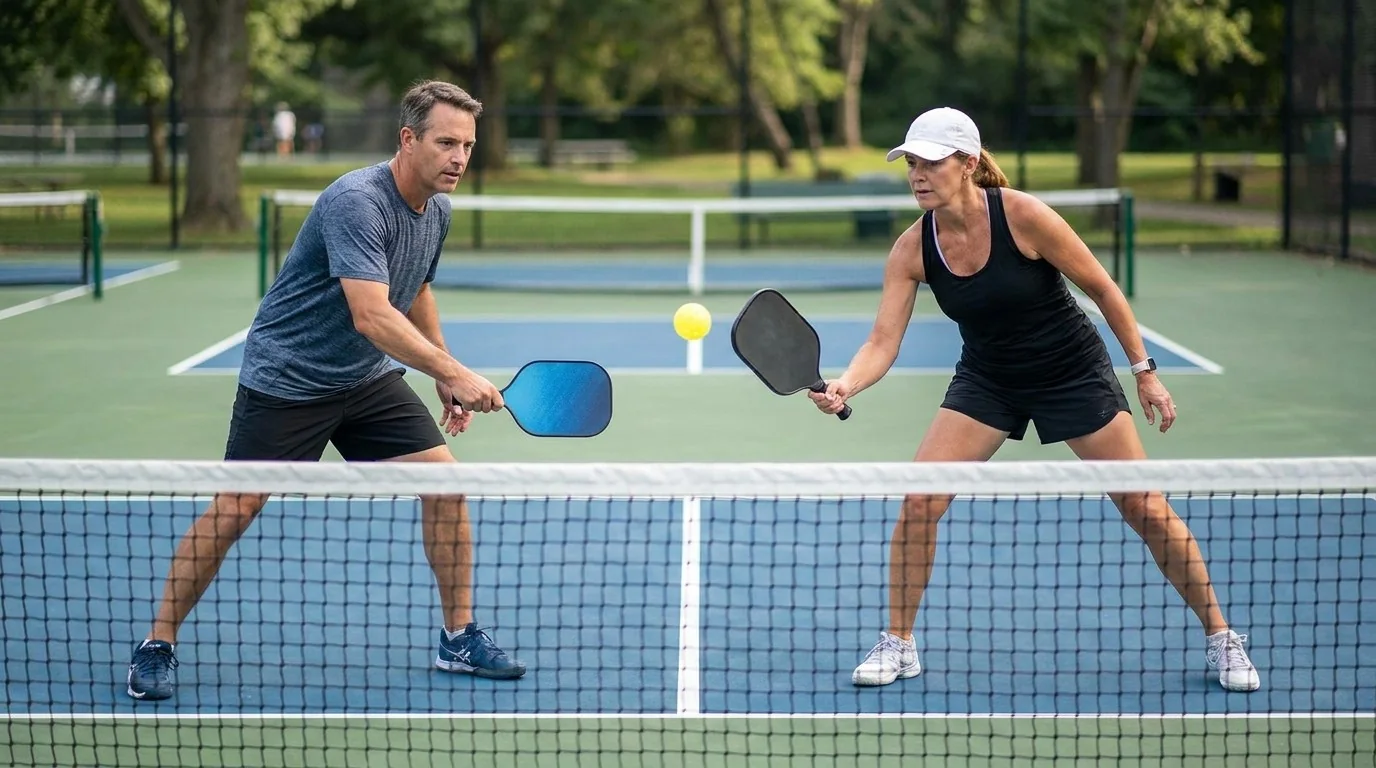
Doubles pickleball is easier to manage when both players make the same decision at roughly the same time. Start points with margin, move forward together, communicate before the ball becomes contested, and choose patterns that make the next reply easier. The aim is not to attack every ball. It is to keep the team connected while creating better chances.
1. Start with a deep, reliable serve
Use the serve to push the receiver toward the baseline and make the return less comfortable. Depth usually matters more than chasing the sideline. Aiming toward a less dependable side, often the backhand, can make the next exchange easier, but leave enough room inside the lines. A missed serve gives away more than a perfectly placed serve can usually recover.
2. Return deep and buy time
A deep return keeps the serving team near the baseline while your pair advances. Send it through the middle or toward the opponent who is less comfortable with that ball. Do not rush the return just to hit harder. Depth gives both partners time to move, stop, and prepare for the next shot.
3. Reach the kitchen line together
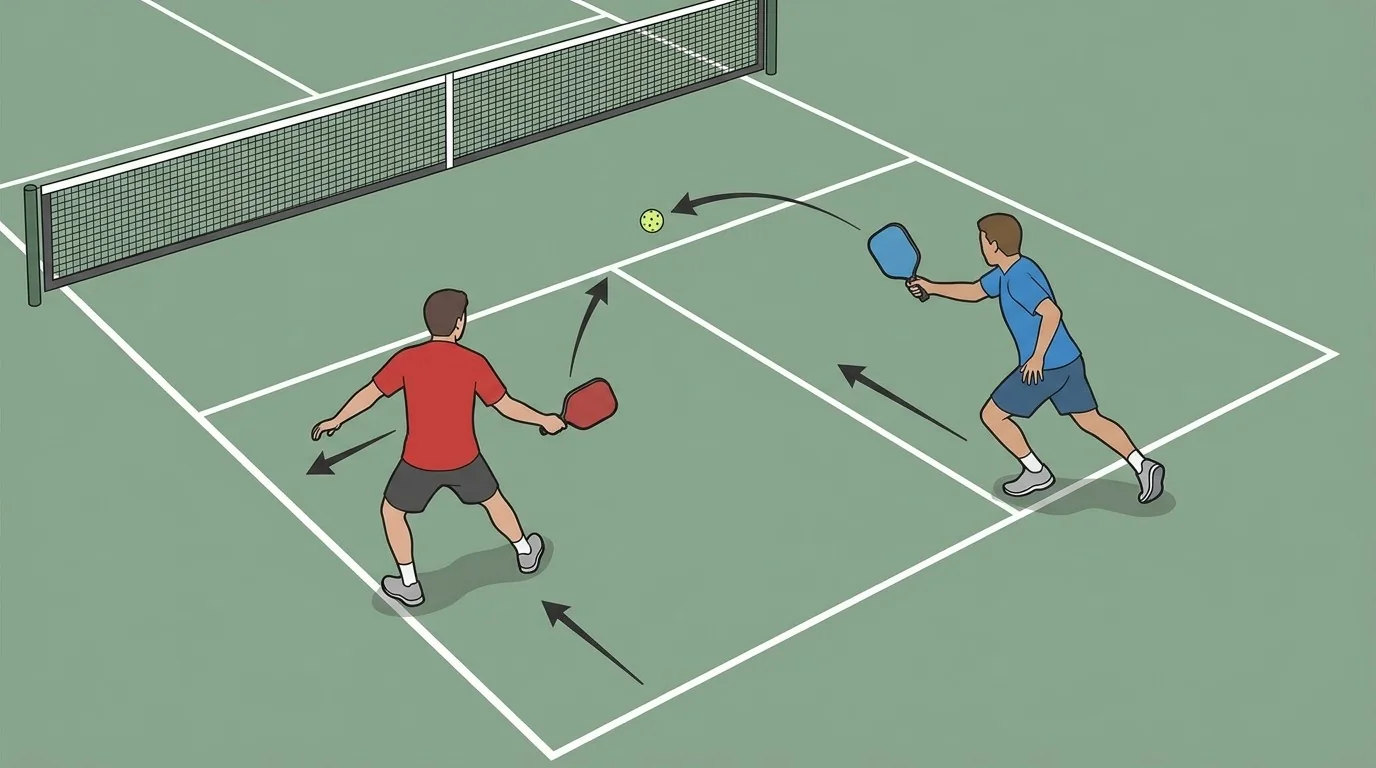
After the two-bounce requirement is satisfied, both partners should work toward the Non-Volley Zone line as a unit. A staggered advance leaves one player behind and opens gaps for angles. Move at a pace that lets both players arrive balanced. The goal is a connected shape, not a race by one partner.
4. Decide quickly and commit
Doubles gives you little time to make a half-decision. Hesitation produces late contact, weak blocks, and balls that neither partner claims. Read the ball, choose the higher-percentage option, and commit while staying ready for what follows. Clear decision-making does not mean attacking everything; it means choosing deliberately and moving with control.
5. Use strengths and find weaknesses
Build the plan around shots your team can repeat: a drive, dink, lob, or dependable reset. At the same time, notice whether an opponent has a less reliable backhand, limited movement, or an uncertain third shot. Work together to create those situations instead of sending the ball back to the opponent's strongest response.
6. Use crosscourt dinks to manage the kitchen
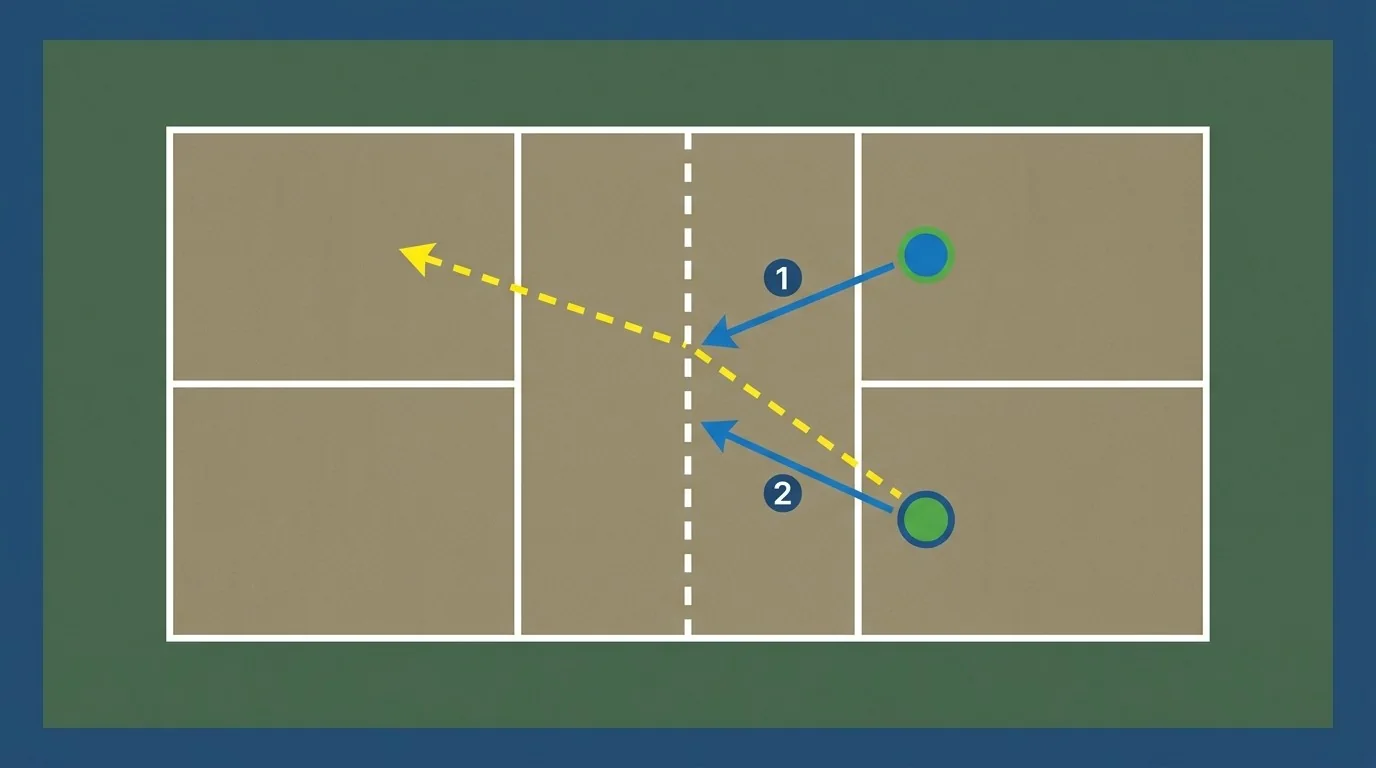
A crosscourt dink travels over the lower middle section of the net and gives you more room than a straight-line option. It can draw an opponent wide and open space. Add middle and straight dinks so the pattern does not become predictable, but let patient crosscourt exchanges provide the stable foundation.
7. Use the middle for a reason
Middle shots take away sharp angles and can force opponents to communicate. They may also bring a weaker backhand into play. The middle is not an automatic target. Use it when it keeps your pair connected and makes the likely reply easier to read.
Practise the pattern as a team
Begin with deep serves and returns. After the two-bounce requirement, have both partners move toward the Kitchen line together. Add cooperative crosscourt dinks and middle feeds. Call early, decide who owns a shared ball, and finish each repetition in a useful recovery position. Judge the drill by the quality of the decisions and movement, not only by whether the rally was won.
Stay connected through the rally
- Serve with margin: depth is more useful than a risky line.
- Return with purpose: keep the serving team back while your pair advances.
- Move together: do not leave one partner stranded behind.
- Choose clearly: a controlled committed shot beats a late half-decision.
- Talk early: communication prevents shared spaces from becoming open gaps.
Good doubles play is a connected sequence: serve deep, return deep, advance together, choose decisively, use your strengths, exchange patient crosscourt dinks, and take the middle when it serves the point. Practise those decisions with a partner until movement and communication support the same plan.