Pickleball Doubles Switch Timing: Trade Sides Without Opening the Seam
A practical guide to covering the open lane after a pickleball doubles poach, with signal timing, partner movement, recovery decisions, and drills.
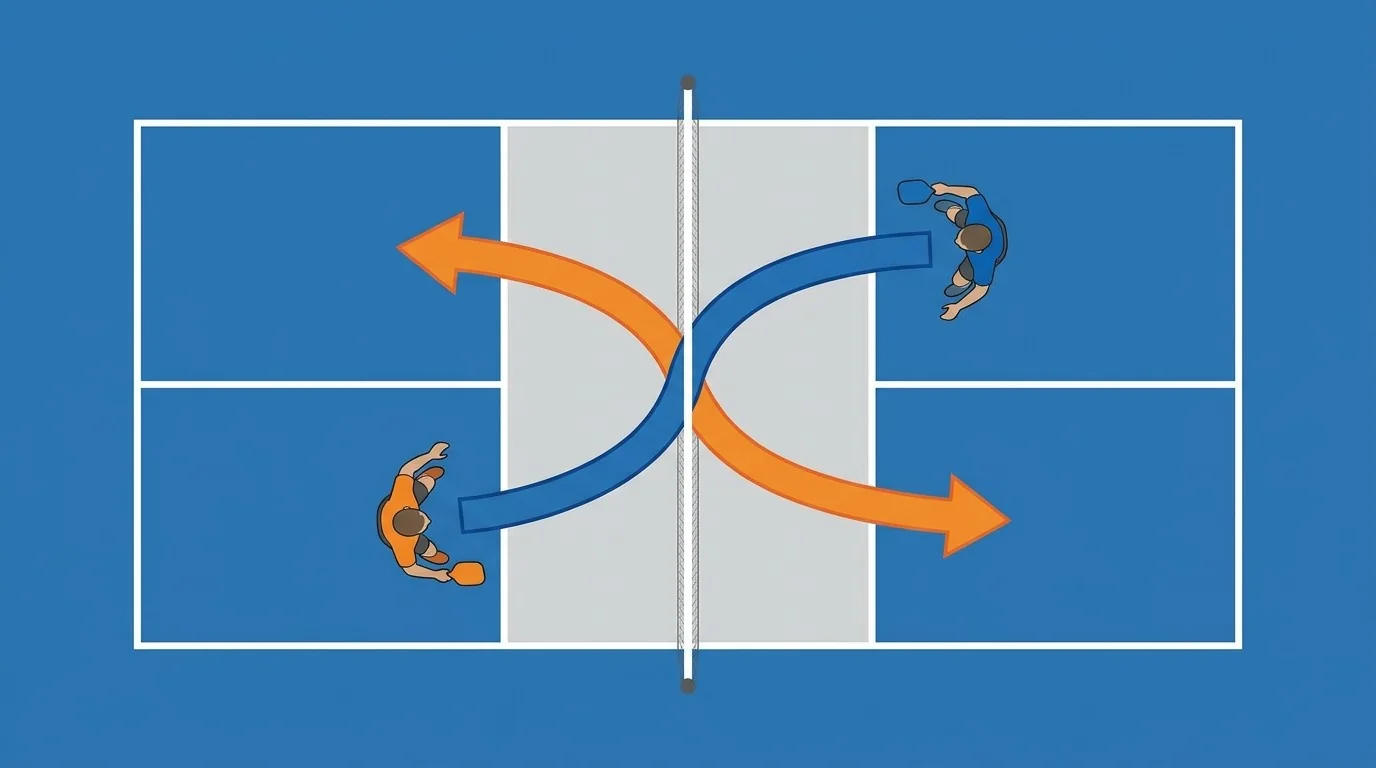
A pickleball doubles poach creates pressure, but the crossing player is only doing half the job. The partner has to close the space left behind, and both players need to settle into a useful formation before the next ball. Good coverage turns a risky-looking move into a shared decision.
Cover the space the poach creates
When one player crosses toward the partner’s side to intercept a ball, the partner should first find the exposed lane. Usually that means sliding toward the vacated sideline or the seam while staying balanced enough to react. Do not follow the poaching player’s path. Move into the space the opponents are most likely to use.
Let the quality of the poach guide the size of the coverage move. A firm, low ball that puts the opponent under pressure may allow the partner to take a measured step with the play. A soft poach, or one that gives the opponent time, calls for protecting the open lane first. The goal is not to match a perfect court diagram. It is to remove the easiest reply.
Set the plan before the point
A planned poach should start with a signal before the serve or return. Keep the signal simple: one player communicates the intention to cross, and the partner agrees to cover the vacated side. Confirm the plan if the formation or the opponent changes.
The signal is a default, not an order to cross on every ball. A short, high, or poorly placed return may create a clear opportunity. A deep, low, or awkward ball may be better handled by staying home. The ball still makes the final decision.
Move as a pair
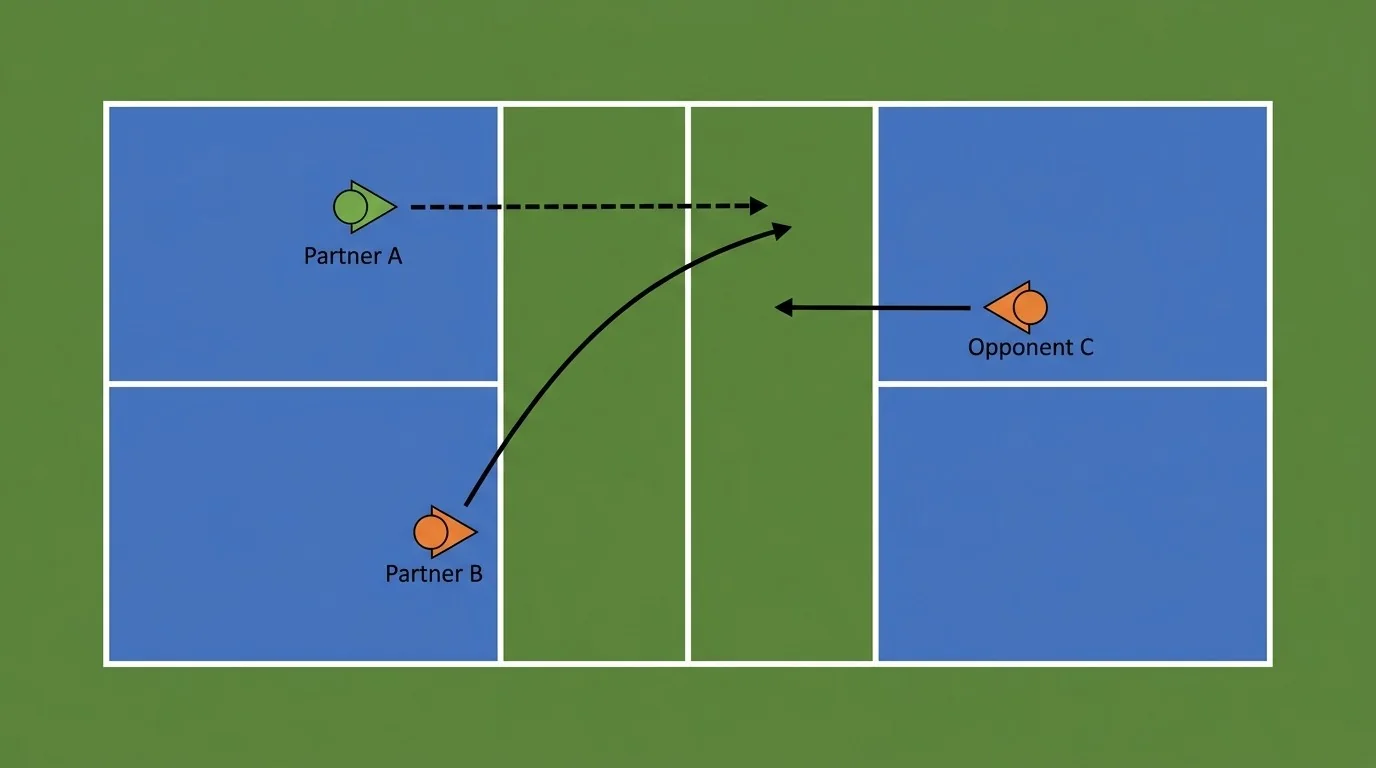
The most common coverage mistake is a partner who waits. The poaching player moves early and contacts the ball, while the partner watches instead of shifting. By the time the opponent responds, the open lane is easy to see. Start the coverage step as the crossing movement begins, then adjust after you know how well the poach landed.
The opposite mistake is over-rotation. Both teammates read the same ball and drift toward it, leaving the other side exposed. Divide the responsibilities clearly: one player takes the ball, and the other protects the likely reply. If the poach ends the exchange, both players can recover afterward. Until then, the partner’s priority is coverage.
Stay square enough to see the ball and the opponents. Keep the paddle up while sliding, and use short steps instead of a lunging sprint. A small adjustment that preserves balance is more useful than a dramatic move that leaves the team late.
Decide whether to switch back
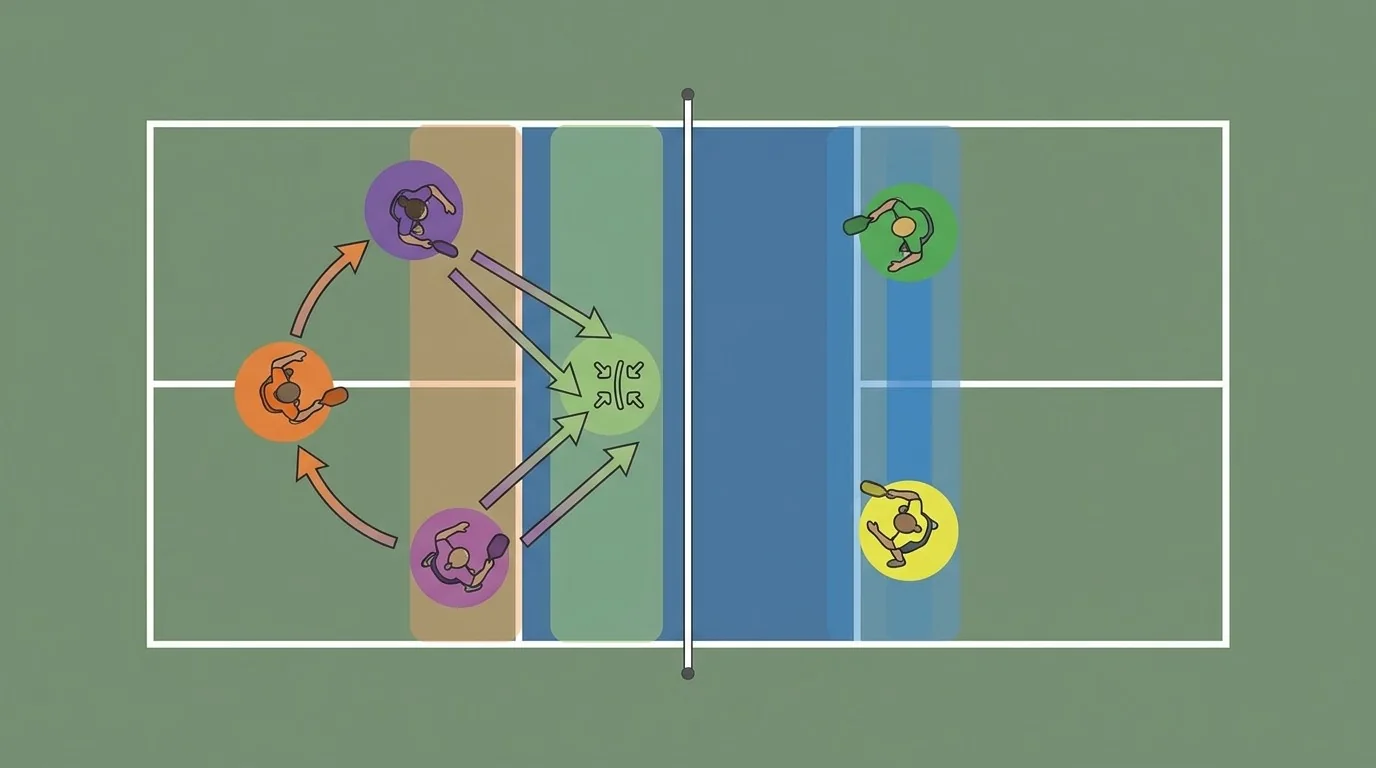
After contact, decide whether to hold the new sides or return to the original formation. If the crossing player has reached a stable position and the partner has filled the open lane, hold those sides long enough to handle the next ball. A rushed switch can create a second gap and make both players late.
When the ball has clearly moved the opponents or the rally has slowed, recover toward normal side-by-side spacing. Communicate the change early. The aim is to finish with two balanced players near the kitchen, not one player trapped wide while the other crowds the center.
Practise the coverage decision
Begin without a live ball. One player signals a poach, crosses two controlled steps, and points to the lane the partner should cover. The partner slides into that lane, pauses in a ready stance, and both players return to their starting spacing. Repeat from both sides so the movement does not become one-directional.
Next, add cooperative feeds through the middle. The poaching player may intercept only when the feed is comfortable. The partner begins moving as the poach starts, then adjusts after contact. Score three parts separately: a clear signal, early coverage, and a balanced recovery. A missed shot can still be a good repetition when the team movement was correct.
Finish with live points in which the team gets one planned poach per rally. Review one question after each point: did the partner cover the lane the opponent could actually use? That keeps the drill focused on decisions rather than showy crossing.
Poaching works best as a team action. Signal early, cross only when the ball permits it, cover the space created by the movement, and recover together before the next decision.