Pickleball Drive Defense: How to Block Body Shots
Learn pickleball drive defense for body shots: set the paddle early, choose a compact block, protect the kitchen line, and measure your practice.
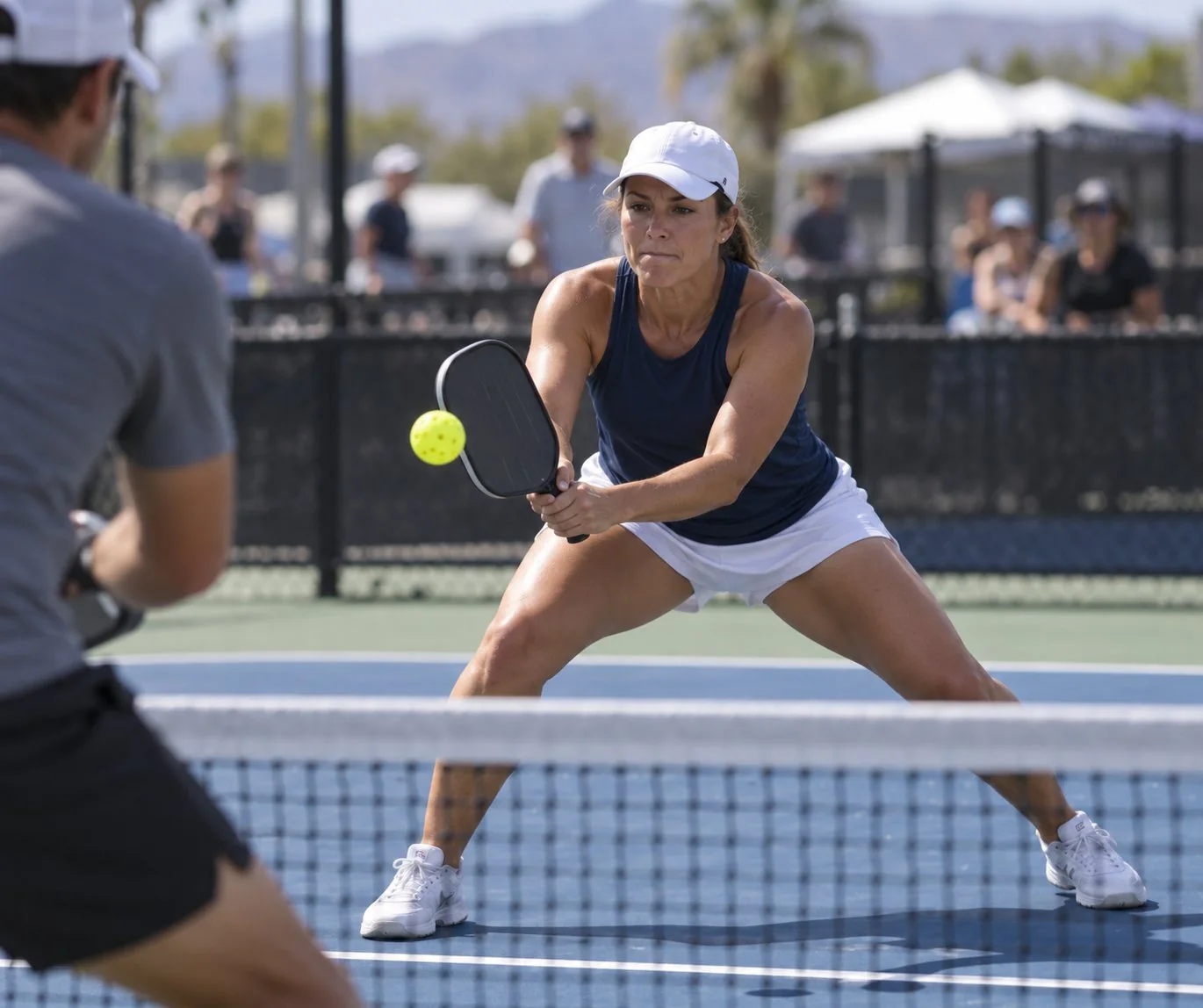
Pickleball drive defense against a ball aimed at your body starts with an early paddle position, soft knees, and a compact block. You do not need to match the attacker’s speed. The useful outcome is a low, controlled ball that keeps you balanced near the kitchen line.
Why are body drives difficult?
A body drive removes the time you would normally use to reach toward a corner. If the paddle is below your waist, the response becomes a rushed lift. If the face opens too much, the block floats high and gives the hitter another attack.
Keep your shoulders quiet and avoid turning away from the ball. Both hands can stay in front of your torso until the direction is clear. That neutral position reduces the hesitation between a forehand and a backhand block.
How do you block a body drive?
Stand with a comfortable base, flex your knees, and keep your weight ready to move in either direction. Hold the paddle in front of your chest with enough room for your elbows to move. When the ball arrives, absorb its pace with a short shoulder and forearm motion rather than a large swing or wrist flick.
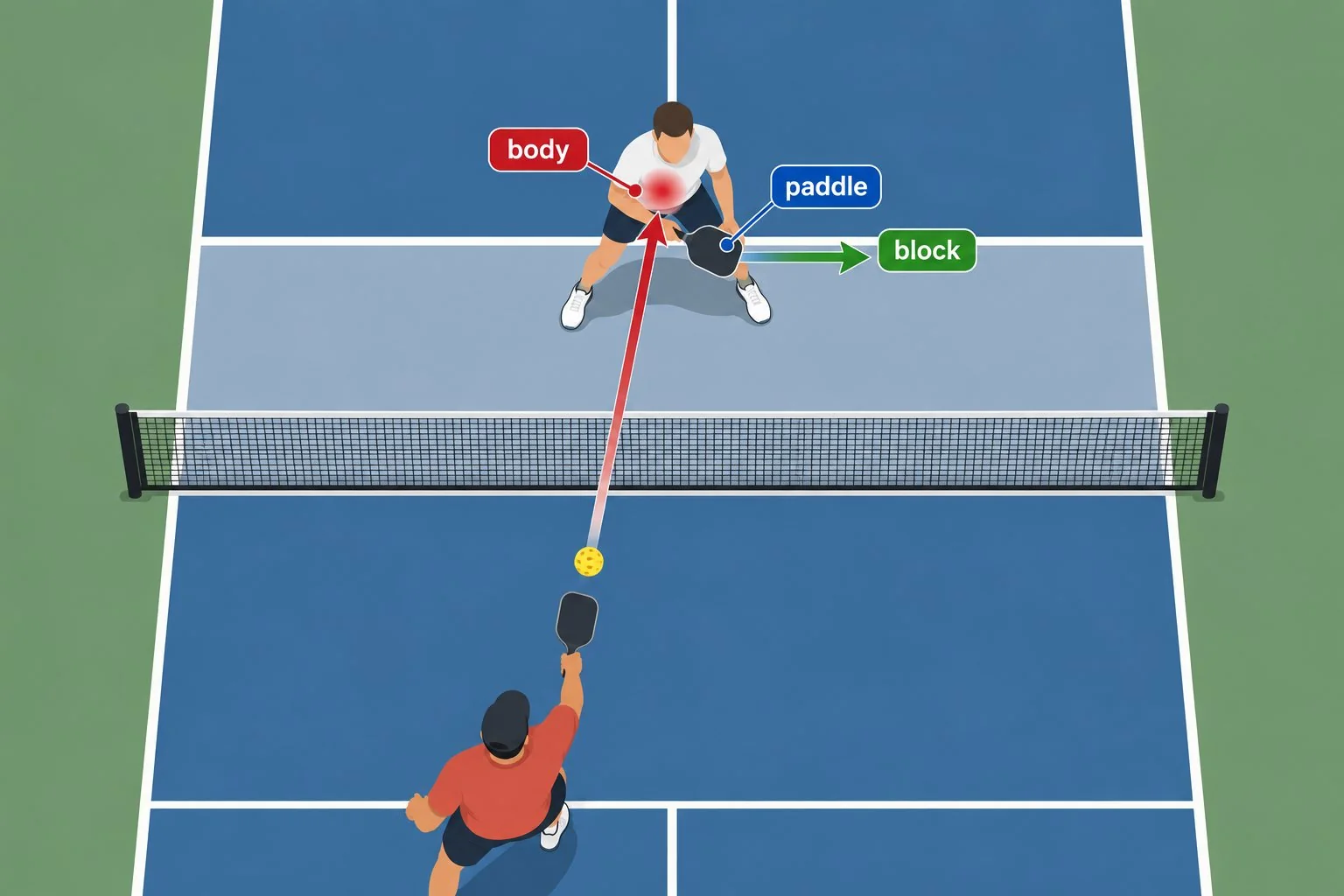
A nearly square face usually sends the ball on a lower path. When the ball is dropping, a slightly closed face can prevent it from sailing long. Training example: on 20 body drives, suppose 14 blocks reach your target and 6 float or miss. Your session rate is 14 ÷ 20 = 70%. That measures the drill, not a guaranteed match percentage.
Should you move or block?
You can move around a body ball when its speed and height give you time. A small step to the forehand side may create a cleaner contact than trapping the paddle against your ribs. When the ball is fast and close, however, protecting the middle and returning a safe block is often the better decision.
Read the opponent’s position before choosing direction. A block through the middle may create uncertainty between partners, while a crosscourt block has more distance but needs more margin. Recover immediately after contact instead of admiring the result.
Which drills improve reaction?
Ask a partner to feed moderate drives to your backhand, middle, and forehand areas, ten balls to each zone. Record both a successful block and whether it stays low. If the first series produces 7, 5, and 8 target balls, the rates are 70%, 50%, and 80%. Change one cue next, such as raising the paddle earlier.
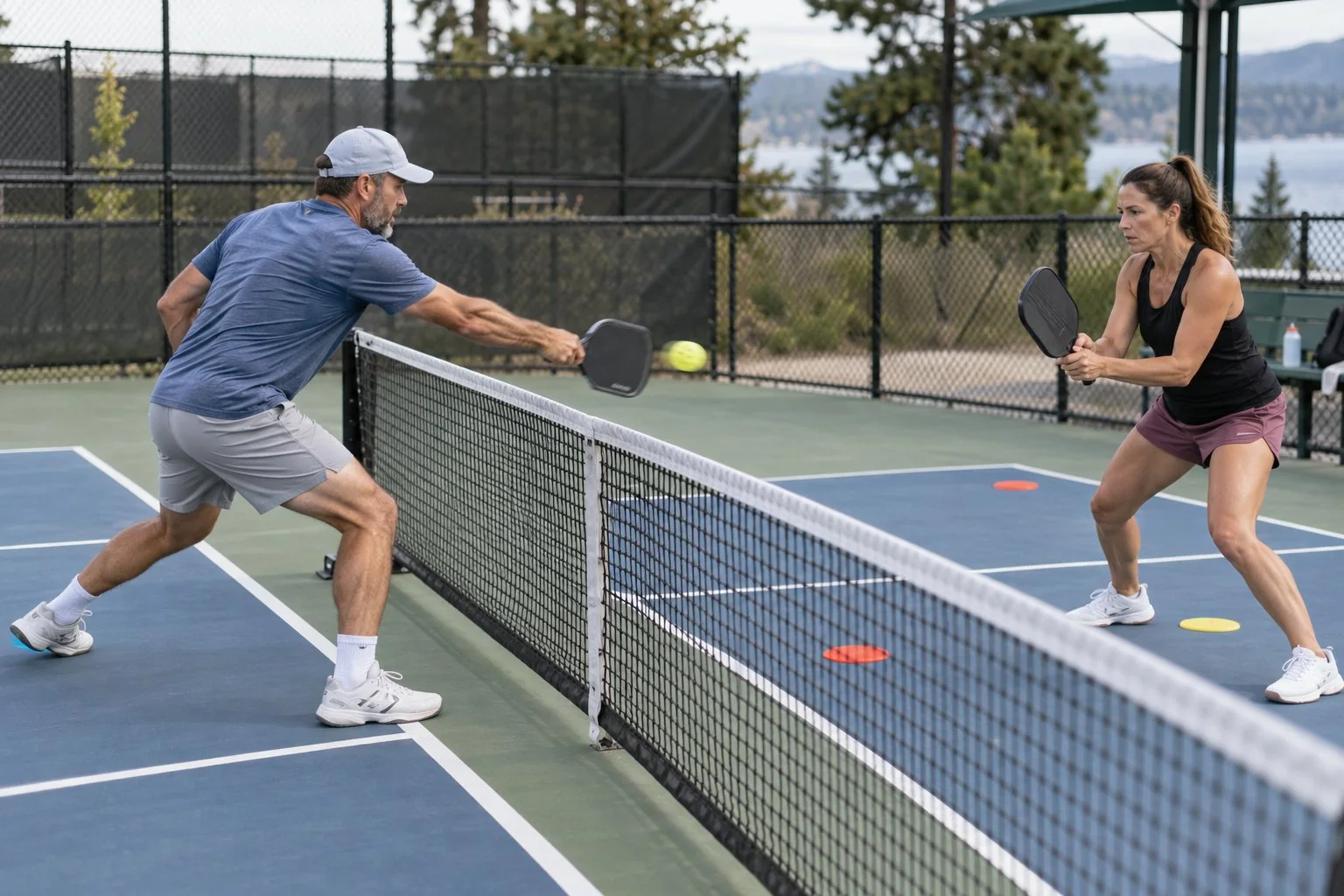
For the next progression, have the feeder vary direction without calling it. Keep a safe distance from the net, take small adjustment steps, and reset the paddle after every contact. Lower the pace when your posture collapses, and stop if pain changes the stroke.
Body-drive checklist
Paddle up early. Keep the knees soft. Protect the middle. Block with a short motion, aim low, and recover before the next ball. Power is optional; balance is not.