Pickleball Drop Shot Follow-Through: Add Distance Without Swinging Hard
Add distance to a pickleball drop shot with a compact setup, stable contact, slower swing, longer follow-through, and balanced recovery.
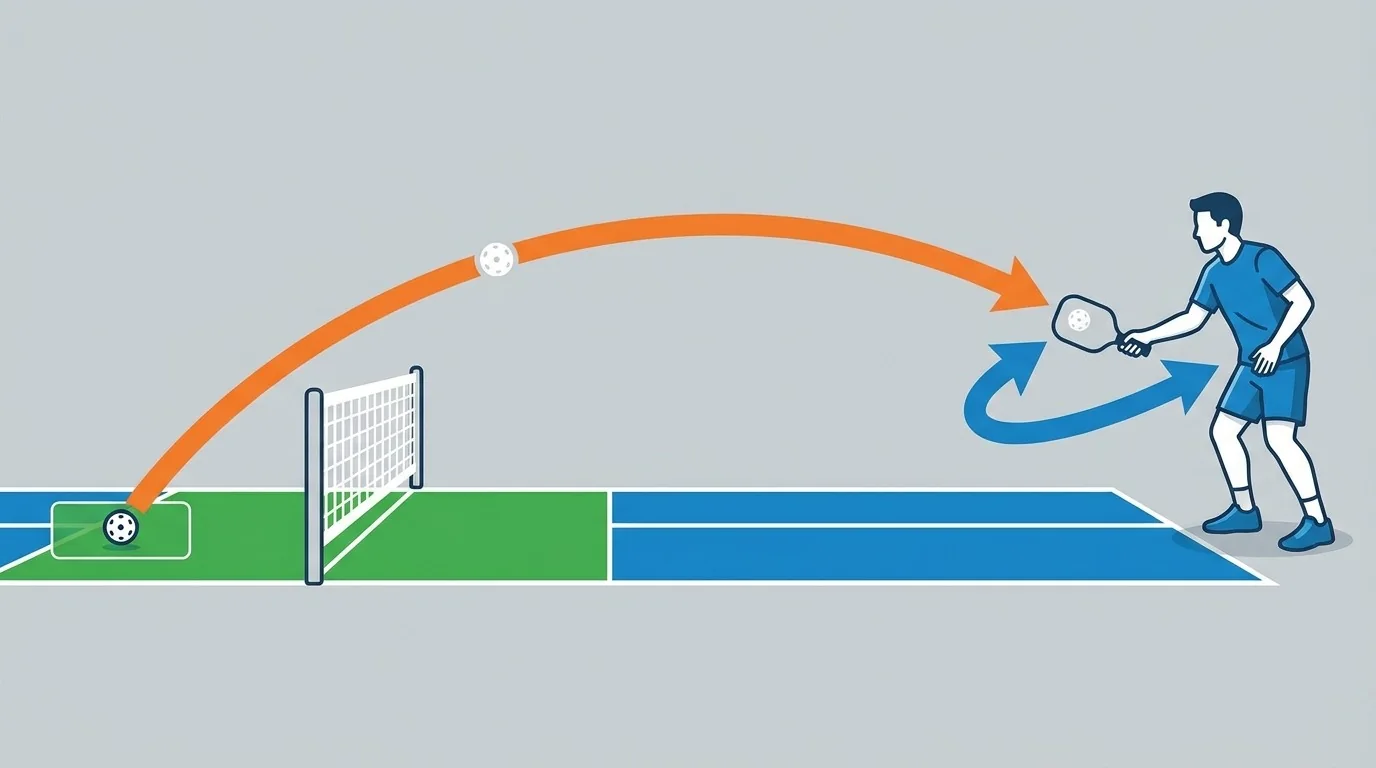
A pickleball drop shot does not need a faster swing to travel farther. From the baseline, distance comes from a clean contact point and a follow-through that continues toward the target. Keep the motion calm, let the paddle travel a little longer, and use your feet to arrive in balance. That combination gives the ball enough flight without turning a soft shot into a drive.
Set the body before you add length
Start near the baseline with your knees comfortably bent and the paddle in front of you. As you read the return, use a split step when the opponent makes contact, then take small adjustment steps. Do not run through the ball or reach from behind your body. Set the feet so the ball can be contacted in front of the lead hip.
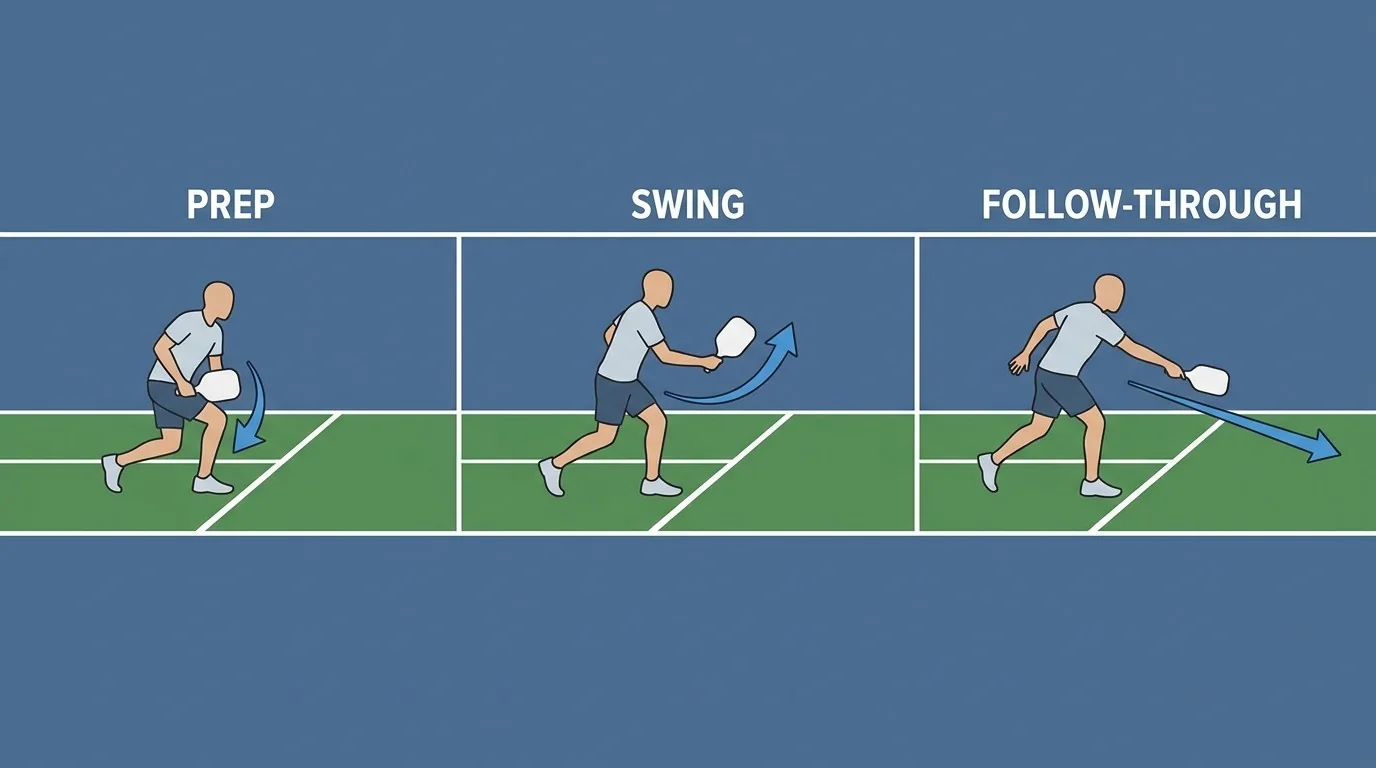
For a forehand drop, a semi-open stance gives you room to turn while still facing the intended lane. Keep the wrist stable and the grip relaxed enough to feel the paddle face. The backswing stays compact, roughly around hip height. A large loop adds speed and makes the soft target harder to control.
Use a slower swing and a longer finish
Contact the ball after it begins to fall from its bounce when the situation allows. Start the paddle around the hip and guide it forward with the shoulder and arm working together. The goal is not to scoop upward with the wrist. Keep the face open enough to lift the ball over the net, then allow the follow-through to extend toward the target and finish around chest or shoulder height.
The longer finish helps the ball travel, but it does not mean you should accelerate violently. Think of adding travel to the paddle path, not adding a sudden burst of power. If the ball lands short, first check whether your contact was too far behind you or whether you stopped the finish early. If it sails long, reduce the speed of the swing and keep the same smooth shape.
A drop still needs a descending flight and a landing in the opponent's non-volley zone. Build enough net clearance to avoid clipping the tape, but do not chase a line. The safer target is a ball that falls into the kitchen and makes a clean volley difficult.
Move after contact, not during the swing
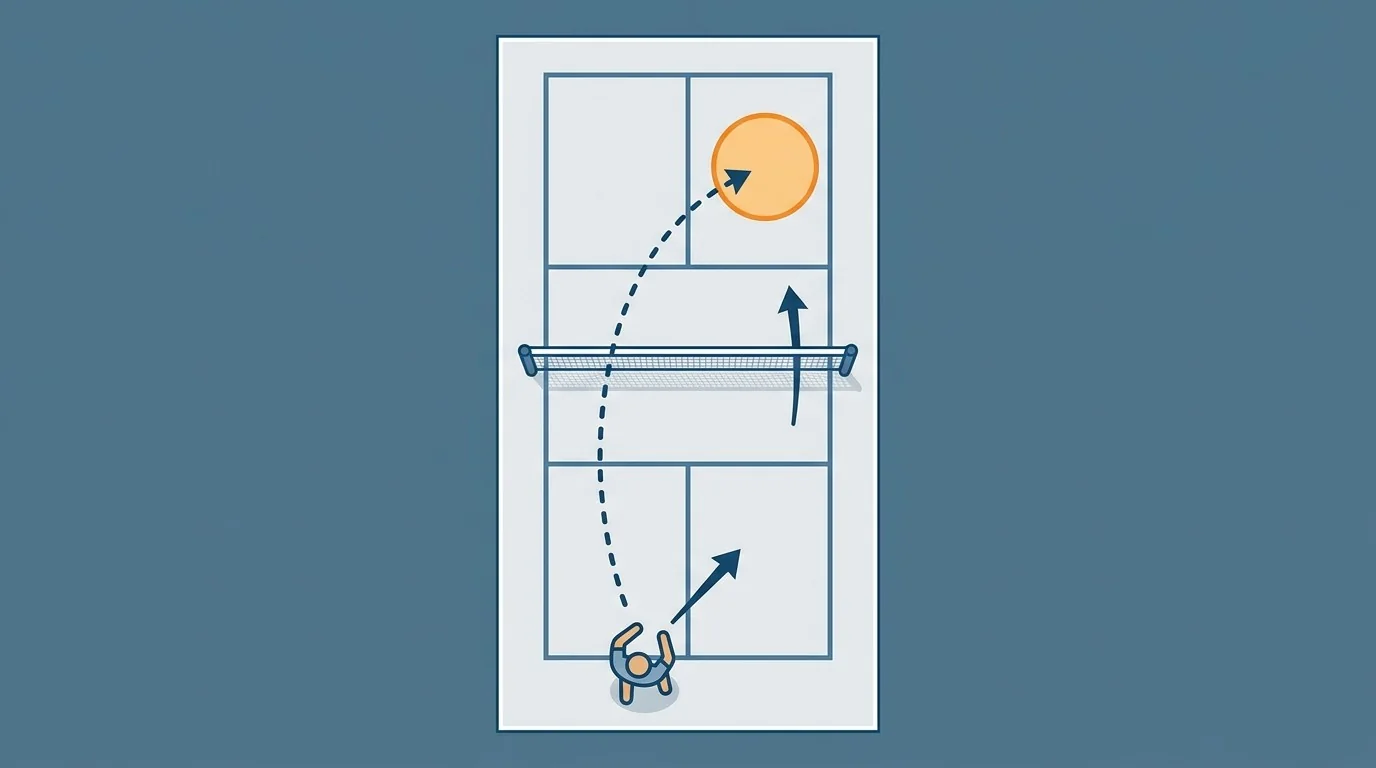
After the paddle finishes, recover your balance before moving forward. The serving team is trying to use the drop to earn a safer path toward the kitchen, not to sprint blindly. Take the next step only when the ball has crossed safely and your opponent's reply gives you time. If the drop is too high or too deep, stay ready for the next ball instead of assuming the approach is open.
Your feet remain part of the shot. A short return may require a small adjustment toward the ball; a wide return may require more space before contact. If you must lunge, prioritize a playable ball and a balanced recovery rather than forcing the same full follow-through. The ball's position decides how much of the ideal motion you can use.
A simple follow-through drill
Begin at the kitchen line with a partner and exchange two soft dinks. Then take two steps back and hit two drops into the kitchen. With each step backward, keep the backswing compact and let the finish become slightly longer while the swing remains slow. Continue until you reach the baseline. At the baseline, hit five to ten drops, then return toward the kitchen and repeat the same pattern.
Use one cue per round: contact in front, stable wrist, or finish toward the target. If a ball pops up, check the contact height and paddle face. If a ball falls into the net, create a little more net clearance without adding a fast wrist snap. If you lose balance, pause the drill, reset the feet, and start the next repetition from a stable base.
A useful final test is to alternate locations. Have the feeder send one ball near the middle, one to the forehand side, and one wider. Move first, make the best available contact, and recover after every shot. The objective is not a perfect identical swing; it is a repeatable drop shape that keeps your next decision available.