Pickleball Drop Shot Practice: Build Height, Margin, and Control
Build a reliable pickleball drop shot with balanced contact, enough net margin, practical targets, troubleshooting, and drills that progress from simple feeds to pressure.
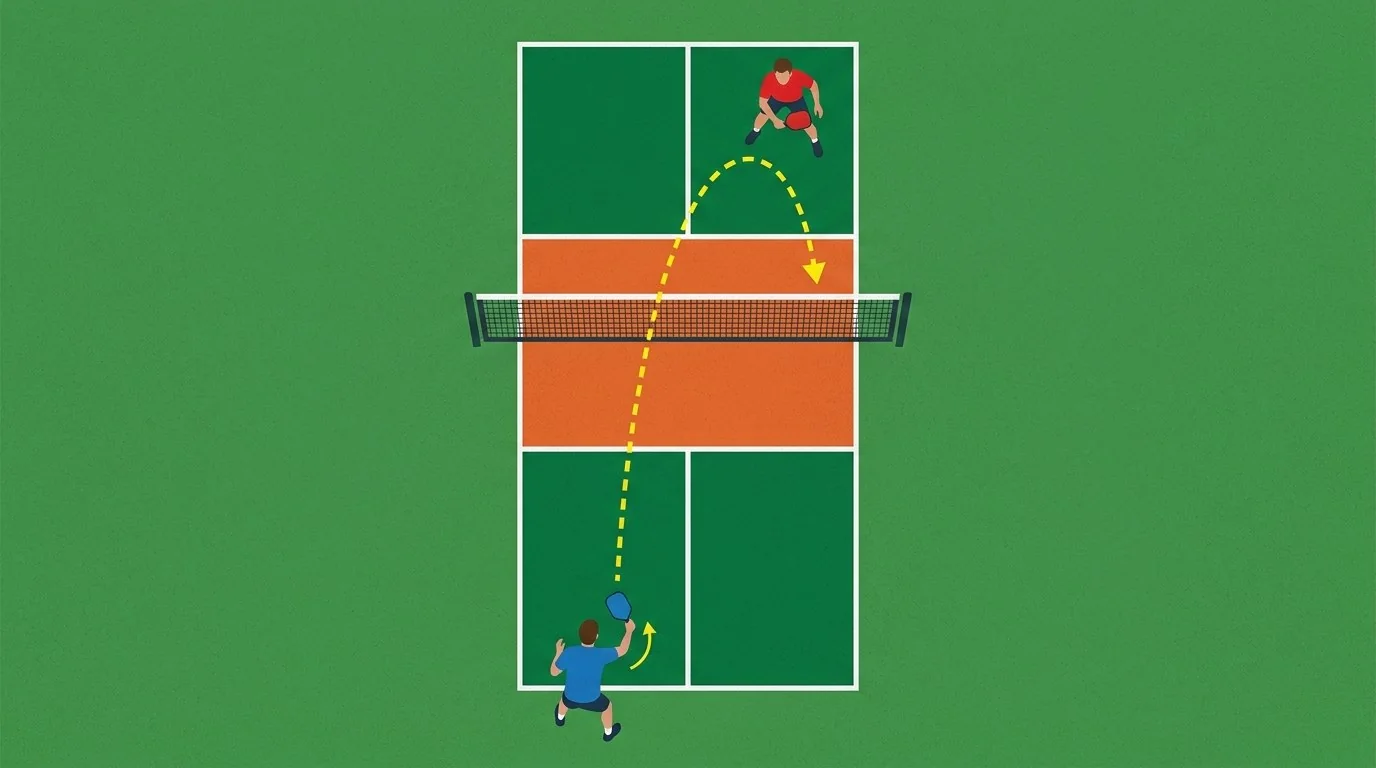
A good pickleball drop is a controlled way to move forward, not a shot that has to land inches from the net. From the baseline or transition area, send the ball high enough to clear the net and soft enough to descend into the opponent's kitchen. A useful drop gives the opponent a low contact and gives you time to advance without rushing.
Judge the result by the next contact
Do not rate a drop only by how close it lands to the net tape. Look at the contact it creates. The ball needs safe net clearance, should be descending before it reaches the opponent's comfortable volley space, and should land where the opponent has to lift, scoop, or let it bounce.
A crosscourt drop often has a longer diagonal and therefore more room for the ball to travel. A middle drop can reduce angles and force two opponents to decide who takes it. Both choices can work when the ball stays low enough to prevent an easy attack.
A drop is not the same as a dink. The drop usually begins from the baseline or transition area and helps the hitting team reach the kitchen. A dink is normally played near the kitchen line during an established soft exchange.
Build a compact stroke
Use a stable continental or slightly eastern grip with light to moderate pressure. Squeezing too hard makes the ball rebound and can create a float. Holding the paddle too loosely makes the face unstable. Start with the paddle in front of you instead of taking a large loop behind the hip.
Bend your knees and let your legs support the motion. Contact the ball in front of the body while staying balanced, then guide the paddle toward the intended landing area. Avoid fixing a late contact with a sudden wrist flick. A practical set of cues is soft hands, active legs, a quiet paddle face, and a forward finish.
Contacting the ball after it reaches the top of the bounce can be a useful default because the starting height is more predictable. It is not an absolute rule. When the ball forces an earlier contact, keep it in front and shorten the motion rather than reaching behind your body.
Match height to distance and target
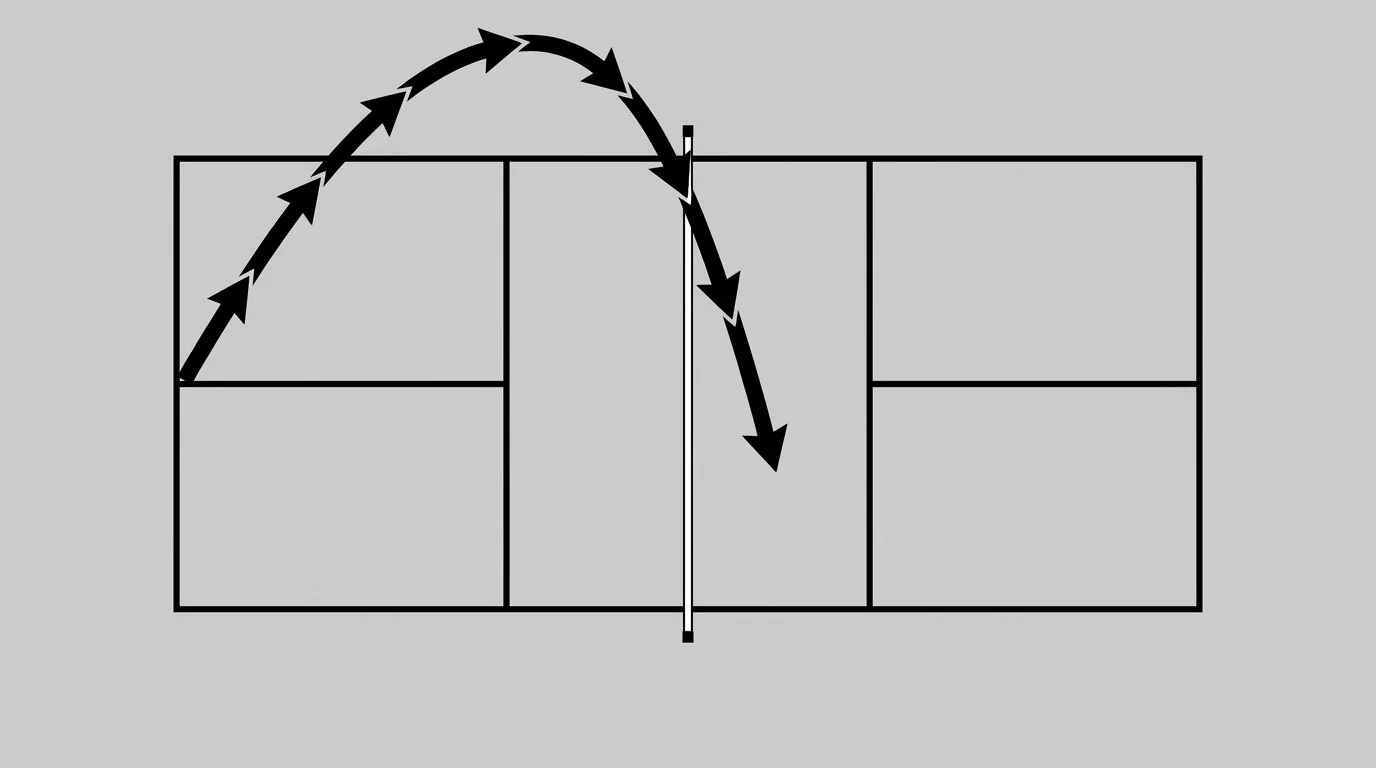
There is no single clearance number that works for every drop. Distance, incoming pace, wind, spin, contact height, and the chosen target all change the required arc. From the baseline, giving the ball a little extra air is often safer than trying to skim the tape. Let it gain height early, then descend as it approaches the kitchen. If the apex comes too late, the ball may still be rising near the kitchen and arrive attackable.
Start with a generous target. The crosscourt kitchen is a useful first option because the diagonal provides distance. The middle can narrow angles and create a communication decision. A weaker backhand side may make the opponent reach, but do not give away all your margin to chase a small corner. Choose the target that makes the next contact difficult while leaving room for error.
Diagnose the common misses
When the ball hits the net, the aim may be too low, the contact may be late, or the legs may have stopped contributing. Create height earlier and finish forward. When the ball floats high, check for an open paddle face, late contact, or an upward wrist flick. When it travels long, shorten the backswing and reduce force. When it lands short, keep controlled forward carry instead of slowing the paddle too much.
A direction error often comes from the paddle face changing at contact. When the ball is fast, low, or pulling you out of position, the stroke may need to become smaller. Keep the face predictable and accept a safer reset rather than forcing a full swing.
Progress from simple feeds to pressure
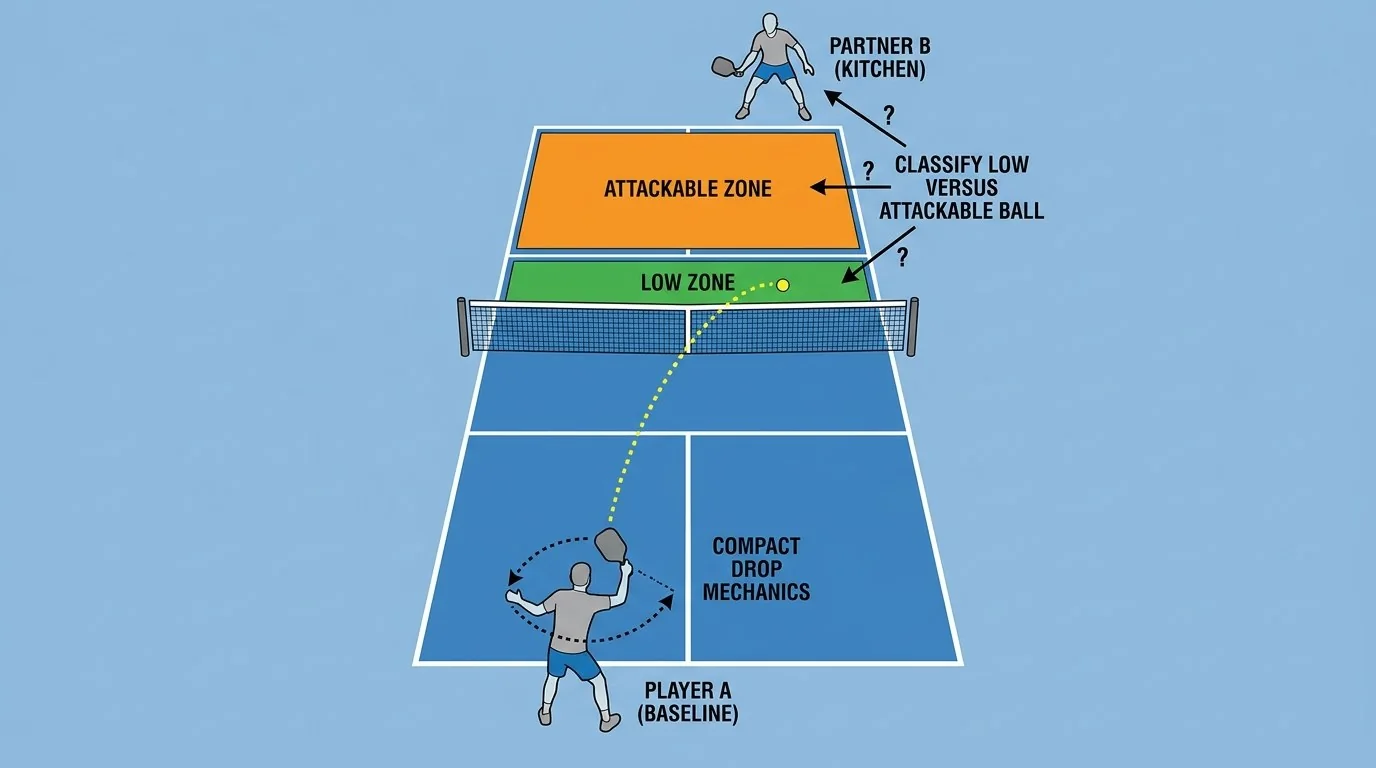
Begin near the baseline with self-feeds toward a broad crosscourt kitchen target. Count a repetition only when the ball clears the net with margin and would require a low contact. After that, start near the kitchen and take one step backward following a successful group, gradually working toward the baseline. This develops feel before distance becomes the main challenge.
Add variable feeds so the hitter has to respond to slow, medium, and faster balls without losing the compact motion. Ask a partner to call the result as attackable, playable, or low. That feedback tells you more than a simple in-or-out result. Finish with live points in which the serving team gets one drop attempt before speeding up.
Track ten or twenty repetitions and separate net errors, floaters, long balls, and effective low drops. Change only one variable at a time, such as contact position, paddle face, target, or pace. Then the result can tell you what improved. Stop if fatigue changes the stroke or causes pain.
Use a short checklist
Before the swing, get balanced and choose a broad target. During contact, keep the ball in front, use a compact motion, and leave room over the net. After the shot, watch the opponent's contact and move forward when the descending drop has created that opportunity. A repeatable arc with margin is more valuable than a spectacular miss that barely clears the net.