Pickleball Dynamic Mobility: Prepare Hips, Shoulders, and Ankles
Prepare for pickleball with a practical sequence of light cardio, dynamic mobility, joint preparation, and court-specific movement.
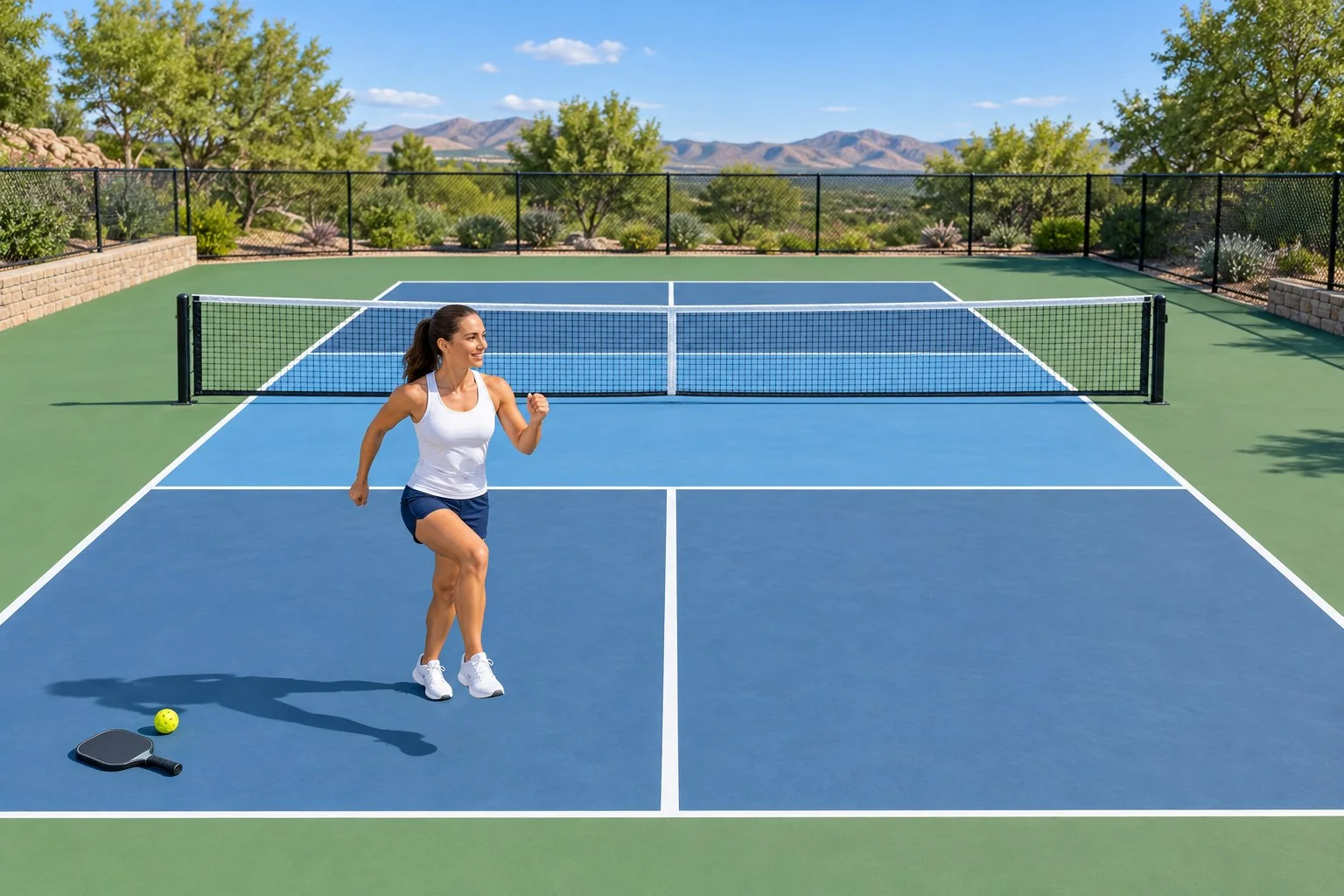
A good pickleball dynamic mobility prepares your body for the demands of play without tiring you before the first point. The most useful sequence moves from general activation to dynamic mobility, joint preparation, and then pickleball-specific movement. Give yourself about eight minutes, and keep every action controlled.
Minutes one and two: raise your pulse
Start with brisk walking or a light jog along the baseline. Add high-knee marches with relaxed arm swings, then finish this block with side-to-side shuffles along the kitchen line. You should feel warmer and more mobile, not breathless. Keep the steps light and use the shuffle to rehearse the lateral movement you will need during rallies.
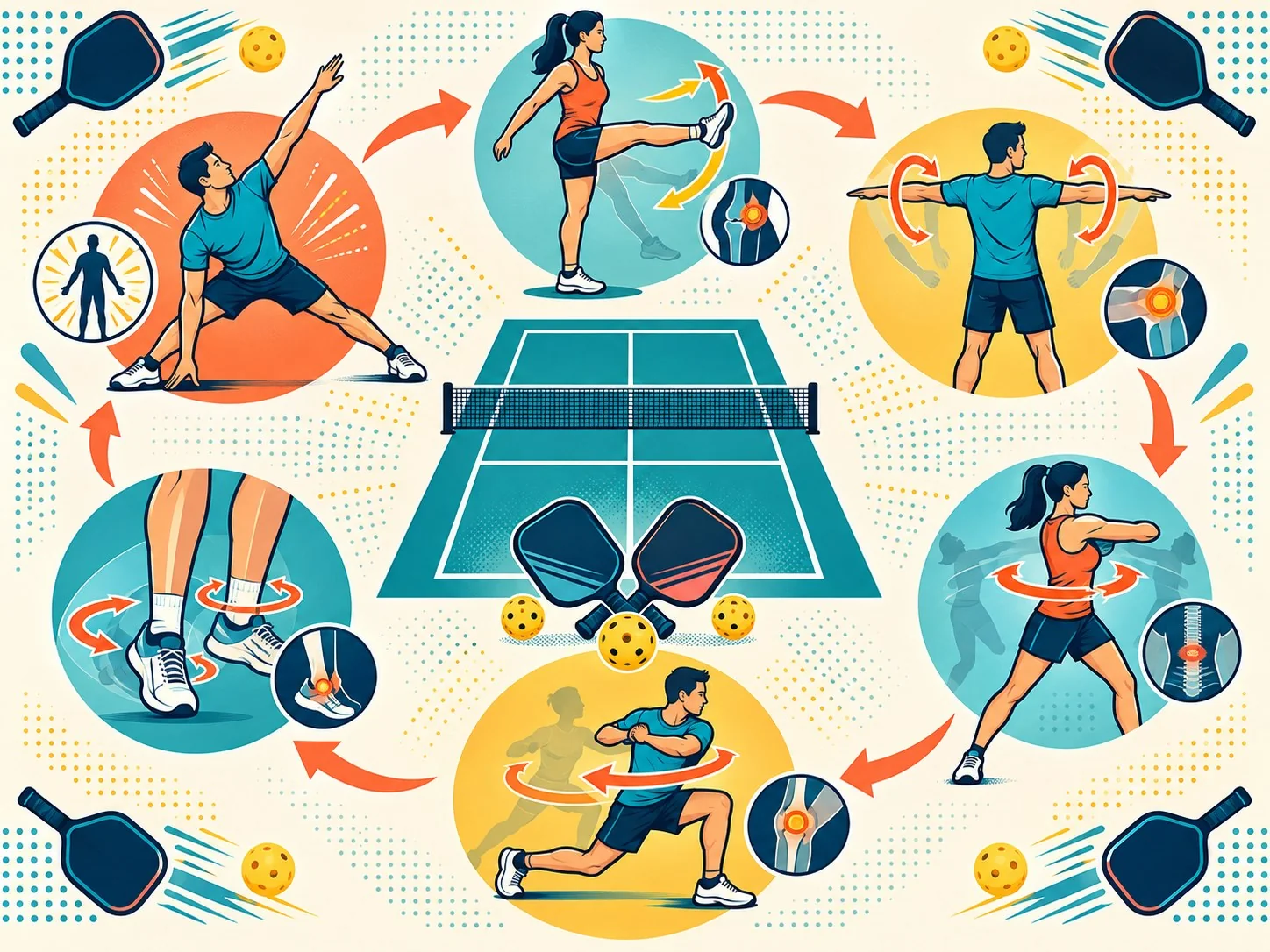
Minutes three and four: move through range
Use dynamic movements rather than long, motionless stretches before play. Swing each leg forward and back, then side to side, staying tall and holding the fence or net post if needed. Make small arm circles and gradually enlarge them, rotate the torso slowly, and add walking lunges with a gentle rotation. Finish with ankle circles and controlled calf raises.
The goal is to explore the ranges you will use for lunges, turns, swings, and push-offs. Nothing should feel forced. If a movement causes sharp pain, stop and choose a smaller range or seek appropriate professional advice.
Minutes five and six: prepare the joints
Give the wrists and forearms a few easy flexion and extension circles, followed by palm-up and palm-down rotations. Add gentle elbow circles and dynamic cross-body shoulder movements. Squeeze the shoulder blades together briefly, then release. For the lower body, use slow bodyweight squats and hip circles to prepare the knees and hips for a low athletic stance.
This block should feel like preparation, not strength training. Keep breathing normally and avoid exhausting the muscles. A warm-up works best when it leaves you feeling ready to move quickly and change direction.
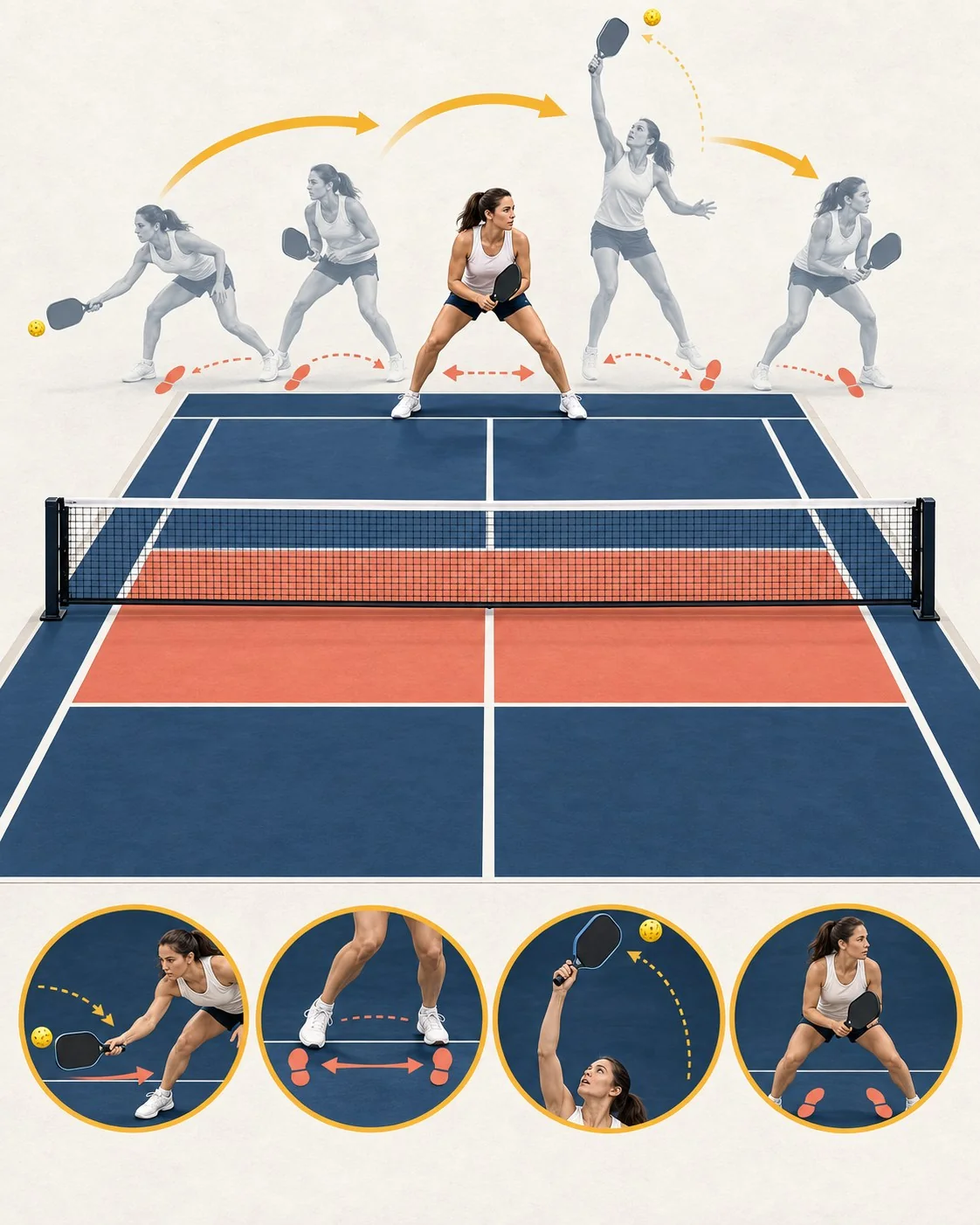
Minutes seven and eight: activate the pickleball patterns
Pick up your paddle and rehearse shadow forehand and backhand dinks without a ball. Keep the motion compact and let your feet find a balanced base. Add several split-step repetitions for kitchen volleys, landing softly with the paddle in front. Finish with a few controlled shadow overheads rather than full-speed swings. If you have a partner, gentle figure-eight paddle drops can add a little rhythm without turning the warm-up into a competition.
When you have only three minutes
Do not skip preparation entirely. Walk or jog briskly for one minute, then use the remaining time for arm circles, torso rotations, leg swings, slow squats, and shadow dinks on both sides. This short version cannot replace a complete warm-up, but it is a practical minimum when time is tight.
Save longer static stretches for after play, when your body is already warm and the goal is recovery. Before a match, active movement is the better fit for raising temperature, opening useful ranges, and rehearsing sport-specific reactions.
A consistent routine is easier to follow when it has a clear order: raise the pulse, move through range, prepare the joints, and activate the shots. Finish feeling alert rather than fatigued, and you will begin the session ready to move instead of using the first game to find your body.