Pickleball Evening Session Safety: Court Visibility Checklist
A practical night-play checklist for checking pickleball court visibility, glare, shadows, fixtures, routes, and maintenance reporting.
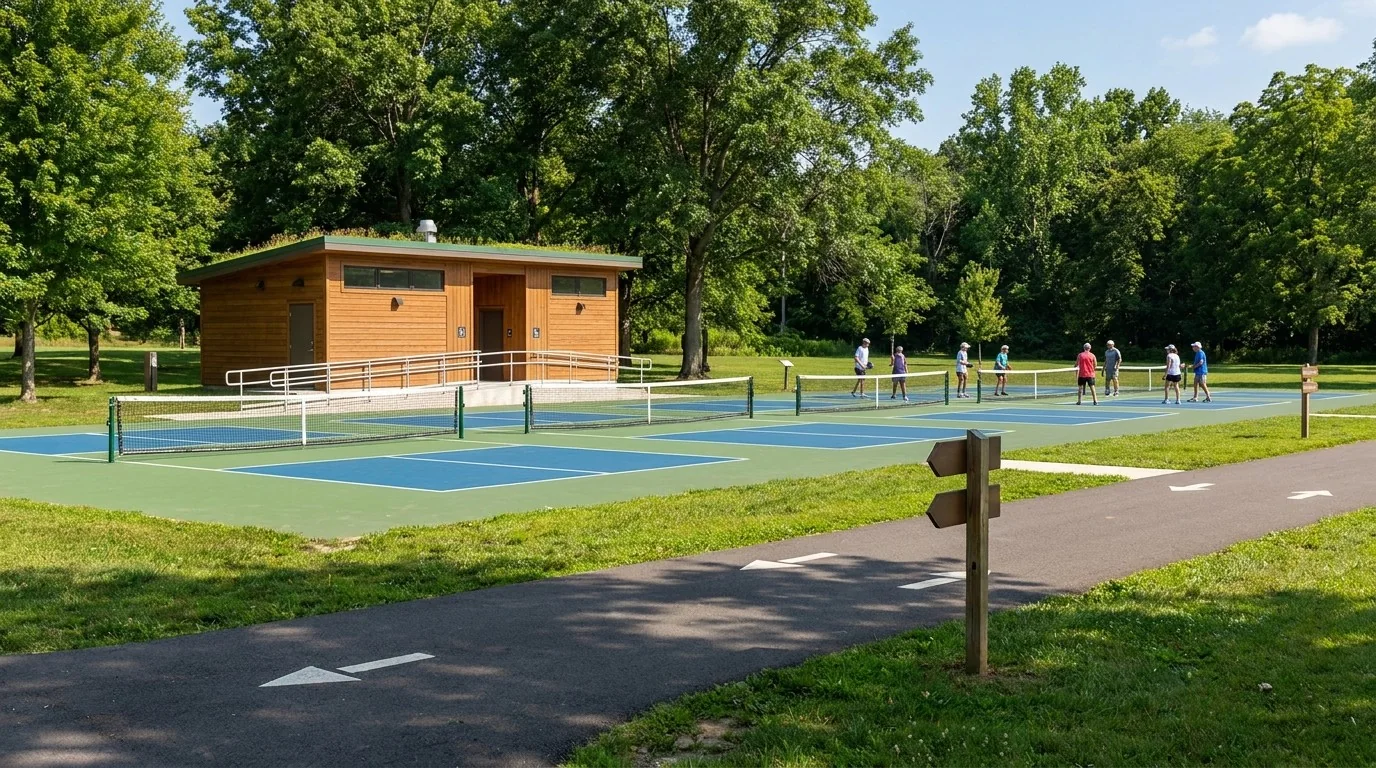
Evening pickleball depends on the visibility players actually get, not simply on whether the lamps turn on. A court can have working lights and still produce glare, dark corners, distracting shadows, or poor contrast against the ball. Use this checklist before opening a night session, then repeat it after weather, maintenance, or any lighting change.
Inspect from the player’s view
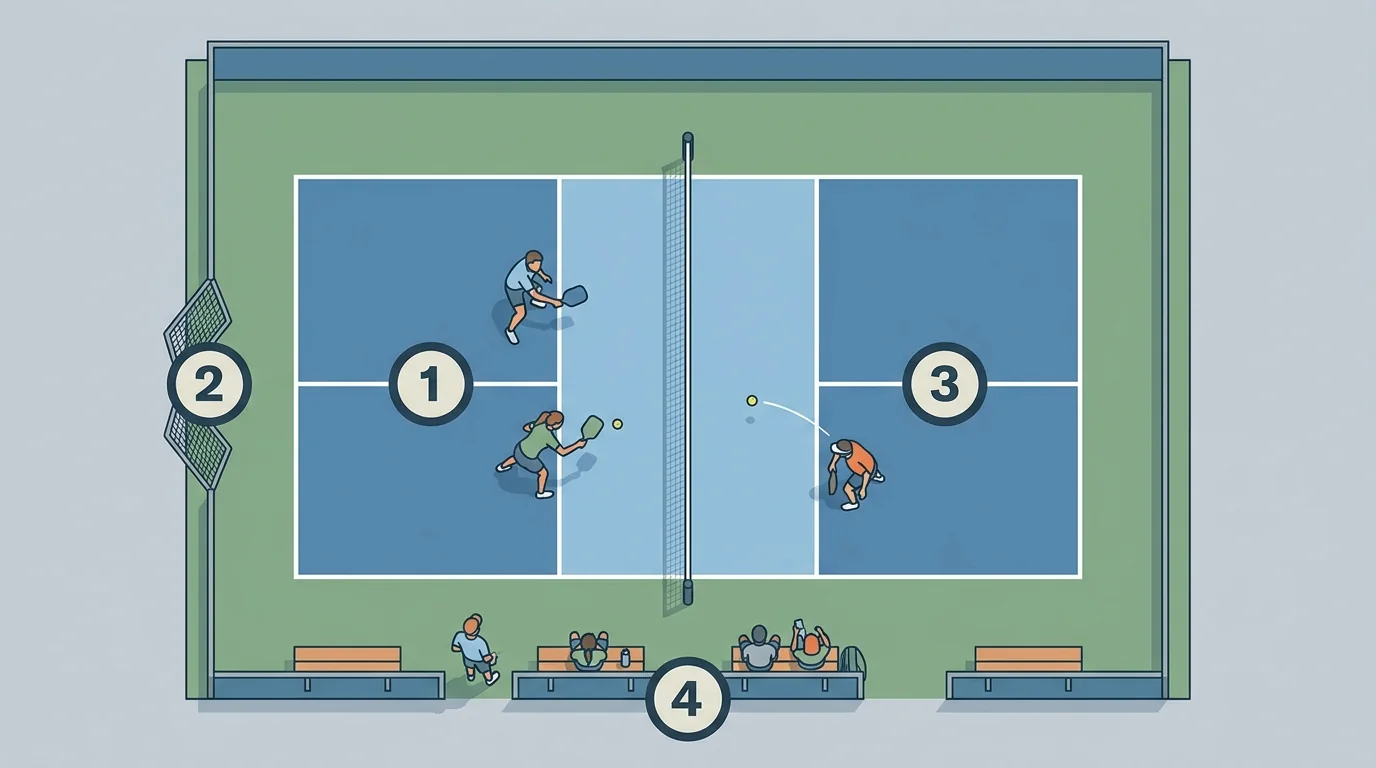
Walk the court at the time players will use it. Look toward each baseline, sideline, and the net instead of judging the lights from outside the fence. Track a ball through a normal rally and check whether a player can follow a high ball without looking directly into a lamp.
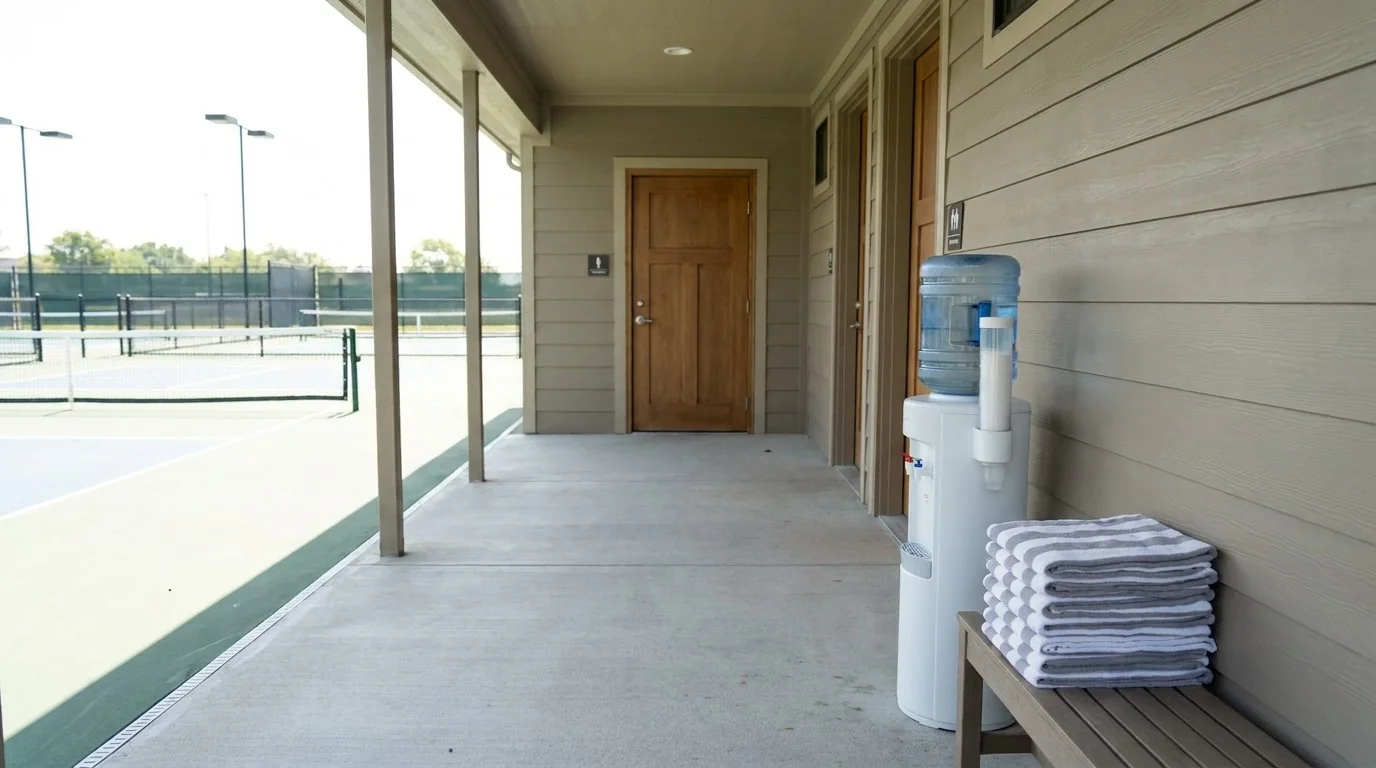
Record dark areas, flicker, delayed start-up, exposed wiring, damaged fixtures, and lights aimed toward neighboring homes or roads. A routine player check is not the time to climb a pole or open electrical equipment. Send those issues to a qualified technician.
Check glare, shadows, and contrast
Even brightness is more useful than a brilliant patch beside a dark one. Stand in several court positions while another person hits or tosses balls through the main sight lines. Note whether a fixture sits behind a server, the net disappears into shadow, or fencing creates confusing contrast.
If players squint, lose the ball near a light, or avoid one corner, treat the problem as more than a faulty switch. Any adjustment should follow the facility’s lighting design, local electrical rules, and manufacturer guidance.
Confirm the court before opening
Turn the lights on early enough for warm-up and leave time to report a failed fixture. Check the controls, timers, emergency contact, and access restrictions. Keep cords, maintenance tools, and temporary equipment out of player paths. After rain or wind, check for standing water, loose covers, fallen branches, and other hazards before play resumes.
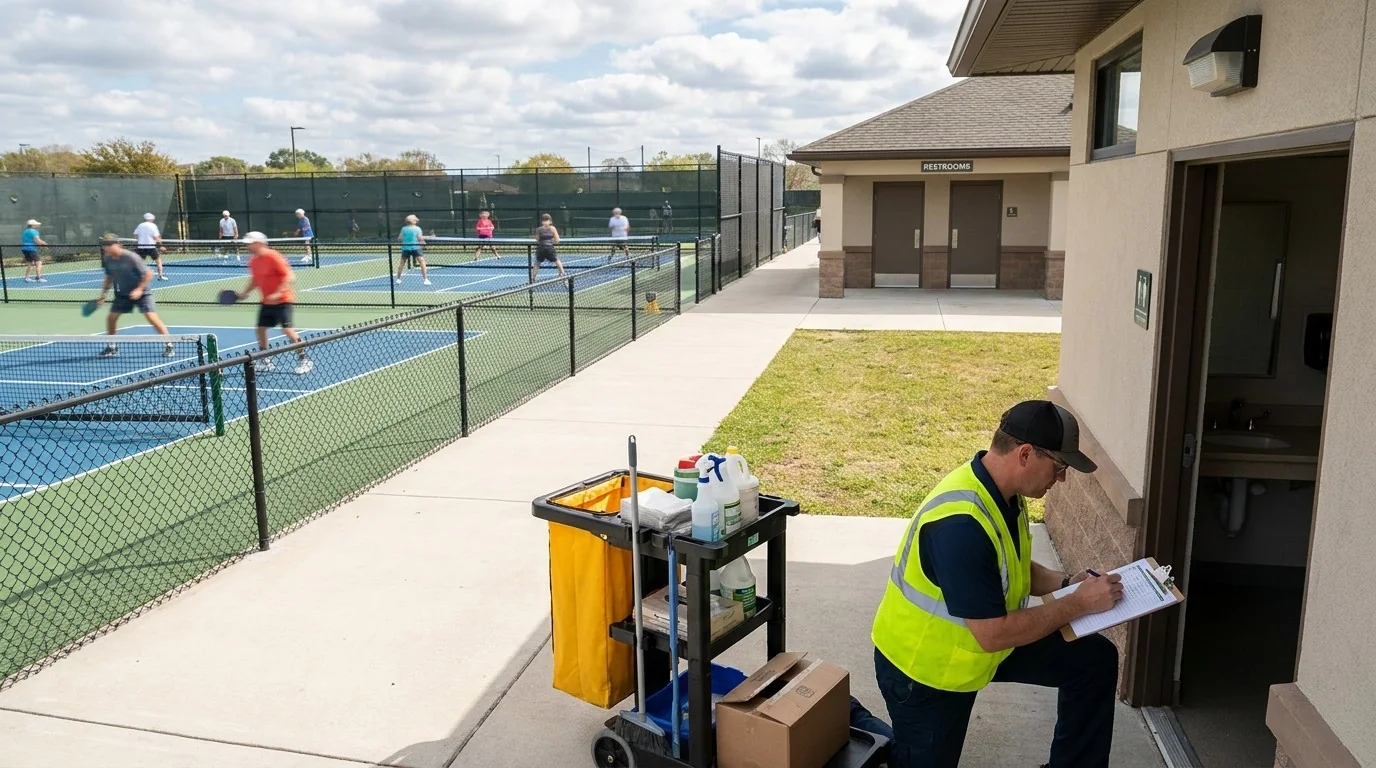
Use a repeatable night-play checklist
- Walk every court from both baselines and both sidelines.
- Confirm that lamps start, remain steady, and leave no dark playing area.
- Test ball tracking during serves, lobs, and ordinary rally height.
- Look for glare behind players, harsh shadows, and distracting reflections.
- Check the net, lines, fencing, and approach routes in the actual light.
- Record fixture numbers or court locations for maintenance staff.
- Tell players which court is closed when visibility or equipment is unsafe.
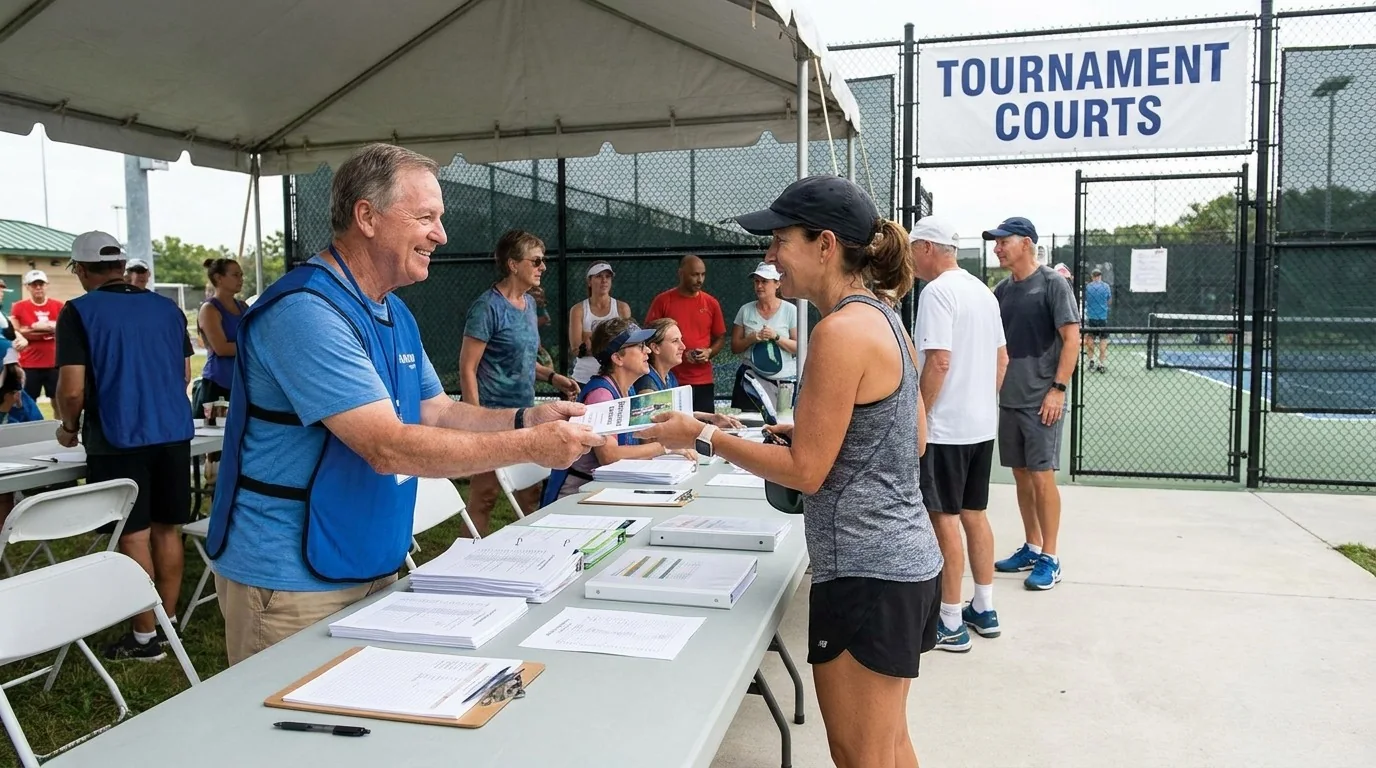
For organised play, include lighting responsibility in the venue plan and give players a clear contact for faults. Event operators should coordinate court access, player information, and facility services before the session begins. A short log is enough: date, court, condition, action taken, and the person who approved reopening.
Reliable night pickleball starts with a player-view inspection rather than a quick glance at the lamps. Check visibility, glare, shadows, routes, and maintenance hazards together. If conditions change during play, pause the affected court, explain why, and reopen it only after the responsible person confirms that visibility and safe access have returned. Repeat the inspection whenever fixtures are repaired, courts are reconfigured, or a new evening schedule begins. Keep the checklist with the venue log so the next host can see what changed.