Pickleball Facility Access: A Pre-Play Safety Walk for Community Courts
A practical pickleball court access checklist for clear routes, usable gates, safe circulation, surface checks, fencing, and welcoming community play.
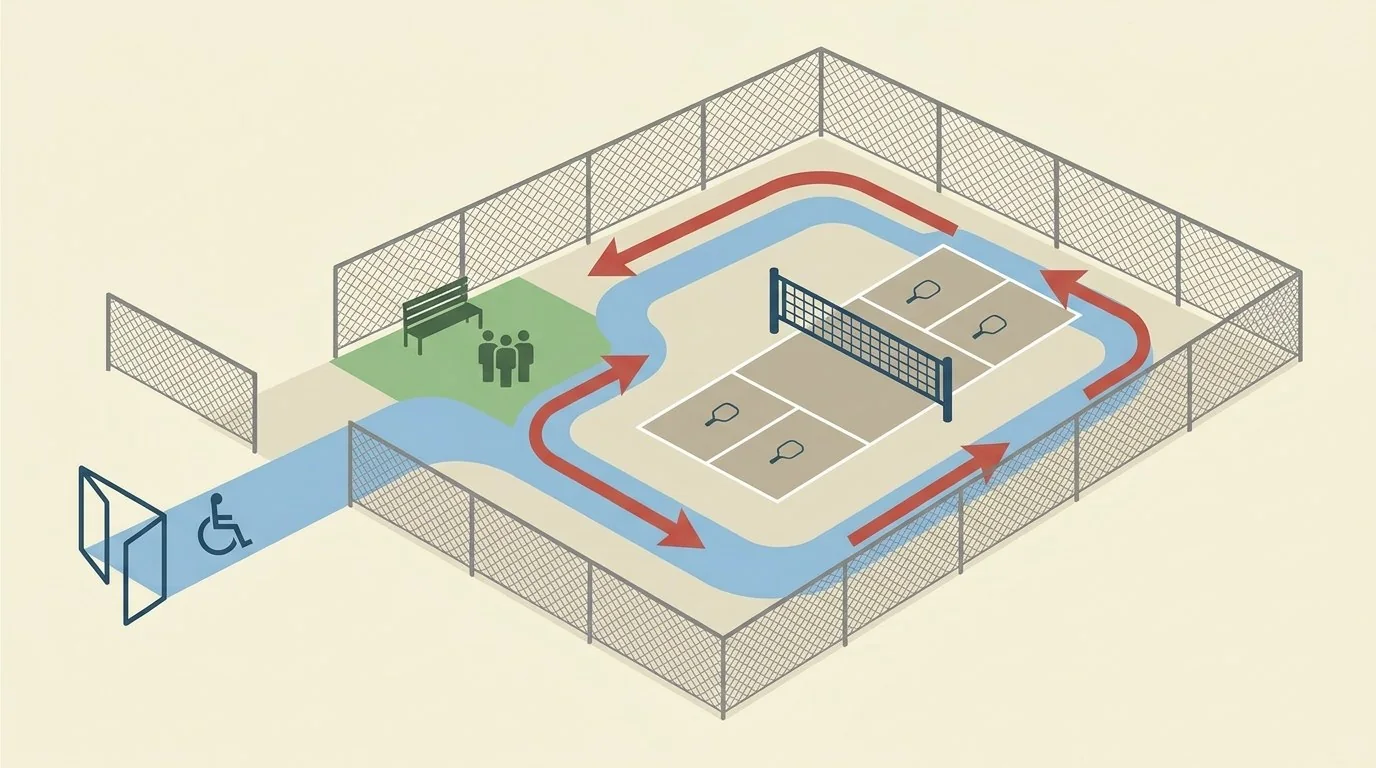
A community pickleball court should be easy to reach before it is easy to play. The route from the sidewalk, parking area, or building entrance needs to stay clear, gates must work without putting people in the playing area, and the court edge should not create a trip or collision hazard. Walk this route before opening a new court, after repairs, and whenever the layout changes.
Walk the route as a first-time visitor
Start outside the facility and follow the complete path to the court gate. Look for bags, benches, bins, hoses, loose equipment, uneven pavement, slick leaves, standing water, and abrupt edges. Include the waiting area and storage area in the check. A route that is clear early in the day can become crowded once players arrive.
Test the route with different users in mind. Someone using a wheelchair or mobility aid, a parent pushing a stroller, or a player carrying a paddle bag should be able to reach the gate, open it, turn, and find a safe position without crossing an active rally. Repair or report a problem instead of expecting visitors to find their own way around it.
Keep the gate visible and free of objects that could block it. During published operating hours, confirm that it is unlocked as intended. Open and close it from the approach side, check the latch, and make sure staff know who handles a damaged hinge, latch, or section of pavement. A clear approach also helps maintenance and emergency access.
Check the gate and waiting space
Open each gate fully and watch its swing. It should not strike the fence, create a pinch point, or force a person to stand on the court while operating it. The opening should suit the people and equipment the facility expects, including maintenance carts and mobility devices.
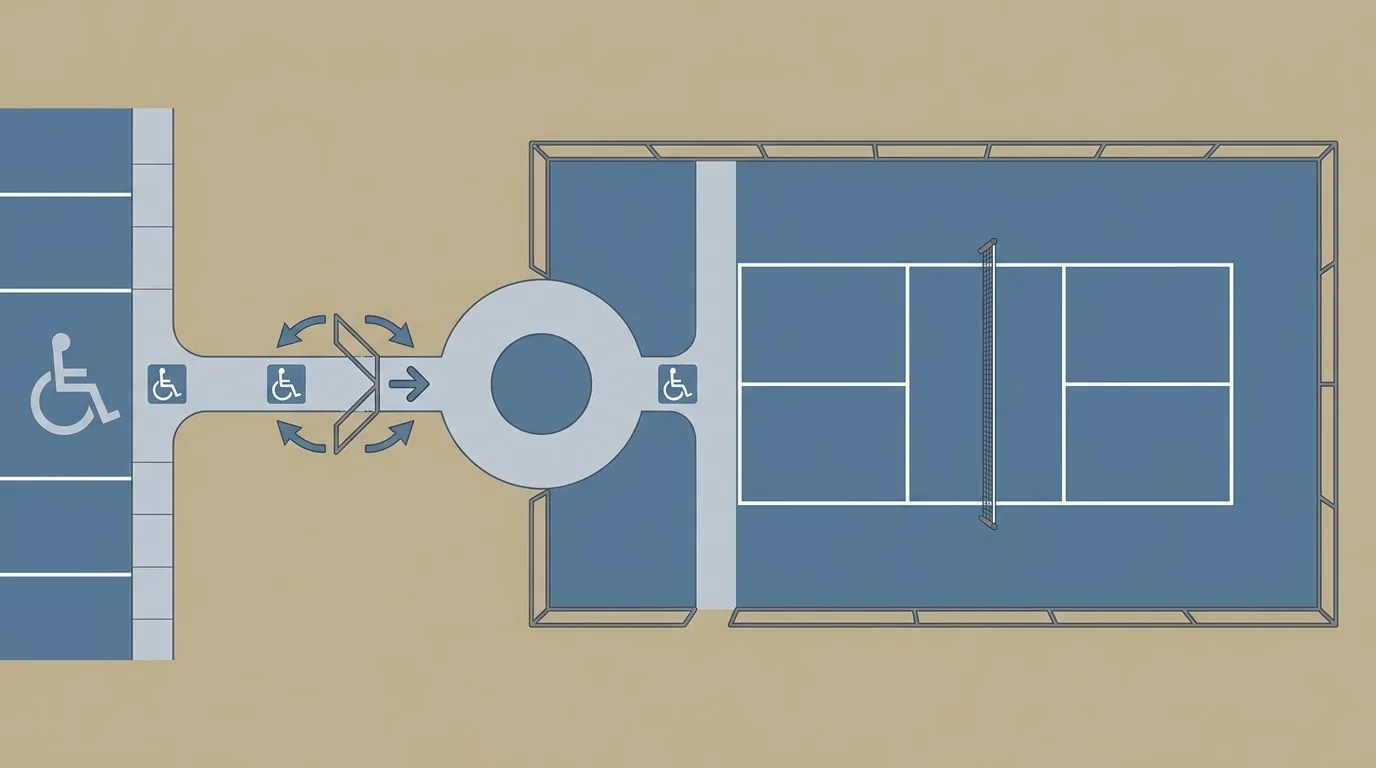
Keep the access route separate from active play whenever the site allows. Players entering, leaving, or waiting should not have to walk behind a server or cut across a neighboring court. Place benches, paddle racks, water containers, and ball baskets outside both the circulation path and the space players need to retreat safely.
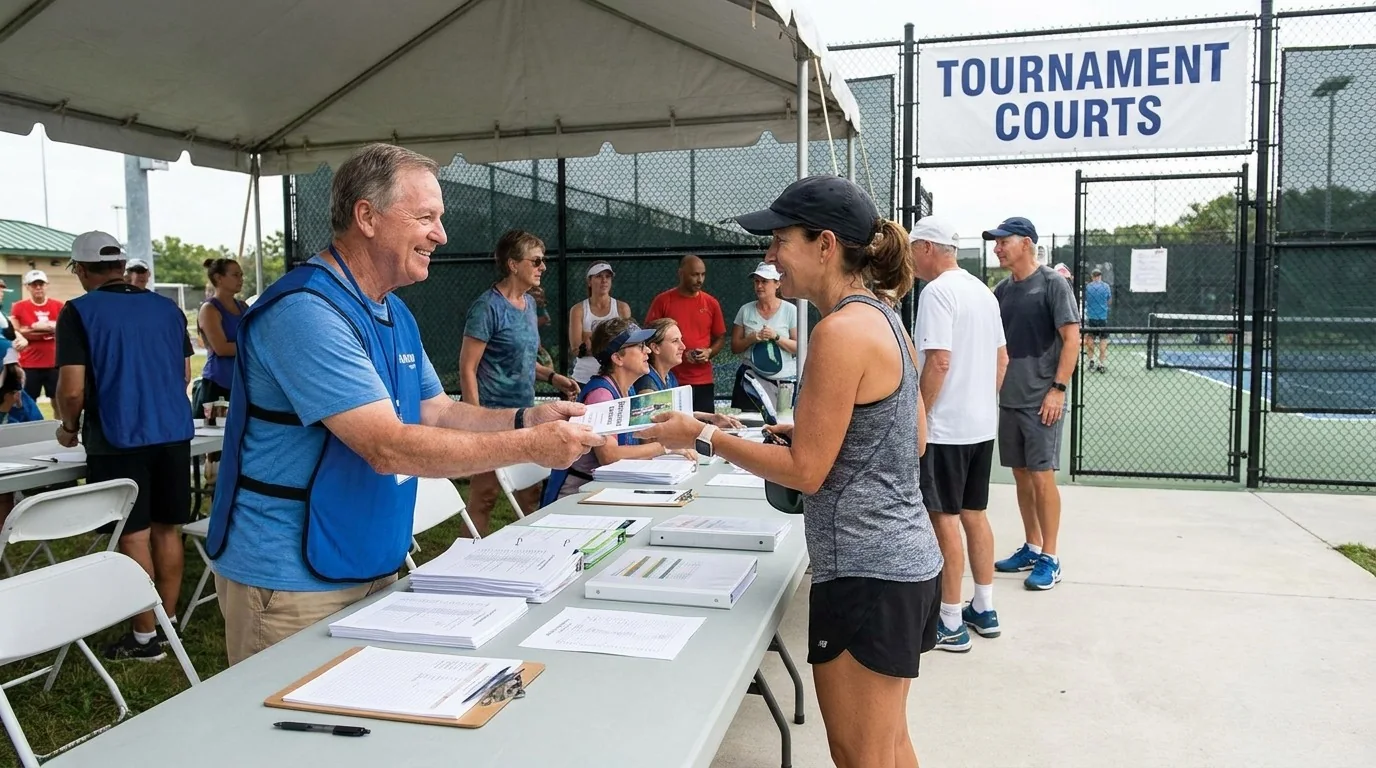
For open play, use a simple arrival routine: wait beyond the gate or at the marked edge, signal before entering, and step onto the court after the rally ends. Signs can reinforce the routine, but the layout should make sense even to a visitor who has not read a long rule board.
Inspect the surface and court edge
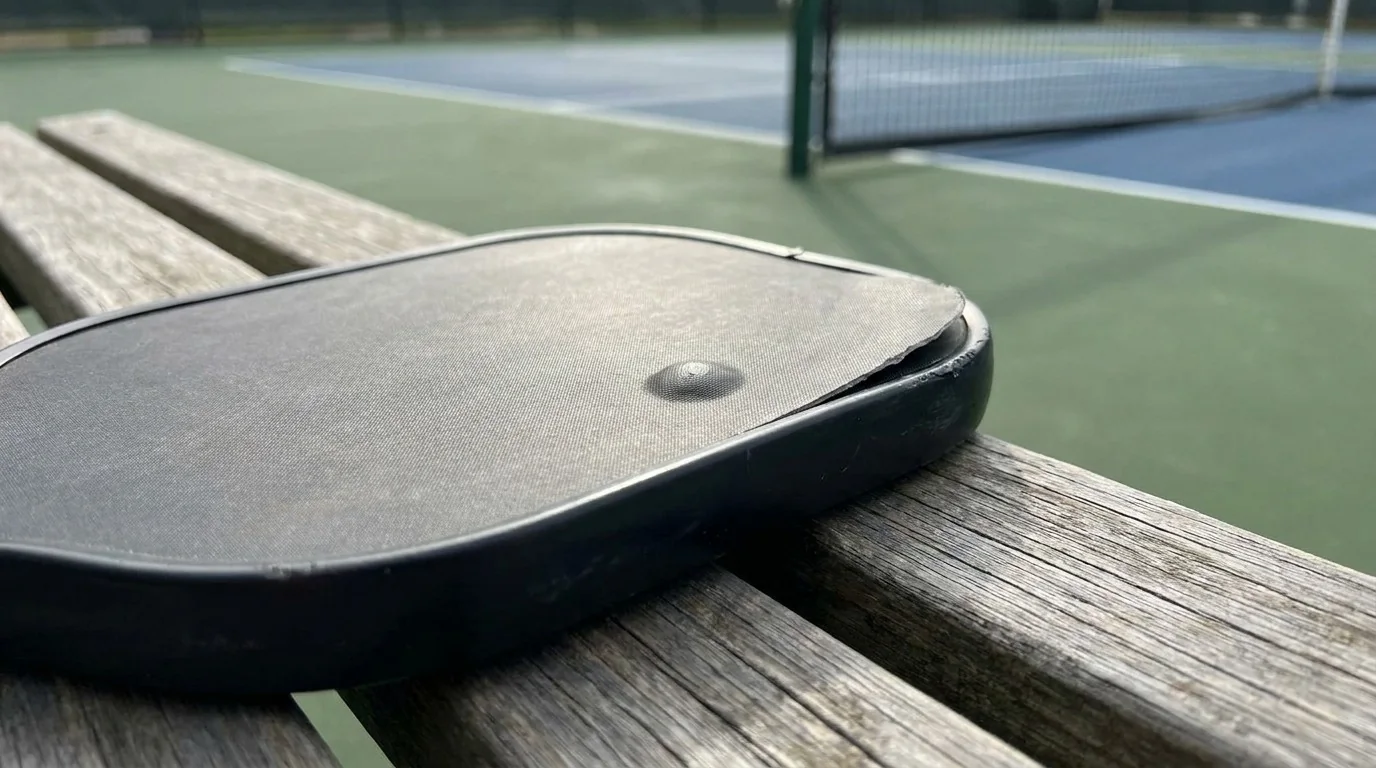
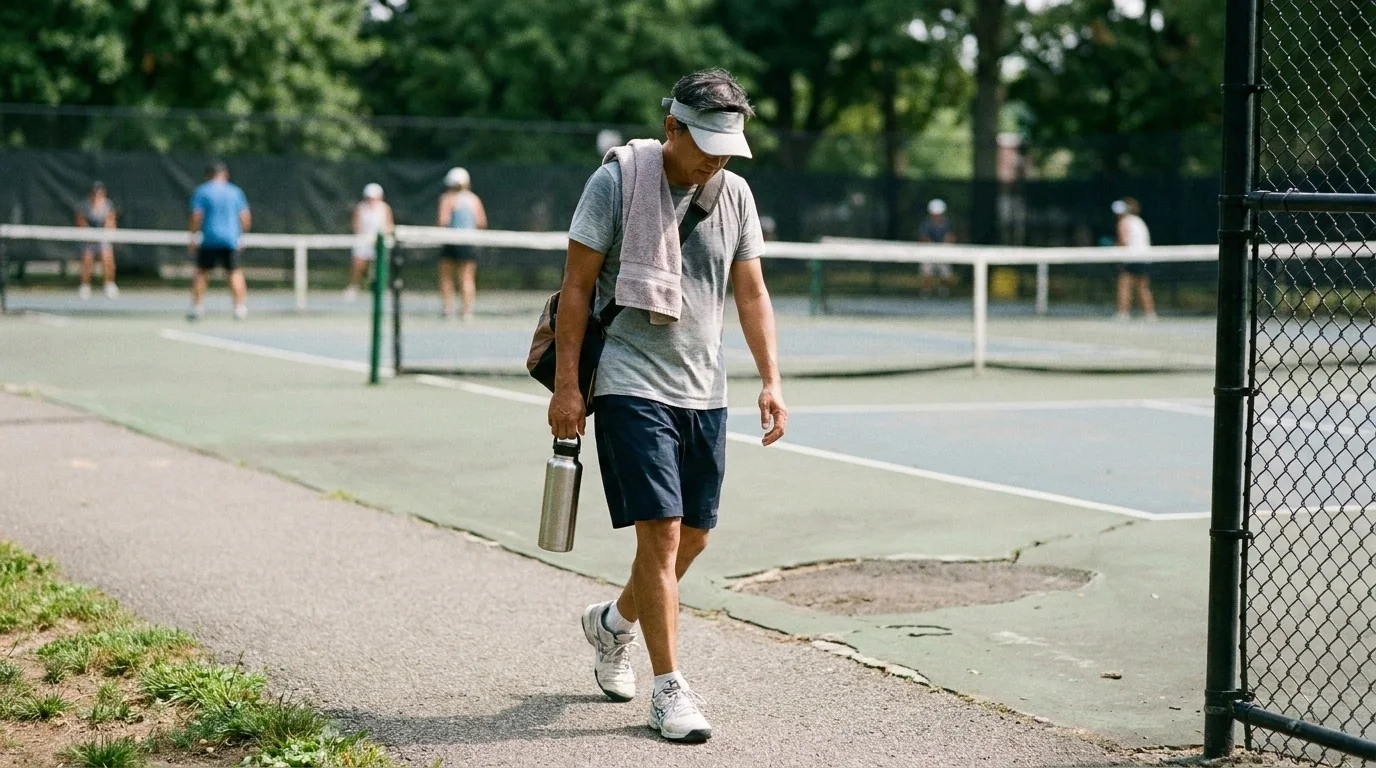
Perfect lines do not make a court safe if the surrounding edge is damaged or cluttered. Check the playing surface for debris, organic growth, loose grit, cracks, peeling, and areas that stay damp. Look closely at the transition between the court and the surrounding path. Raised edges and unexpected gaps can catch a shoe or a mobility-aid wheel.
Inspect fences for sharp protrusions, loose wires, unstable posts, and objects mounted at head or shoulder height. Check whether balls can escape into a pedestrian path or road. Backstops and side stops should contain play while preserving visibility and a safe way out. Keep hard obstacles away from likely run-off areas.
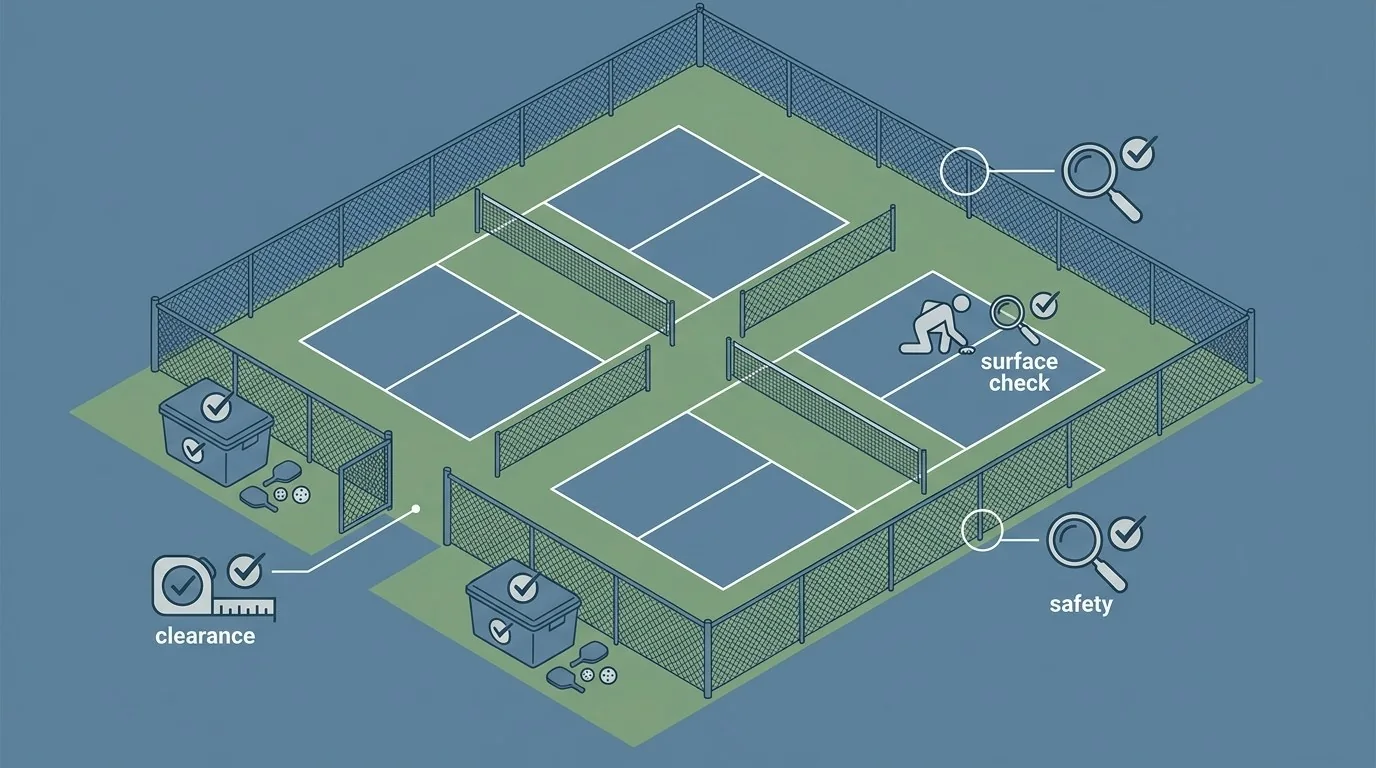
Include the net, posts, boundary lines, nearby lighting, and shade structures in the pre-play walk. This is not a demand to redesign the facility every time. It is a way to catch a condition that could change traction, visibility, or movement. Record recurring problems with their location, date, weather, and a photograph so the facility manager can prioritize a lasting repair.
Make the check part of normal operations
Post the court hours, booking or open-play system, maintenance contact, and emergency location information where visitors can read them without blocking the route. Tell regular players where to leave bags and how to report a loose gate, wet surface, or damaged fence. A short reporting process is more dependable than relying on one observant volunteer.
Repeat the route walk after rain, cleaning, construction, or landscaping before reopening the court. Check that new shade equipment has not narrowed the path, drainage has not moved soil onto the court, and temporary barriers have not left trip hazards. At a multi-court facility, inspect every court rather than assuming they all have the same condition.
A useful access check has a clear order: walk the approach, test the gate, separate circulation from rallies, inspect the surface and edge, then record anything that needs action. That routine makes shared courts safer to enter and easier for the whole community to use.