Pickleball Fast Serve Return: Use Space, Lift, and Depth
A practical guide to returning fast pickleball serves: create space, manage the paddle angle, add lift, aim deep, and move forward.
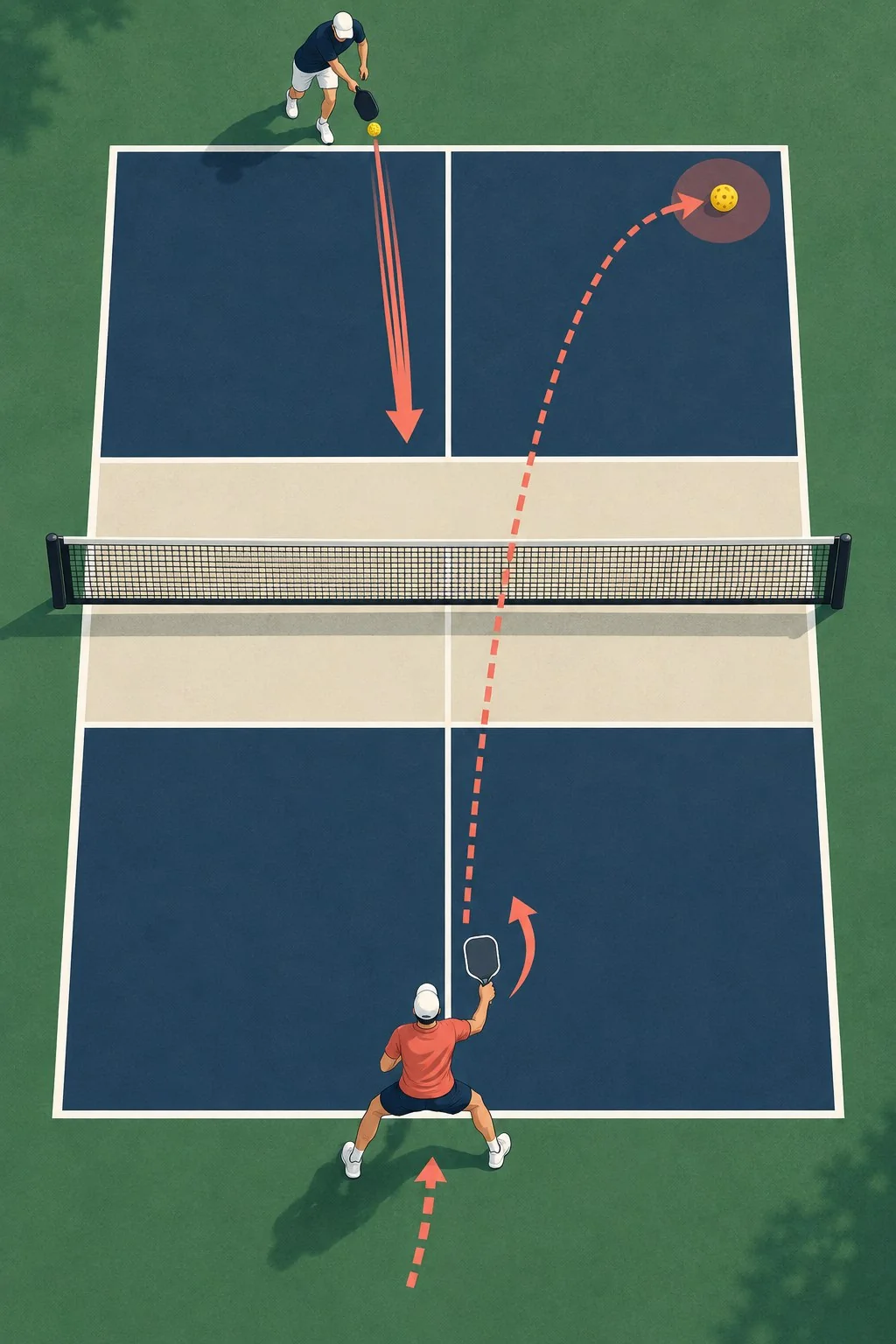
Returning a fast pickleball serve is not a contest of who can swing harder. The receiver needs time, space, and a paddle angle that turns incoming pace into a high-enough ball with useful depth. Start farther behind the baseline, keep the motion compact, and move forward after contact so the return does more than survive the serve.
Create space before the fast serve arrives
Stand far enough behind the baseline to let the ball travel. The extra distance gives you a longer reaction window and helps keep contact in front of your body. Avoid standing so close that a deep or fast serve jams the swing; use the available court space while keeping enough room behind you to move safely.
Watch the server’s preparation and read the direction early. Stay light on your feet, then make a small adjustment rather than taking a large retreating step once the ball is already close. A stable base matters more than a dramatic split step. Your first job is to arrive at a contact point where the paddle can move forward without your shoulders falling backward.
Use the paddle angle to add lift
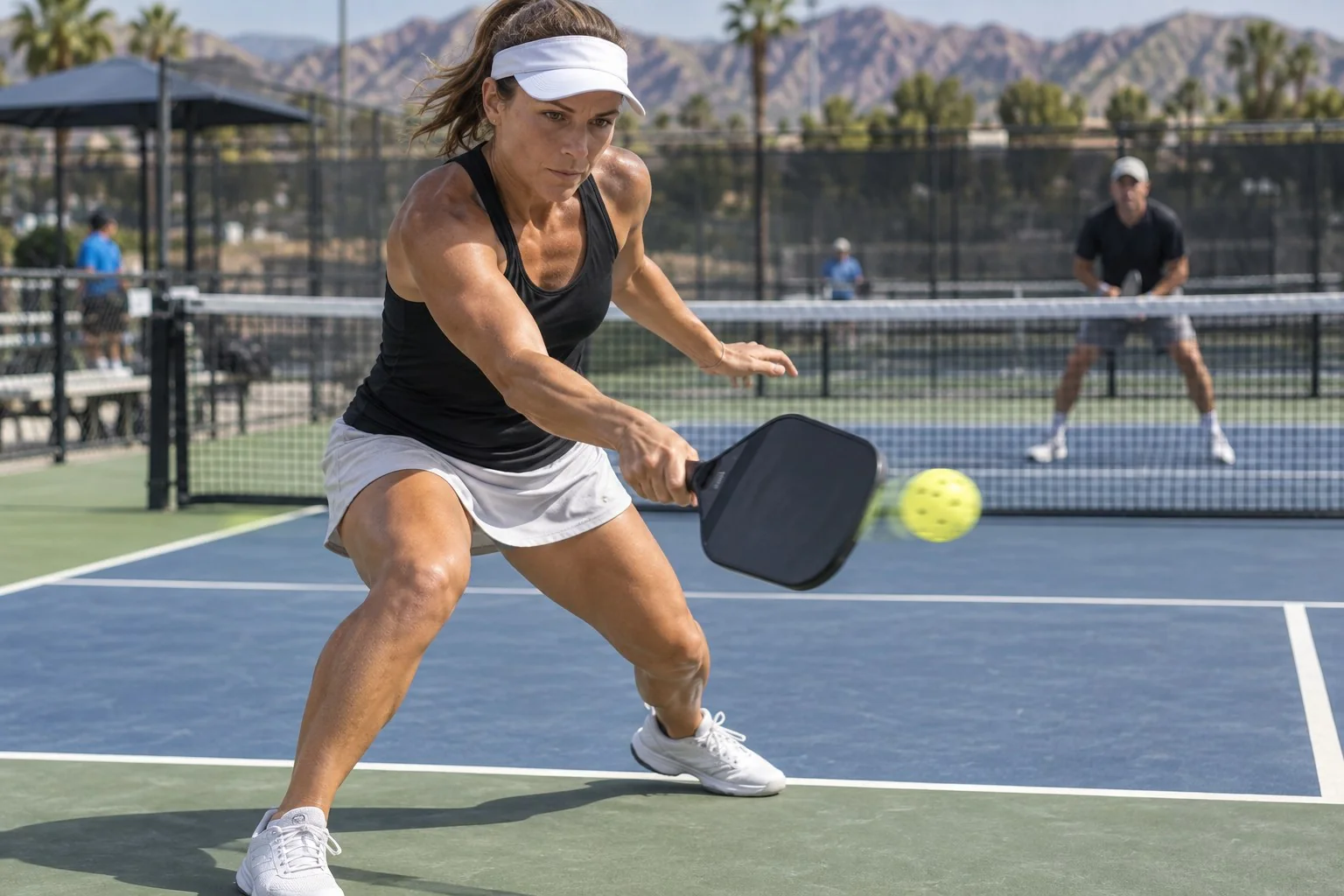
A slightly open paddle face helps absorb the serve and send the ball upward. The hold should be firm enough to keep the face steady, but not so tight that your arm becomes rigid. Think of catching the pace with a controlled platform, then guiding the ball forward rather than trying to overpower it.
Keep the backswing short. Let the turn of your shoulders and hips provide the preparation instead of pulling the arm far behind you. Against a faster serve, a large swing leaves too many moving parts and makes late contact more likely. A compact, low-to-high motion gives the ball enough clearance over the net while preserving control.
Contact the ball in front of your body. If it reaches your side or drifts behind you, the return loses both direction and depth. Move your feet, keep the chest balanced, and finish around chest height or slightly higher when the ball needs extra lift. The goal is a dependable arc, not a flat blast.
Prioritize depth over speed
Aim beyond the middle of the opponent’s service box, preferably toward a deep area that makes the third shot uncomfortable. A return that lands short may look quick but leaves the serving team an easier ball. Depth buys the receiver time to advance and makes the server work from farther back.
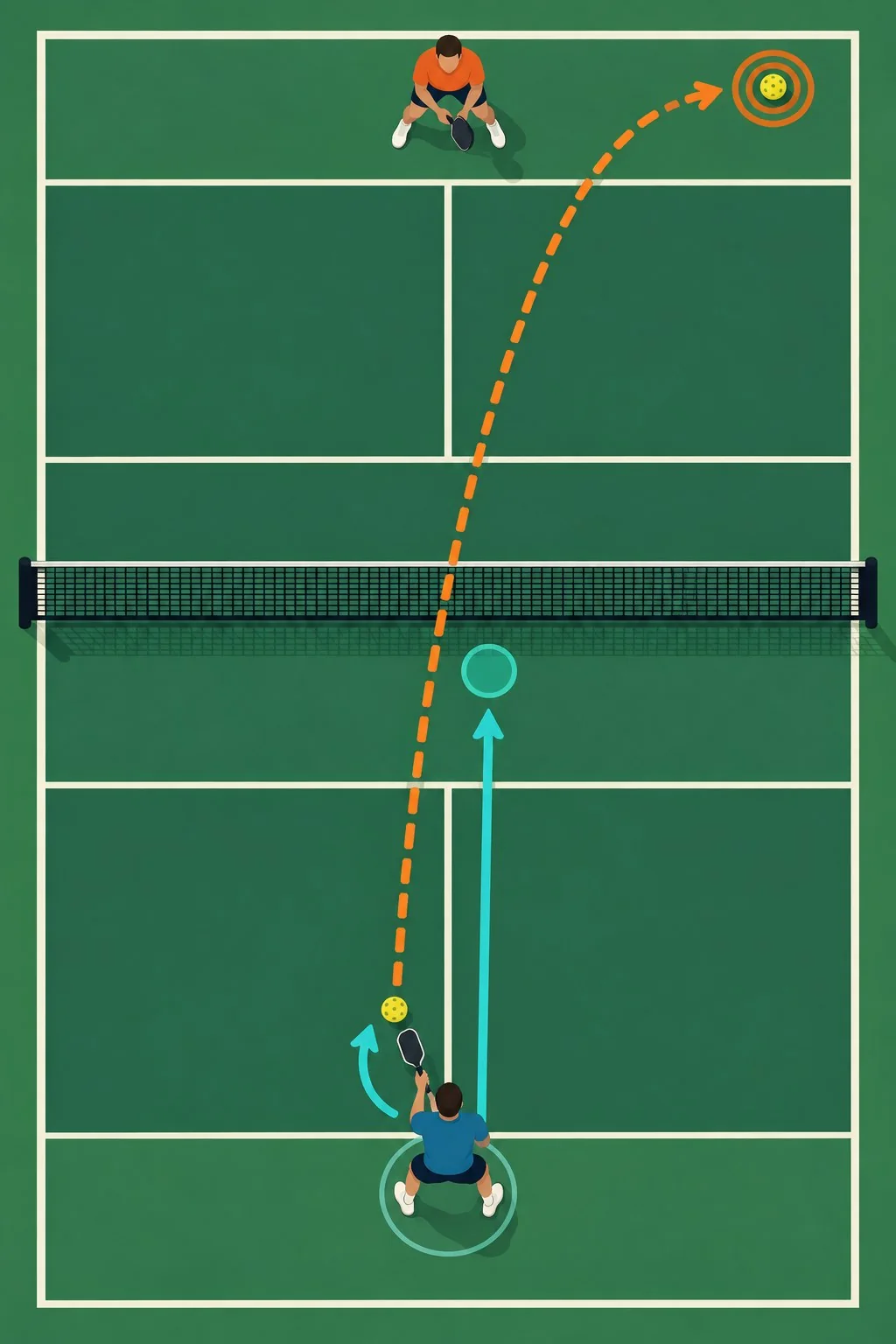
Use a target cone or marker during practice. Begin with a moderate serve and count only returns that clear the net with margin and land near the back third of the court. Then increase the feed speed without changing the basic shape. If the ball flies long, reduce the forward force or close the face slightly; if it clips the net, add lift before adding power.
Return and move forward
The return is the start of your next position. As soon as the ball leaves the paddle, move toward the kitchen instead of stopping to admire the shot. The serving team still has to let the return bounce, so that rule gives the receiver time to gain ground. Advance under control and use a split step as the opponent prepares the next shot.
When a fast serve catches you late, choose the safe response: create lift, send the ball deep, and recover your balance. Practise from both forehand and backhand sides, then add serves aimed at the body so the feet learn to make room. The best fast-serve return is repeatable under pressure because it combines space, a compact swing, a steady face, useful depth, and immediate movement forward.