Pickleball Fifth Shot Drop: How to Recover and Move Forward
Use the fifth shot drop to recover after a difficult third-shot exchange, create a safer arc into the kitchen, and move forward only when your position is ready.
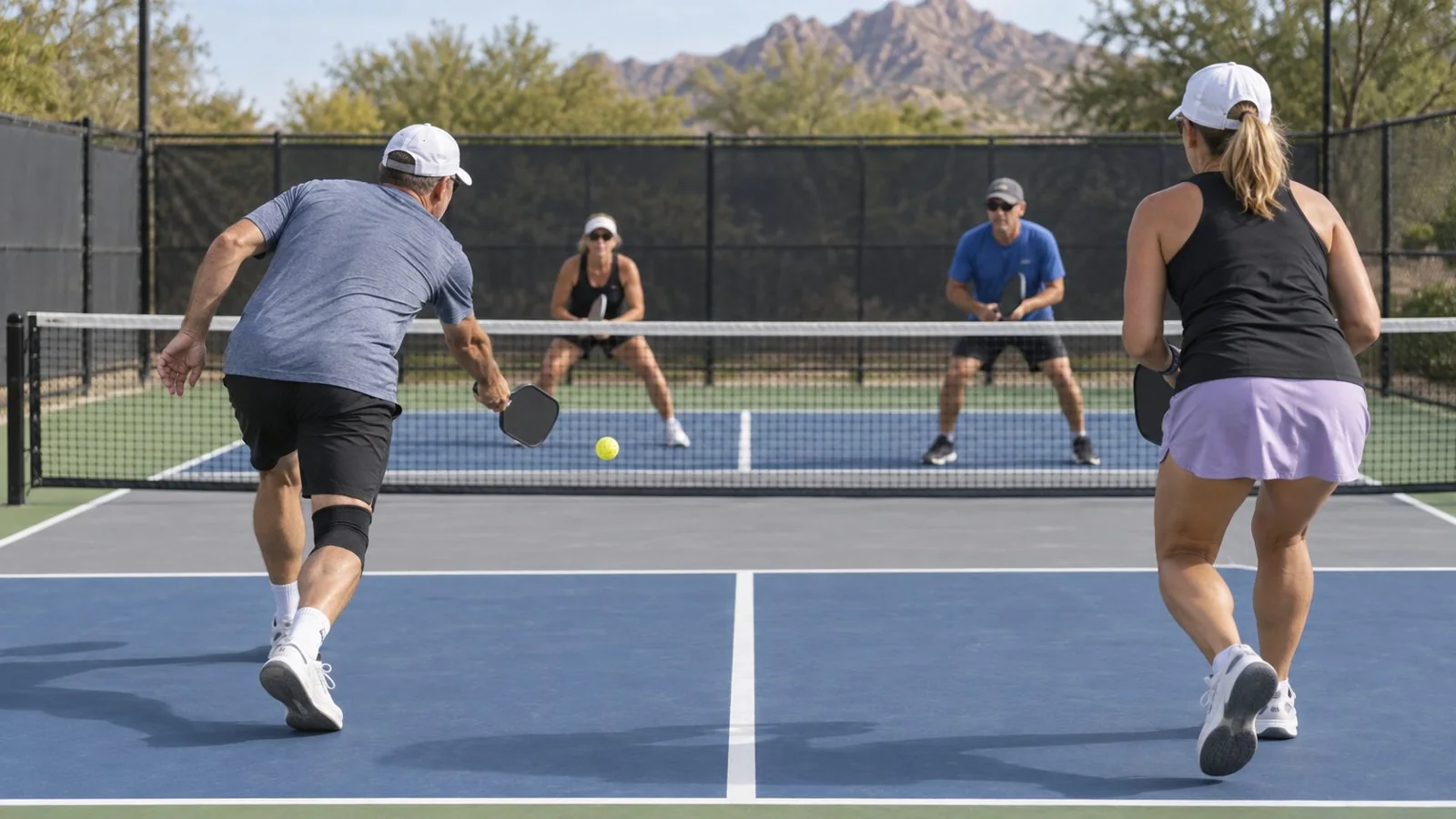
A pickleball fifth shot drop is the soft transition ball you play after your third shot and the opponent’s fourth shot. It is useful when the first drop did not give you a clean path to the kitchen. Instead of rushing forward behind an attackable ball, you use height, touch, and patience to create another chance to advance.
What the fifth shot drop is for
The serving team begins a typical doubles rally at the back of the court. After the serve, the return, and the third shot, the opponent may answer with a fourth shot that is too low, too fast, or too awkward to attack safely. Your fifth shot then becomes a decision point.
A drop is not a guaranteed way to win the rally. Its purpose is to send a manageable ball toward the opponent’s non-volley zone, often called the kitchen, while giving your team time to improve position. If the ball lands softly and forces an upward reply, you may be able to take the next step forward. If your fifth shot is still high or rushed, stay balanced rather than charging into the transition zone without a plan.
Read the fourth shot before choosing
Look at the ball’s height, speed, and location before committing to a drop.
- High and short: A controlled drive may be more effective than another soft ball, especially if the opponent is still moving.
- Low and deep: Use a compact lift with margin. Trying to hit through the ball often produces a ball into the net.
- At your feet: Bend your legs, keep the paddle quiet, and prioritize a safe reset. You may need to accept a higher arc to keep the rally alive.
- Wide or off balance: Do not force a perfect target. Recover your balance first and send the ball to the larger safe area.
These are practical choices, not rigid rules. The best option changes with opponent position, wind, your contact height, and whether your partner can cover the middle.
A simple fifth-shot technique
1. Start with a stable base
Use small adjustment steps and keep your weight centered. Avoid reaching while your feet are still crossing. A low athletic posture gives you room to lift the ball without relying on a sudden wrist flick.
2. Relax the grip and shorten the swing
Hold the paddle firmly enough to control it, but do not squeeze. A compact backswing and shoulder-led motion make it easier to absorb pace. Think of guiding or lifting the ball rather than striking it as hard as possible.
3. Contact in front
Let the ball come to a comfortable contact point when possible. Keep the paddle face slightly open if you need lift, and follow through toward the intended landing area. The exact face angle depends on the incoming speed and your distance from the net; avoid treating one angle as universal.
4. Choose margin over the tape
Aim for a safe arc that clears the net with room and descends into the kitchen. A ball that barely clears the net can fail from a small error or gust. Your target does not need to be a precise spot: a deep section of the kitchen away from an opponent’s reach is a useful starting goal.
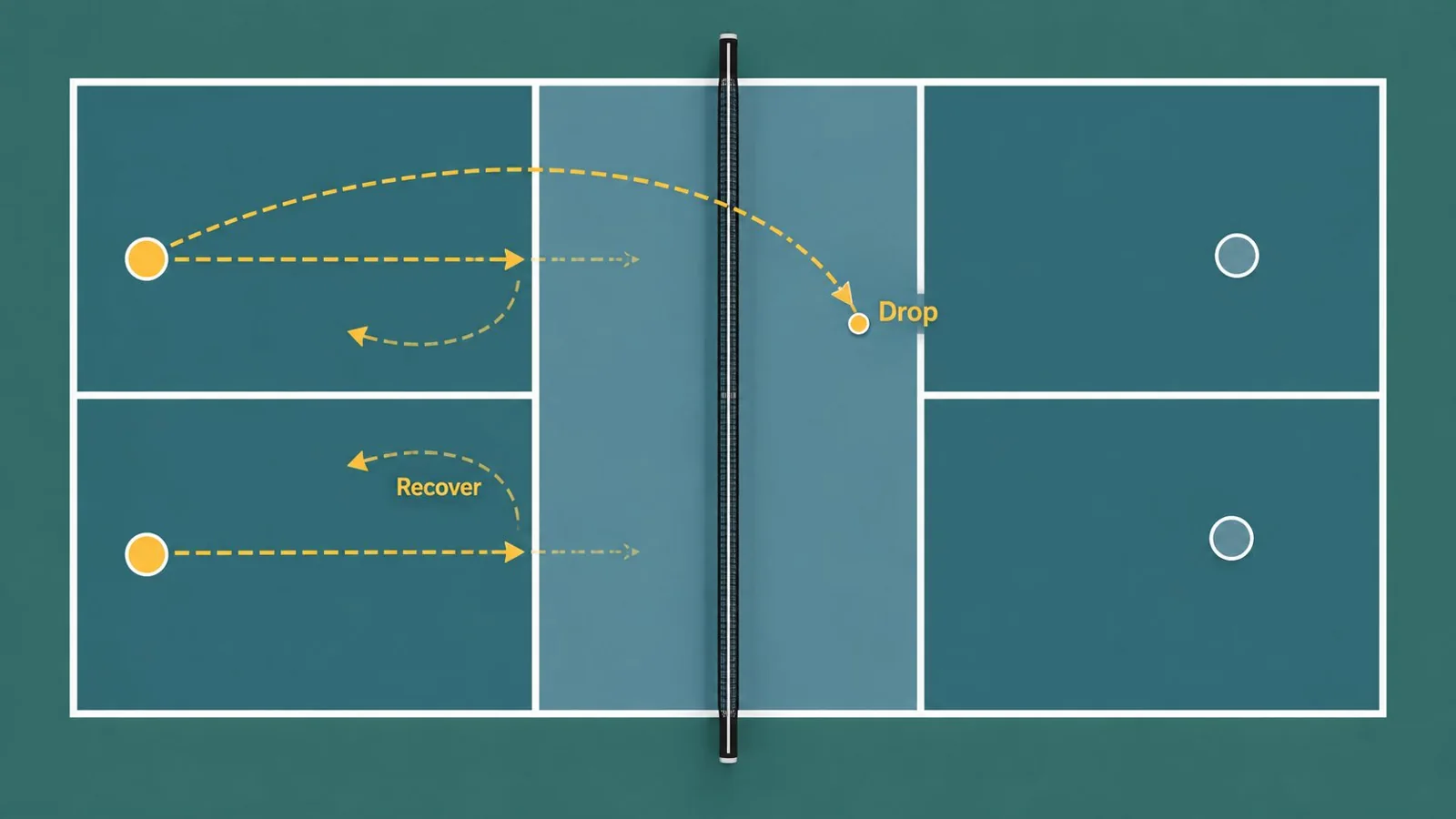
Recover after the ball leaves your paddle
Do not watch the shot from the baseline. Once you see that the ball is traveling with a usable arc, move forward under control. Take compact steps, keep the paddle in front, and use a split step as the opponent prepares to make contact. This helps you respond to a drive, a dink, or a ball directed at your body.
If the drop floats high, stop at a position where you can defend rather than sprinting all the way to the kitchen. Standing in the middle without balance leaves gaps and makes low balls difficult. A successful transition is not just forward distance; it is a position from which you can handle the next shot.
Drills that build the shot
Start close to the kitchen with a partner feeding gentle balls. Make ten controlled drops before taking a step backward. Repeat until you can send the ball over the net with a consistent arc from the transition area.
Next, rehearse the sequence: partner feeds a fourth shot, you play the fifth-shot drop, then move forward and split step. The feeder should vary height and direction so you learn to read rather than repeat one identical swing. Keep a simple count of balls that land in the kitchen and balls that go into the net or beyond the baseline. The count is practice feedback, not a promise of match performance.
For a final progression, add a live decision: the partner sends some high balls and some low balls. Drive only the high, manageable feeds; reset the others. This teaches the difference between a soft shot chosen deliberately and a soft shot used automatically.
Common errors to fix
Rushing after a bad third shot. A poor third shot does not require an immediate sprint. Stay back, make the next ball playable, and advance when the trajectory supports it.
Swinging harder from frustration. Extra speed usually reduces the margin you need. Return to a shorter motion and a clear landing target.
Standing tall at contact. A tall posture can make the ball pop up. Bend from the legs while keeping your eyes level and your chest controlled.
Stopping after contact. Your shot and your movement are one sequence. Finish the swing, read the opponent, and recover with the paddle ready.
Final takeaway
The fifth shot drop is a recovery tool, not a magic shot. Read the fourth ball, create a safe arc, and move only when the next position is defensible. With progressive-distance practice and a deliberate split-step recovery, you can turn a difficult transition into another chance to reach the kitchen with balance.